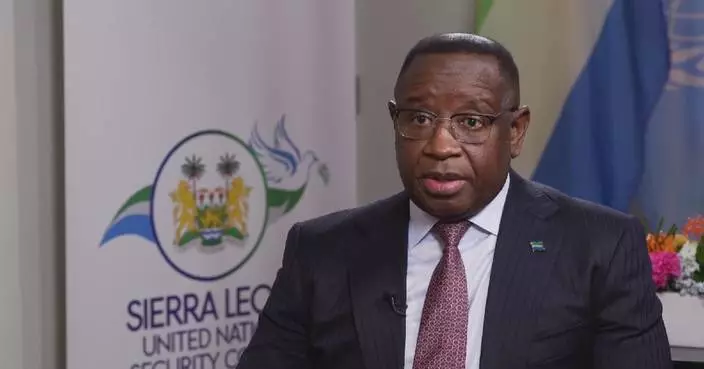
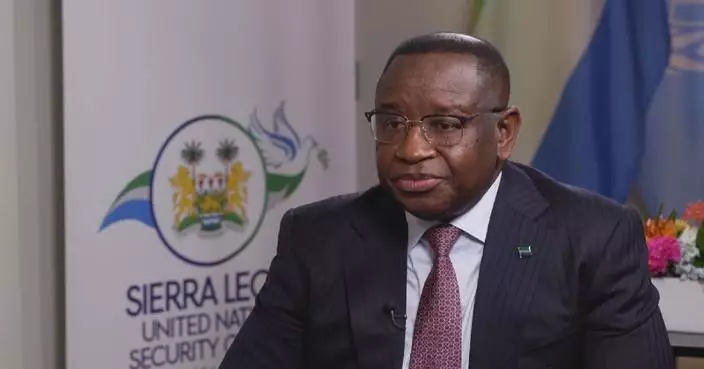
Sierra Leonean President Julius Maada Bio expressed his commitment to improving infrastructure and modernizing agriculture in his drive to achieve food sovereignty for his country.
In an interview with China Media Group (CMG) that aired on Friday, Bio recalled a pivotal conversation with Chinese President Xi Jinping, who stressed the importance of infrastructure for agriculture and food security. That exchange reinforced Bio's determination to modernize Sierra Leone's food production systems.
"I once joked with President Xi Jinping. I told him, you are feeding comfortably 1.4 billion people. Please help me to feed just 8 million people. And one of the things he told me was that infrastructure is critical to agriculture, food security. We have over 5.4 million hectares of arable land as a small country. We have ample rainfall. What has been lacking is the capital, and also a modernization we are ceased talking history in terms of our agriculture, the food production methods. So we have to try to mechanize and bring in the modern techniques of food production," he said.
The Sierra Leonean President also noted that the importance of food security goes beyond nutrition, playing a vital role in ensuring stability and paving way to industrialization.
"Let's look at food not only as for nutrition. It's also a way to prevent conflict. A hungry man is an angry man. Agriculture itself, for now, until we are able to transform, is highly labor intensive and 70 percent of our people are actually living in the rural areas where agriculture is the main preoccupation. So we want to be able to give jobs, livelihood to these people, especially the women, and the youth who needs to be employed. And to the best of my knowledge for all countries that we admire and are doing well as industrialized states, it had to go through the agriculture path, food security. And I want food sovereignty, in addition to political sovereignty. And that is why I'm pushing very hard to be able to succeed," he said.
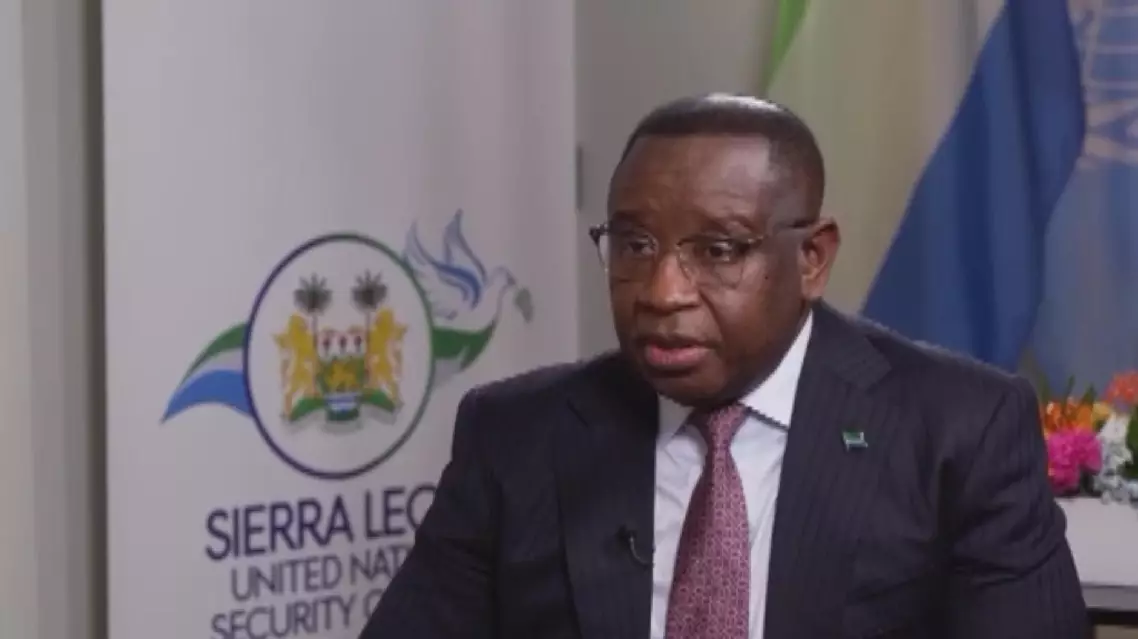
Sierra Leonean President pushes for food sovereignty through agricultural modernization
British international relations analyst Keith Bennett said the Tokyo Trial was a just reckoning for the war crimes of Japanese militarism, calling for a correct understanding of history and safeguarding the gains of the World Anti-Fascist War to prevent the repetition of such tragedies.
From May 3, 1946 to Nov. 12, 1948, the International Military Tribunal for the Far East was held in Tokyo by 11 countries, including the United States, China, the UK and the Soviet Union, to try Japan's Class-A war criminals after World War II. This year marks the 80th anniversary of the start of the Tokyo Trial.
Bennett believes the Tokyo Trial played a pivotal role in punishing Japan, the main Asian ally of Nazi Germany, for its aggression and atrocities committed during the World War II.
"I think it's entirely reasonable that the victors of the Anti-Fascist War, whether in Europe or in Asia, should bring the perpetrators of the dreadful crimes that were committed to justice," Bennett said.
Bennett said that the multinational participation in the Tokyo Trial made it an important manifestation of the international community's shared commitment to justice.
"The involvement of different powers in the Tokyo trials [mean] lifted it above a bilateral issue between this or that country and Japan, but about international society and humanity as a whole. The crimes that Japan committed, they may have been committed in China or in Korea or in the Philippines and so on, but they were crimes against humanity," he said.
Bennett said it is of great significance to have a proper understanding of the history of the World War II and prevent this tragedy from repeating itself. "Whether we're talking about the Tokyo trials in Asia or the Nuremberg trials in Europe, the point was to draw a line under some of the most brutal aggression and crimes against humanity that we've seen in all of history, really, and to ensure that these things should never happen again," he said.
Yet, due to the leniency and protection of the U.S. occupation authorities, accountability for Japan's war crimes was never as thorough as the Nuremberg Trials of the Nazi leaders. Fourteen Class-A war criminals were even enshrined at Yasukuni Shrine, their ghosts lingering to this day.
Until this day, some right-wing Japanese politicians still refuse to renounce Japan's militaristic past, and even question or deny the outcomes of the war.
They continue to pay tribute to the notorious Yasukuni Shrine, revise high school history textbooks to downplay Japan's wartime atrocities, and deny the forced recruitment of "comfort women" by the Japanese military during WWII.
During the deadliest military conflict in human history 80 years ago, more than 80 countries and regions, involving roughly 2 billion people, were drawn into the war. More than 100 million worldwide were killed or wounded, and global economic losses exceeded 4 trillion U.S. dollars.
To resist fascist aggression, more than 50 countries, including China and the Soviet Union, formed a united front. As the main theater in the East during the World Anti-Fascist War, China paid a heavy price -- over 35 million casualties in its fight against the majority of Japanese militarist troops.
Preserving the truth of history is the most meaningful tribute to the soldiers and civilians who perished during WWII. It is also a foundation for reconciliation between former belligerent nations.

Tokyo Trial represents just reckoning for Japanese aggression crimes: British expert