A French expert on international affairs urged Japan to squarely face up to and thoroughly reflect upon its invasion history as the world marks the 80th anniversary of the Tokyo Trial this year.
In an interview with the China Media Group (CMG) on Saturday, Sebastien Perimony from the International Schiller Institute said that Japan is pushing to revive militarism, which once again puts the world in danger.
"This year, we commemorate the 80th anniversary of the Tokyo Trial, which adjudicated the crimes committed by Japan during World War II. At the same time, we see Japan reviving militarist policies, which again place the world in danger," said Perimony.
"The world stands at a crossroads today. On one side are those who seek war and mutual destruction, choosing conflict over cooperation. On the other side, as President Xi Jinping has said, are the efforts to build a community with a shared future for mankind. I believe the 80th anniversary of the Tokyo Trial can serve as an opportunity for Japan to acknowledge the crimes it committed during World War II," Perimony said.
The French expert also criticized the repeated visits by Japanese right-wing politicians to the notorious Yasukuni Shrine, where convicted Class-A war criminals are enshrined, saying such behaviors constitute an insult and a provocation, and are very dangerous and worrying.
"We've seen that some members of Japan's ruling party and lawmakers have visited the Yasukuni Shrine, which has long been controversial because it honors World War II war criminals. I think such actions are shocking and provocative, amounting to a glorification of those who massacred the Chinese people. It is an insult and a provocation, and the repeated provocations are extremely dangerous and worrying," said Perimony.
From 1946 to 1948, the International Military Tribunal for the Far East, historically referred to as the Tokyo Trial, tried Japan's principal Class-A war criminals.
Nevertheless, Japan has failed to bring all Japanese war criminals to justice.
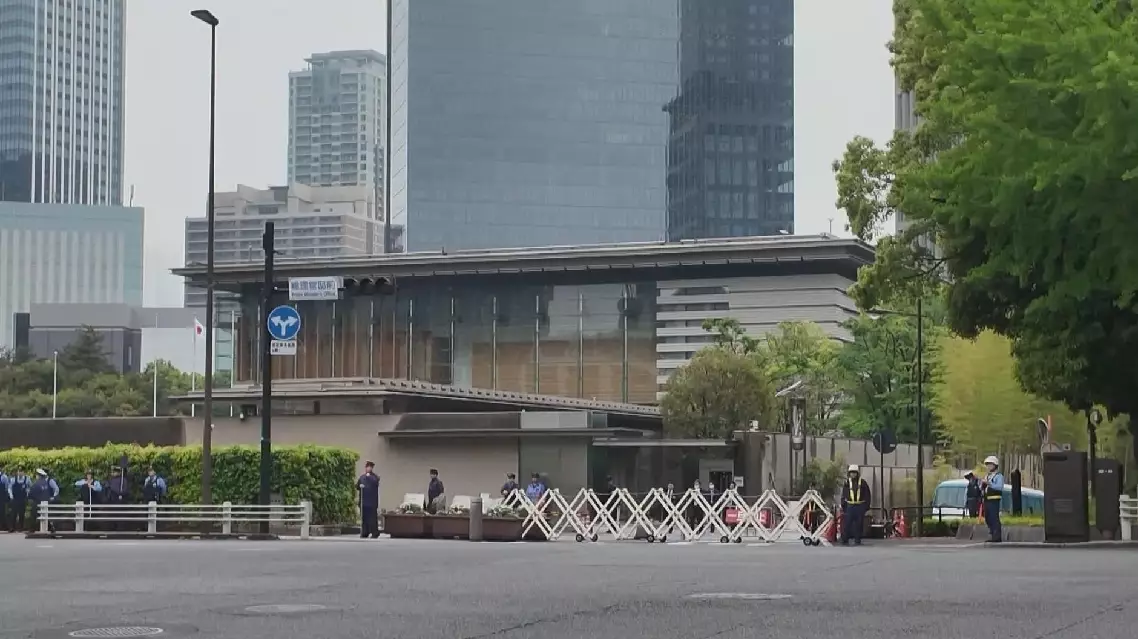
French expert urges Japan to thoroughly reflect on historical crimes
The world's largest single-unit 16-megawatt floating offshore wind turbine "Three Gorges Pilot" was installed on Saturday in waters off Yangjiang, south China's Guangdong Province.
The 16-megawatt floating offshore wind turbine consists of three parts, namely a 16 mw ultra-large capacity wind turbine, a semi-submersible floating platform, and a new mooring system.
With a maximum tip height exceeding 270 meters, the wind turbine rotor has a diameter of 252 meters, with a swept area equivalent to seven standard football fields.
Unlike traditional fixed-bottom turbines that are physically connected to the seabed, it is installed on a semi-submersible floating platform measuring 80.82 meters long, 91 meters wide, and with a displacement of 24,100 tons.
The platform is secured through nine suction anchors, combined with domestically produced high-performance polyester fiber cables and anchor chains for seabed mooring and positioning.
"To deal with the harsh sea conditions, our team has developed and applied a new mooring system, a dynamic monitoring system, an active ballast system, and 66 kV dynamic submarine cables for the first time in China," said Pan Hongguan, an offshore wind power engineer from Guangdong Branch of China Three Gorges Corporation (CTG).
According to Pan, the new mooring system combines polyester cable and anchor chain, which is like adding a "spring" to the middle of the system, to deliver superior mechanical performance.
The "Three Gorges Pilot" wind turbine previously completed its integrated assembly at Tieshan Port in Beihai of south China's Guangxi Zhuang Autonomous Region. It arrived at its target sea area located more than 70 kilometers off the coast of Yangjiang after a long-distance towed voyage across the Qiongzhou Strait which connects South China's island province of Hainan with Guangdong Province on the mainland.
After being put into operation, the wind turbine is expected to generate approximately 44.65 million kilowatt-hours of clean energy annually, enough to meet the annual electricity demand of 24,000 households.
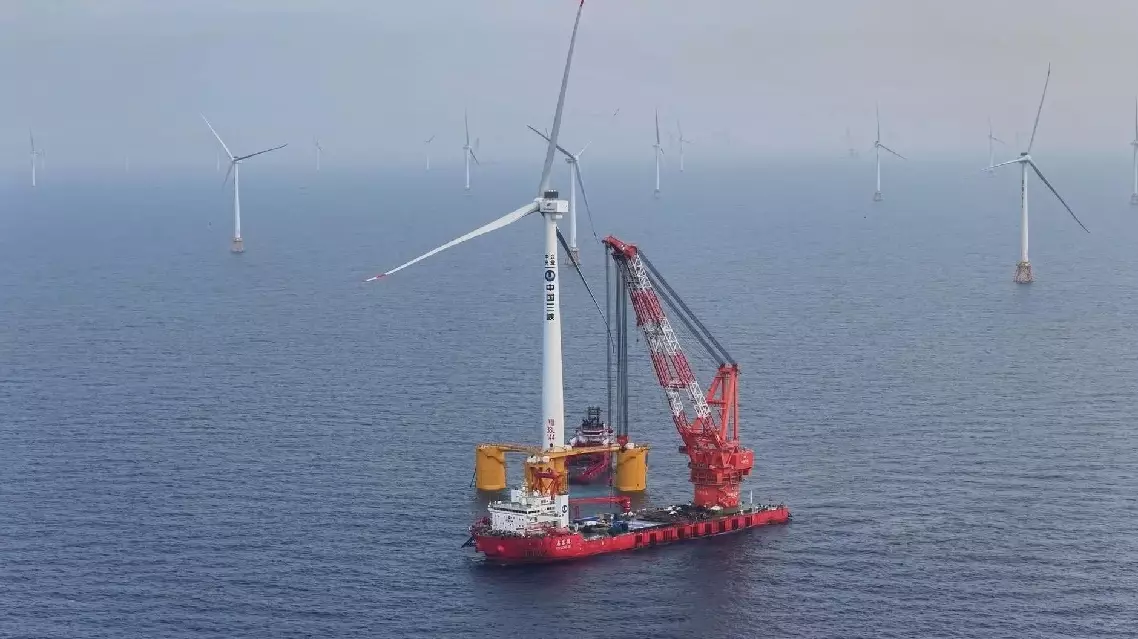
China completes installation of world's largest single-unit floating offshore wind turbine