Nestled along the West Bund of Shanghai's Xuhui District, the "Mosu Space," or literally "Model Speed Space," an innovation center dedicated to large AI models, has attracted more than 300 large model-focused enterprises, drawing young AI entrepreneurs eager to explore the frontiers of innovation.
Recognized by the Ministry of Industry and Information Technology this April as one of China's first 14 "outstanding incubators," Mosu Space keeps its focus squarely on young talent. Just recently, the community hosted a "Youth Tech Innovation Salon," where young AI practitioners gathered to discuss cutting-edge technologies, explore AI applications, and showcase their latest breakthroughs and real-world deployment results from the past year of large model research and development.
Another pillar of support at Model Speed Space is the embodied intelligence sector. Inside the community's "Embodied Workshop," a group of young engineers work as dedicated trainers for humanoid robots. Their work here includes fine-tuning algorithms, conducting intelligent training, and adapting systems to real-world scenarios, sharpening the core capabilities needed to bring embodied intelligence into practical use.
"The workshop prepares robots to 'get on the job.' The Embodied Workshop is essentially a training and employment base for embodied intelligence robots, allowing them to fit in real-world scenarios and achieve effective deployment even at this early stage of development," said Zhen Di, founder of SoulPartner Technology, an AI startup based in the center.
The innovation park also houses an AI tech experience store, where nearly 500 artificial intelligence products are on sale, presenting the latest AI applications to visitors.
"I just asked the staff. These are all Chinese technology, products incubated in own our country. I feel like these innovations are already weaving themselves quietly into our everyday lives," said a shopper surnamed Zhang.
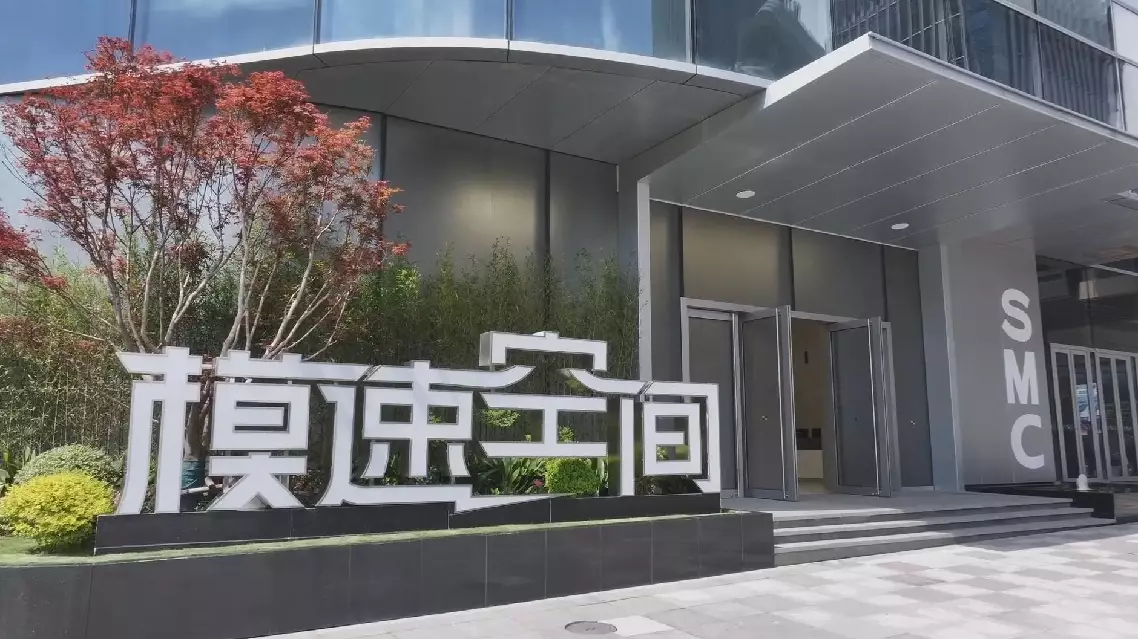
AI incubator in Shanghai brings together large model, robot innovators
Eighteen sets of precious archival materials related to David Nelson Sutton, a U.S. assistant prosecutor at the Tokyo Trials and one of the earliest international prosecutors to investigate the Nanjing Massacre, were officially donated on Wednesday to the Memorial Hall of the Victims in Nanjing Massacre by Japanese Invaders.
Sunday marks the 80th anniversary of the opening of the International Military Tribunal for the Far East (IMTFE, also known as the Tokyo Trials). To commemorate the milestone, six diaries written by Sutton between 1946 and 1948, when he was conducting investigations for the tribunal, were donated together with a series of reports titled Reports from China.
"It is necessary to let more Chinese, even people all over the world, to see these archival materials. Let all the world know why the Tokyo Trials 80 years ago were described as a trial of justice, and how the Nanjing Massacre nearly 90 years ago was unprecedentedly brutal and tragic beyond compare," said Zou Dehuai, the donor.
From May 3, 1946 to Nov 12, 1948, the International Military Tribunal for the Far East was held in Tokyo by 11 countries, including the United States, China, Britain and the Soviet Union, to try Japan's Class-A war criminals after World War II.
"Why do we say the Tokyo Trials were a trial of justice? It was a trial witnessed by the world, with judges from 11 countries. Major war criminals, such as Iwane Matsui, a crime culprit for the Nanjing Massacre, and Hideki Tojo, all ultimately received the punishment they deserved. That is why the Tokyo Trials are called a trial of justice. These archives are of immense importance," Zou said.
Sutton came to China with the International Prosecution Section in 1946 and was tasked with investigating Japanese war crimes in China, with a particular focus on collecting evidence related to the Nanjing Massacre.
The six diaries recorded many details of Sutton's work during the Tokyo Trials. In one entry, dated March 9, he wrote that he had received formal orders to go to Shanghai, Nanking (Nanjing), Peiping (Beijing) and other sites in the China theater to investigate war crimes and gather evidence. Another entry recorded his arrival in Nanjing at 11:20 on April 2. On May 3, the day the trial opened, he described the defendants as looking like "insignificant beaten men."
The donated materials also include Sutton's "Reports from China," which further exposed Japanese wartime atrocities in China, including mass killings, violence against civilians, germ warfare and the coercion of Chinese people into opium cultivation.
Zou is a collector born in the 1990s who has long searched for wartime historical evidence. He first found the Sutton materials in November 2025 on a U.S.-based auction website specialized in military artifacts. After confirming Sutton's identity and reviewing preview images that indicated the items were original archival materials, Zou placed a bid for the collection and later, ultimately paying a price nearly 100,000 U.S. dollars, far more than his original budget. And he arranged for its return to China, with assistance from others.
At the donation ceremony, Zou received a donation certificate. He said the Sutton archives were the most expensive items he had acquired in a decade of collecting. "These archives, these ironclad evidences, expose the crimes committed by the invading Japanese army in China and serve as a warning to all humanity. When you look at these documents, you cannot imagine that a human army could commit such massive and horrible atrocities. I believe that any Japanese person with conscience, after reading the Sutton archives, would firmly recognize what kind of a massacre took place in Nanjing. For the young people of future China, Japan and the United States, we must tell them the truth of history, and why we must cherish the hard-won peace, and how heavy the cost of peace truly was," Zou said.
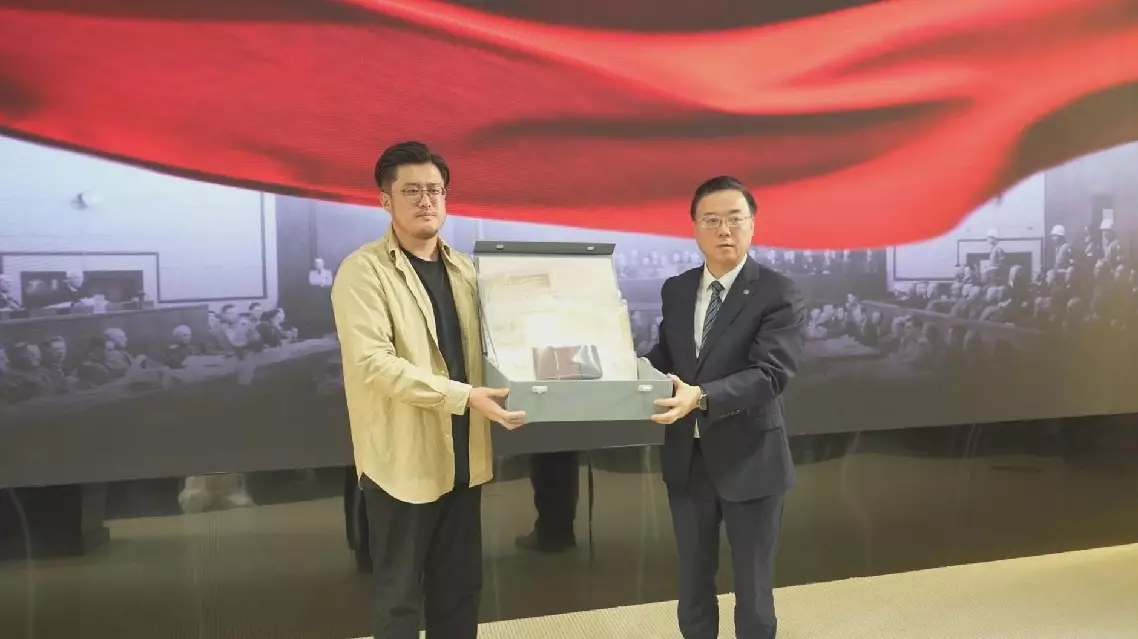
Tokyo Trials prosecutor's diaries donated to Nanjing Massacre memorial hall