VIENNA, Va.--(BUSINESS WIRE)--May 4, 2026--
This press release features multimedia. View the full release here: https://www.businesswire.com/news/home/20260504772382/en/
The Excellence in Resilience Awards recognize organizations that have excelled in critical event management and organizational resilience. This year’s honorees were selected for optimizing operations, embracing innovation, and building more mature, scalable resilience programs.
The 2026 Excellence in Resilience Award winners are:
High Velocity CEM
Business Resilience
Digital
“Discover Resilience gives us an opportunity to recognize the customers who are setting the standard for resilience,” said Dave Wagner, President and CEO at Everbridge. “This year’s award winners are showing what strong, modern critical event management looks like in practice. They are using intelligence, automation, and human judgment in the right ways to protect their people, reduce disruption, and improve over time. We are proud to honor their leadership.”
Each award winner was recognized for a distinct contribution:
“We are honored to receive the Excellence in Resilience: Digital Award on behalf of Sony PlayStation,” said Ben Narramore, Director, Global Operations at PlayStation. “This recognition reflects the work our teams are doing across PlayStation to strengthen reliability, improve response, and move our AIOps and automation strategy forward. We appreciate Everbridge for recognizing that progress, and this award belongs to the entire organization.”
At Discover Resilience, Everbridge introduced its vision for Dynamically Adaptive Resilience, an operating model for helping organizations know earlier, respond faster, and improve continuously. The company shared its ambition to help customers achieve a simple but powerful outcome: Every Incident Response Optimized. That vision is reflected in Everbridge High Velocity CEM™, an all-in-one AI-powered platform that is autonomous when you want it to be and human-guided when you need it to be.
Discover Resilience brought together resilience leaders from across industries for customer-led sessions, executive discussions, solution showcases, and hands-on workshops on the future of critical event management, business continuity, digital operations, and AI-powered resilience.
About Everbridge
Everbridge helps more than 6,500 enterprises and government organizations manage critical events by enabling them to know earlier, respond faster, and improve continuously. Through an all-in-one AI-powered platform, Everbridge High Velocity CEM™ is autonomous when you want it to be and human-guided when you need it to be, so every incident response is optimized. For more information, visit everbridge.com and follow us on LinkedIn.

Everbridge Honors 2026 Excellence in Resilience Award Winners at Discover Resilience
DUBAI, United Arab Emirates (AP) — The U.S. military’s Central Command says two American-flagged merchant ships have “successfully transited through the Strait of Hormuz.”
It said Monday that Navy guided-missile destroyers in the Persian Gulf are helping to restore commercial shipping traffic.
The statement on X said the destroyers transited the Strait of Hormuz “in support of Project Freedom” and that the merchant ships are ” safely headed on their journey.” It did not say when the Navy ships arrived or when the merchant vessels departed.
THIS IS A BREAKING NEWS UPDATE. AP’s earlier story follows below.
DUBAI, United Arab Emirates (AP) — The U.S. military on Monday denied claims that Iran struck a Navy vessel as U.S. forces now offer to guide commercial ships through the Strait of Hormuz, where hundreds have been stuck since the Iran war began. Tehran over the past two months has attacked some vessels and blocked others that don’t receive its authorization.
Iranian news agencies, including the semiofficial Fars and the Iranian Labour News Agency, claimed that Iran struck a U.S. vessel near an Iranian port southeast of the strait, accusing it of “violating maritime security and navigation norms.” The reports said the vessel was forced to turn back.
The U.S. Central Command said on social media that “no U.S. Navy ships have been struck.”
The U.S. military has said the new initiative, announced by President Donald Trump on Sunday, might involve guided-missile destroyers, more than 100 aircraft and 15,000 service members but has not specified what kind of assistance it would provide. The U.S.-led Joint Maritime Information Center has advised ships to cross the strait in Oman’s waters, saying it set up an “enhanced security area.”
It was unclear whether any vessels were attempting to cross the strait, or whether shipping companies, and their insurers, will feel comfortable taking the risk given that Iran has fired on ships in the waterway and vowed to keep doing so.
Iran has responded to the new U.S. effort by calling it a violation of the fragile ceasefire that has held for more than three weeks.
Iran’s control of traffic through the crucial artery for a significant amount of the world’s oil and gas supplies has proved a strategic advantage in its war with the U.S. and Israel, allowing Tehran to inflict tremendous pain on the global economy despite being outgunned on the battlefield.
Trump's announcement that the U.S. would “guide” ships out of the strait warned that Iranian efforts to block them "will, unfortunately, have to be dealt with forcefully.”
He described “Project Freedom” in humanitarian terms, designed to aid stranded seafarers, many on oil tankers or cargo ships, who have been stuck in the Persian Gulf since the war began. Crews have described to The Associated Press seeing drones and missiles explode over the waters as their vessels run low on drinking water, food and other supplies.
Iran’s state-run IRNA news agency called “Project Freedom” part of Trump's “delirium."
Iran’s military command on Monday said ships passing must coordinate with them.
“We warn that any foreign military force — especially the aggressive U.S. military — that intends to approach or enter the Strait of Hormuz will be targeted,” Maj. Gen. Pilot Ali Abdollahi told state broadcaster IRIB.
The Joint Maritime Information Center urged mariners to coordinate closely with Omani authorities “due to anticipated high traffic volume.” It warned that passing close to usual routes, known as the traffic separation scheme, “should be considered extremely hazardous due to the presence of mines that have not been fully surveyed and mitigated.”
But the head of security for the Baltic and International Maritime Council, a leading shipping trade group, said no formal guidance or details about the U.S. effort had been issued to the industry. Jakob Larsen questioned whether the effort was sustainable in the long run or envisioned as a more limited operation, and said there is a “risk of hostilities breaking out again” if it goes ahead.
And the United Arab Emirates on Monday accused Iran of targeting a tanker linked to its main oil company with two drones as it passed through the strait. It did not say when the attack took place. No injuries were reported.
The disruption of the waterway has squeezed countries in Europe and Asia that depend on Persian Gulf oil and gas, raising prices far beyond the region.
Trump has promised to bring down gas prices as he faces midterm elections this year.
The U.S. has warned shipping companies they could face sanctions for paying Iran for transit of the strait. It has enacted a naval blockade on Iranian ports since April 13, telling 49 commercial ships to turn back, U.S. Central Command said Sunday.
The blockade has deprived Tehran of oil revenue it needs to shore up its ailing economy.
U.S. officials have expressed hope that the blockade forces Iran back to the negotiation table.
“We think that they’ve gotten less than $1.3 million in tolls, which is a pittance on their previous daily oil revenues,” U.S. Treasury Secretary Scott Bessent told Fox News on Sunday, adding that Iran’s oil storage is rapidly filling up and “they’re going to have to start shutting in wells, which we think could be in the next week.”
Iran’s latest 14-point proposal for ending the war, made public over the weekend, calls for the U.S. lifting sanctions, ending the U.S. naval blockade, withdrawing forces from the region and ceasing all hostilities, including Israel’s operations in Lebanon, according to the semiofficial Nour News and Tasnim agencies, which have close ties to Iran’s security organizations.
Iranian officials said they were reviewing the U.S. response, though Foreign Ministry spokesperson Esmail Baghaei told reporters on Monday that changing demands, which he did not detail, made diplomacy difficult.
Iran has claimed its proposal does not include issues related to its nuclear program and enriched uranium — long a driving force in tensions with the U.S. and Israel.
Iran’s proposal wants other issues resolved within 30 days and aims to end the war rather than extend the ceasefire. Trump on Saturday said he was reviewing the proposal but expressed doubt it would lead to a deal.
Pakistan said Monday it has facilitated the transfer of 22 crew members from an Iranian vessel seized earlier by the U.S., describing the move as a confidence-building measure as Islamabad attempts to revive talks. Pakistan hosted face-to-face talks last month.
Pakistan's Foreign Ministry said the crew members, who had been aboard the Iranian container ship MV Touska, were flown to Pakistan overnight. They were expected to be handed over to Iranian authorities.
The vessel will be brought into Pakistani territorial waters for necessary repairs before being returned to its original owners, the ministry said, adding that the process is being coordinated with the support of Iran and the U.S.
Metz reported from Ramallah, West Bank. Munir Ahmed contributed from Islamabad, Pakistan.
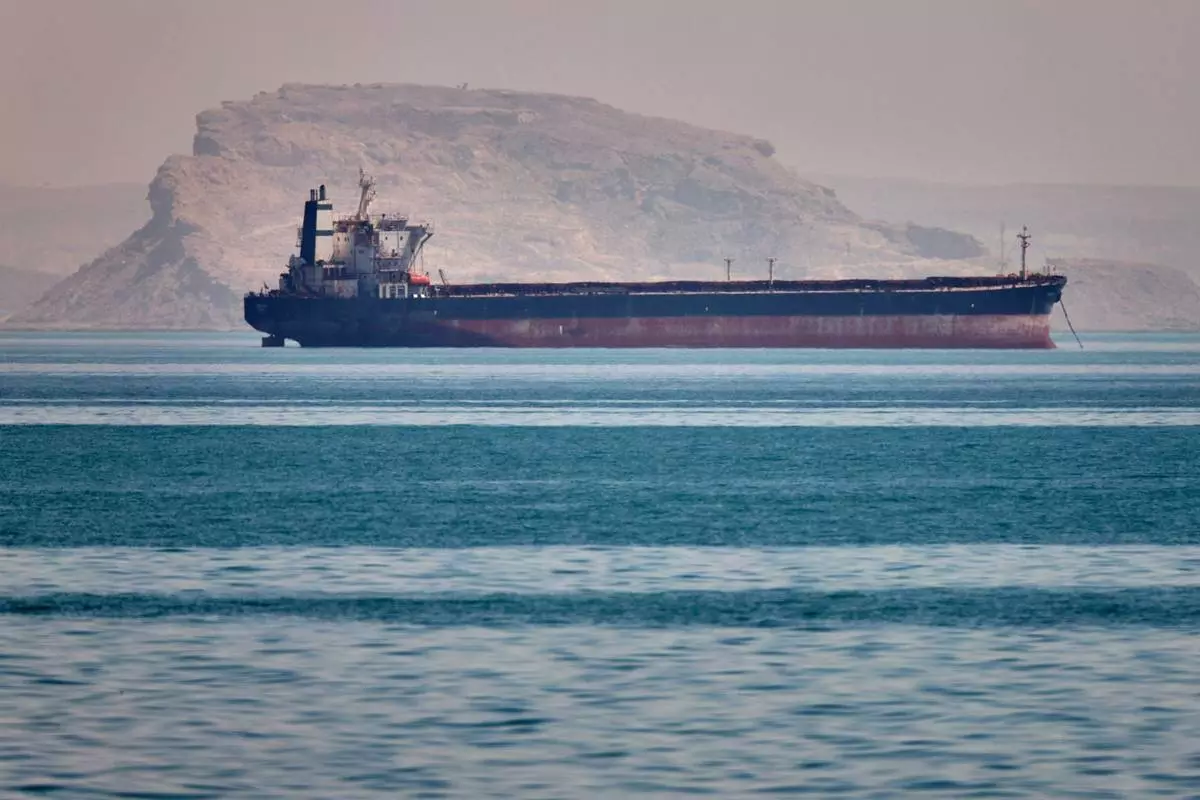
A bulk cargo ship sits at anchor in the Strait of Hormuz off Bandar Abbas, Iran, Saturday, May 2, 2026.(Amirhosein Khorgooi/ISNA via AP)
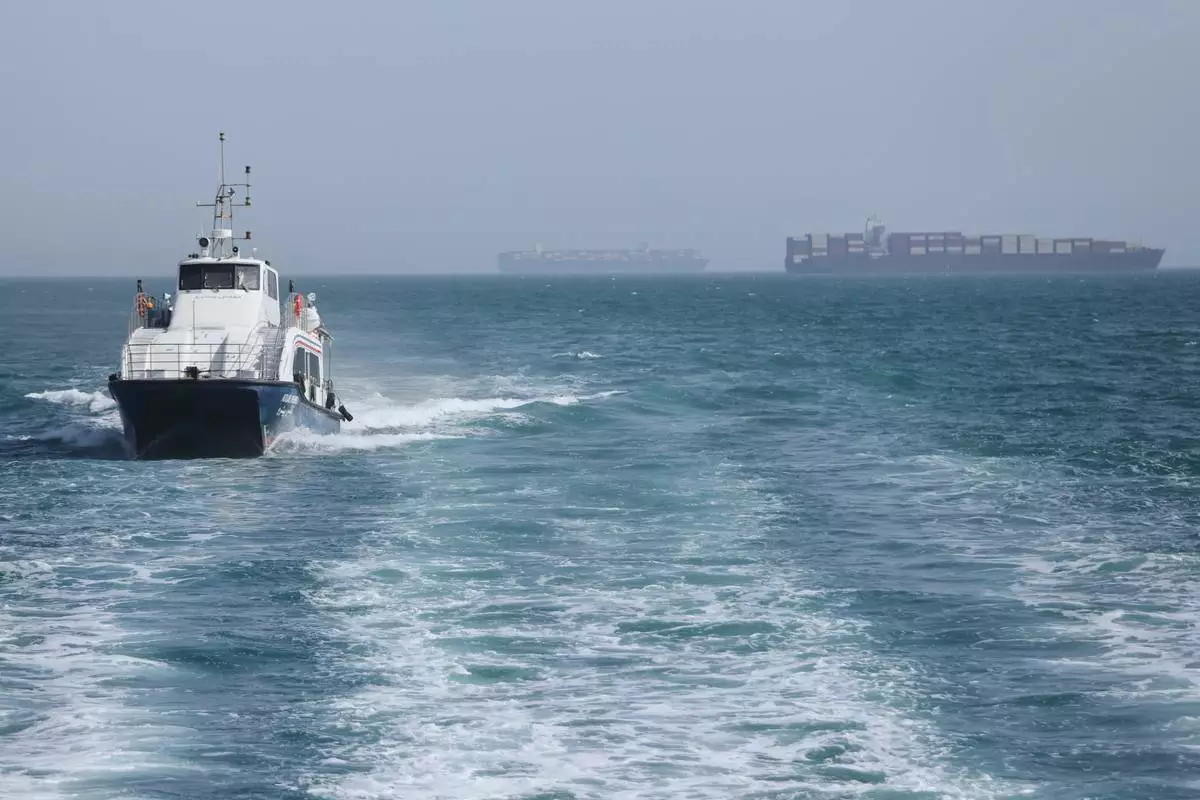
A patrol boat moves through the water as cargo ships sit at anchor in the Strait of Hormuz off Bandar Abbas, Iran, Saturday, May 2, 2026.(Amirhosein Khorgooi/ISNA via AP)
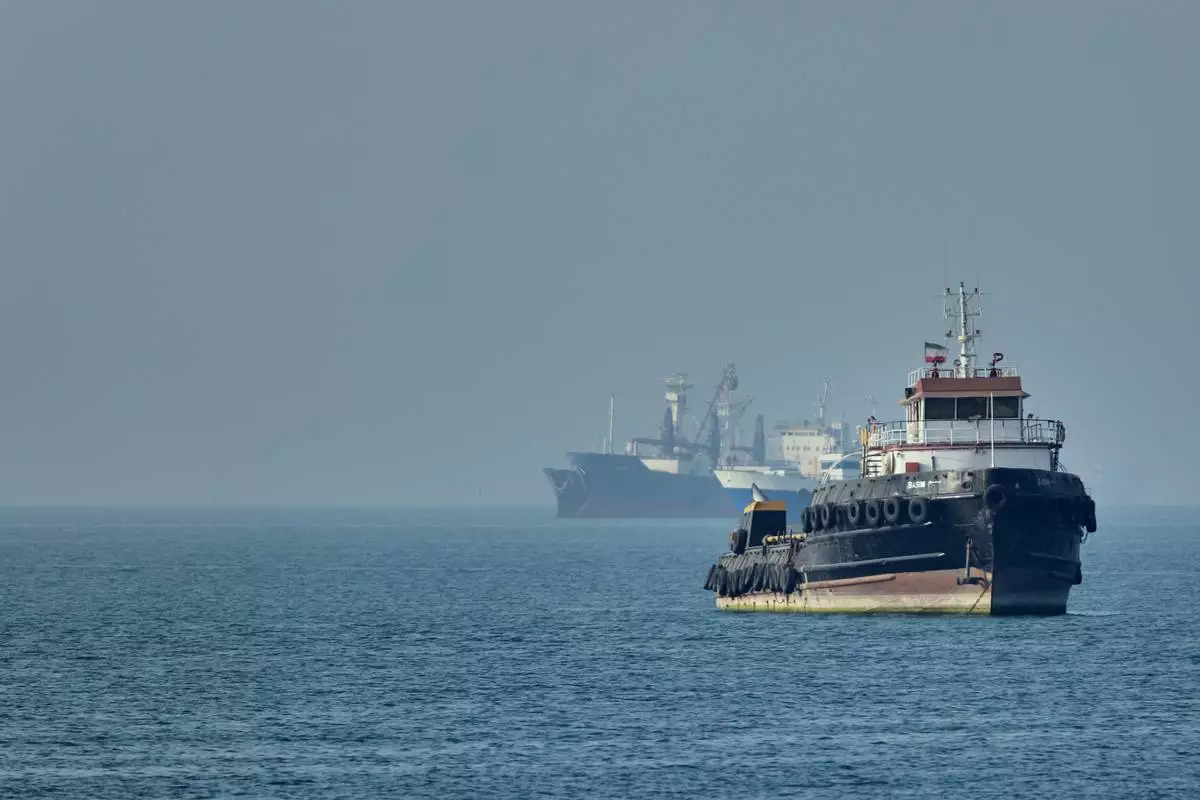
An Iranian tugboat floats in the foreground as cargo ships sit at anchor in the Strait of Hormuz off Bandar Abbas, Iran, Monday, May 4, 2026. (Amirhosein Khorgooi/ISNA via AP)

A container ship sits at anchor as a small motorboat passes in the foreground in the Strait of Hormuz off Bandar Abbas, Iran, Saturday, May 2, 2026. (Amirhosein Khorgooi/ISNA via AP)
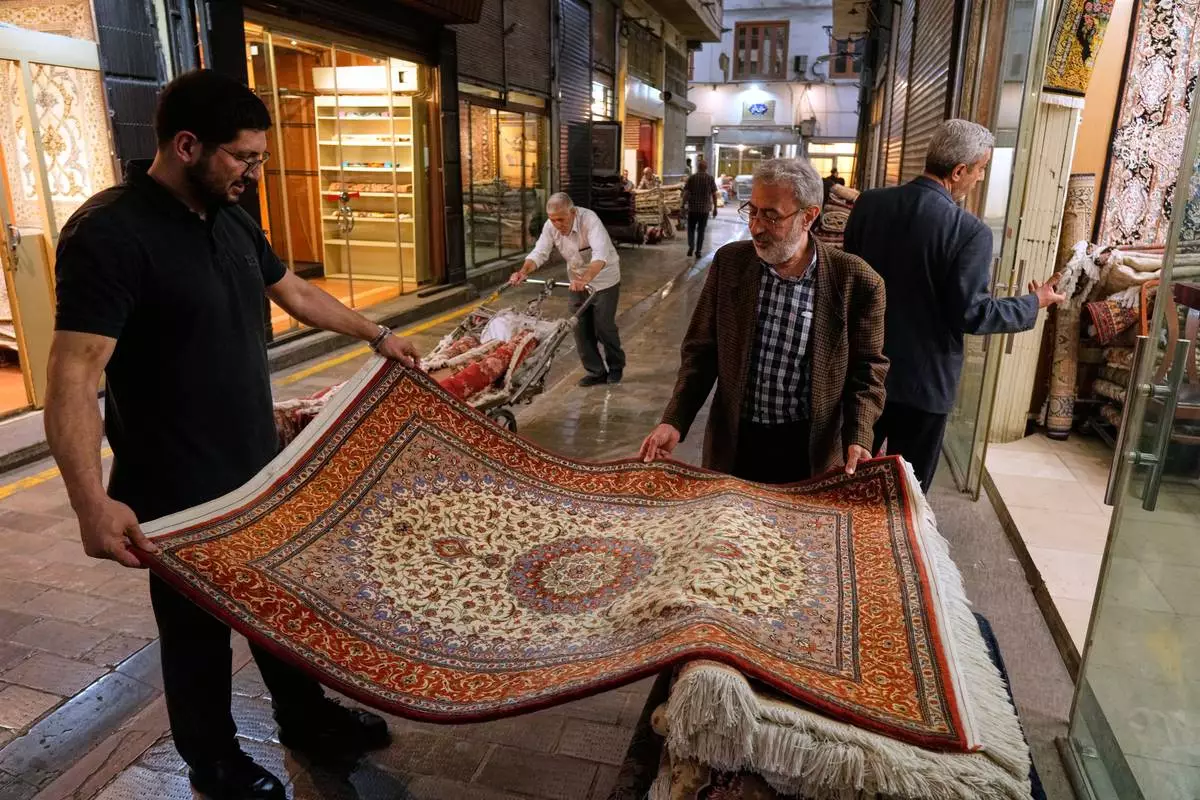
People view rugs at the Grand Bazaar in Tehran, Sunday, May 3, 2026. (AP Photo/Vahid Salemi)

A woman looks at jewelry in the window of a gold shop at Tehran's historic Grand Bazaar, Iran, Sunday, May 3, 2026. (AP Photo/Vahid Salemi)
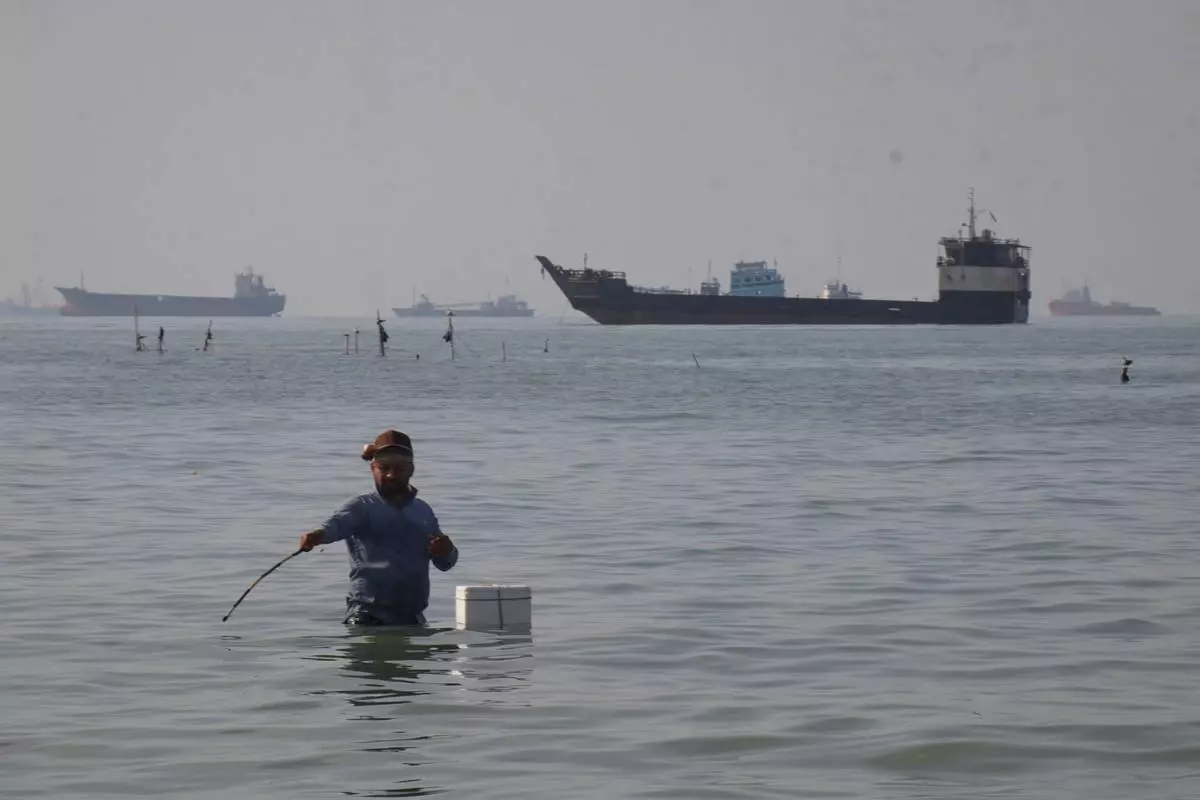
A man stands in the water, appearing to fish, as bulk carriers, cargo ships, and service vessels line the horizon in the Strait of Hormuz off Bandar Abbas, Iran, Monday, April 27, 2026.(Razieh Poudat/ISNA via AP)
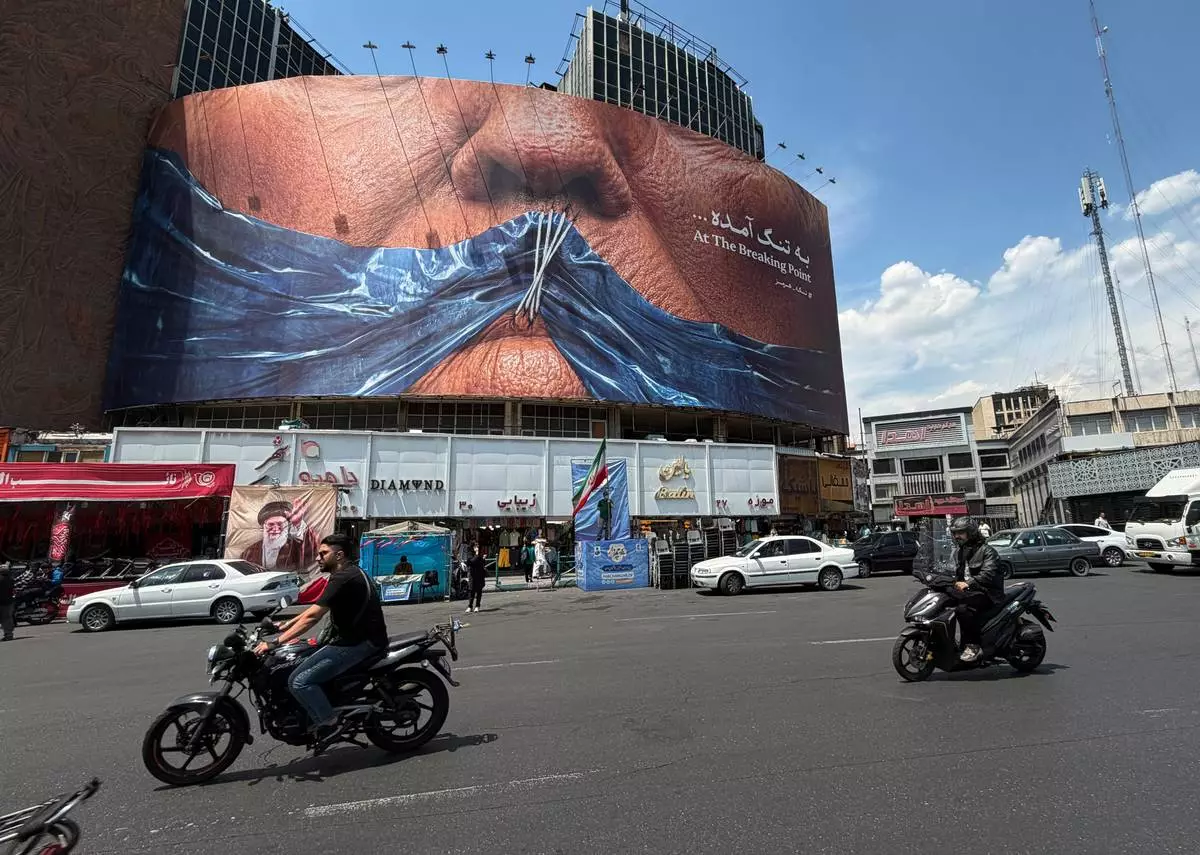
Vehicles drive past a billboard with graphic showing Strait of Hormuz and sewn lips of U.S. President Donald Trump in a square in downtown Tehran, Iran, Saturday, May 2, 2026. (AP Photo/Vahid Salemi)
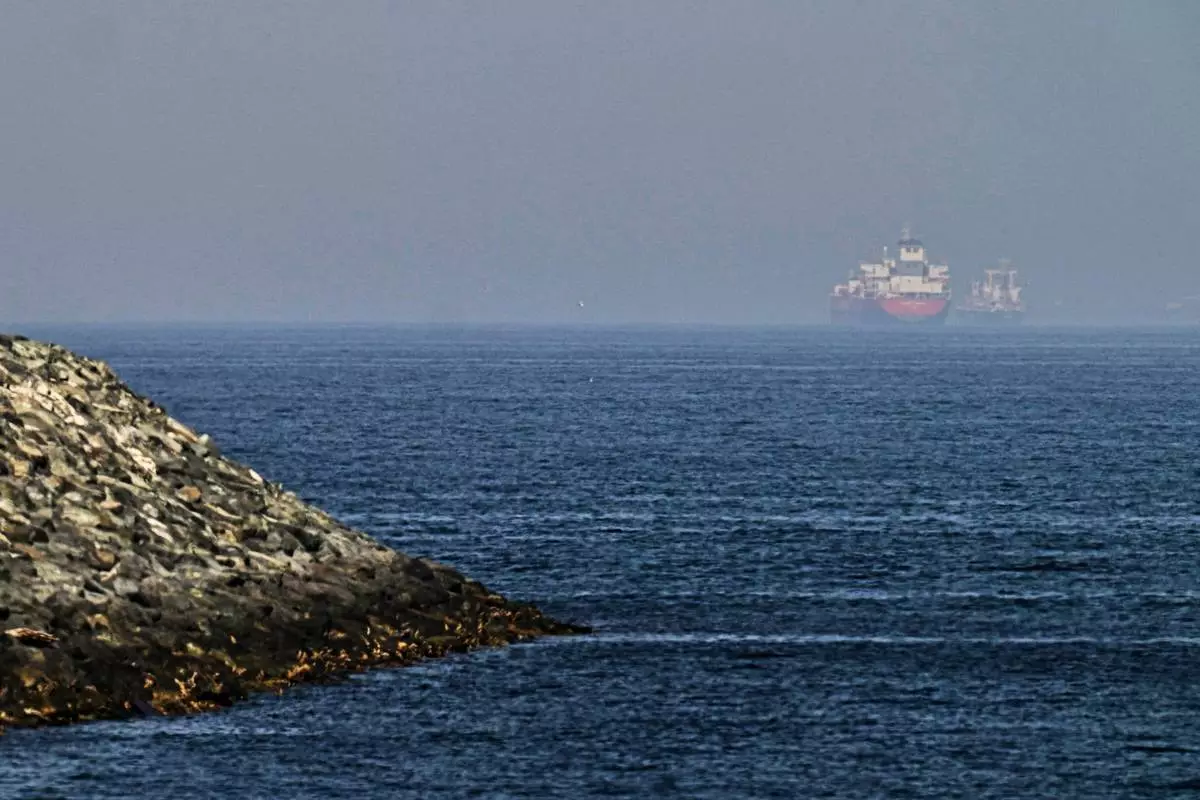
Cargo ships are seen at sea near the Strait of Hormuz, as viewed from a rocky shoreline near Khor Fakkan, United Arab Emirates, Friday, May 1, 2026. (AP Photo/Fatima Shbair)