Scenic areas across China are drawing hordes of tourists from near and far with rich folk cultures and colorful performances during the five-day May Day holiday, which will end on Tuesday.
During the holiday, tourist attractions in Hotan City, northwest China's Xinjiang Uygur Autonomous Region, has welcomed large crowds, with unique folk customs, culinary experiences, and traditional competitive performances proving particularly popular.
"Not only can I see such distinctive folk architecture and buy such exquisite handicrafts, but I can also experience the folk culture firsthand. I feel it's really worth it," said Ju Mei, a tourist from southwest China's Sichuan Province.
Recently, the Taoyangli historical and cultural block in Jingdezhen City of east China's Jiangxi Province, reputed as China's ancient porcelain capital, has been bustling with visitors.
Upon entering the scenic area, the historical heritage of the porcelain capital and the vibrant atmosphere of everyday life immediately envelop visitors.
As the core hub of Jingdezhen's ceramic culture, the block has fully preserved the ceramic production fabric, historic alleys, and traditional architecture of old Jingdezhen, perfectly showcasing the millennia-old heritage of the porcelain capital and its vibrant local folk customs.
During the holiday, people of the Miao ethnic group in Dehang Miao Village in Jishou City, central China's Hunan Province, beat Miao drums and perform ethnic Miao dances to warmly welcome guests from across the country.
Authentic Miao wedding custom performances, including dances performed by local girls, create a festive and lively atmosphere.
At a small Miao language classroom, tourists can ask the teachers questions on the spot and request them to teach them about the local culture.
At an outdoor market, the tourists can find workshops dedicated to weaving, wine-making, tofu-making, and other intangible cultural heritage crafts.
Not only can they try their hand at these crafts, but they can also listen to stories about the daily lives and production of the Miao people.
At tie-dye workshops, visitors can experience the entire tie-dyeing process firsthand and create their own works.
At a square, 56 drummers dressed in vibrant Miao attire take the stage to play the Miao drums that are arranged in neat rows.
After the performance, visitors are invited to join the stage and pick up drumsticks to strike the drums, immersing themselves in the lively festive atmosphere.
Walking along the village path deeper into the canyon, there is the Liusha Waterfall, with a drop of 216 meters, which is another major tourist draw.
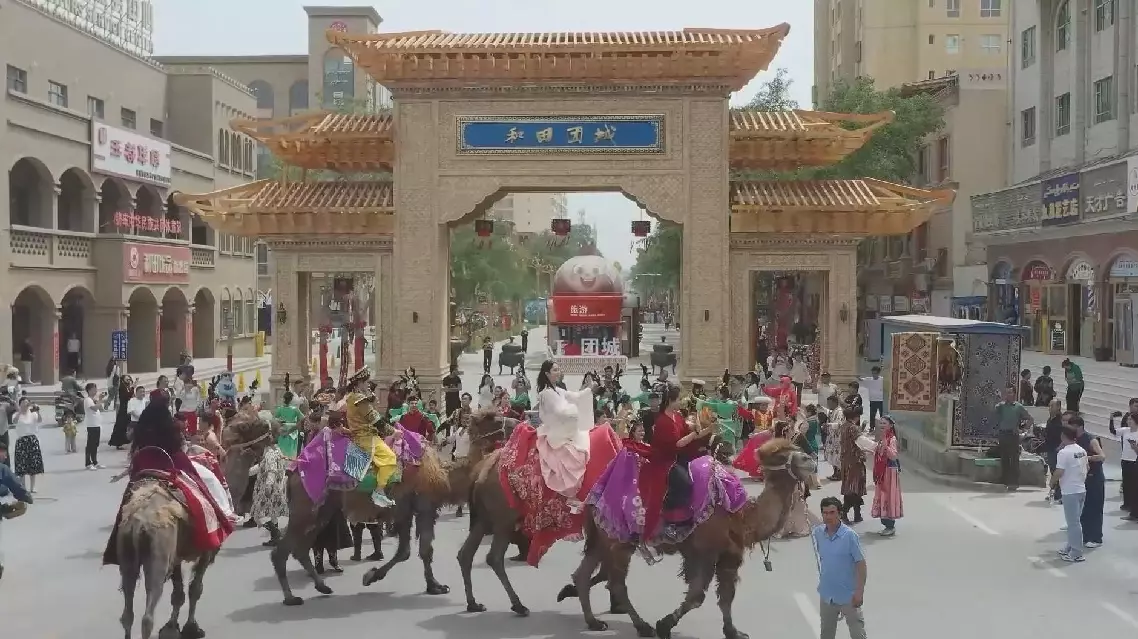
May Day holiday sees tourism boom as Chinese tourist attractions bustle with crowds