China's box office revenues including pre-sales during the May Day holiday had exceeded 600 million yuan (about 88 million U.S. dollars) by Monday afternoon, according to the latest data released by online platforms.
The five-day holiday from May 1 to 5 saw a rich supply of films that appealed to a diverse audience, including action, comedy, and animation features.
"I brought my kid to see a Chinese animated film. The production of Chinese animation nowadays is very meticulous. My kid's happy, and adults can actually enjoy it as well. It feels like a truly fulfilling holiday," said Xue Jinping, a moviegoer.
"Based on daily ticket sales during the holiday, the attendance rate was 30 percent to 40 percent higher than on regular weekends. Our cinema launched holiday movie-watching carnival events starting from the end of April, offering discounted packages, increasing screenings, and extending business hours -- all in an effort to provide a better viewing experience for audiences," said Wu Yubo, a member of staff at a cinema in east China's Jiangxi Province.
A VR cinema in Beijing was popular with families with children during the holiday, attracting nearly 2,000 visitors on Friday, the first day of the holiday. The audience wore VR headsets and held interactive props, allowing them a unique movie-watching experience.
The Tianfu Long Island Digital Cultural and Creative Park in Chengdu City in southwest China's Sichuan Province has brought together a number of movie industry businesses, covering the entire industrial chain from IP creation to special effects, animation production, and derivative product operation. Many of the most popular films of recent years were produced here.
"People from all walks of life can be found here. Over a cup of coffee, I can find friends in the same field and just chat," said Li Shujie, founder of Chengdu L Square Culture Communication Company.

China's holiday box office exceeds 600 mln yuan
Chinese mainland equity markets closed slightly lower on Friday, giving back some of the momentum from earlier multi-year highs as renewed geopolitical concerns in the Middle East weighed heavily on investor sentiment, according to a market analyst.
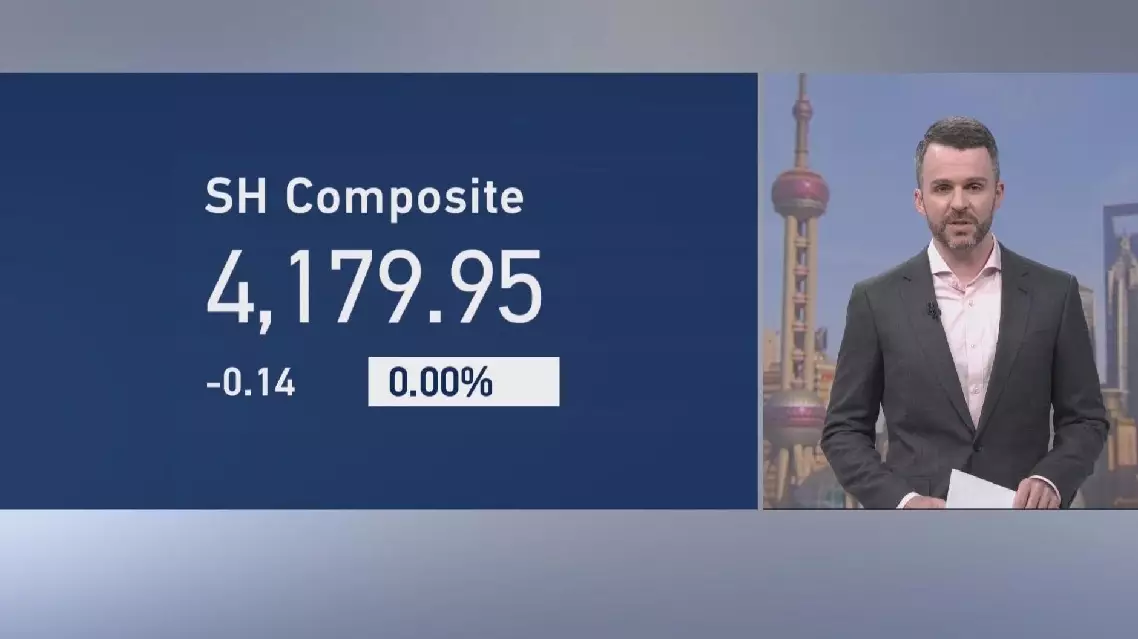
The benchmark Shanghai Composite Index ended the session flat at 4,179.95 points, while the Shenzhen Component Index slipped 0.5 percent to 15,563.80 points.
The ChiNext Index, tracking China's Nasdaq-style board of growth enterprises, lost 0.96 percent to close at 3,796.13 points.
Timothy Pope, a market analyst for China Global Television Network (CGTN), attributed the pullback to renewed tensions between Iran and the U.S.
"We had the Chinese mainland markets hitting all sorts of multi-year highs, particularly small-cap tech stocks, on Wednesday. But the war in the Middle East was back to dominate sentiment on Friday. The word that keeps being used to describe the current U.S.-Iran ceasefire is 'fragile', and despite strikes from both sides on Thursday, they insist it's holding. But the market's hopes for that one-page peace deal that the White House had been touting earlier in the week, they really have been dealt a serious blow. The Shanghai Composite Index ended the session pretty much flat. The Shenzhen Component lost about half of one percent, and the small-cap ChiNext board was off by almost 1 percent," said Pope.
He noted that chip stocks led the decline as investors locked in profits following strong midweek rallies.
"Chip stocks were the biggest decliners this session. Investors were really taking profits there. But they had very strong sessions, particularly as I said on Wednesday, and they were ripe for a bit of profit-taking. An index tracking semiconductor stocks managed to regain a little bit of ground by the end of the session, but it was still down more than 2.5 percent at the close. Energy stocks were also down, with any resolution of the U.S.-Iran war looking like a more and more distant prospect," said the analyst.
Chinese mainland shares retreat as Middle East tensions overshadow earlier gains