Skip to Content Facebook Feature Image

Thailand scraps 2001 maritime territory deal with Cambodia after years of deadlock

News

Thailand scraps 2001 maritime territory deal with Cambodia after years of deadlock
News

News

Thailand scraps 2001 maritime territory deal with Cambodia after years of deadlock

2026-05-05 19:26 Last Updated At:19:50

BANGKOK (AP) — Thailand's government on Tuesday terminated a 2001 Memorandum of Understanding with Cambodia that was meant to provide a bilateral framework for resolving overlapping maritime territorial claims.

Cambodia said it regretted the Thai Cabinet's decision but would continue trying to resolve the issue.

The two governments signed the agreement to peacefully pursue maritime boundary delimitation and provide a framework for jointly managing marine resources in accordance with international law. But they failed to make any progress after five rounds of talks over the past two decades.

The decision to terminate, which does not legally take effect until Thailand sends a formal notification letter to Cambodia, ended hopes in both countries that resolving the competing claims would allow exploitation of offshore oil and gas resources in the disputed area.

Thailand’s decision to abrogate the agreement comes after a sharp deterioration of relations and armed combat with Cambodia last year. The countries fought over competing claims to territory along the land border in July and December. Several dozen civilians and soldiers on both sides were killed and hundreds of thousands of people displaced.

A fragile ceasefire was agreed in late December, but tensions continue with sporadic incidents and large-scale deployment of military forces.

The fighting triggered renewed interest in border issues and safeguarding Thai territory, making nationalism a major issue affecting domestic Thai politics. Prime Minister Anutin Charnvirakul and his Bhumjaithai Party included terminating the agreement among its promised policies in this year's election campaign.

The memorandum termination is unrelated and will not impact the current border situation, Anutin said after the Cabinet meeting Tuesday, adding that negotiations over the maritime territory issue are expected to continue in other frameworks such as the United Nations Convention on the Law of the Sea.

Thai government spokesperson Rachada Dhnadirek likewise stressed the termination represents an adjustment of the framework for cooperation, not a termination of relations or negotiations.

Thailand will continue discussions with Cambodia, but proposes to shift to mechanisms under the U.N. Convention, which is clearer and more comprehensive and systematic to allow maritime disputes to be resolved effectively, she said.

Cambodia Foreign Minister Prak Sokhonn, speaking in the capital Phnom Penh, expressed regret and called the Thai decision “a departure from the spirit and political will that enabled our two countries to establish a framework for peacefully resolving these issues in accordance with international law.”

Prak Sokhonn declared Cambodia will pursue compulsory conciliation under the U.N. framework, which “reaffirms its commitment to resolving maritime disputes peacefully and in accordance with international law.”

Prime Minister Hun Manet said in a socia media post, “Cambodia’s decision reflects our sincere hope that both countries can reach a just and lasting solution in line with international law, allowing our peoples to live together in peace, stability, and harmony. ”

Sopheng Cheang in Phnom Penh, Cambodia, contributed to this report.
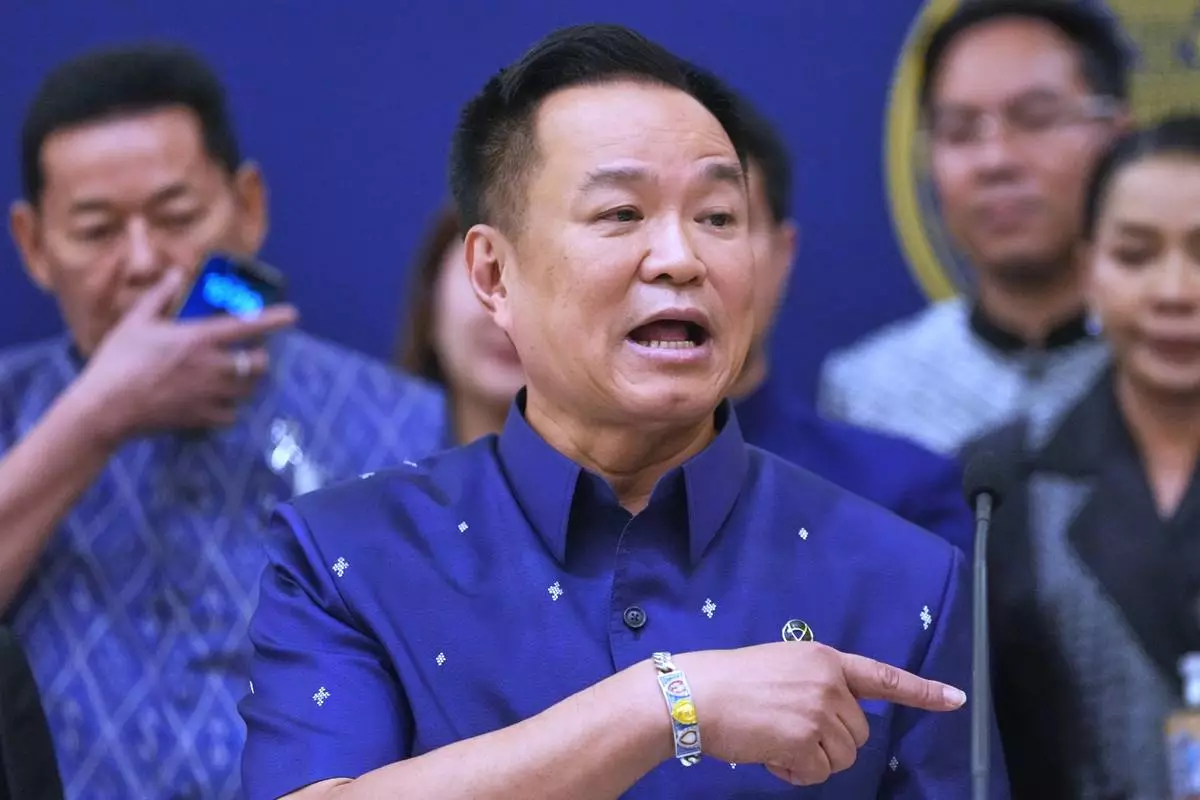
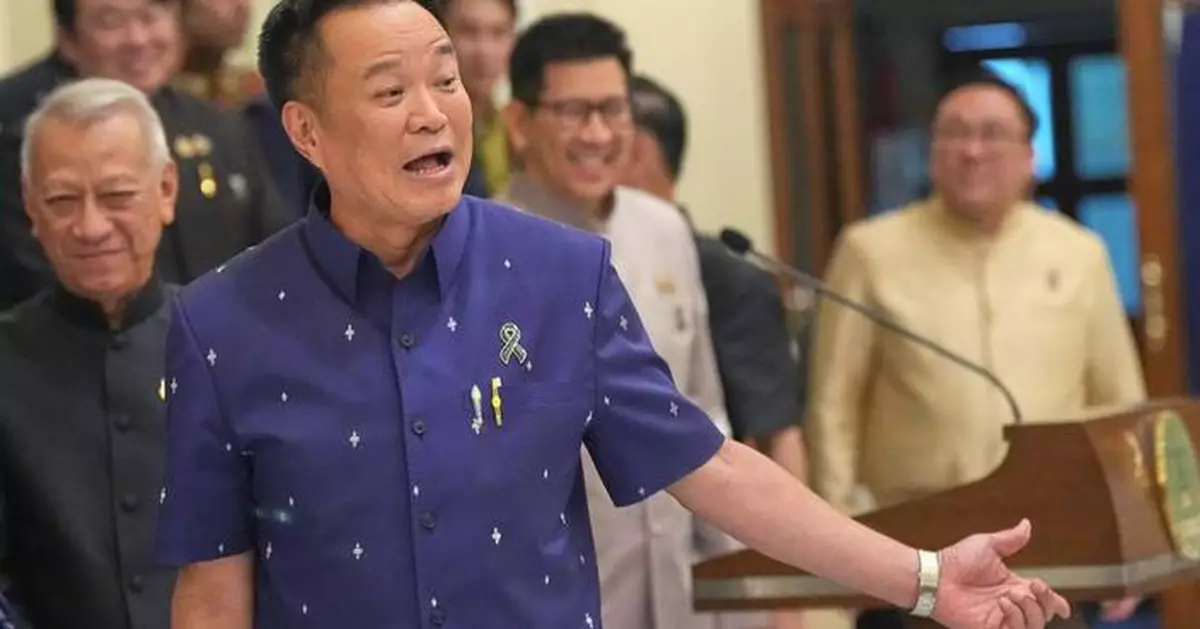
Thailand's Prime Minister Anutin Charnvirakul speaks during a news conference in Bangkok, Thailand, Tuesday, May 5, 2026. (AP Photo/Sakchai Lalit)
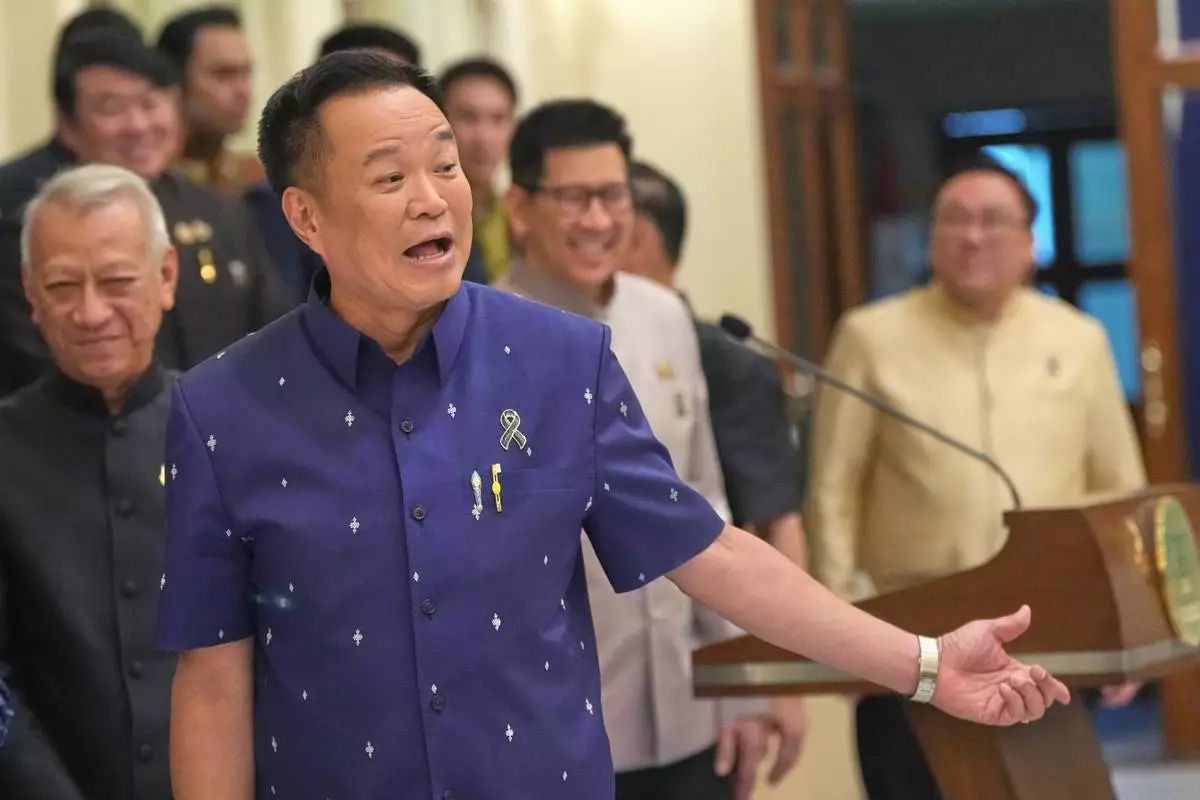
Thailand's Prime Minister Anutin Charnvirakul speaks during a news conference in Bangkok, Thailand, Tuesday, May 5, 2026. (AP Photo/Sakchai Lalit)

Thailand's Prime Minister Anutin Charnvirakul speaks during a news conference in Bangkok, Thailand, Tuesday, May 5, 2026. (AP Photo/Sakchai Lalit)

Thailand's Prime Minister Anutin Charnvirakul speaks during a news conference in Bangkok, Thailand, Tuesday, May 5, 2026. (AP Photo/Sakchai Lalit)

CAIRO (AP) — The Sudanese government accused Ethiopia of being behind recent drone attacks on sites including Khartoum airport and recalled its ambassador on Tuesday.

A military spokesperson in Sudan said the government has evidence that four drone strikes that have happened since March 1 came from neighboring Ethiopia’s Bahir Dar airport. It also accused the United Arab Emirates of supplying the drones.

The Sudanese military has been at war with a paramilitary group known as the Rapid Support Forces since April 2023, when the RSF stormed the capital. The battles have now shifted towards more drone warfare concentrating in the Kordofan and Blue Nile states.

Sudan has long accused the UAE of supporting the RSF, and U.N. experts and rights groups have also accused it of providing arms to the group. The UAE has rejected the accusation.

The most recent attack came on Monday and targeted the airport in Sudan's capital, Khartoum. The previous attacks were launched towards the Sudanese states of Kordofan, Blue Nile and White Nile.

Army spokesman Brig. Gen. Asim Awad Abdelwahab said at a Tuesday press conference that the government had analyzed data and evidence from a drone that entered Sudanese airspace heading for El-Obeid in Kordofan state on March 17 and found that it had originated from the United Arab Emirates and took off from Ethiopia.

"We do not want to initiate aggression against any country, but whoever attacks us will be met with a response,” Sudanese Foreign Minister Mohi al-Din Salem said in the joint presser.

Ethiopia's foreign ministry in a statement Tuesday said it “rejects (the) baseless accusations.” It accused Sudan of violating its territorial integrity by supporting rebels in the northern Tigray region but said it had exercised restraint from publicizing the violations due to the ties between the two countries.

“It is evident that these hostile actions, as well as the recent and earlier series of allegations by officials of Sudanese armed forces, are undertaken at the behest of external patrons seeking to advance their own nefarious agenda,” the statement said.

Sudan's airport’s gradual reopening last year marked a key step in efforts to restore normal life in Khartoum, with ministries and millions of people starting their return back to the capital and surrounding states. The U.N migration agency said that around 4 million people have returned back to Sudan.

Drone attacks have happened frequently in the war, but Khartoum was considered largely safe until a string of attacks shattered the sense of calm in the capital and central Sudan.

A drone strike Saturday in Omdurman, the capital's sister city, killed five people in a civilian bus and another strike Sunday in central Sudan state of Al Jazirah killed family members, of Abu Agla Kaikal, a commander with the Sudan Shield Forces, a group allied with the Sudanese military, who defected from the RSF earlier in the war.

At least 59,000 people have been killed in the war, according to Armed Conflict Location & Event Data, an independent conflict-monitoring body. Aid groups, however, say the true toll could be much higher, as access to areas of fighting across the vast country remains limited.

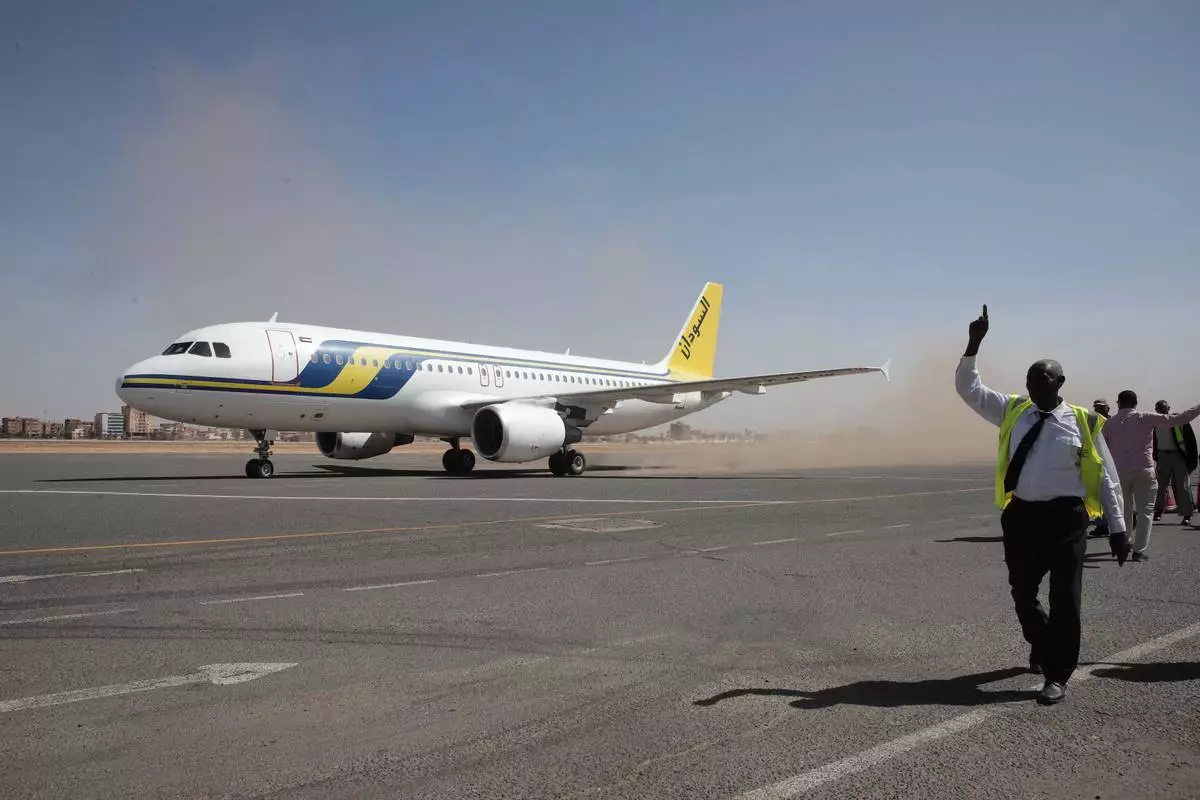
FILE - Khartoum International Airport ground workers greet the first domestic Sudan Airways flight landing from Port Sudan, in Khartoum, Sudan, on Feb. 1, 2026. (AP Photo/Marwan Ali, File)

FILE - Khartoum International Airport ground workers greet the first domestic Sudan Airways flight landing from Port Sudan, in Khartoum, Sudan, on Feb. 1, 2026. (AP Photo/Marwan Ali, File)

Recommended Articles