ROCHESTER, N.Y.--(BUSINESS WIRE)--May 5, 2026--
The pace of job growth among U.S. small businesses showed an increase in April, marking the second consecutive month of gains as employers continued to demonstrate resilience amid ongoing economic uncertainty, according to the latest Paychex Small Business Employment Watch. The national jobs index, which reflects employment growth in U.S. small businesses with fewer than 50 employees, rose 0.35 percentage points from March to April (99.16), the largest one‑month increase since February 2025.
This press release features multimedia. View the full release here: https://www.businesswire.com/news/home/20260505276771/en/
Hourly earnings growth for U.S. small business workers remained steady and below three percent for the 18th consecutive month in April at 2.71%. Weekly hours worked growth (0.18%) was positive for the second consecutive month, a trend that has only happened twice in the last five years.
“Despite facing an evolving set of challenges and an increasingly uncertain macroenvironment, our latest employment data from U.S. small business clients indicate some encouraging signs,” said John Gibson, Paychex president and CEO. “Consecutive gains in the pace of employment and weekly hours worked growth in March and April demonstrate remarkable resilience among small business owners. We remain focused on supporting our clients as they manage both complexities and opportunities, including the 2025 tax cuts, so they are well positioned for long‑term success.”
“Overall employment across our client base continues to be stable,” Gibson added. “While moderate employment growth among Paychex clients with 50 or more employees remains consistent, smaller clients experienced an increase in the job growth rate during March and April.”
Jobs Index and Wage Data Highlights
About the Paychex Small Business Employment Watch
Since 2014, the Paychex Small Business Employment Watch has been a trusted source of employment trends for U.S. small businesses with fewer than 50 employees. The Employment Watch website offers interactive charts and historical data across the report’s two key components – the jobs index and wage data – as well as the methodology for both analyses. Visit the Bloomberg Terminals or subscribe to receive monthly alerts with the latest data.
*Information regarding the professions included in the industry data can be found at the Bureau of Labor Statistics website.
About Paychex
Paychex, Inc. (Nasdaq: PAYX) is the digitally driven HR leader that is reimagining how companies address the needs of today’s workforce with the most comprehensive, flexible, and innovative HCM solutions for organizations of all sizes. Offering a full spectrum of HR advisory and employee solutions, Paychex pays 1 out of every 11 American private sector workers and is raising the bar in HCM for approximately 800,000 customers in the U.S. and Europe. Every member of the Paychex team is committed to fulfilling the company’s purpose of helping businesses succeed. Visit paychex.com to learn more.
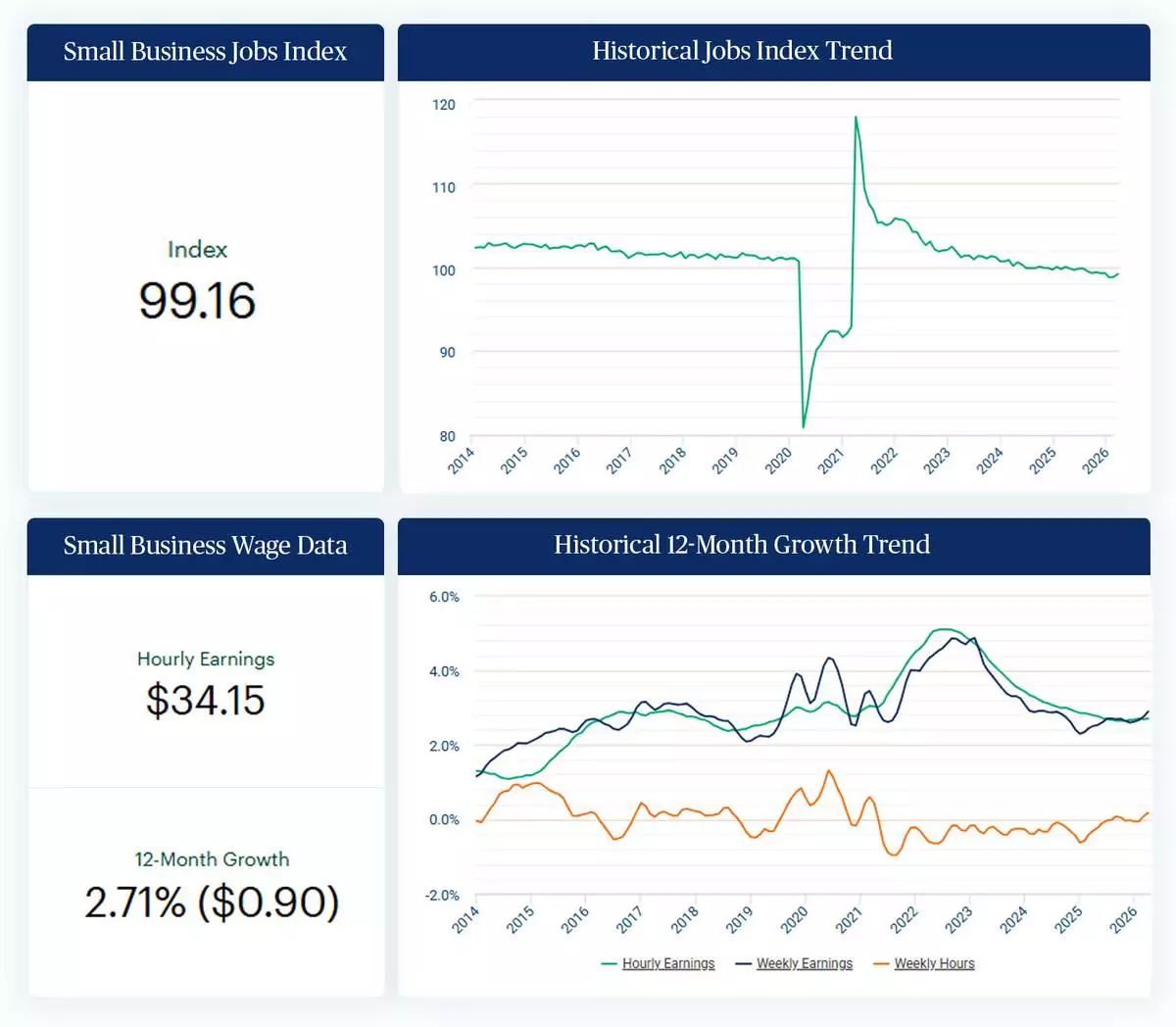
The Paychex Small Business Employment Watch saw the pace of job growth increase for the second month in a row in April.
FORT COLLINS, Colo. (AP) — While some Americans were gazing at tulips and mowing lawns, people in Colorado and Wyoming were getting out their snow shovels.
A late snowstorm swept over the Rocky Mountains and into the High Plains on Tuesday, bringing heavy, wet accumulation north of Denver into southeastern Wyoming.
In Fort Collins, Colorado, heavy snow fell throughout the day on ground that was still too warm for significant accumulation. Slushy snow clung to leaves, grass and flowers, and homeowners shut off yard sprinklers lest sub-freezing temperatures damage their plumbing.
More accumulation was on the way with temperatures expected to keep dropping overnight.
Boulder, nestled against the mountains, could get upward of a foot (30 centimeters) of snow. Up to 8 inches (20 centimeters) was possible in the Denver area into Wednesday.
Even as Denver imposed lawn-watering restrictions to address what have been low mountain snows, the city was facing what may be its biggest snowfall of the season.
“We just had our driest winter on record,” Kenley Bonner, a meteorologist in the weather service’s Denver office, said. “We were kind of joking earlier in the season that winter’s not going to come until spring, and it did exactly that.”
The snow was expected to continue into Wednesday, followed by more plunging temperatures before warmer temperatures return Thursday, the National Weather Service said.
Accumulated snow could snap tree branches and knock out power, Bonner said. Utilities were preparing, with Xcel Energy putting 165 employees on standby across the state.
Highways remained open Tuesday for the time being. Interstate 80 across southern Wyoming, including a high-elevation stretch between Cheyenne and Laramie that closes often, was open but webcams showed heavy snowfall.
Others along northern Colorado mountain highways also showed deteriorating conditions.
The forecast is somewhat unusual but not unheard of.
Denver typically sees its last snowfall around April 28, although May storms do happen. The “Mile High City” recorded half an inch of snow (1.2 centimeters) on May 21, 2022, while nearby Boulder got 4.5 inches (11.4 centimeters).
Historically, Denver has seen at least five May storms with snowfall over 10 inches (25 centimeters). The biggest, in 1893, dropped 15.5 inches (39.3 centimeters). The city's most recent double-digit snow was May 25-26, 1950, with 10.7 inches (27 centimeters).
A light dusting on June 2, 1951, was the latest time in the year it snowed.
The worsening storm caused the Colorado Rockies to reschedule two games against the New York Mets. But that happens more often than not during Denver's spring baseball season, including four times in 2015, according to MLB.
May snows are even more common in the Wyoming capital of Cheyenne, which is almost 1,000 feet (300 meters) higher than Denver and cooler year-round. Wyoming is also windier than Colorado, pushing snow into drifts that must be re-plowed if gusts persist.
April was warmer than usual and short on precipitation, with Denver missing an inch of rain (2.5 centimeters) and 2.8 inches of snow (7 centimeters) last month compared to normal.
But one storm won't solve the West's water problems.
A report from the National Drought Mitigation Center said recent precipitation helped boost topsoil moisture and reduced irrigation demands, but hasn't changed a “mostly bleak” water outlook heading into the summer.
Wildfires also thrive in the dry conditions. Firefighters across the West have been turning to artificial intelligence and other technology to catch small fires before they expand.
The unsettled weather isn’t limited to the Rockies.
Thunderstorms are expected from northeast Texas into western Tennessee, with Arkansas facing the greatest risk of large hail, damaging winds and possible tornadoes, according to the Storm Prediction Center. Isolated strong storms could also reach parts of the Northeast.
McCormack reported from Concord, New Hampshire.
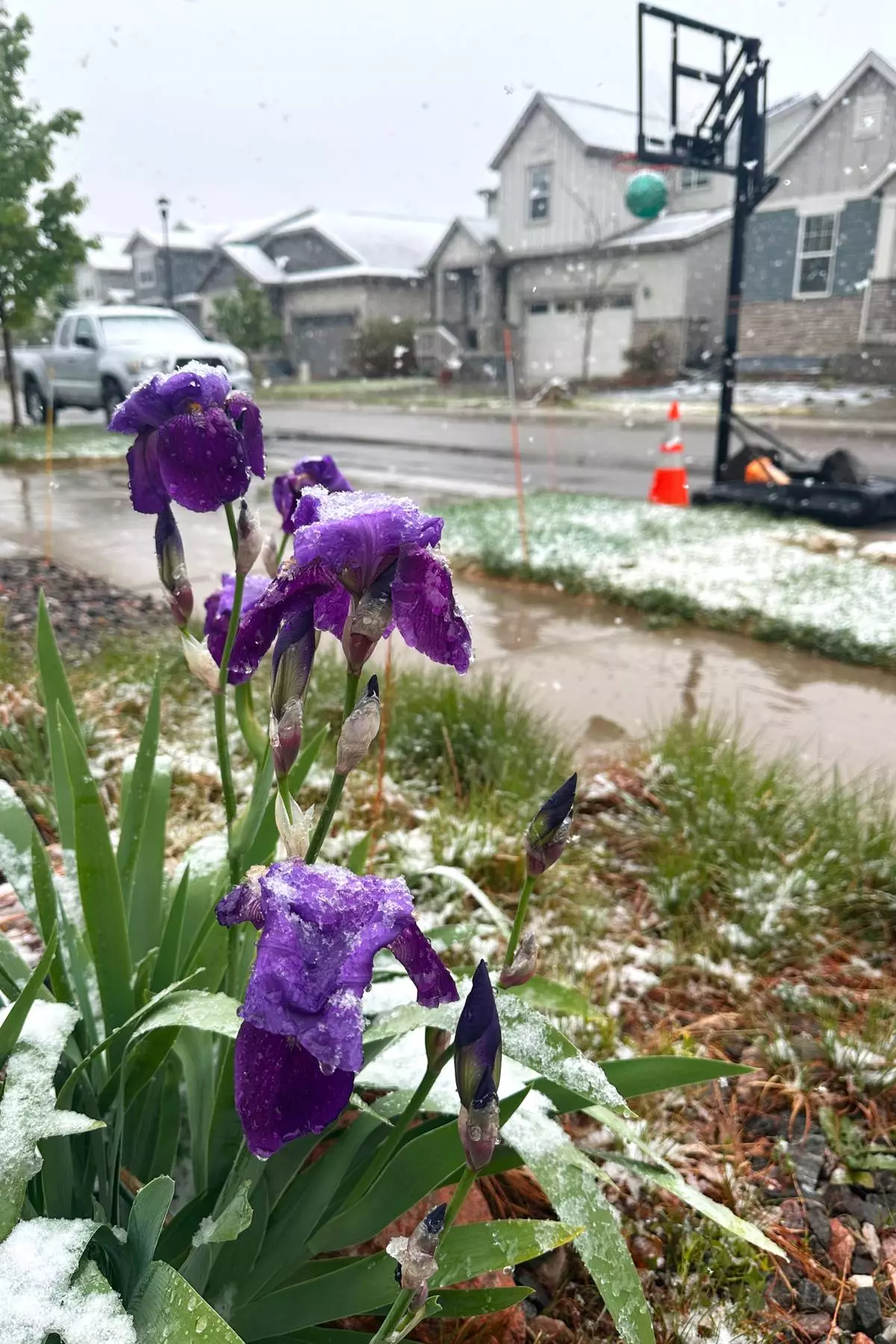
Wet snow falls on flowers Tuesday, May 5, 2026, in Fort Collins, Colo. (AP Photo/Mead Gruver)

Wet snow falls on flowers Tuesday, May 5, 2026, in Fort Collins, Colo. (AP Photo/Mead Gruver)

Wet snow falls on flowers Tuesday, May 5, 2026, in Fort Collins, Colo. (AP Photo/Mead Gruver)