RESEARCH TRIANGLE PARK, N.C.--(BUSINESS WIRE)--May 5, 2026--
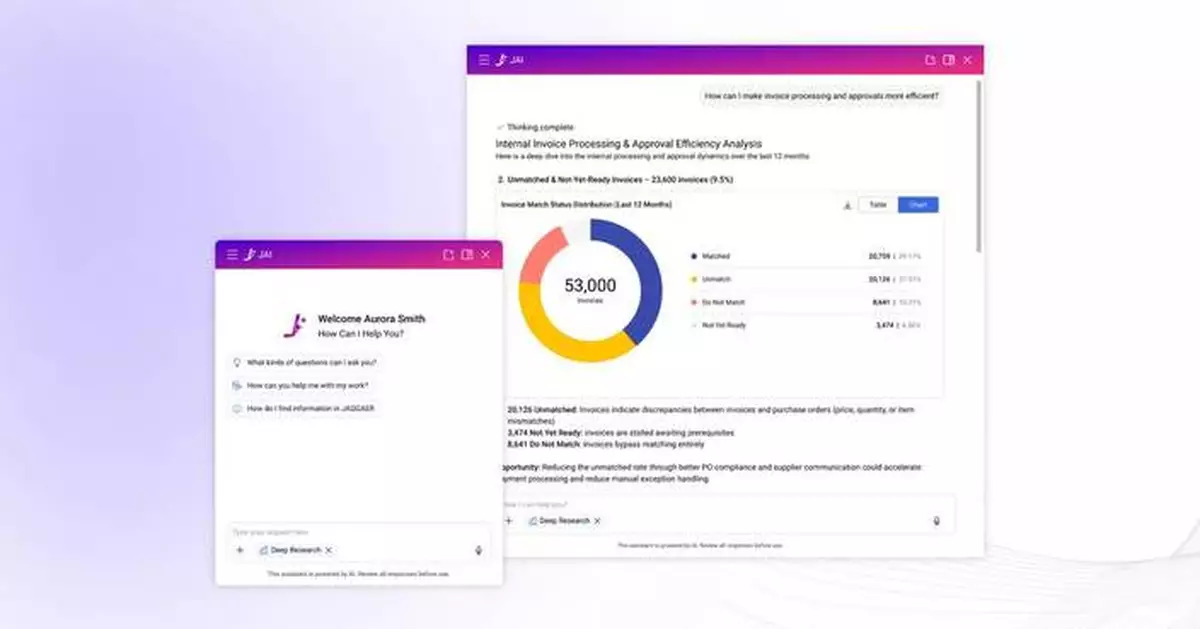
JAGGAER, a global leader in procurement software, today officially launched JAI — a new AI-powered assistant designed to make the daily work of buying goods and services faster, smarter, and less frustrating.
This press release features multimedia. View the full release here: https://www.businesswire.com/news/home/20260505580618/en/
Early results from customers who have already been using JAI tell a striking story: an expected 50% reduction in support tickets in year-one, time savings across more than 40 different workflows. And in some cases, adoption growing by as much as 1,000% week-on-week, as employees quickly discover how useful it is.
Think of JAI as a knowledgeable colleague who is always available, knows your company's purchasing rules inside and out, and can answer any question about your spending, suppliers, or contracts in seconds. No waiting, no help desk tickets, no switching between systems.
Most companies struggle with the same problem: employees asking basic questions like "Do I need approval to buy this?" or "Who is our preferred supplier for office equipment?” Today, those questions often mean opening a ticket, waiting for a response, and interrupting someone's day. JAI fixes that.
Employees simply type their question — in plain language, in any of 28 languages — and JAI gives them an accurate, policy-compliant answer immediately. It knows your company's rules because it is grounded specifically on your own documents and data, not on the internet at large. That means the answers it gives are relevant, reliable, and based on your actual policies. It also respects the same security and access controls already in place in the JAGGAER system, meaning people only see what they are supposed to see.
Beyond answering questions, JAI can also dig deep into spending data to surface insights that used to take analysts hours to pull together. Things like identifying where money is being spent outside approved channels, which suppliers carry the most risk, or where costs could be reduced.
JAI is available today and can be set up on the same day a company decides to use it.
"Procurement has always been about making smart decisions with limited time and information. JAI changes that equation entirely. It is embedded into the core platform and actually earns trust - it knows your business, respects your rules, and gives you answers you can act on. This is just the beginning."— Andrew Roszko, CEO, JAGGAER
A large financial institution describes its initial experiences with JAI: “As a financial institution, we're beholden to very high standards from both a regulatory and a contractual standpoint. In practice, this means that Supply Chain teams need to reference and adhere to a complex set of principles. These are set out across different guides that range from risk standard handbooks to sourcing guides, often located in different places or outside the internal system, making the reference process difficult.
“JAI changes that. By creating a unified view of all these standards, users can find the answers to their questions, rapidly and efficiently, without exiting the system. We’re confident in improvements on ticketing times and audit preparation in the future. But the time savings and accuracy of the detail we’re seeing in the Early Access phase is already a huge win.”
About JAGGAER:
JAGGAER is a global leader in enterprise procurement and supplier collaboration, and the catalyst for enhancing human decision-making to accelerate business outcomes. We help organizations to manage and automate complex processes while enabling their highly resilient, accountable, and integrated supplier base. Backed by 30 years of expertise, our proven AI-powered industry-specific solutions, services, and partnerships form JAGGAER One, serving direct and indirect, upstream, and downstream, in settings demanding an intelligent and comprehensive source-to-pay solution. Our 1,200 global employees are obsessed with helping customers create value, transform their businesses, and accelerate their journey to Autonomous Commerce. www.jaggaer.com
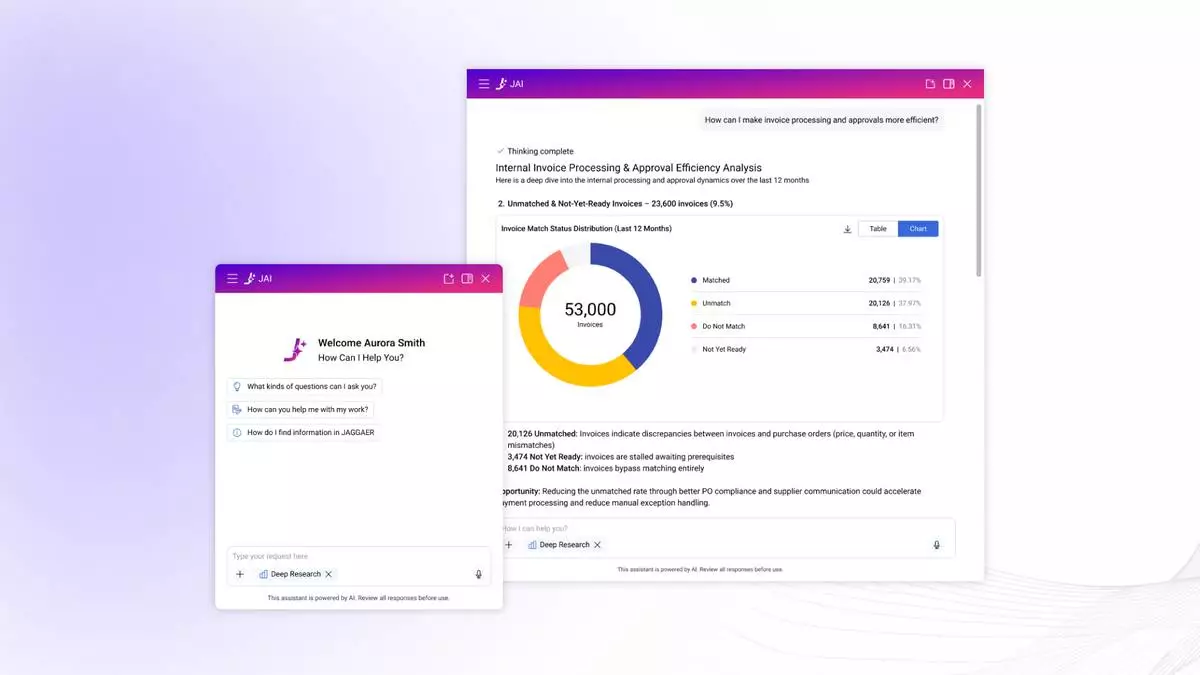
JAGGAER Launches JAI: The AI Assistant That Helps Companies Buy Smarter
CONCORD, N.H. (AP) — In 1985, a 13-year-old girl in New Zealand spotted a pair of purple, lip-shaped sunglasses in “Young Miss” magazine. In March, I traveled 9,000 miles from New Hampshire to deliver them to her, finally fulfilling my pen pal’s decades-old request.
International Youth Service, the agency that matched us up 40 years ago, has long since folded, but other pen pal programs have survived — or even began during — the internet age. And even though New Zealand's postal system has reduced home delivery days, Denmark has stopped delivering letters altogether and Canada is moving in that direction, some see signs of a letter-writing resurgence.
“The hunger is there,” said Rachel Syme, a writer for The New Yorker magazine who created a pen pal program during the COVID-19 pandemic and later published a book encouraging others to take up handwritten correspondence.
More than 15,000 people signed up for Syme’s Penpalooza project in 2020, and she still gets hundreds of takers when she coordinates a new round of matchmaking every few months. She also gets requests for pen pals at book signings for “Syme’s Letter Writer – A Guide to Modern Correspondence,” and the stationery stores she frequents in New York City are always crowded with customers.
“People are very interested in physical, analog things right now,” she said. “I think it really has an appeal especially to a younger generation who grew up with a phone glued to their hand, to do something that’s more tactile, slower, more intentional, more mindful, but also just disconnected from the internet in every way.”
I was still 10 years away from connecting to the internet when I opened my first aerogramme from New Zealand, a sheet of pale blue paper that served as both writing surface and envelope adorned with a 45-cent stamp. That missive ended with a formal “Yours (hopefully) Molly Nunns,” but within a year, she was signing off with “Lots and lots of love” or “Your friend forever.”
In letter after letter, Molly drew little hearts on the tails of y’s in both of our first names, asked for updates on my middle school crushes and shared stories about her classmates and family. I could clearly picture her life, though it was hard in snowy New Hampshire to imagine celebrating Christmas during the summer.
“I am thinking of you heaps and I wonder what you are doing because you’re a SUPER pen friend and I hope that we never stop writing to each other and that one day we will get to meet each other,” she wrote in early 1986.
Julie Delbridge, 65, fostered similar friendships after joining International Pen Friends as a teenager in 1979. Writing to pen pals in more than a dozen countries from her home in Australia was such a positive experience that she began working for the organization as an adult and took over as its president in 2001. While she loved sharing photos, postcards and treats with her pen friends, it also was a therapeutic experience at a time when her parents were going through a bitter divorce.
“It was a pastime that I totally immersed myself into in a positive way and gained a lot of enjoyment from,” she said. “There was an abundance of non-judgmental friendship, fun and different perspectives.”
Over its 59-year history, IPF has provided pen pals to more than 2 million people ages 8 to 80+, she said. Membership peaked in the late 1990s but surged again during the pandemic, and this year, there’s been an increase in people ages 21-26 joining.
In 2021, the U.S. Postal Service sent cards and envelopes to 25,000 elementary school classrooms for a pen pal project, but older students also are putting pen to paper.
In Texas, a group of medical students created an anonymous pen pal program to promote peer support and personal reflection. At Villanova University, professor Kamran Javadizadeh requires students to send letters to each other as part of a literature class called “Letters, Texts, Twitter” that examines different forms of epistolary communication in literature.
“I make them put pieces of paper in envelopes and take them to the post office and send them to each other even though they could just as easily hand it to the person in class,” he said. “Something is lost when you have instantaneous communication. So I’m interested in the relationship between synchronous kinds of intimacy and asynchronous forms of intimacy.”
Gordon Alley-Young, dean of communications at New York’s Kingsborough Community College, believes letters are like vinyl records — they’re coming back into fashion as young people explore a tangible medium from the past. He has both studied the history of letter writing and used it to teach students empathy.
In an interpersonal communication class, he noticed that students analyzing case studies about relationship problems offered matter-of-fact, almost insensitive diagnoses. But when he re-wrote the case studies in the form of letters from friends and had students respond in kind, they began sharing their own feelings and offering more open-ended advice.
“We really want students to connect to what they’re looking at,” he said. “And letter writing encourages that.”
An app called Slowly seeks to combine modern technology with the old-fashioned anticipation inherent to the pen pal relationship. Users send messages digitally, but delivery is delayed from an hour to several days to mimic snail mail.
“This delay naturally encourages longer, more thoughtful messages because you wouldn’t just say ‘hi’ if you know you have to wait days for a reply,” said cofounder JoJo Chan.
Since 2017, the app has gained 10 million users in more than 160 countries, most in their 20s and 30s. One user said he was curious about pen pals after hearing about them from his grandparents, Chan said.
“Slowly offers a convenient way and a modern way for them to try that experience,” she said.
Syme, however, is all about the tangible aspects of letter writing. Her book includes advice on paper and pens plus all kinds of goodies that can be tucked into envelopes.
“There is joy to be had once you fully embrace the medium’s outdated extravagance,” she writes.
But letter writing, she said in an interview, is like a swimming pool, both shiny and deep. The frippery and embellishments don’t matter in comparison to what you actually put on the page.
“That’s where I think it can get very real, very quickly,” she said.
Molly and I had been writing for 15 years by the time we met in person, spending a day together in New York when she toured the U.S. in May 2000. We crossed paths in London a few years later, and in 2018, she and her family visited New Hampshire.
“Who would have thought when we started writing in 1985 that one day you’d be sitting here? It’s quite amazing,” she said during my recent visit. “We’ll always have a special connection, I’m sure.”
In addition to the sunglasses, I also gave Molly a bound book of 200 pages of her letters that I scanned and printed. At age 13, I never could have imagined that someday I’d have searchable PDFs of our teenage scribblings that could be summarized in 10 seconds by artificial intelligence. But what amazes me more is the depth of the connection I felt during our tearful airport goodbye.
We will for sure meet again. Until then, lots and lots of love, Holly.
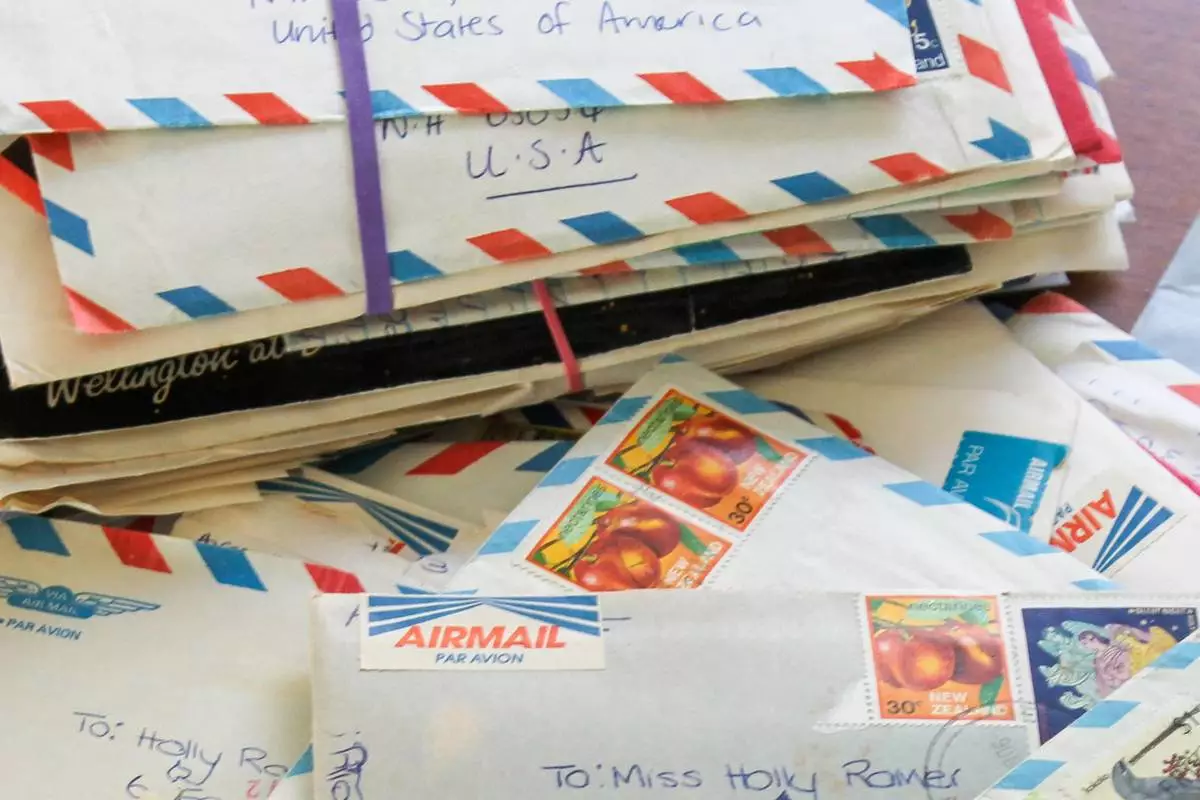
Some of the hundreds of letters AP reporter Holly Ramer has received from her pen pal in New Zealand are displayed in Bow, N.H., Thursday, April 9, 2026. (AP Photo/Holly Ramer)