The American Football Coaches Association is proposing the elimination of conference championship games and other changes as part of its non-binding recommendation for the College Football Playoff to be completed by the second Monday each January.
While the AFCA has no authority within the NCAA or CFP governance structures, FBS coaches are part of the group's board and membership. The AFCA publicly revealed its positions Tuesday, after they were discussed and adopted by board members at an annual meeting last week.
“The American Football Coaches Association has identified the length of the college football season as a critical issue that needs to be addressed,” the group said in a statement. “As we modernize our game to better serve student-athletes, we have fallen short in structuring a season that concludes in a timely and sustainable way.”
As for the size of the playoff field, currently 12 teams and expected to expand, the AFCA didn't publicly endorse a certain number, but said “future playoff models should maximize the number of participants while honoring the proposed completion date.”
Along with eliminating conference title games, the AFCA proposals for finishing on the second Monday in January are to reduce scheduled bye weeks from two to one and reduce the minimum number of days between games to no fewer than six.
The AFCA also calls to preserve a dedicated window for the Army-Navy game, while allowing flexibility for other games, such as playoff games, to be played on that same day outside that window.
“Structuring the season in this way will better support student-athletes by more closely matching the academic calendar and aligning with the single transfer portal window,” the AFCA said. “It also elevates the quality of play during the most meaningful stretch of the season by removing unnecessary breaks and preserving competitive rhythm.”
An NCAA committee last month recommended that Football Bowl Subdivision teams play a 12-game schedule over 14 weeks beginning in 2027. The regular season would start on the Thursday of what is now designated Week Zero and end the Saturday after Thanksgiving.
The 12-team playoff format is unchanged for next season. The opening round of games, featuring the fifth through 12th seeds, will be played on campus Dec. 18-19. Traditional bowl sites will host quarterfinal games Dec. 30-Jan. 1, and semifinal games Jan. 14-15. The championship game will be played in Las Vegas on Jan. 25, 2027, which is the fourth Monday of that month.
Conference championship games are set for the first weekend in December, with the Army-Navy game scheduled Dec. 12.
Last season's national championship game was played on Jan. 19, when undefeated Indiana beat Miami 27-21.
Get poll alerts and updates on the AP Top 25 throughout the season. Sign up here. AP college football: https://apnews.com/hub/ap-top-25-college-football-poll and https://apnews.com/hub/college-football
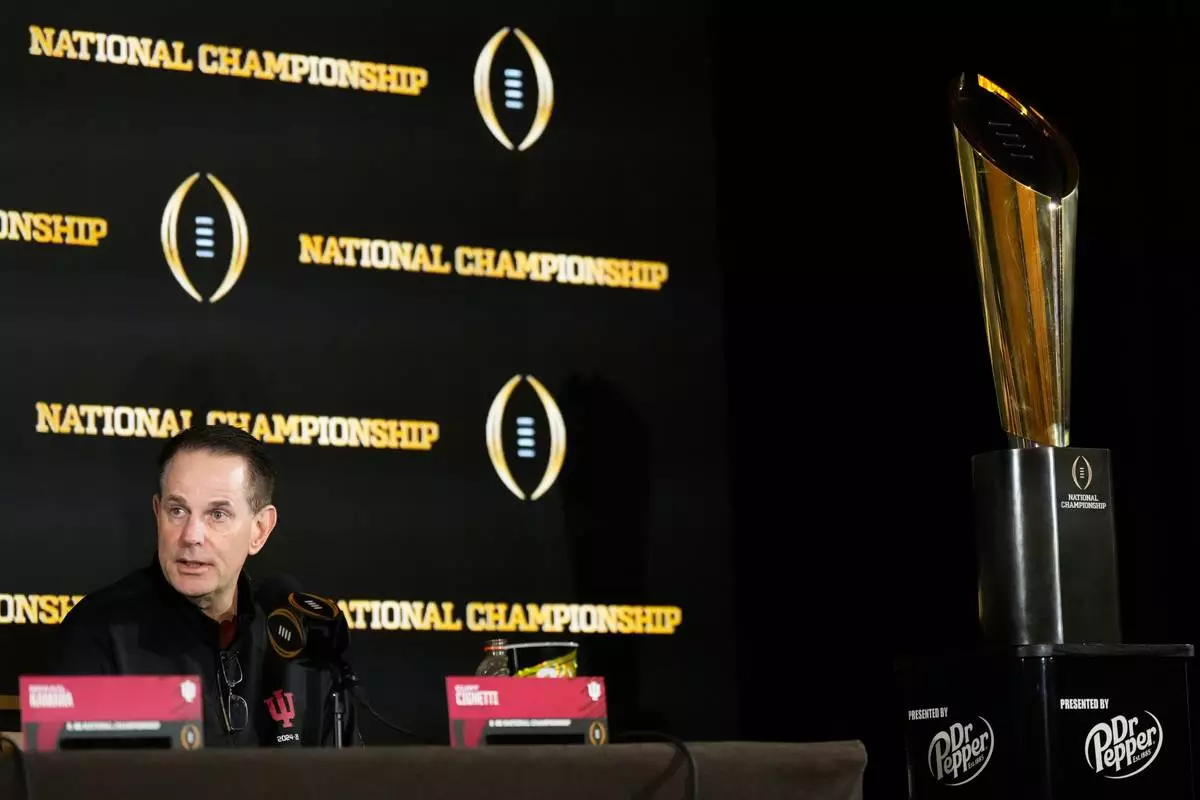
FILE - Indiana head coach Curt Cignetti speaks during the champions news conference after theiir win against Miami in the College Football Playoff national championship game, Tuesday, Jan. 20, 2026, in Miami. (AP Photo/Chris Carlson,File)

FILE - Indiana quarterback Fernando Mendoza (15) is interviewed during the trophy ceremony after Indiana defeated Miami in a College Football Playoff national championship game, Monday, Jan. 19, 2026, in Miami Gardens, Fla. (AP Photo/Lynne Sladky,File)
BUCHAREST, Romania (AP) — Romania’s pro-European coalition collapsed Tuesday after lawmakers voted against Prime Minister Ilie Bolojan, less than a year after he was sworn in, triggering fresh turmoil in the European country.
The no-confidence vote was a blow to Bolojan, who came to power with the aim of ending one of Romania’s worst political crises in its post-communist history.
The Social Democratic Party, or PSD, and the nationalist opposition Alliance for the Unity of Romanians party, or AUR, jointly submitted the motion to Parliament on April 28. PSD withdrew from the coalition last month. On Tuesday, 281 lawmakers voted in favor and four voted against.
Lawmakers from Bolojan’s National Liberal Party, or PNL, and coalition partners, Save Romania Union party and the small ethnic Hungarian UDMR party, abstained.
Romanian President Nicusor Dan called for calm on Tuesday, saying that while it is “not a happy moment … it is a democratic decision by Parliament,” and that negotiations and informal consultations to form a new government are underway.
“We will have a new government within a reasonable time,” Dan said. “I exclude the scenario of early elections. And I emphasize: at the end of these procedures, we will have a pro-Western government — we will calmly get through this.”
Romania has faced a long period of instability after the annulment of a presidential election in December 2024. The country has also grappled with one of the highest budget deficits in the European Union, rampant inflation, and a technical recession. In June, when the coalition was voted in, it pledged to reduce the budget deficit, marking it a top priority.
The PSD had often found itself at loggerheads with Bolojan over austerity measures, including tax hikes, public-sector wage and pension freezes, and cuts to state spending and public administration jobs.
Last week, the party accused Bolojan of “failing to implement any genuine reform” in his 10 months leading the government, and said Romania needs a leader who is “capable of collaboration.” Bolojan said that he took tough but necessary fiscal measures that effectively “regained the trust of the markets in the Romanian government.”
Bolojan also called the no-confidence motion “cynical and artificial” and said before the vote that it “seems to be written by people who were not in government every day and did not participate in all the decisions.”
“It is cynical, because it does not take into account the context in which we find ourselves,” he said. “I assumed the position of prime minister, being aware that it comes with enormous pressure and that I would not receive applause from the citizens. But I chose to do what was urgent and necessary for our country.”
The PSD party's president, Sorin Grindeanu, said Bolojan should appoint an interim prime minister until one is voted into office by lawmakers. He also said he expected Romanian President Nicusor Dan to consult PSD.
“I would like us to quickly find a solution … together with the other parties and move forward,” Grindeanu said. “All options are open.”
The secretary-general of Bolojan's party, Dan Motreanu, posted on social media, saying PSD and AUR “have a duty to take over the government, to come up with a prime minister candidate and a clear program,” accusing the two parties of “playing political theater.”
“You cannot overthrow a government and then run away from accountability,” Motreanu wrote, adding that “any signal of political chaos” negatively affects the country's economy and people.
The PSD would be needed to form a pro-European parliamentary majority. The party has previously ruled out forming a government with AUR, whose leader, George Simion, said Tuesday that voters had “supported and wanted water, food, energy,” but had “received taxes, war and poverty.”
Cristian Andrei, a Bucharest-based political consultant, said the crisis will likely lead to a stalemate, since “no one has a majority, or a coalition, and it will take the president ... weeks to find such a majority and name a new prime minister, prolonging the indecision.”
“At this moment, there are two tentative options for a new Cabinet, both difficult to achieve; either a reshuffled coalition, without Bolojan, in the same formation ... or a minority Cabinet, rather led by PSD and satellites from populist parties, like AUR, or other small groups,” he said. “A PSD-AUR official Cabinet is not a possibility today because the president will not endorse it.”
The prime ministerial position was set to be rotated in 2027 from Bolojan to a PSD premier as part of a power-sharing agreement. A general election is scheduled for 2028.
McGrath reported from Leamington Spa, England.
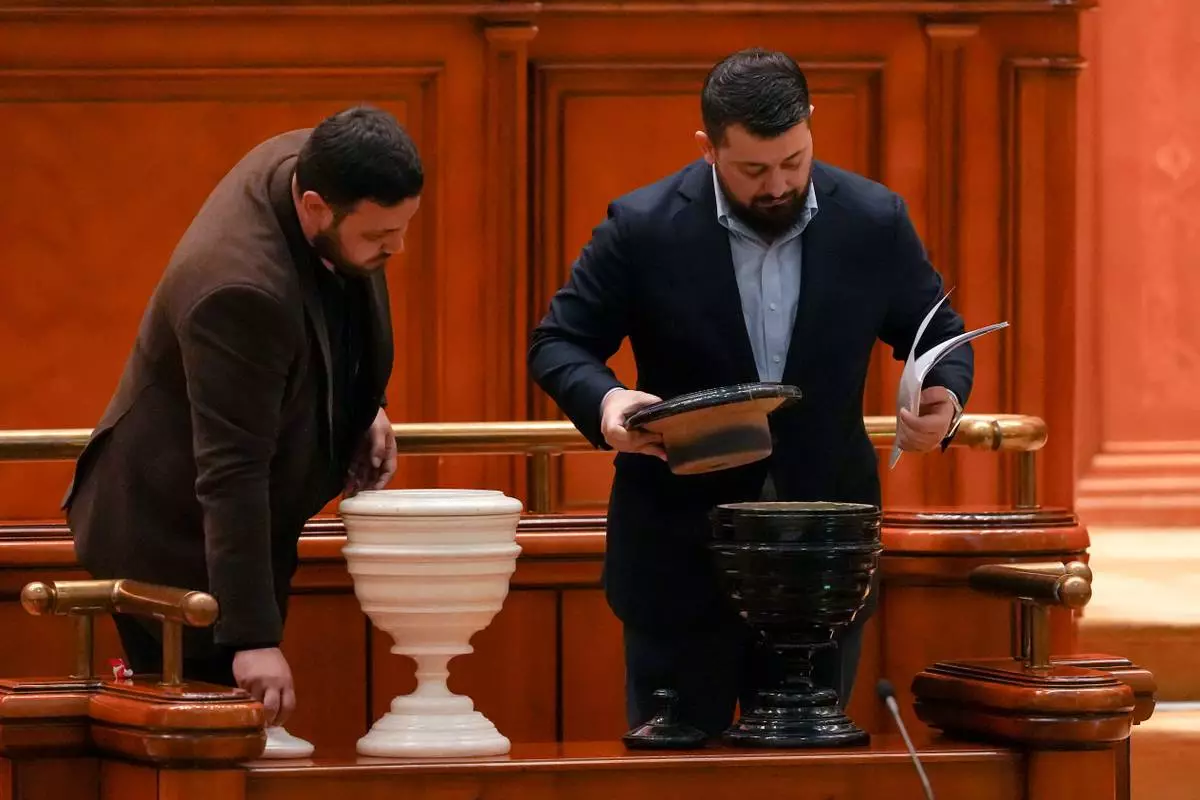
Staff members check the voting urns ahead of a no confidence vote against Prime Minister Ilie Bolojan's government in Bucharest, Romania, Tuesday, May 5, 2026. (AP Photo/Vadim Ghirda)
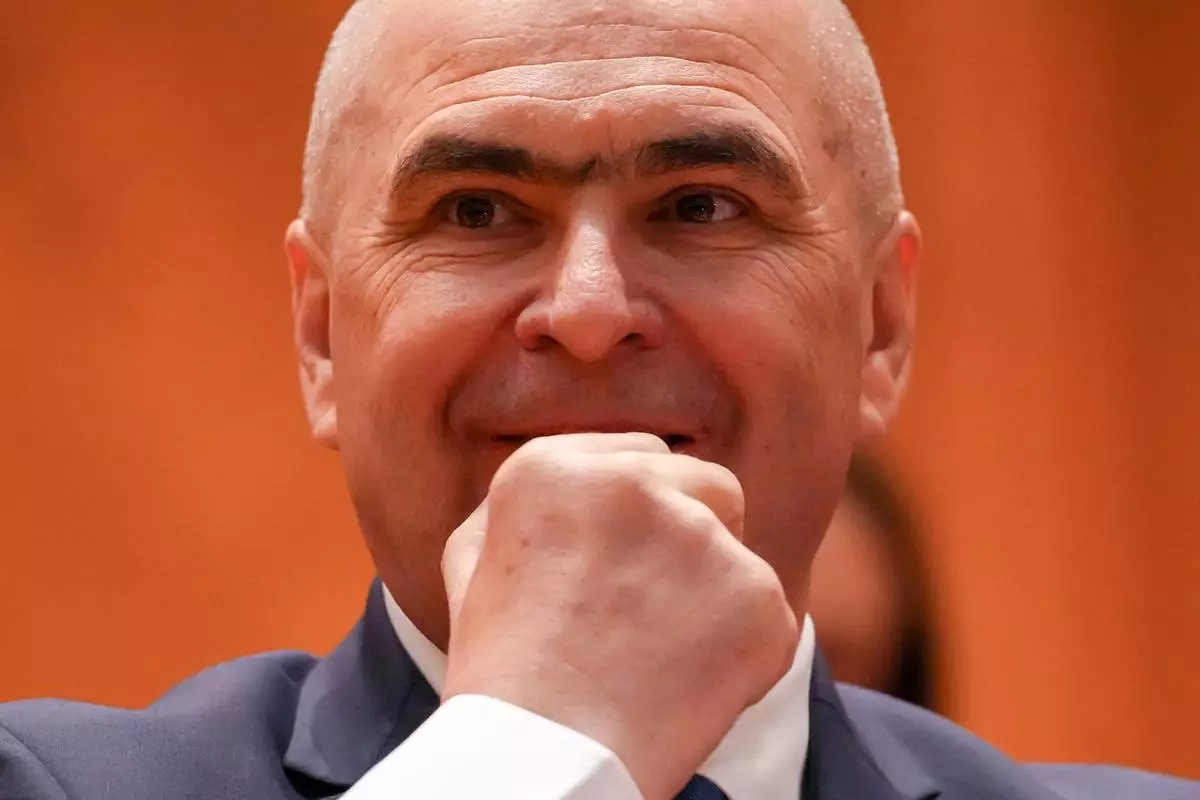
Romanian Prime Minister Ilie Bolojan grimaces during a parliament session ahead of a no confidence vote in Bucharest, Romania, Tuesday, May 5, 2026. (AP Photo/Vadim Ghirda)
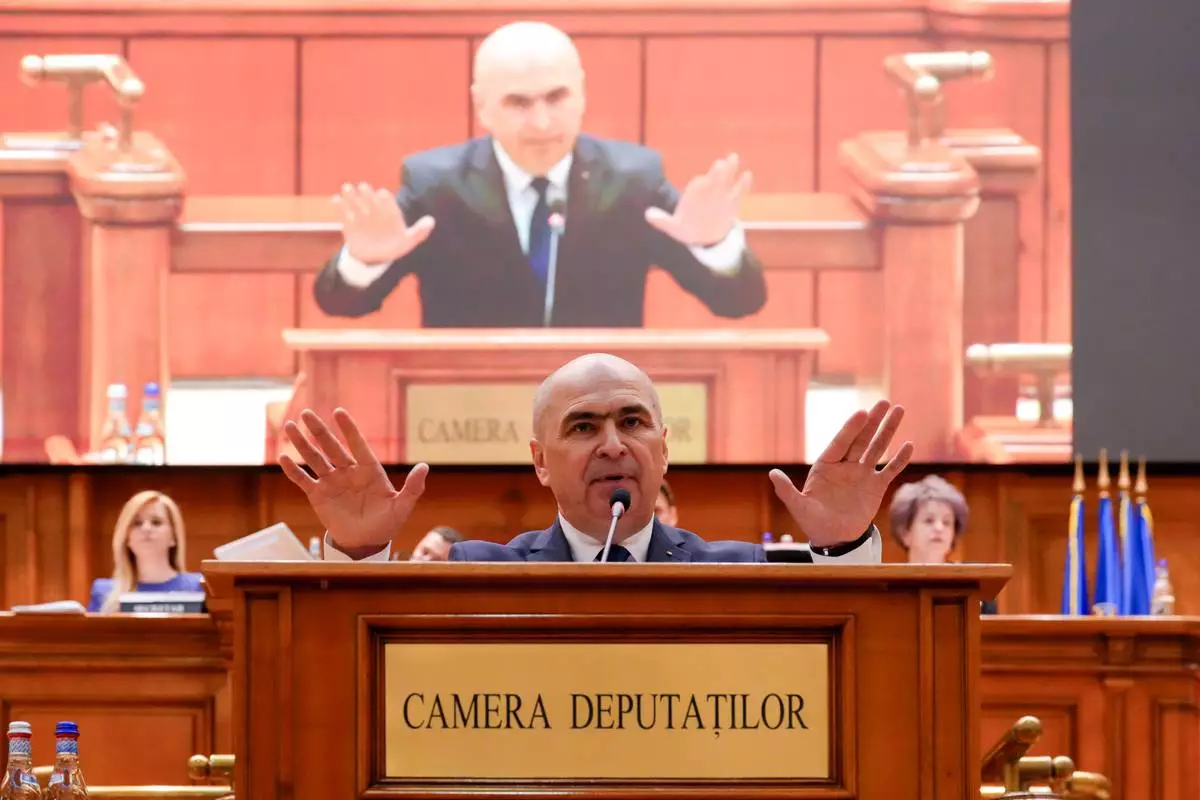
Romanian Prime Minister Ilie Bolojan addresses a parliament session ahead of a no confidence vote in Bucharest, Romania, Tuesday, May 5, 2026. (AP Photo/Vadim Ghirda)
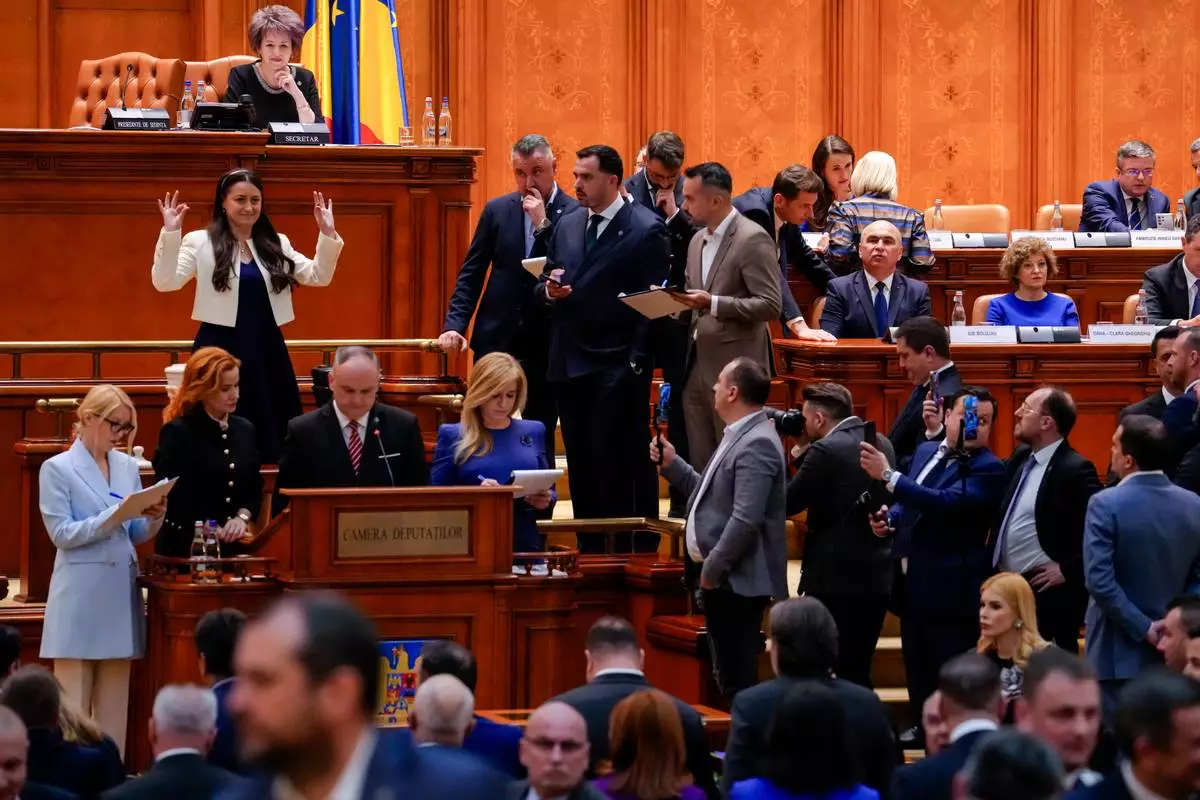
Romanian Prime Minister Ilie Bolojan, centre row third from right, sits as lawmakers vote during a no confidence vote in Bucharest, Romania, Tuesday, May 5, 2026. (AP Photo/Vadim Ghirda)
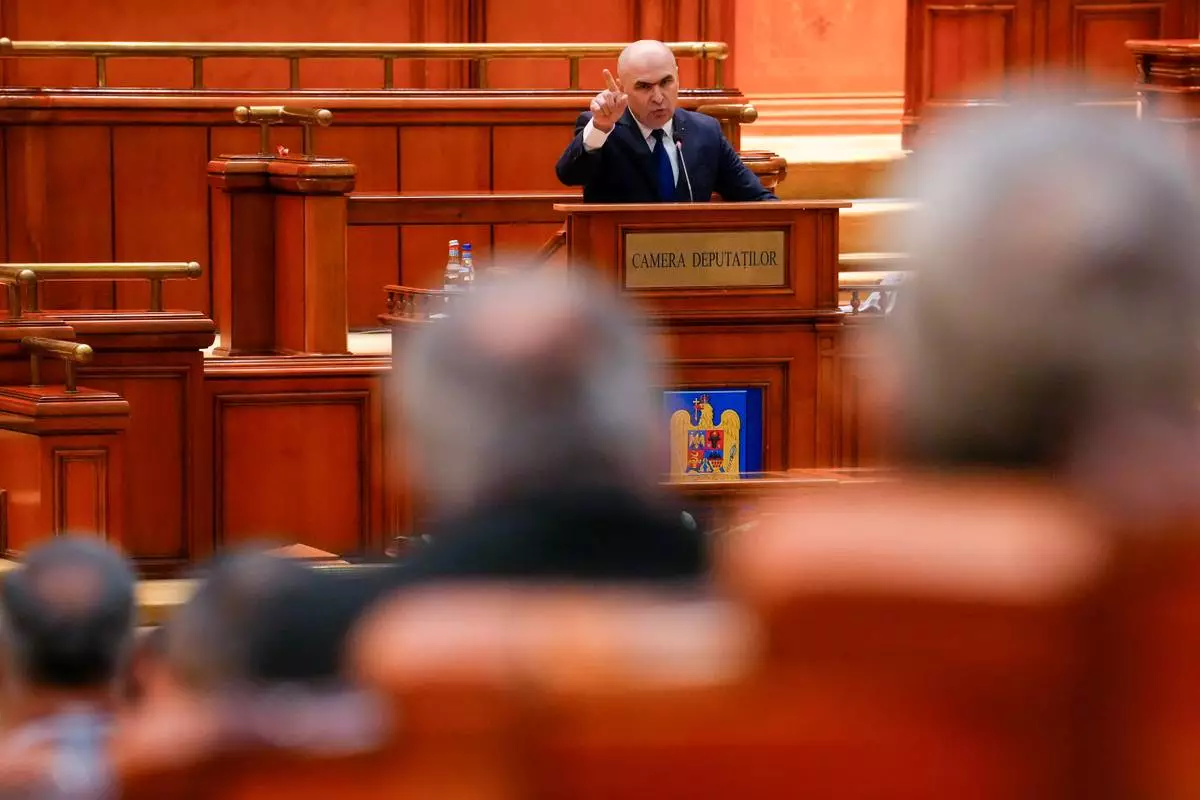
Romanian Prime Minister Ilie Bolojan addresses a parliament session ahead of a no confidence vote in Bucharest, Romania, Tuesday, May 5, 2026. (AP Photo/Vadim Ghirda)
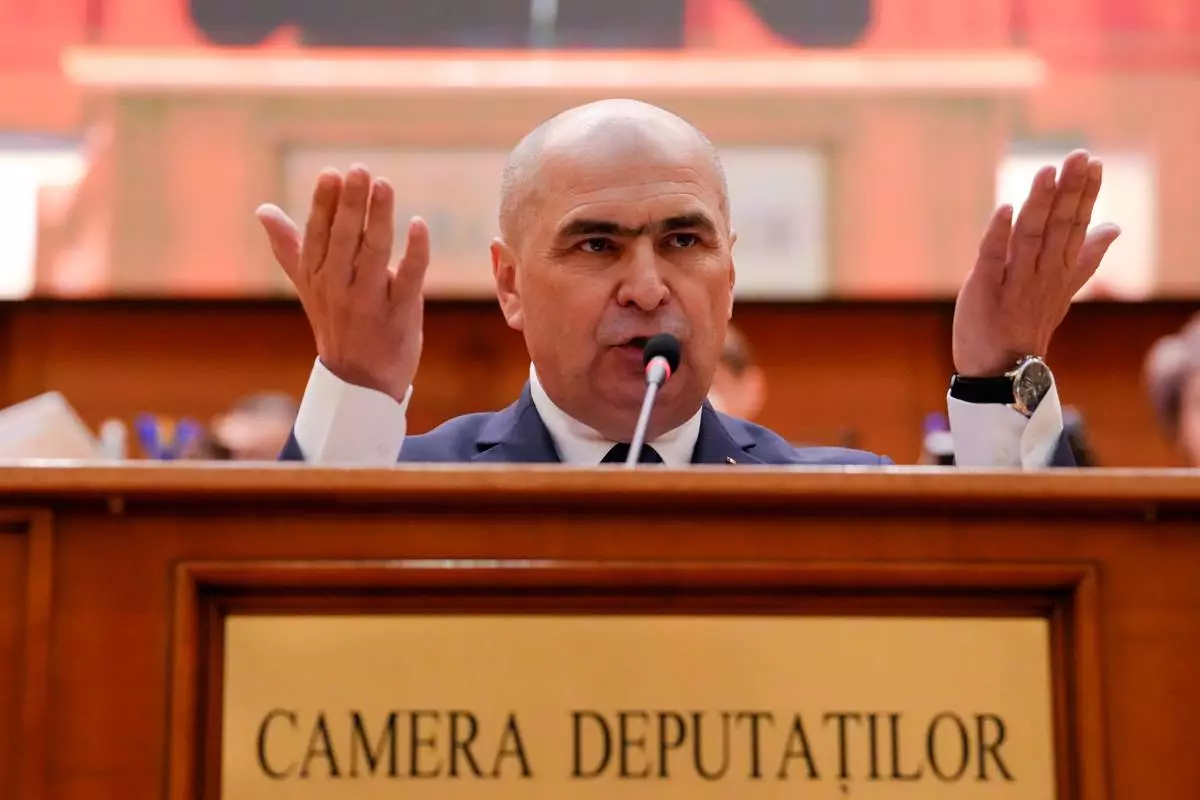
Romanian Prime Minister Ilie Bolojan addresses a parliament session ahead of a no confidence vote in Bucharest, Romania, Tuesday, May 5, 2026. (AP Photo/Vadim Ghirda)
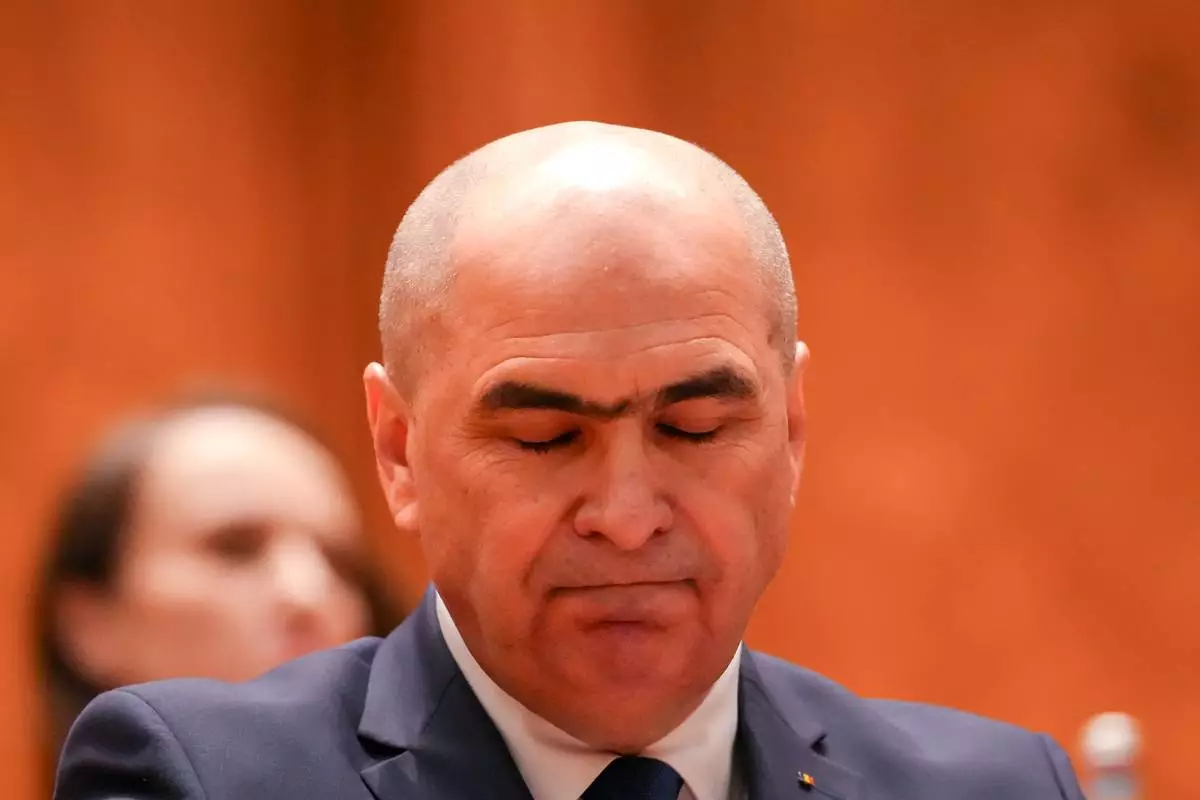
Romanian Prime Minister Ilie Bolojan reacts during a parliament session ahead of a no confidence vote in Bucharest, Romania, Tuesday, May 5, 2026. (AP Photo/Vadim Ghirda)
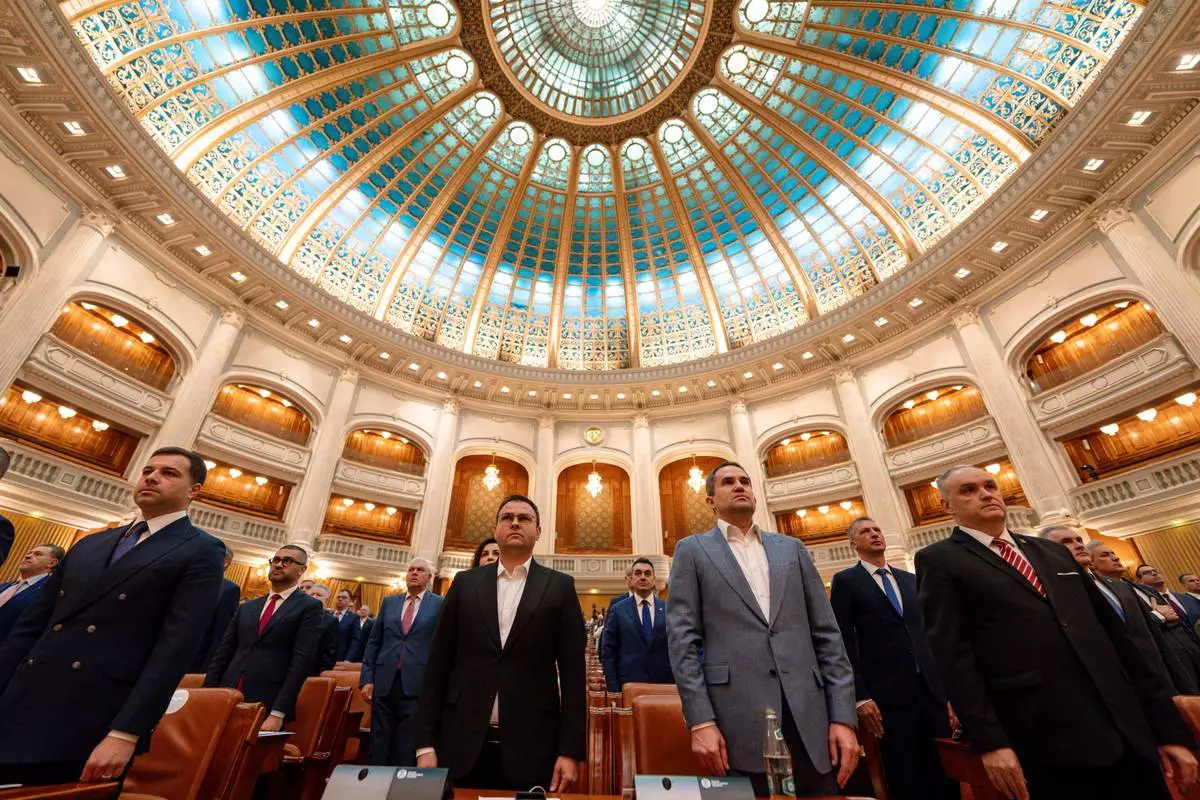
Romanian lawmakers stand during the anthem ahead of a no confidence vote against Prime Minister Ilie Bolojan's government in Romania's parliament in Bucharest, Romania, Tuesday, May 5, 2026. (AP Photo/Vadim Ghirda)
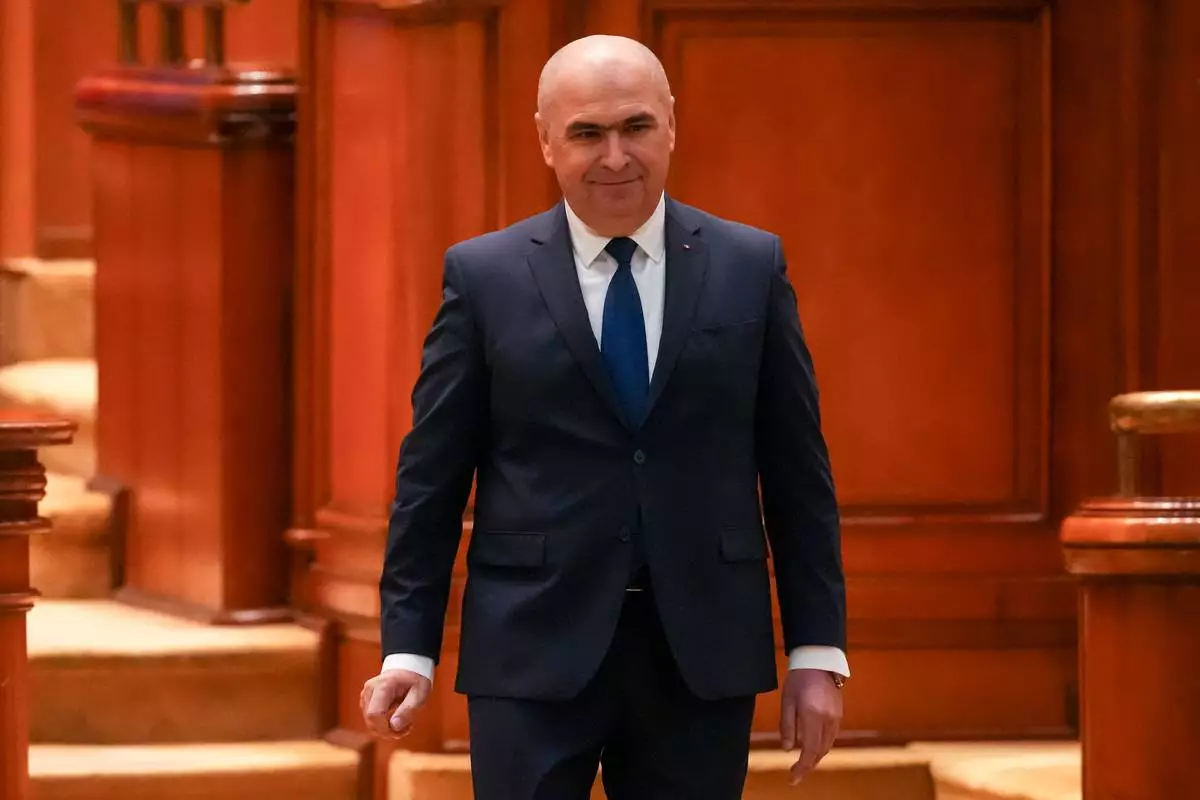
Romanian Prime Minister Ilie Bolojan arrives at a parliament session ahead of a no confidence vote in Bucharest, Romania, Tuesday, May 5, 2026. (AP Photo/Vadim Ghirda)