SAN JOSE, Costa Rica (AP) — Costa Rica 's outgoing President Rodrigo Chaves will remain a top official in his successor's government, the country's president-elect announced on Tuesday, granting the outgoing populist and Trump ally ongoing immunity in the face of corruption allegations.
Chaves will hold the posts of Minister of the Presidency and Minister of Finance in the incoming administration, Chaves’ political ally and president-elect Laura Fernández announced on Tuesday.
Such a move is unprecedented in Costa Rican politics and will offer the outgoing leader incredible sway over the next government. It marks another bold move by Chaves' political movement that has tested the Central American nation's democratic norms.
Fernández, set to take office on Friday, pitched herself as a figure of “continuity" in the lead up to February elections — so much so that many ministers and leaders of Chaves’ government will also remain in their previous positions or swap roles. Fernández herself once acted as Minister to the President to Chaves, the role the outgoing leader will now assume.
“Just as we have done since the first day of your administration, we will continue working very well as a team,” Fernández said to Chaves at a public event Tuesday in capital San José.
Chaves is a firebrand populist who has cozied up to U.S. President Donald Trump. He's known for lashing out at the media and critics, and has sought to project himself as a figure similar to El Salvador's President Nayib Bukele by cracking down on an uptick in crime in the historically peaceful Central American nation.
Recently, Chaves agreed to accept 25 third-country deportees per week from the U.S. His government was accused of pushing for the Trump administration to strip the board of directors of a critical newspaper of their visas.
The move by Fernández marks not just a continuation of Chaves' grip on power, but also a temporary balm to his mounting legal ails, preserving the immunity he enjoyed as president.
Last year, Chaves' presidency was rocked by scandal when he faced accusations by Costa Rican prosecutors of illegal campaign finance and corruption charges, which the president has denied.
Prosecutors accused Chaves of pressuring a close associate and government contractor to give a chunk of money from the contract to a former campaign adviser.
As a result, Costa Rica’s legislature has tried and failed to strip Chaves of his immunity twice. With his appointment as a minister, another attempt appears unlikely, especially as the ruling party now holds a majority in the legislature.
Chaves has said the accusations are political revenge by the country’s attorney general and Supreme Court magistrates.
Costa Rica's opposition politicians criticized Chaves' appointment. Legislator José María Villalta said Tuesday the appointment was a blatant attempt to “grant or preserve immunity for controversial politicians from the outgoing government rather than to improve the functioning of institutions.”
——
Associated Press journalist Megan Janetsky contributed to this report from Mexico City.
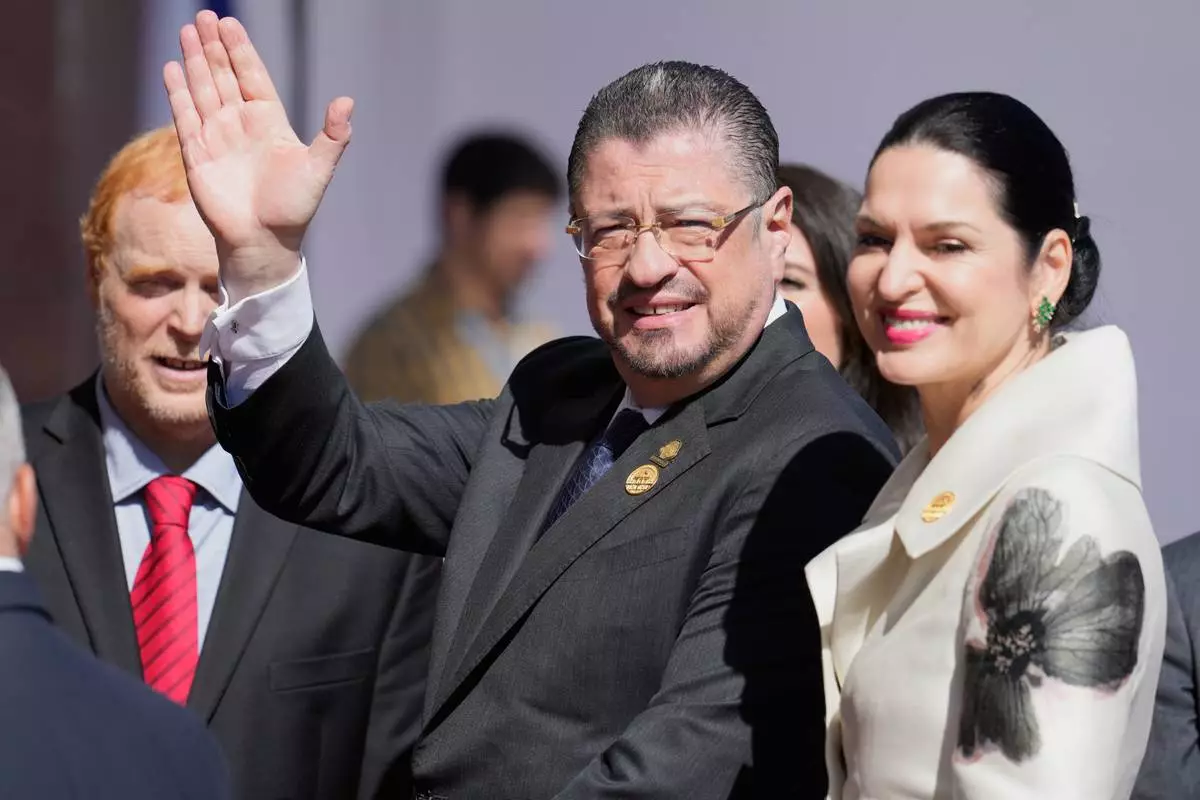
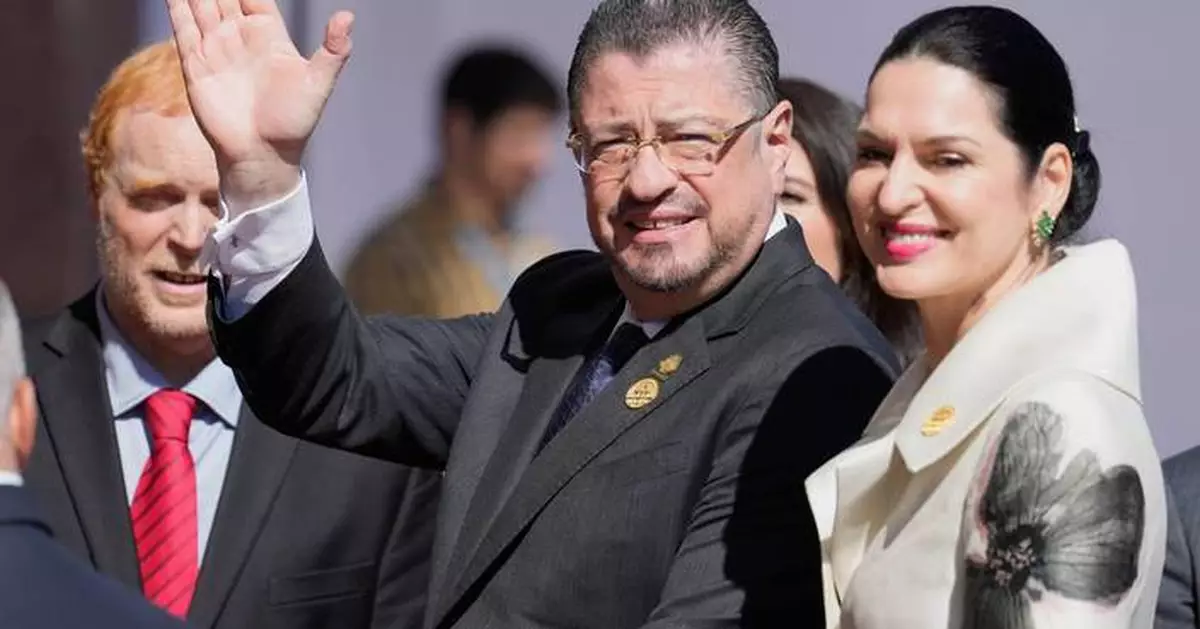
FILE - Costa Rica President Rodrigo Chaves, accompanied by his wife Signe Zeicate, waves as he arrives for the inauguration ceremony of Chile's new president, in Valparaiso, March 11, 2026. (AP Photo/Gustavo Garello, File)
NEW YORK (AP) — A federal civil rights agency filed a discrimination lawsuit Tuesday against the New York Times, claiming that the new organization passed over a white male employee for a promotion in favor of a lesser qualified woman to meet its diversity goals.
The New York Times called the lawsuit politically motivated and said it would defend itself “vigorously.”
The Equal Employment Opportunity Commission filed the lawsuit Tuesday on behalf of a New York Times editor who lodged a complaint after he didn't get the role of deputy real estate editor in 2025, alleging gender and racial discrimination under Title VII of the 1964 Civil Rights Act, which prohibits employment discrimination on the basis of sex, race, national origin or religion.
The EEOC claimed the news organization's publicly stated goals of increasing the number of women and people of color in its leadership ranks influenced the decision to exclude the white male applicant for a final round of interviews, while advancing three women and a Black man.
EEOC Chair Andrea Lucas, a Republican, has been a staunch champion of the Trump administration's campaign against corporate diversity policies that she argues veer into discrimination against white men and others. In December, Lucas posted a social media call urging white men to come forward with complaints if they believe they have faced discrimination because of their employer's diversity policies.
“No one is above the law — including ‘elite’ institutions. There is no such thing as ‘reverse discrimination;’ all race or sex discrimination is equally unlawful, according to long-established civil rights principles," Lucas said in a statement. "No matter the size or power of the employer, the EEOC under my leadership will not pull punches in ensuring evenhanded, colorblind enforcement of Title VII to protect America’s workers, including white males.”
The New York Times spokeswoman Danielle Rhoades Ha said the EEOC “deviated from standard practices in highly unusual ways. The allegation centers on a single personnel decision for one of over 100 deputy positions across the newsroom, yet the EEOC’s filing makes sweeping claims that ignore the facts to fit a predetermined narrative.”
“Neither race nor gender played a role in this decision – we hired the most qualified candidate, and she is an excellent editor,” Rhoades Ha added.
In the lawsuit filed in the U.S. District Court of the Southern District of New York, the EEOC complaint said the complainant, who was not identified, has worked as an editor for the New York Times since 2014, mostly as a senior staff editor on the international desk with previous experience working on real estate stories.
The lawsuit claims that the woman ultimately appointed deputy real estate editor “did not have experience with real estate journalism" but “as a multiracial female, this candidate matched the race and/or sex characteristics NYT sought to increase in its leadership.” The EEOC said one final panel interviewer described her as “a bit green overall."
The EEOC's lawsuit extensively cited The New York Times diversity and inclusion policies as evidence for its alleged discriminatory policies.
In particularly, the lawsuit cites the organizations “Call to Action” plan published in February 2021 in which it set a goal of increasing the number of Black and Latino employees in leadership by 50% by 2025. The EEOC said the New York Times met that goal in 2022 but continued its commitment to diversity policies. According to reports cited in the lawsuit, white employees composed 68% of its leadership in 2024, compared to 29% people of color.
Lucas has been particularly critical of representation goals that many companies have publicly announced, particularly in the wake of of the 2020 racial protests following the police killing of unarmed Black man George Floyd.
In almost all cases, it is illegal under Title VII for employers to take race or gender into account when making hiring, promotion and other decisions. Lucas has taken aim at practices she claims pressure hiring managers to do just that, from certain forms of anti-bias training to ensuring a diverse slate of candidates for roles. Critics say the EEOC is attacking long held practices designed to level the playing field for workers who have traditionally faced discrimination in U.S. workplaces.
In February, the EEOC revealed that it was investigating sportswear giant Nike for racial discrimination against white employees. Unlike the New York Times lawsuit, the Nike investigation stemmed not from a worker complaint but by Lucas herself, who filed what is known as “commissioner's charge” to investigate an array of diversity policies at the sneaker company.
FILE - The emblem of the U.S. Equal Employment Opportunity Commission (EEOC) is displayed on a podium in Vail, Colo., Feb. 16, 2016. (AP Photo/David Zalubowski, File)
FILE - A sign for The New York Times is displayed above the entrance to its building in New York on May 6, 2021. (AP Photo/Mark Lennihan, File)