TOKYO (AP) — South Korea’s Kospi soared nearly 7% to a fresh record on Wednesday as Samsung Electronics' stock jumped nearly 13% in a rally driven by expectations of strong growth in artificial intelligence and hopes for progress in ending the U.S.-Iran war.
Shares in SK Hynix, another major Korean computer chipmaker, shot up 10% early Wednesday. Both Samsung and SK Hynix are major manufacturers of the computer chips vital for AI applications.
Click to Gallery
A dealer talks on the phone at a dealing room of Hana Bank in Seoul, South Korea, Wednesday, May 6, 2026. (AP Photo/Lee Jin-man)
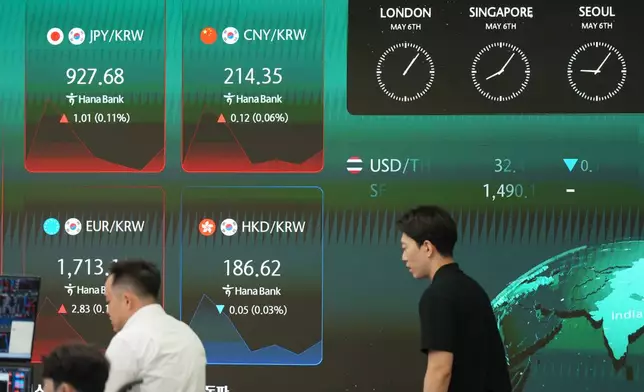
Dealers walk past near the screens showing the foreign exchange rates at a dealing room of Hana Bank in Seoul, South Korea, Wednesday, May 6, 2026. (AP Photo/Lee Jin-man)
A dealer watches computer monitors at a dealing room of Hana Bank in Seoul, South Korea, Wednesday, May 6, 2026. (AP Photo/Lee Jin-man)
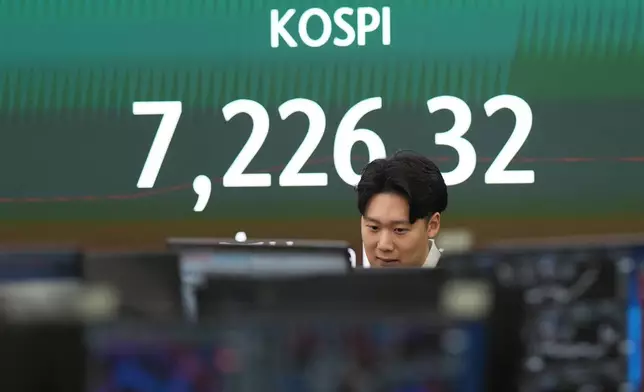
A dealer walks past near the screen showing the Korea Composite Stock Price Index (KOSPI) at a dealing room of Hana Bank in Seoul, South Korea, Wednesday, May 6, 2026. (AP Photo/Lee Jin-man)
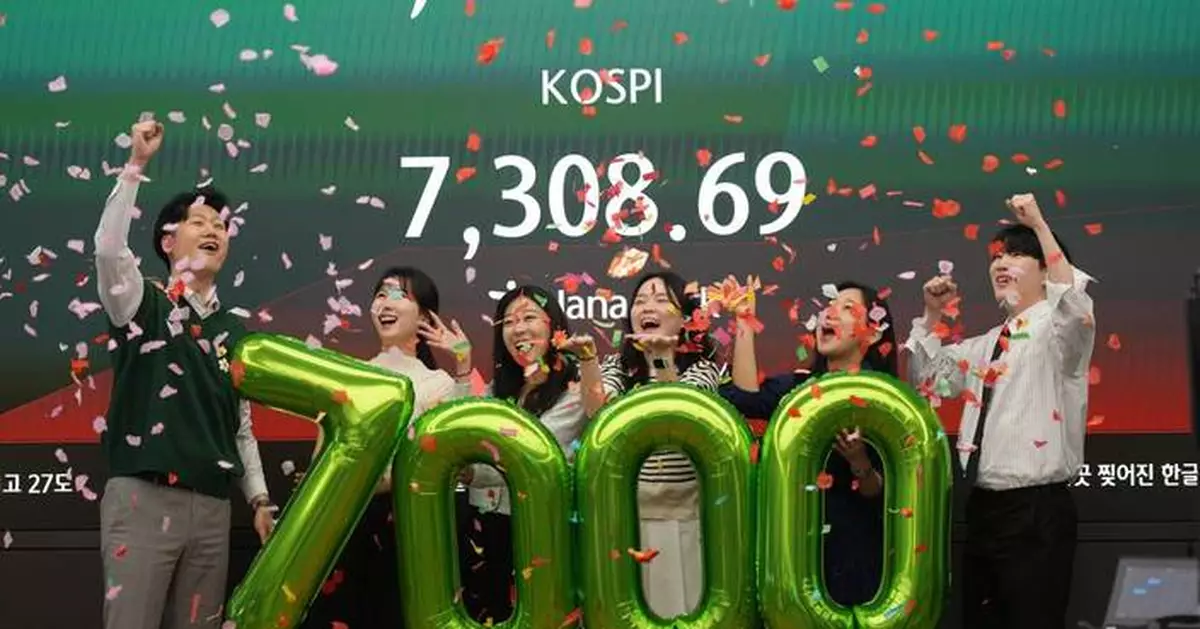
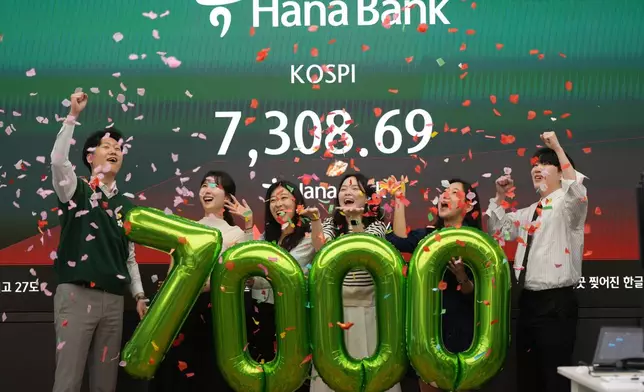
Employees of Hana Bank celebrate in a photo opportunity to mark the Korea Composite Stock Price Index (KOSPI) of over 7,000 points at a dealing room of Hana Bank in Seoul, South Korea, Wednesday, May 6, 2026. (AP Photo/Lee Jin-man)
News that Iranian officials were traveling to China ahead of a summit between President Donald Trump and Chinese leader Xi Jinping lifted market sentiment. That also helped ease volatility in oil prices.
South Korea's market was closed Tuesday for a holiday and on reopening gained 6.7% early Wednesday to 7,398.34.
Shares mostly rose in other Asian markets, though Tokyo trading was closed for a holiday.
Australia’s S&P/ASX 200 gained nearly 1.0% to 8,766.80 in morning trading.
Hong Kong’s Hang Seng gained 0.7% to 26,081.52, while the Shanghai Composite rose 1.0% to 4,152.68.
In energy trading, benchmark U.S. crude slipped $1.37 to $100.90 a barrel. Brent crude, the international standard, lost $1.50 to $108.37 a barrel, echoing declines Tuesday that erased the big jumps earlier in the week. The prices still remain well above their roughly $70 price before the war with Iran.
U.S. military leaders have said a ceasefire with Iran is in effect, although uncertainties clearly remain. The U.S. military is trying to force open a path in the Strait of Hormuz, which would allow oil tankers to resume shipments from the Persian Gulf.
The S&P 500 climbed 0.8% to top its prior all-time high set at the end of last week, closing at 7,259.22. The Dow Jones Industrial Average added 0.7% to 49,298.25, and the tech-heavy Nasdaq composite set its own record, rallying 1% to 25,326.13.
Reports on the U.S. economy came in mixed. One said growth for U.S. services businesses unexpectedly slowed last month, with some companies saying the war is hurting spending. A separate report said U.S. employers were advertising slightly more job openings at the end of March than economists expected, an encouraging signal for the job market.
In currency trading, the U.S. dollar inched down to 157.88 Japanese yen from 157.89 yen. The euro cost $1.1720, up from $1.1693.
AP Business Writer Stan Choe in New York contributed.

A dealer talks on the phone at a dealing room of Hana Bank in Seoul, South Korea, Wednesday, May 6, 2026. (AP Photo/Lee Jin-man)
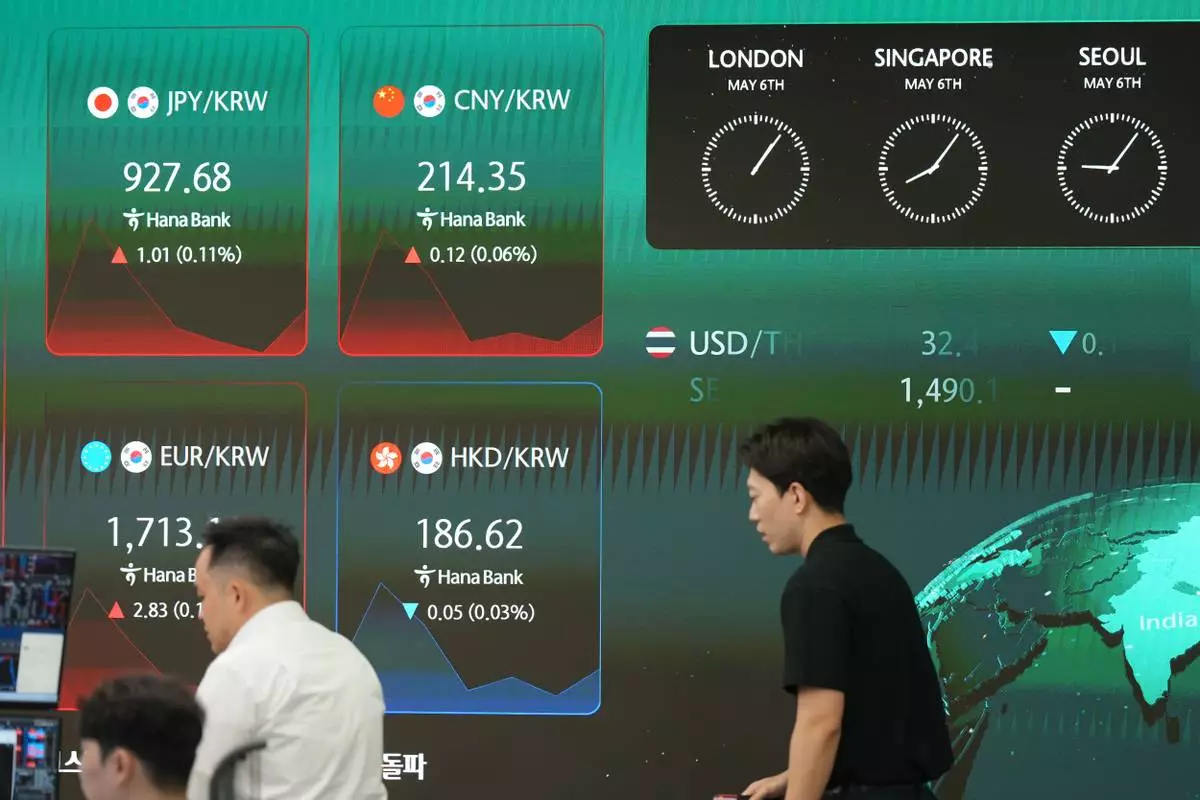
Dealers walk past near the screens showing the foreign exchange rates at a dealing room of Hana Bank in Seoul, South Korea, Wednesday, May 6, 2026. (AP Photo/Lee Jin-man)
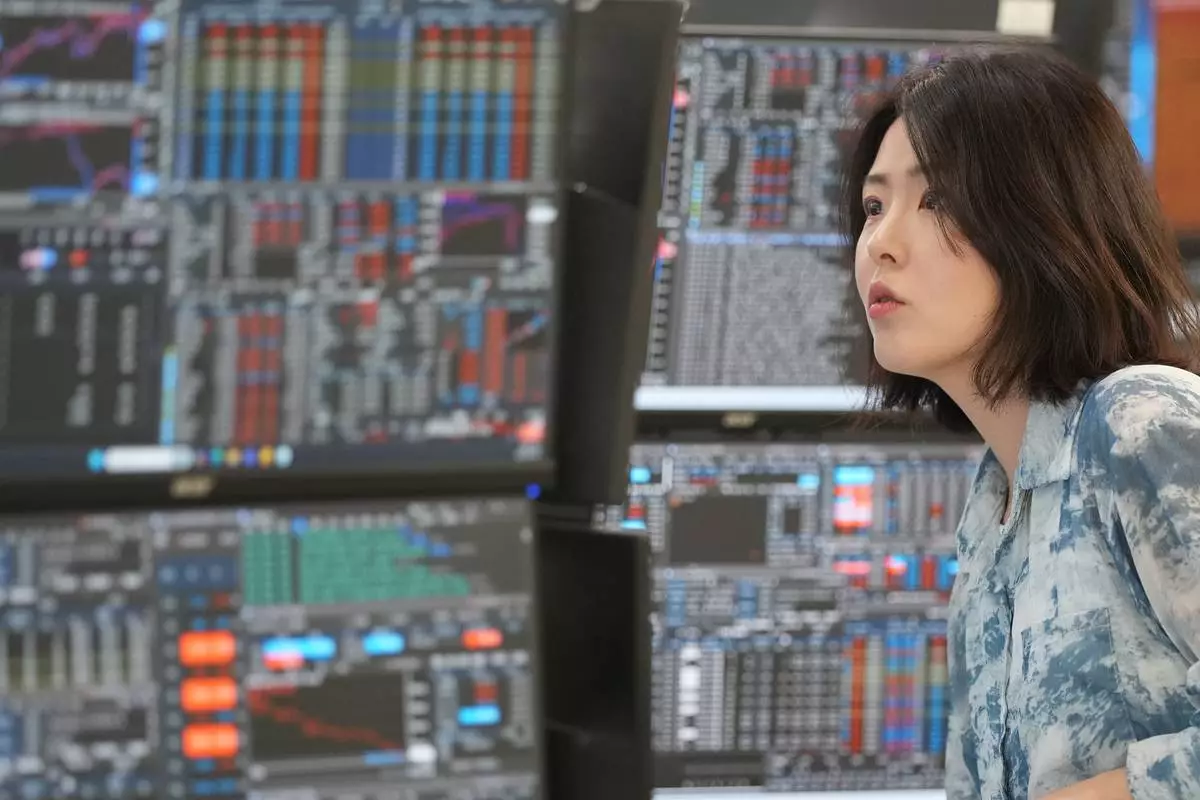
A dealer watches computer monitors at a dealing room of Hana Bank in Seoul, South Korea, Wednesday, May 6, 2026. (AP Photo/Lee Jin-man)
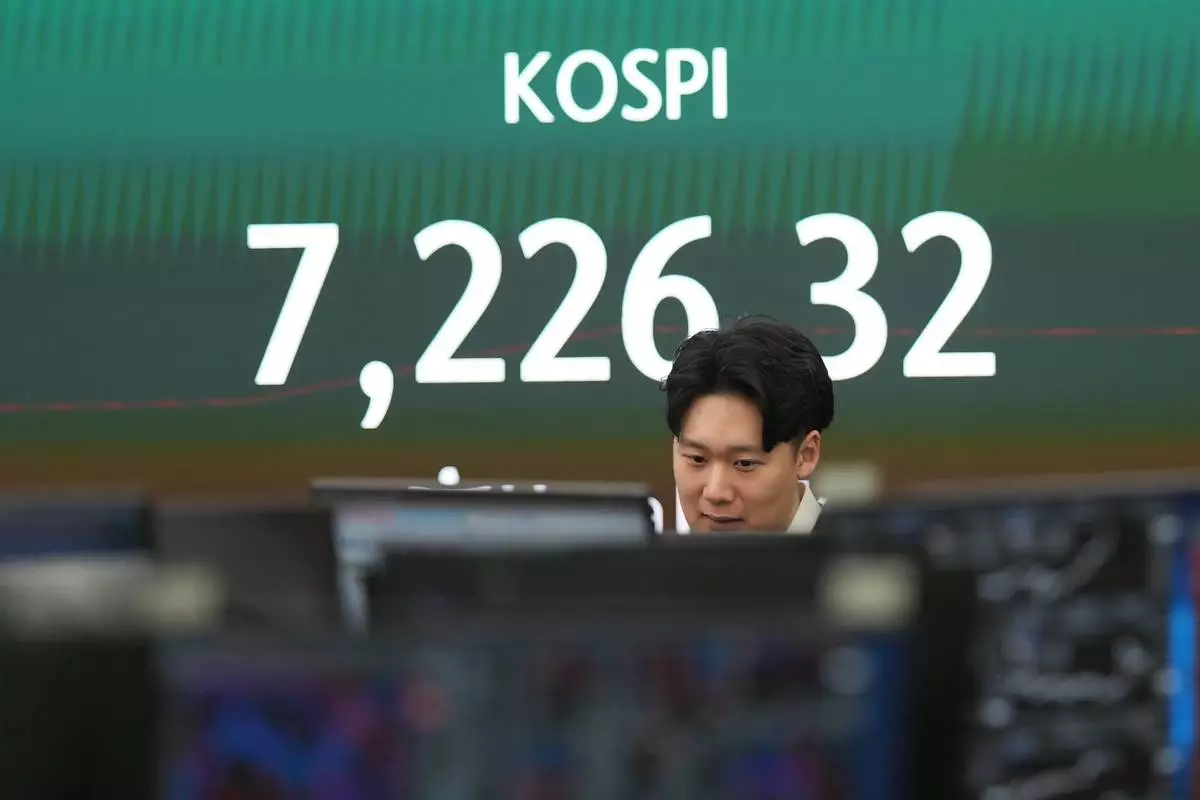
A dealer walks past near the screen showing the Korea Composite Stock Price Index (KOSPI) at a dealing room of Hana Bank in Seoul, South Korea, Wednesday, May 6, 2026. (AP Photo/Lee Jin-man)
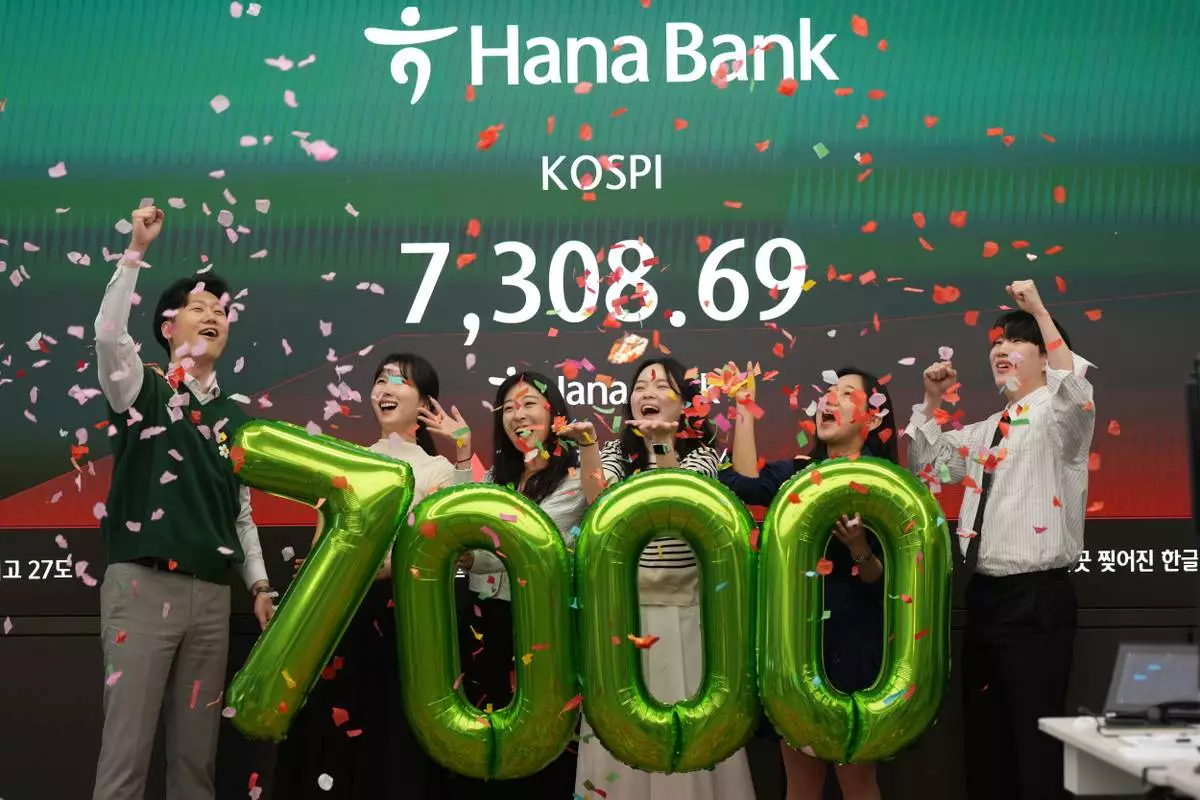
Employees of Hana Bank celebrate in a photo opportunity to mark the Korea Composite Stock Price Index (KOSPI) of over 7,000 points at a dealing room of Hana Bank in Seoul, South Korea, Wednesday, May 6, 2026. (AP Photo/Lee Jin-man)
LONDON (AP) — British voters will cast ballots Thursday in elections that could hasten the end of Prime Minister Keir Starmer’s troubled term and confirm that an increasingly fractured United Kingdom has entered an era of messy multiparty politics.
Starmer’s center-left Labour Party is expected to take a battering in elections for local authorities across England and for semiautonomous legislatures in Scotland and Wales.
With the prime minister’s popularity in the doldrums from a weak economy and repeated questions about his judgment, rival parties are framing Thursday’s votes as a referendum on Starmer and his 2-year-old government. “Vote Reform, Get Starmer Out” is the campaign slogan of the hard-right party Reform UK.
The next national election does not have to be held until 2029, but a wipeout on Thursday could tip a restive Labour Party into revolt against its unpopular leader.
Less than two years after winning a landslide election victory, “Keir Starmer has become a vessel for people’s disappointment (and) disillusionment,” said Luke Tryl of pollster More in Common.
Starmer's popularity has plunged after repeated missteps since he became prime minister in July 2024. His government has struggled to deliver promised economic growth, repair tattered public services and ease the cost of living — tasks made harder by the U.S.-Israeli war with Iran, which has choked off oil shipments through the Strait of Hormuz.
The prime minister has been further hurt by his disastrous decision to appoint Peter Mandelson, a scandal-tarnished friend of Jeffrey Epstein, as Britain’s ambassador to Washington.
Forecasters suggest Labour will lose well over half of the 2,500 seats it is defending on English local councils. It is expected to lose votes to parties on both left and right — especially to the Green Party in London and Reform UK in working-class, former Labour strongholds in England’s north.
“These elections are a perilous, perilous moment for Keir Starmer,” said Tony Travers, professor in the Department of Government at the London School of Economics. He said that after a series of policy U-turns and in an economy where “there isn’t much money to spend on anything ... his opponents are lining up.”
Starmer has already survived one crisis in February, when some Labour lawmakers, including the party’s leader in Scotland, urged him to quit over the Mandelson appointment.
An election rout could trigger a snap leadership challenge from a high-profile rival such as Health Secretary Wes Streeting, former Deputy Prime Minister Angela Rayner or Greater Manchester Mayor Andy Burnham. Any challenger would need the support of 80 lawmakers, one-fifth of the party in the House of Commons, to trigger a contest. In Burnham’s case he would have to win election to Parliament before he could take over.
Alternately, Starmer could face pressure from the party to set a timetable for his departure after an orderly leadership contest.
“His parliamentary party are unsure as to whether now is the right time to unseat him,” said Tim Bale, professor of politics at Queen Mary University of London. “So there might be a stay of execution.”
But, Bale added, "it’s a case of when rather than if he goes."
For decades, Labour losses would have been good news for its main rival, the right-of-center Conservative Party. But the Conservatives are tarnished by 14 tumultuous years in power that ended in 2024. In these elections, it’s Nigel Farage-led Reform UK, the left-leaning Greens and nationalist Welsh and Scottish parties that will likely be the main beneficiaries.
Travers said Britain is moving from being a “two-and-a-half party system” — with the Liberal Democrats as the usual third party — “to something more like a five-party one.”
That is excellent news for Rhun ap Iorwerth, who leads Plaid Cymru (the Party of Wales) and stands a strong chance of leading that country’s semiautonomous government.
“The old politics is gone,” he said. “Labour is not going to win this election.”
Labour has dominated Welsh politics for a century and has held power in Cardiff since the Welsh government was established in 1999. Polls suggest Labour will be pushed into third place behind Plaid Cymru and Reform UK, who are running neck-and-neck.
A Plaid victory would give three of the four parts of the U.K. pro-independence leaders. Northern Ireland is governed by Irish nationalist party Sinn Fein in a power-sharing arrangement with the pro-British Democratic Unionist Party.
The Scottish National Party, which has governed in Edinburgh since 2007, says it will push for a new referendum on independence if it wins a majority on Thursday. Scottish voters rejected leaving the U.K. in a 2014 vote.
Plaid Cymru says a secession vote isn’t on the agenda in the next few years, though independence remains the party’s ultimate goal. In the short term, it wants more power to raise taxes and more control over how money is spent.
“We need a fundamental redesign of Britain,” ap Iowerth said. “This is an unequal union.”
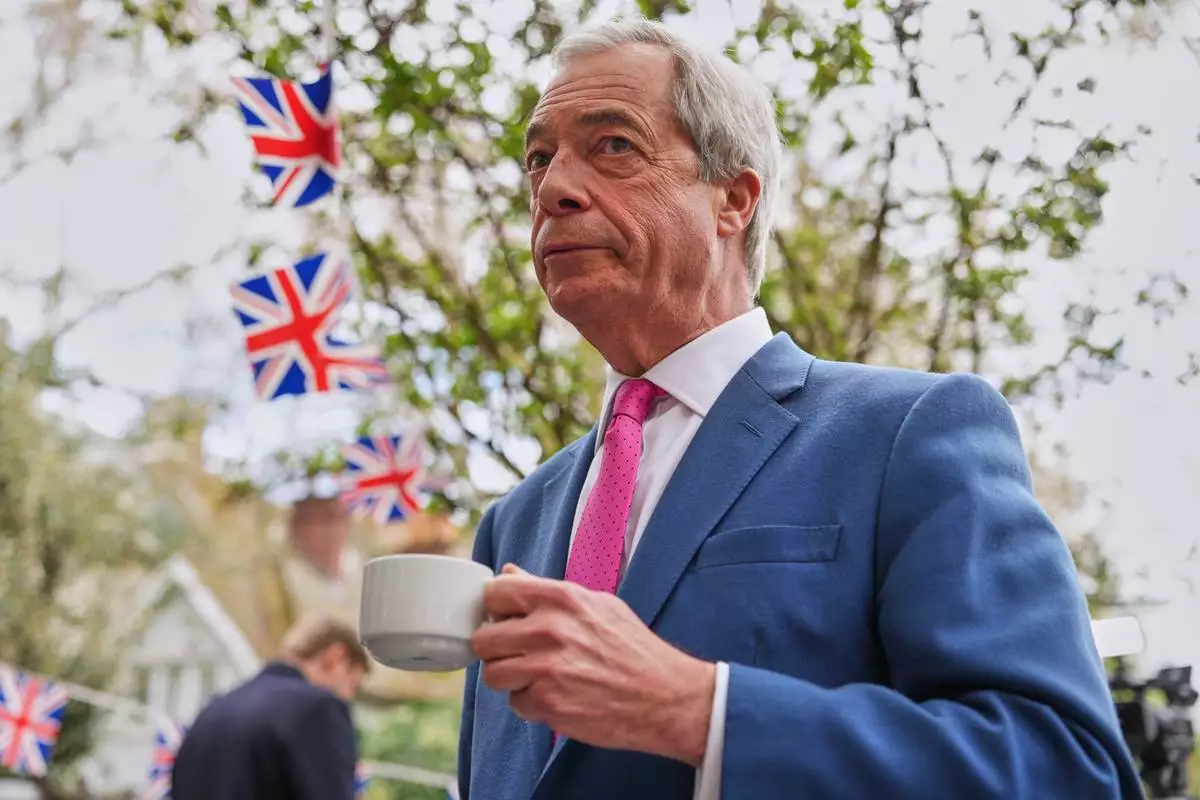
FILE - Nigel Farage, the leader of Reform UK, drinks a cup of tea as he meets supporters after a news conference in London on April 2, 2026. (AP Photo/Kirsty Wigglesworth, File)
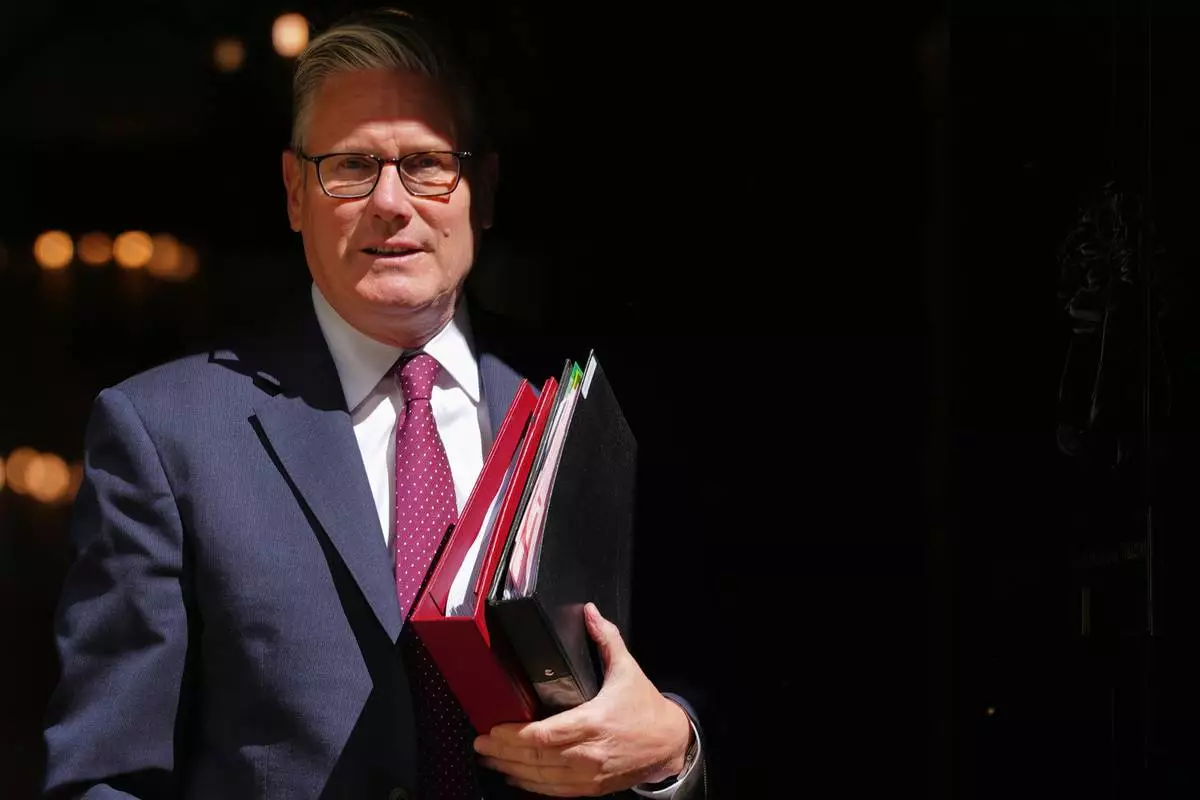
FILE - Britain's Prime Minister Keir Starmer leaves 10 Downing Street in London on April 29, 2026. (AP Photo/Kirsty Wigglesworth, File)