Skip to Content Facebook Feature Image

59% of Organizations Made a "Bad AI Hire" in the Past Year, New TestGorilla Research Reveals

Business

59% of Organizations Made a "Bad AI Hire" in the Past Year, New TestGorilla Research Reveals
Business

Business

59% of Organizations Made a "Bad AI Hire" in the Past Year, New TestGorilla Research Reveals

2026-05-06 16:01 Last Updated At:16:10

LONDON--(BUSINESS WIRE)--May 6, 2026--

TestGorilla, the leading skills-based hiring platform, today released The State of Hiring for AI Fluency, revealing a fundamental shift in talent evaluation: AI fluency has overtaken domain expertise as the top hiring priority. 53% of hiring managers now prefer candidates with strong AI fluency over deep subject matter experts.

This press release features multimedia. View the full release here: https://www.businesswire.com/news/home/20260506155219/en/

But ambition is outpacing reality. Although 72% of UK and 71% of US organizations have formally defined AI fluency, and nearly all list it as a hiring requirement, 59% across both markets still made a bad AI hire in the past year — a candidate who spoke the language fluently in the interview but couldn't apply it on the job.

"Organizations are no longer just looking for subject matter experts; they are looking for AI-augmented performers who can use emerging technology to 10x their output," says Wouter Durville, CEO of TestGorilla. "But a candidate can learn the vocabulary, 'agentic workflows,' 'RAG,' 'prompt chaining' in a single weekend. They can describe a workflow convincingly without ever having built one."

The Infrastructure Paradox

TestGorilla's research identifies an "Infrastructure Paradox": companies are investing in AI hiring frameworks built on the same broken proxies that have failed recruiters for decades. The report flags three critical issues:

A bad AI hire can cost more to fix than a vacancy: in lost output, failed projects, and rehiring costs.

A Transatlantic Divide

The data exposes a sharp split. 33% of US organizations report frequent AI-driven errors, compared to just 13% in the UK. UK employers are also less likely to set the bar at mere tool awareness (29% vs. 45% in the US), showing stronger internal alignment on what AI fluency requires.

The conclusion is the same on both sides: subjective evaluation is no longer fit for purpose. Objective, skills-based assessment is the only reliable path to verifying AI competence.

Read TestGorilla's full report on the State of Hiring for AI Fluency 2026here.

About the Data

The State of Hiring for AI Fluency draws on a February 2026 survey of 1,928 senior hiring leaders across the US and UK, spanning 29 industries and organizations hiring 1 to 250+ roles a year. The 15-question survey explored how companies define and measure AI fluency. Findings were enriched by TestGorilla's "Hire for the AI Era" virtual event and frameworks from Zapier, IBM, and the Microsoft and LinkedIn 2025 Work Trend Index.

About TestGorilla

TestGorilla is a skills-based hiring platform helping 10,000+ organizations find and hire the right people - faster, fairer, and without the bias of CVs. With 350+ science-backed assessments, 100+ AI interviews, resume scoring, and role simulations. TestGorilla gives hiring teams everything they need to evaluate talent on what actually matters: proven ability.

As of December 2025, TestGorilla has been working with companies to help them identify and hire AI-fluent talent and develop scientifically-backed tests and interviews to identify role-specific AI fluency.
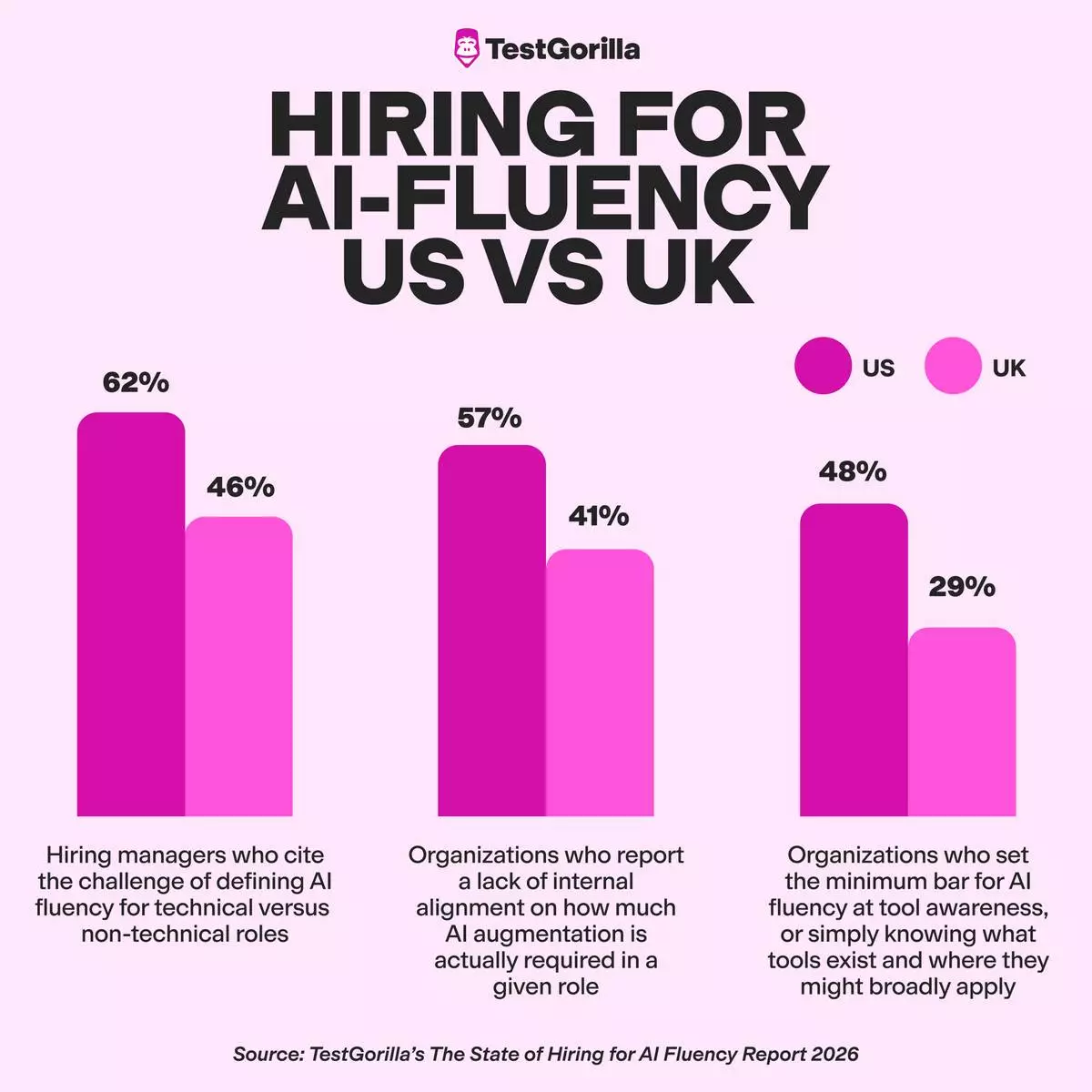
TestGorilla's The State of Hiring for AI Fluency Report Reveals a Transatlantic Divide between US and UK: Study of nearly 2,000 senior hiring leaders finds 53% now prioritize AI fluency over domain expertise, but a critical gap between definitions and measurement is producing confident wrong hires on both sides of the Atlantic

TestGorilla's The State of Hiring for AI Fluency Report Reveals a Transatlantic Divide between US and UK: Study of nearly 2,000 senior hiring leaders finds 53% now prioritize AI fluency over domain expertise, but a critical gap between definitions and measurement is producing confident wrong hires on both sides of the Atlantic
KYIV, Ukraine (AP) — Russia fired dozens of drones at Ukraine in nighttime attacks, Ukrainian officials said Wednesday, disregarding a unilateral ceasefire announced by Kyiv that began at midnight.

The Russian Defense Ministry claimed that Ukraine hadn’t abided by its own ceasefire, saying that air defenses shot down 53 Ukrainian drones over Russian regions, the illegally annexed Crimean peninsula and the Black Sea between Tuesday evening and dawn Wednesday.

There had been no official sign from Moscow that it would heed Kyiv’s ceasefire, and there was little hope for a pause in hostilities as the war stretches into its fifth year following Russia’s all-out invasion of its neighbor. U.S.-led diplomatic efforts to stop the war over the past year have come to nothing.

Ukrainian President Volodymyr Zelenskyy had announced the move after Russia said it would hold its own unilateral ceasefire over two days later this week while it marks the 81st anniversary of the defeat of Nazi Germany in World War II. The Ukrainian leader said any breach of the ceasefire would trigger a military response.

Russian forces launched 108 drones and three missiles overnight, Ukrainian Foreign Minister Andrii Sybiha said, with attacks continuing throughout the night and into Wednesday morning.

“Moscow once again ignored a realistic and fair call to end hostilities, supported by other states and international organizations,” Sybiha said in a post on X.

On Tuesday, Russian drone and missile strikes on Ukraine killed at least 22 people and wounded more than 80 others, authorities said.

Moscow’s proposal to stop fighting on Friday and Saturday follows a pattern of Russia declaring short unilateral ceasefires during the war timed to coincide with various holidays, most recently Orthodox Easter.

Those suspensions of combat don’t produce any tangible results amid deep mistrust between the warring sides.

Sybiha said Russia’s actions exposed its calls for a separate ceasefire around May 9 as insincere. “Putin only cares about military parades, not human lives,” he said.

The diplomat called for increased international pressure on Moscow, including new sanctions, diplomatic isolation, accountability measures for war crimes and expanded military and civilian support for Ukraine.

Follow AP’s coverage of the war in Ukraine at https://apnews.com/hub/russia-ukraine

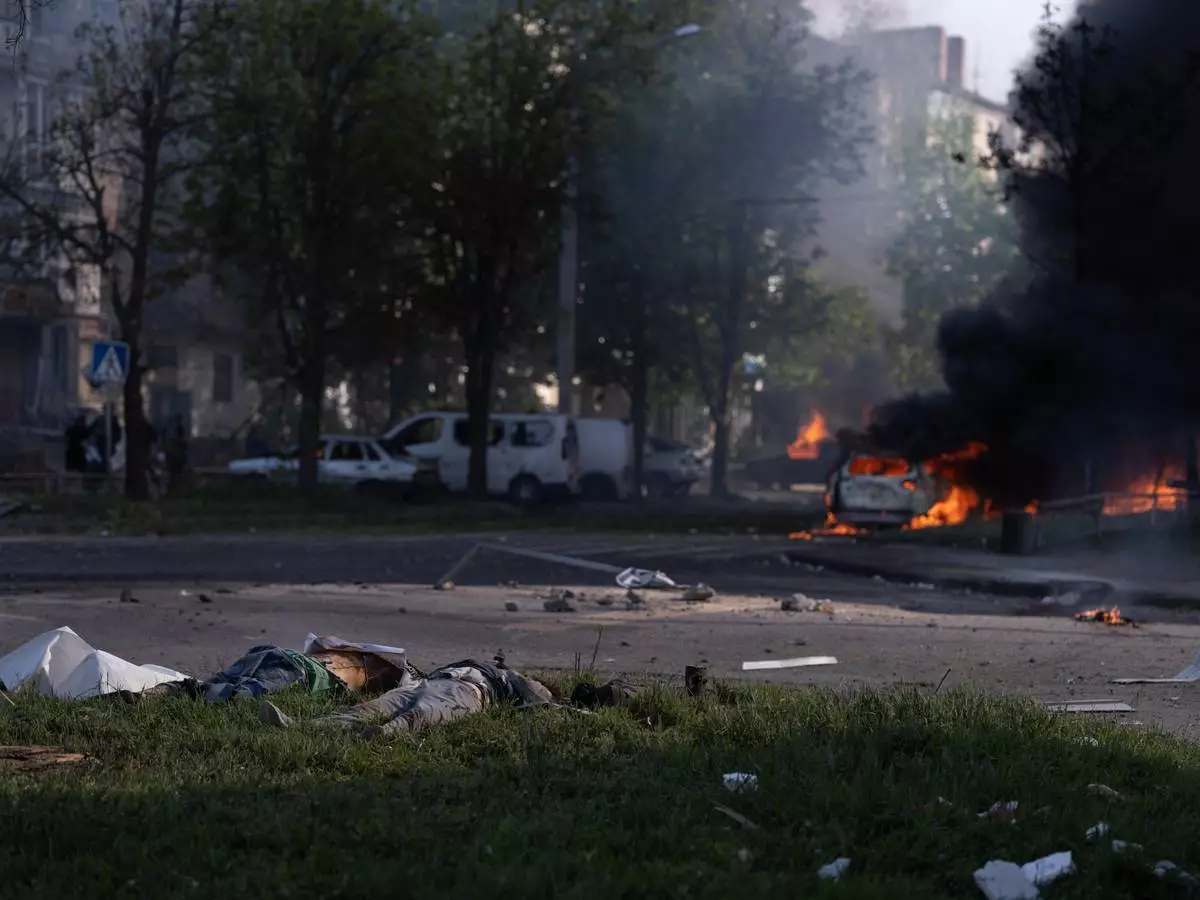
This photo provided by Ukraine's 93rd Kholodnyi Yar Separate Mechanized Brigade press service, shows the site of an aerial guided bomb strike after Russia's air attack in Kramatorsk, Donetsk region, Ukraine, Tuesday, May 5, 2026. (Iryna Rybakova/Ukraine's 93rd Mechanized Brigade via AP)

This photo provided by Ukraine's 93rd Kholodnyi Yar Separate Mechanized Brigade press service, shows the site of an aerial guided bomb strike after Russia's air attack in Kramatorsk, Donetsk region, Ukraine, Tuesday, May 5, 2026. (Iryna Rybakova/Ukraine's 93rd Mechanized Brigade via AP)

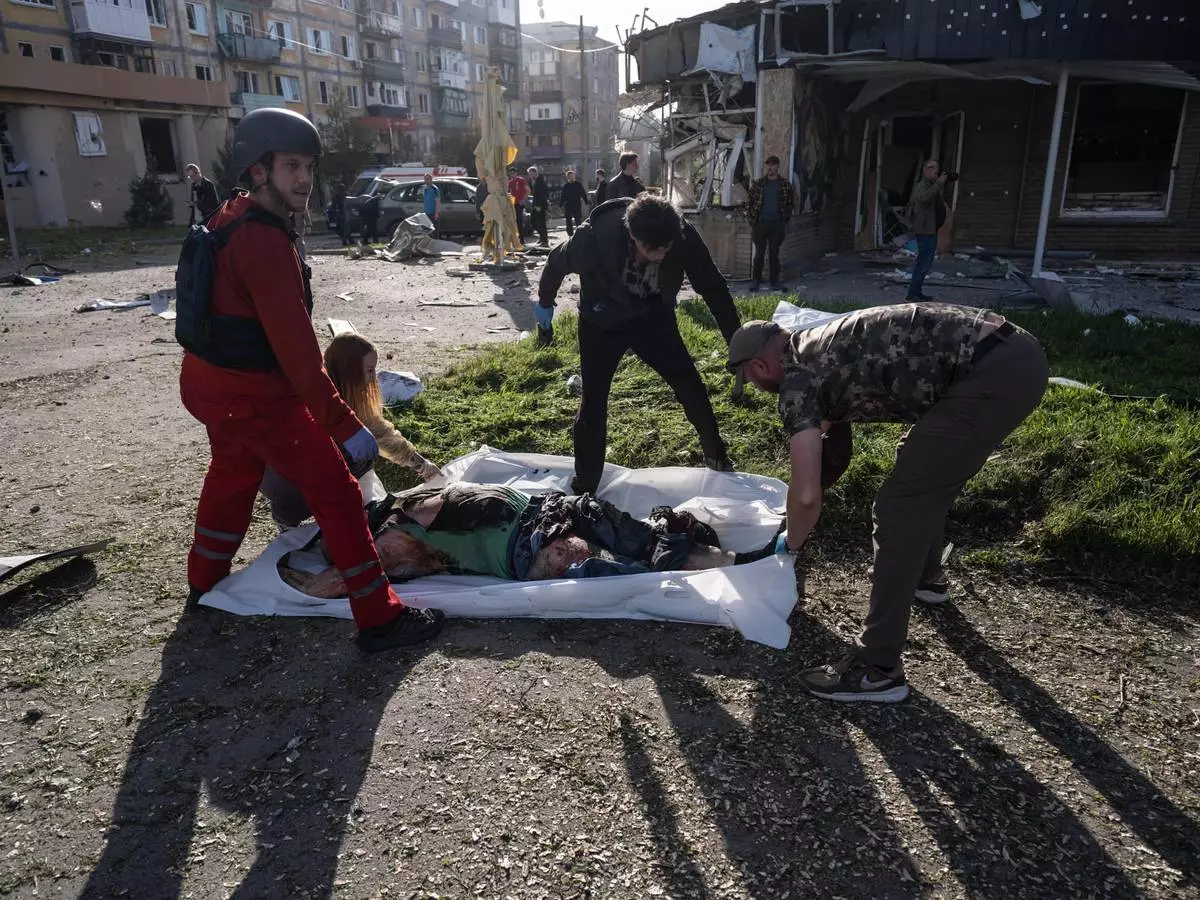
EDS NOTE: GRAPHIC CONTENT - In this photo provided by Ukraine's 93rd Kholodnyi Yar Separate Mechanized Brigade press service, people cover bodies of civilians killed in Russia's aerial guided bomb attack in Kramatorsk, Donetsk region, Ukraine, Tuesday, May 5, 2026. (Iryna Rybakova/Ukraine's 93rd Mechanized Brigade via AP)

EDS NOTE: GRAPHIC CONTENT - In this photo provided by Ukraine's 93rd Kholodnyi Yar Separate Mechanized Brigade press service, people cover bodies of civilians killed in Russia's aerial guided bomb attack in Kramatorsk, Donetsk region, Ukraine, Tuesday, May 5, 2026. (Iryna Rybakova/Ukraine's 93rd Mechanized Brigade via AP)

Recommended Articles