Skip to Content Facebook Feature Image

Study says trees counter half the world's urban heating, but not in the places that need it most

News

Study says trees counter half the world's urban heating, but not in the places that need it most
News

News

Study says trees counter half the world's urban heating, but not in the places that need it most

2026-05-06 18:16 Last Updated At:18:30

WASHINGTON (AP) — Trees are countering nearly half the urban heating from pavement and buildings in the world's cities, but they're not doing enough cooling in hotter, poorer cities where it's needed the most as the world warms, a new study found.

When averaged out over all the world’s cities, tree cover — by giving shade and releasing water vapor — cools an average of 0.27 degrees Fahrenheit (0.15 degrees Celsius), according to a study in Wednesday’s Nature Communications.

More Images
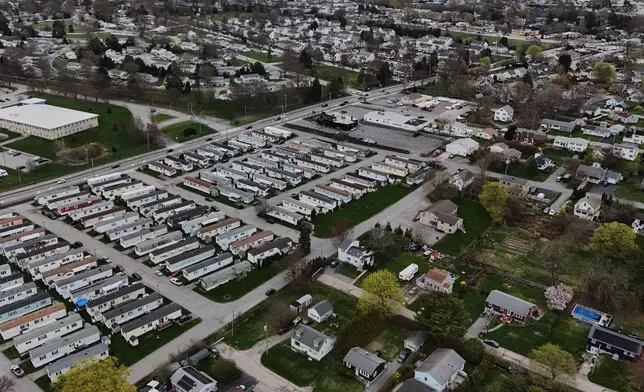
FILE - A mobile home park is visible April 22, 2026, in Newport, R.I. (AP Photo/Joshua A. Bickel, File)
FILE - A mobile home park is visible April 22, 2026, in Newport, R.I. (AP Photo/Joshua A. Bickel, File)

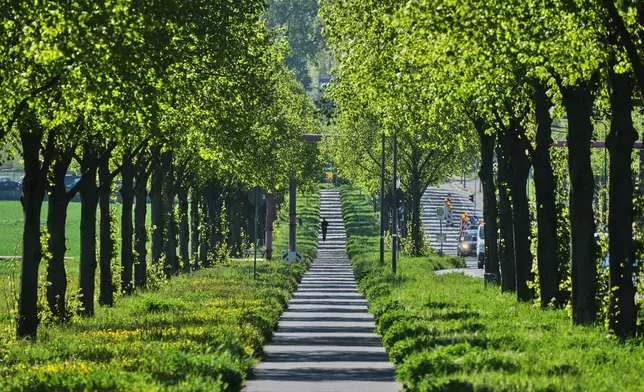
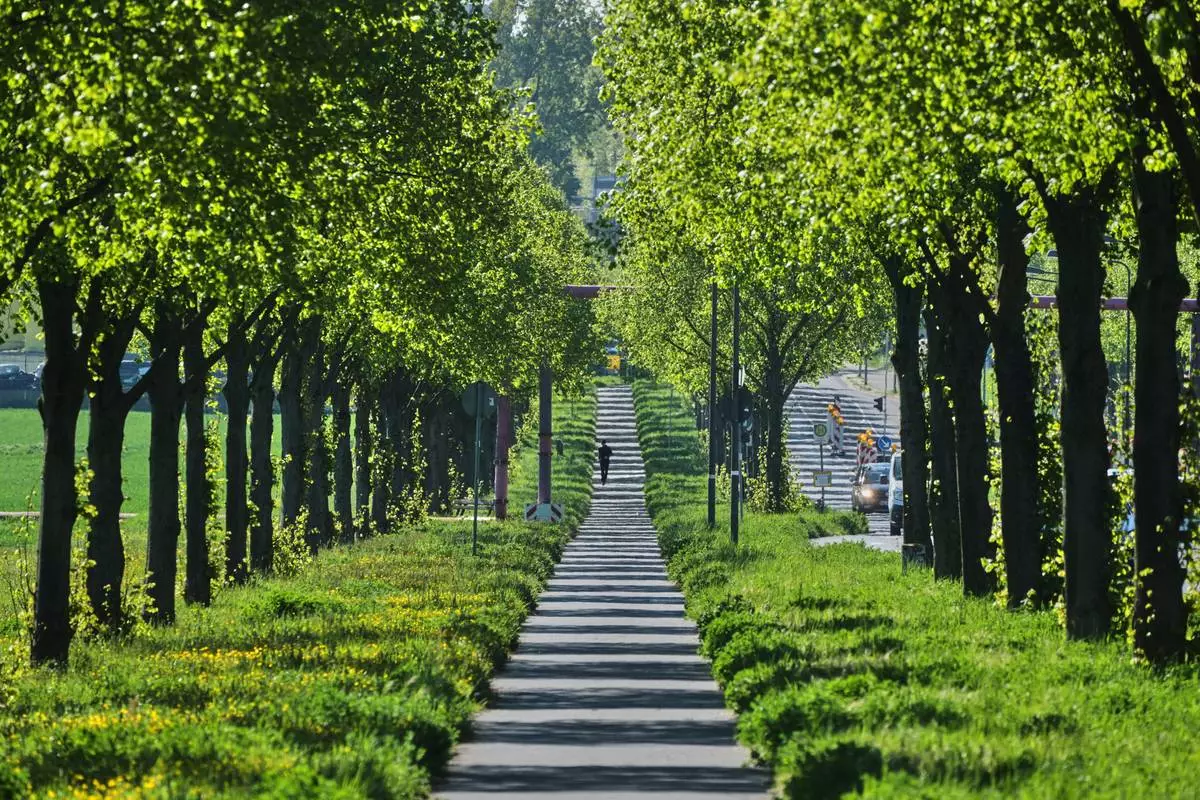
FILE - A man runs through an alley on the outskirts of Frankfurt, Germany, April 23, 2026. (AP Photo/Michael Probst, File)

FILE - A man runs through an alley on the outskirts of Frankfurt, Germany, April 23, 2026. (AP Photo/Michael Probst, File)

FILE - Allie Bujakoski collects a native tree seedling as part of a collection effort April 22, 2026, in Newport, R.I. (AP Photo/Joshua A. Bickel, File)

FILE - Allie Bujakoski collects a native tree seedling as part of a collection effort April 22, 2026, in Newport, R.I. (AP Photo/Joshua A. Bickel, File)

FILE - A person walks through the blooming Yoshino cherry trees at the University of Washington, April 5, 2026, in Seattle. (AP Photo/Lindsey Wasson, File)

FILE - A person walks through the blooming Yoshino cherry trees at the University of Washington, April 5, 2026, in Seattle. (AP Photo/Lindsey Wasson, File)

Without those trees, the world cities would warm on average by 0.56 degrees Fahrenheit (0.31 degrees Celsius) due to the urban heat island effect, where dark roofs and pavement absorb heat. The human-caused warming mechanism is distinct from climate change caused by the burning of fossil fuels.

Researchers built their analysis of Earth’s nearly 9,000 large cities by measuring temperatures for segments of about 150 city blocks each. That allowed them to capture cooling effects for cities and neighborhoods so that trees in New York’s Central Park, for example, weren’t credited for cooling more built-up areas miles away in the Bronx.

About 185 million people living in 31 of the larger cities already feel an average cooling from tree cover of at least half a degree Fahrenheit (0.3 degrees Celsius). But study lead author Rob McDonald, a scientist at the Nature Conservancy, said poorer and hotter large urban centers that need it the most aren’t getting as much relief from higher heat, which can kill by confusing the brain, shutting down organs and overworking the heart.

Meteorologists measure the temperature difference between a city center and nearby rural area to find the urban heat island effect. Scientists in this study used a combination of weather station measurements, satellite data and computer models to see the cooling trees provided.

In 20 cities with at least 3 million people, residents feel less a tenth of a degree Fahrenheit (0.05 degrees Celsius) from cooling trees. In four cities — Dakar, Senegal; Jeddah, Saudi Arabia; Kuwait City and Amman, Jordan — there's such minimal tree cover that the more than 15 million people who live there get essentially no cooling from trees.

On the other end of the spectrum, McDonald looked at cities where tree cover cools at least 0.45 degrees Fahrenheit (0.25 degrees Celsius). Nearly 40% of cities in wealthy nations get that much cooling, but just under 9% in the poorest countries have that amount of tree relief, the study said.

The list of places that cool the most is topped by Berlin and includes Atlanta, Moscow, Washington, Seattle and Sydney, which have more trees. For example, Atlanta has 64% of its land area under tree canopy, McDonald said. Wealthy areas in North America have larger lot sizes, individual ownership and residents with more political clout, all of which contribute to more trees growing and providing larger cover, said Chris Greene of the University of Dalhousie in Canada, who wasn't part of the study.

“There’s this inequality,” McDonald said. “When you look at cities globally, there are many, many cities, especially in developing countries, that have very low tree cover, and so I think the air temperature cooling number was a little less than we expected.”

Thomas Crowther, an ecologist at the King Abdullah University of Science and Technology in Saudi Arabia, said every little bit helps. He's in a region where cities have nearly no cooling from tree cover, often because water is at a premium.

“As up to 75% of the human population shifts towards living in urban environments, these buffering effects of urban vegetation are going to be vital,” said Crowther, who wasn't part of the research. “But we have to overturn the devastating inequities in the distribution of urban trees, so that their benefits can be experienced by the low- and middle-income communities that are often most vulnerable to the effects of extreme temperatures.”

The study's authors said that cities, especially poorer and hotter ones, can and should do more to increase tree cover. But because of limitations in availability of water, land and proper species, combined with worsening climate change, at most they'd reduce future urban heating by 20%, McDonald said.

“Trees won’t save us from climate change,” McDonald said. “The climate scenarios are showing a much warmer world and there’s only so much of that that tree cover can help with.”

Still, planting trees has benefits beyond lowering heat. In 2019, Crowther and Jean-Francois Bastin in a study in the journal Science suggested planting a trillion new trees — on top of the 3 trillion trees already growing on the planet — to suck up carbon dioxide, not so much for their cooling.

“Planting trees does help fight climate change in multiple ways, but this strategy is not nearly enough to slow climate change to a significant degree,” said University of Michigan environment dean Jonathan Overpeck, who wasn’t part of the study. “Only by transitioning away from fossil fuels in favor of renewable energy and battery storage can we hope to halt the climate change that is wreaking havoc around the planet.”

The Associated Press’ climate and environmental coverage receives financial support from multiple private foundations. AP is solely responsible for all content. Find AP’s standards for working with philanthropies, a list of supporters and funded coverage areas at AP.org.
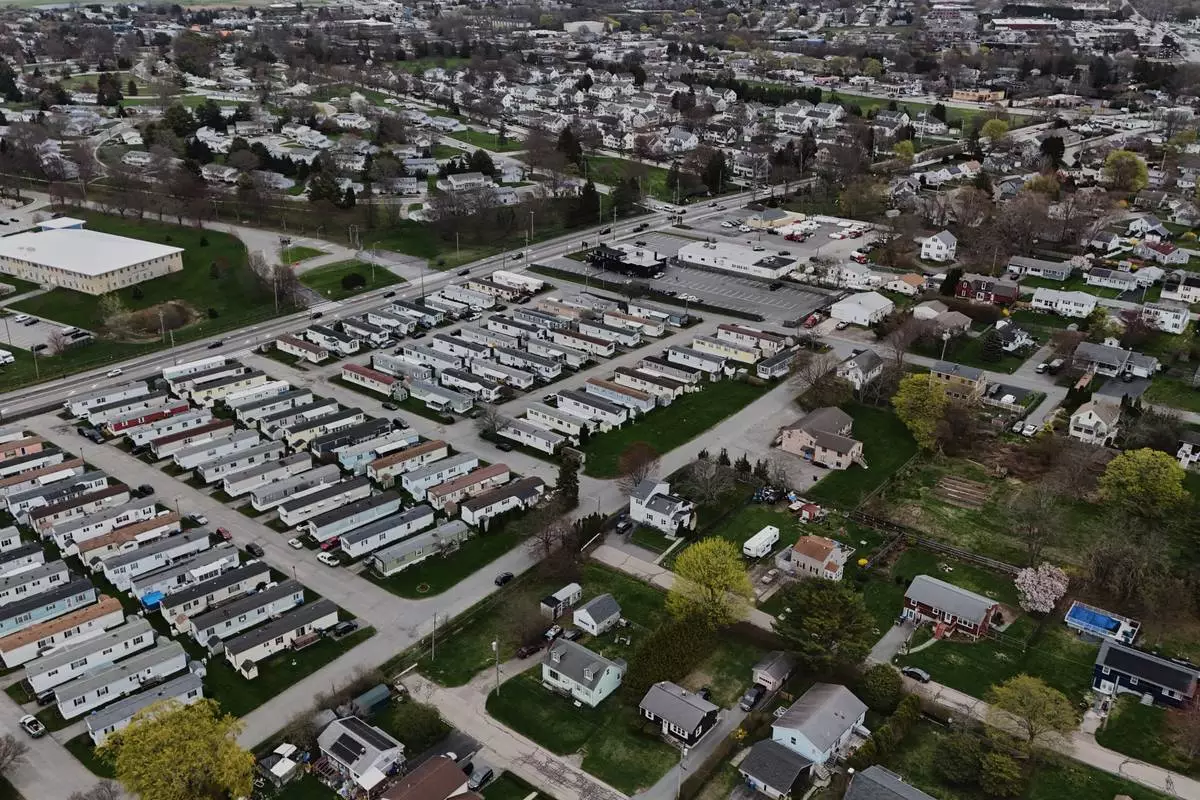
FILE - A mobile home park is visible April 22, 2026, in Newport, R.I. (AP Photo/Joshua A. Bickel, File)
FILE - A mobile home park is visible April 22, 2026, in Newport, R.I. (AP Photo/Joshua A. Bickel, File)

FILE - A man runs through an alley on the outskirts of Frankfurt, Germany, April 23, 2026. (AP Photo/Michael Probst, File)

FILE - A man runs through an alley on the outskirts of Frankfurt, Germany, April 23, 2026. (AP Photo/Michael Probst, File)

FILE - Allie Bujakoski collects a native tree seedling as part of a collection effort April 22, 2026, in Newport, R.I. (AP Photo/Joshua A. Bickel, File)

FILE - Allie Bujakoski collects a native tree seedling as part of a collection effort April 22, 2026, in Newport, R.I. (AP Photo/Joshua A. Bickel, File)

FILE - A person walks through the blooming Yoshino cherry trees at the University of Washington, April 5, 2026, in Seattle. (AP Photo/Lindsey Wasson, File)

FILE - A person walks through the blooming Yoshino cherry trees at the University of Washington, April 5, 2026, in Seattle. (AP Photo/Lindsey Wasson, File)
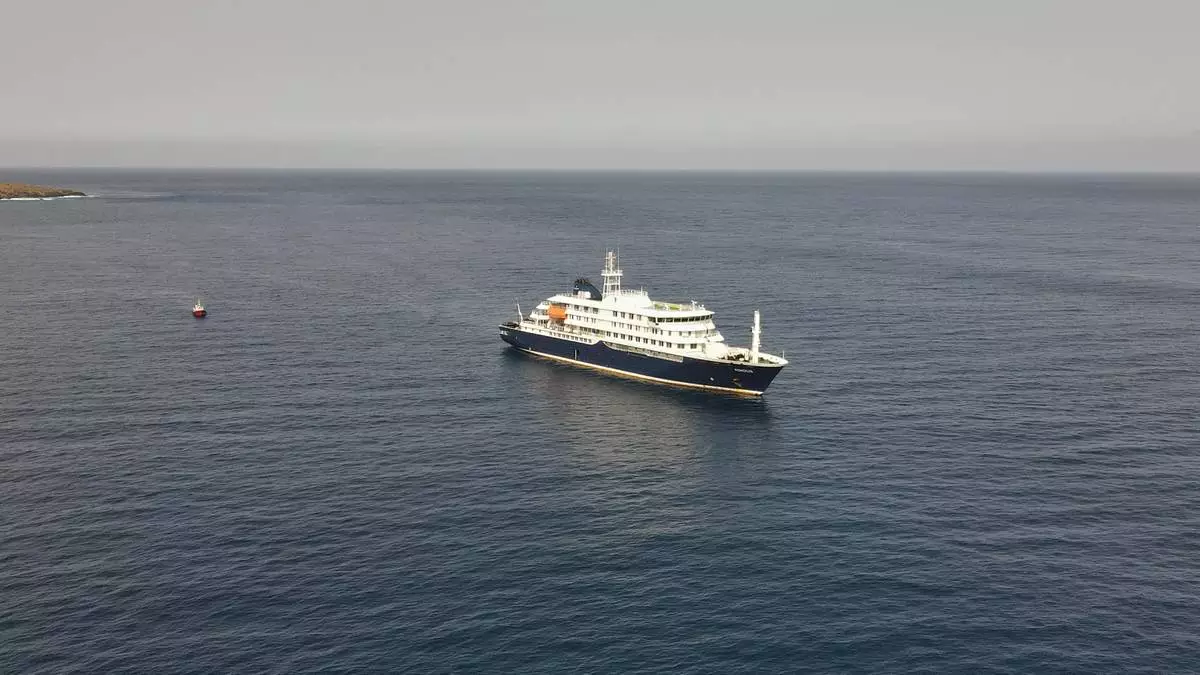
JOHANNESBURG (AP) — The head of the World Health Organization said Wednesday that three patients with suspected hantavirus cases have been evacuated from an affected cruise ship and are on their way to the Netherlands.

WHO Director-General Tedros Adhanom Ghebreyesus said the U.N. health agency is working with the operators of the Dutch-flagged MV Hondius cruise ship to closely monitor the health of passengers and crew.

“At this stage, the overall public health risk remains low,” he wrote on his X account.

THIS IS A BREAKING NEWS UPDATE. AP’s earlier story follows below.

JOHANNESBURG (AP) — The cruise ship at the center of a deadly hantavirus outbreak and which is stuck of the coast of Cape Verde with nearly 150 people on board was waiting Wednesday to head to Spain’s Canary Islands. Meanwhile, health authorities in South Africa and Switzerland identified a strain of the virus that can be transmitted between humans in rare cases in three cases.

Authorities in Switzerland announced Wednesday that a man who returned from South America and traveled on the cruise ship has tested positive for the virus and is receiving treatment.

Three passengers have died and at least five people have been sickened by hantavirus on board the Dutch-flagged MV Hondius cruise ship. Hantavirus usually spreads by inhaling contaminated rodent droppings. There have been three laboratory-confirmed cases.

The ship left Argentina on April 1 on an Atlantic cruise and was scheduled to include stops in Antarctica, the Falkland Islands and other locations. However, the itinerary may have changed because of the situation on board.

Spain’s Health Ministry said in a statement late Tuesday that it would receive the MV Hondius vessel in the Canary Islands after a request from the World Health Organization and the European Center for Disease Prevention and Control.

But for now it remains marooned off the coast of Cape Verde, an island nation off West Africa in the Atlantic. The World Health Organization said passengers are isolating in their cabins.

South African health authorities said they identified the Andes strain of hantavirus in two passengers who were on the ship.

The World Health Organization says the Andes virus, a specific species of hantavirus, is found in South America, primarily in Argentina and Chile.

The Andes virus can be spread between people, though this is rare and the spread of the disease is typically contained because it would spread only through close contact, such as by sharing a bed or sharing food, experts say.

The South African Department of Health said in a report that the information came from tests performed on the passengers after they were removed from the ship and flown to South Africa.

One of the passengers, a British man, is in intensive care in a South African hospital. Tests were performed on the other passenger posthumously after she died in South Africa.

A statement from the Federal Office of Public Health said that the man “returned to Switzerland after traveling on the cruise ship on which there were a number of hantavirus cases.” It said his case also involved the Andes virus.

It said he had returned from a trip to South America with his wife at the end of April. After noticing symptoms, he went to the University Hospital Zurich after consulting with his doctor and was immediately placed in isolation.

The patient’s wife hasn’t shown any symptoms but is self-isolating as a precaution, the statement said.

The public health office said that “there is currently no risk to the Swiss public.”

The WHO said in a social media post that the man responded to “an email from the ship’s operator informing the passengers of the health event” and went to the hospital.

The cruise ship will be welcomed to Spain’s Canary Islands, according to Spanish authorities, as the vessel waited off the coast of West Africa for a third day Wednesday for sick passengers to be evacuated.

However, the regional president of Spain’s Canary Islands, Fernando Clavijo, said Wednesday that he was worried the arrival of the ship could put the local population at risk and demanded an urgent meeting with Spanish Prime Minister Pedro Sánchez.

“Neither the populace nor the government of the Canary Islands can rest assured because it is clear that the danger to the population is real,” Clavijo told Onda Cero radio.

Medical evacuation teams were on standby Wednesday morning in the port of Praia, the capital of Cape Verde.

Associated Press journalists nearby saw a boat approach the ship on Tuesday night before turning back soon after. It was not clear what happened, or whether that was the evacuation team.

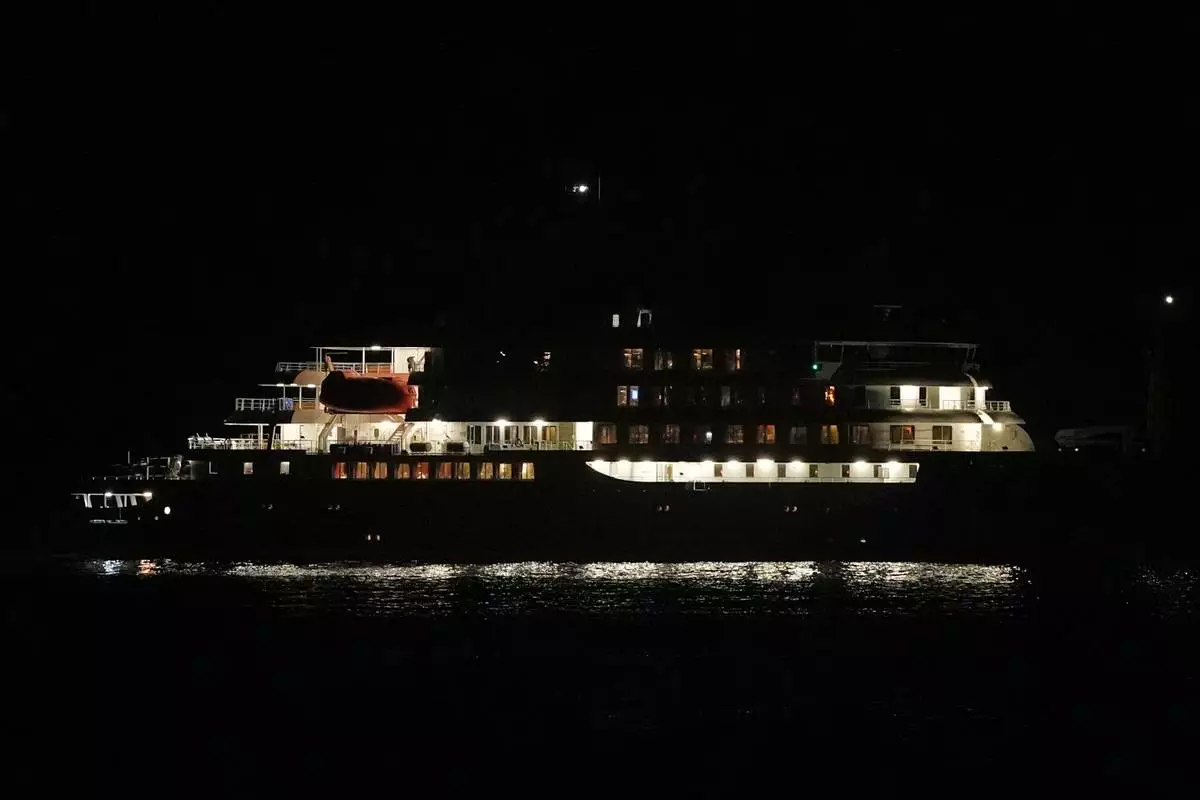
A night view of the MV Hondius cruise ship anchored at a port in Praia, Cape Verde, Tuesday, May 5, 2026. (AP Photo/Misper Apawu)

A night view of the MV Hondius cruise ship anchored at a port in Praia, Cape Verde, Tuesday, May 5, 2026. (AP Photo/Misper Apawu)

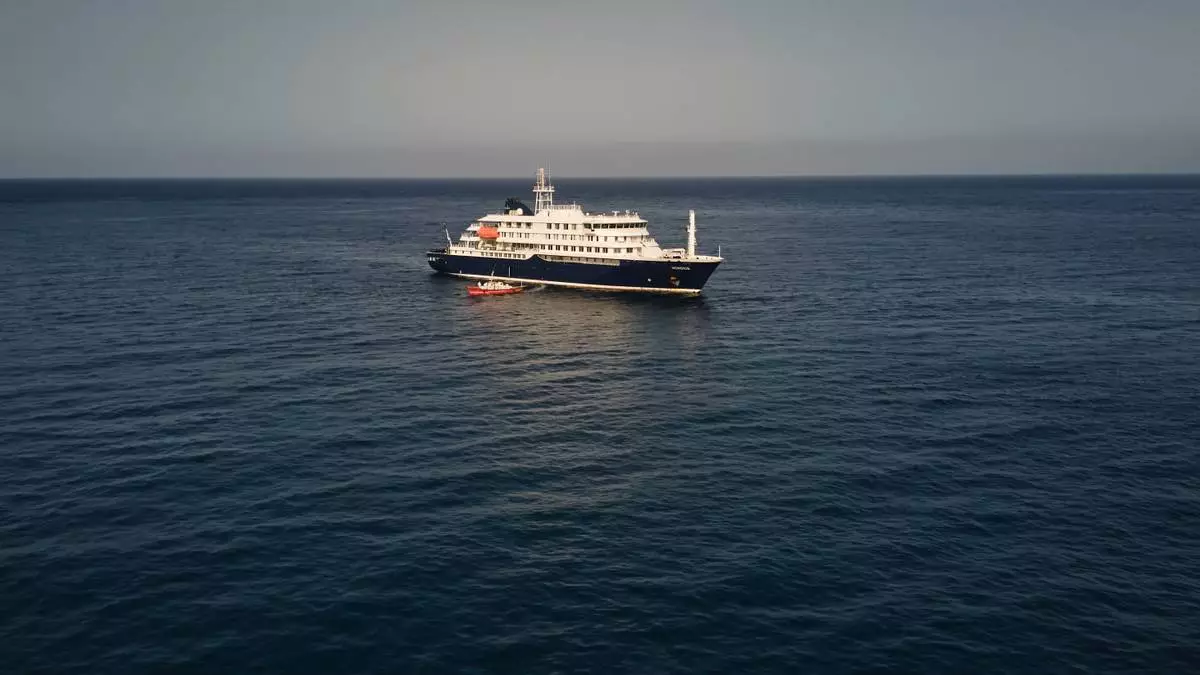
An aerial view of the MV Hondius Dutch cruise ship anchored in the Atlantic off Cape Verde, Tuesday, May 5, 2026. (AP Photo/Arilson Almeida)

An aerial view of the MV Hondius Dutch cruise ship anchored in the Atlantic off Cape Verde, Tuesday, May 5, 2026. (AP Photo/Arilson Almeida)

An aerial view of the MV Hondius Dutch cruise ship anchored in the Atlantic off Cape Verde, Tuesday, May 5, 2026. (AP Photo/Arilson Almeida)

An aerial view of the MV Hondius Dutch cruise ship anchored in the Atlantic off Cape Verde, Tuesday, May 5, 2026. (AP Photo/Arilson Almeida)

Recommended Articles