
Skip to Content Facebook Feature Image

Poland warns Russia is moving from low-cost recruits to professional sabotage cells

News

Poland warns Russia is moving from low-cost recruits to professional sabotage cells
News

News

Poland warns Russia is moving from low-cost recruits to professional sabotage cells

2026-05-06 18:40 Last Updated At:18:50

WARSAW, Poland (AP) — Russia is shifting from individual recruits to ‘professional’ networks to carry out a campaign of sabotage and other attacks across Europe, Poland's internal security service said in a report published Wednesday.

European officials and law enforcement have previously warned that Russia is waging a hybrid war against Europe, including sabotage, arson attacks, and vandalism, as well as influence operations. The Associated Press has tracked more than 150 such incidents linked to Moscow by Western officials since the invasion of Ukraine.

Many of the people involved were recruited online as disposable agents and some had no idea they were working for Moscow. Russia is now moving away from using those low-cost, one-time recruits toward more “professional” operations, tapping into organized crime networks, according to the report published on Wednesday by the Internal Security Agency, or ABW.

Poland has conducted as many espionage investigations in the past two years as it did over the previous three decades, ABW said, noting that 62 people have been arrested.

Those espionage efforts are part of Russia's “undeclared war with the Western world,” ABW said, in which “Russian intelligence is increasingly using methods typical of special forces (reconnaissance and sabotage).”

In 2024 and 2025, 69 espionage investigations were initiated, the same total number as between 1991 and 2023, ABW reported.

“The long-term goal of the Russian Federation remains the disintegration of Euro-Atlantic structures, the isolation of specific countries and their internal socio-political and economic destabilization,” the report stated. While Poland was primarily targeted by Russia, some of the espionage activities were also dictated by Belarus' secret services, which are “closely cooperating” with Moscow, as well as by China.

The “mass surveillance” operations in Poland are meant to set the ground for acts of diversion, which ABW considers “the most serious challenge” it faces. Russian intelligence services, who are escalating their actions in Poland, are accepting the possibility of “occurrence of fatalities,” the Polish agency observed.

ABW also noted an increasing “professionalization” of Russian sabotage activities in 2024-2025. According to the agency, in 2023, Russian services were still basing their operations mainly on so-called one-time agents, recruited ad hoc via the internet. That is a model that Russia is thought to have expanded following the expulsion of its intelligence officers by Western European countries after Russia's full-scale invasion of Ukraine in 2022.

In 2024-2025, however, Russia placed greater emphasis on the creation of “complex sabotage cells” relying on "the closed structures of organized crime,” ABW noted.

“Russians prefer individuals with experience in law enforcement (e.g., former soldiers, police officers, mercenaries from the Wagner Group),” the report said.

ABW added that Russian services had also intensified training conducted on the territory of Russia itself, aimed at "professionally preparing agents for terrorist activities."

In November 2025, Poland faced what Prime Minister Donald Tusk called an “unprecedented act of sabotage,” when explosions and other malfunctions on a section of railway line used for deliveries to Ukraine affected two trains, including a passenger train. There were no casualties.
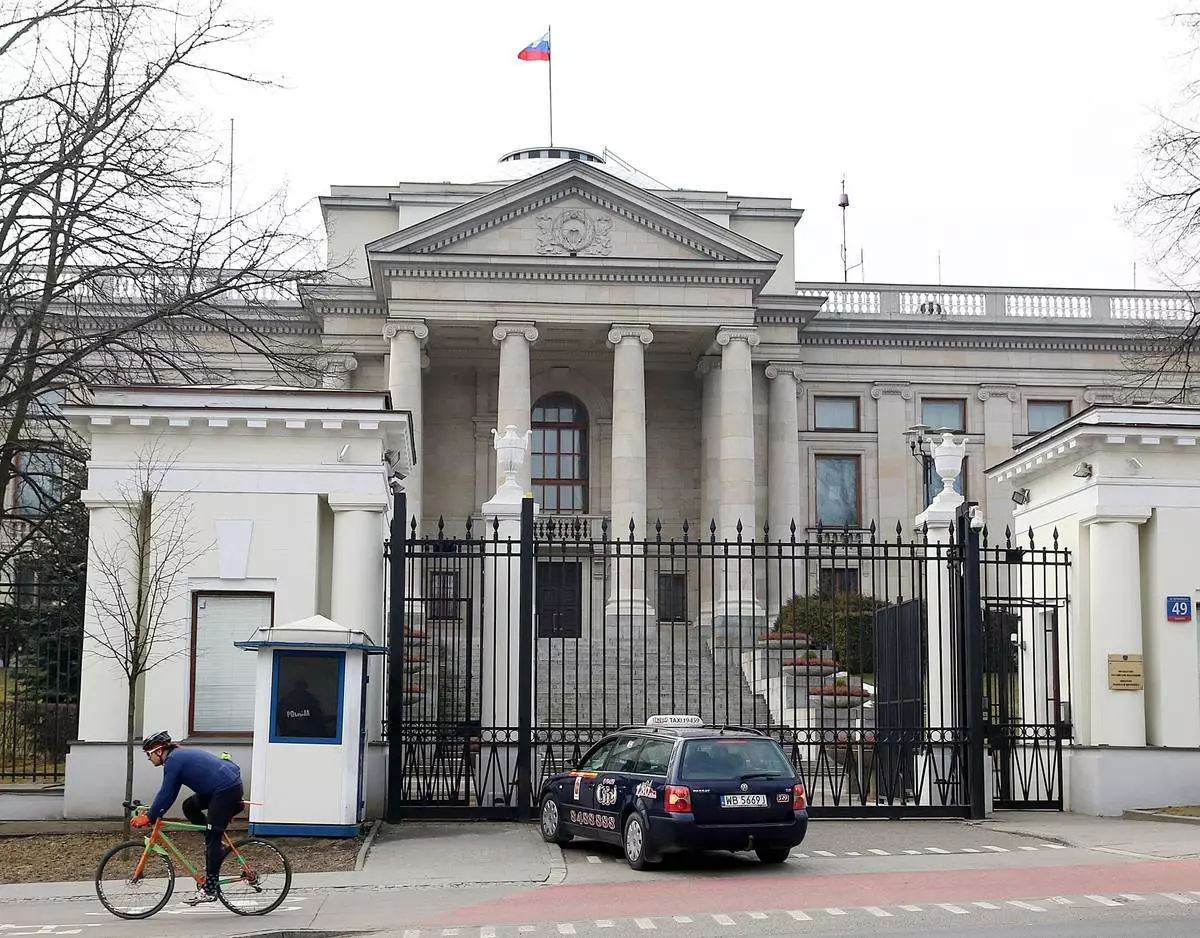
FILE - A taxi in front of the Russian Embassy in Warsaw, Poland, Monday, March 26, 2018. (AP Photo/Czarek Sokolowski, File)

FILE - A taxi in front of the Russian Embassy in Warsaw, Poland, Monday, March 26, 2018. (AP Photo/Czarek Sokolowski, File)

MELBOURNE, Australia (AP) — An Iranian man who murdered his wife has lost his landmark court bid to prevent Australia from deporting him to the tiny Pacific island of Nauru.

Seven High Court judges unanimously dismissed an appeal by the man against an order last year deporting him to the independent nation of around 12,000 people with a 30-year visa. The man is identified in court only as TCXM because refugees’ identities are protected in Australia.

Immigration Minister Tony Burke issued a statement that applauded the ruling as a win for Australia's control over immigration.

“I welcome the decision of the court. A canceled visa must have consequences in our migration system,” said Burke, who had contested the man's appeal of the deportation order.

Australia last year agreed to pay Nauru 408 million Australian dollars ($296 million) for resettlements of up to 30 years for unwanted noncitizens who could not be deported to their homelands. Nauru also will receive an annual payment of AU$70 million ($51 million).

Eight men have been resettled in Nauru so far under the deal that has been criticized in Australia as being excessively expensive.

Nauru became the solution to a political problem for Australia’s government that was created by another High Court decision in 2023. The court found at the time that stateless people or people who could not be returned to their homelands could no longer be held indefinitely in Australian detention with little chance of a third country offering a home.

More than 350 people, many of them convicted criminals including TCXM, were released in Australia on temporary visas as a result of that ruling. The test case was brought by a convicted child molester, identified in court as NZYQ, who was a refugee and member of Myanmar’s persecuted Rohingya Muslim minority.

TCXM, who is now in his early 60s, came to Australia from Iran in 1990. He was given a protection visa in 1995 and then sentenced to 22 years in prison in 1999 for murdering his wife.

His visa was canceled and he was transferred in 2015 from prison to immigration detention where he remained for eight years. Iran does not accept the forced repatriation of its citizens by other governments. Australia has a policy of not returning refugees to countries where they risk persecution.

TCXM was one of the first three noncitizens chosen to be sent to Nauru under the new bilateral deal. His challenge was rejected by a federal court judge and the decision was upheld Wednesday by the highest court, ending his legal options. TCXM was allowed to stay in Australia while he fought his legal challenge and it’s not clear when he will be deported.

His grounds for appeal included that Nauru’s medical services were inadequate to treat his severe asthma.

He also argued Australia’s agreement with Nauru was unlawful and his deportation was punitive and therefore unconstitutional. Australia’s constitution says punishment must be dealt by courts and never by governments.

Australian governments previously paid Nauru and Papua New Guinea to house asylum seekers who attempted to reach Australia’s shore by boat in squalid detention camps.

The Australian policy of refusing to allow boat arrivals to settle has largely ended people smuggling from Southeast Asian ports in rickety fishing boats that had once thrived.

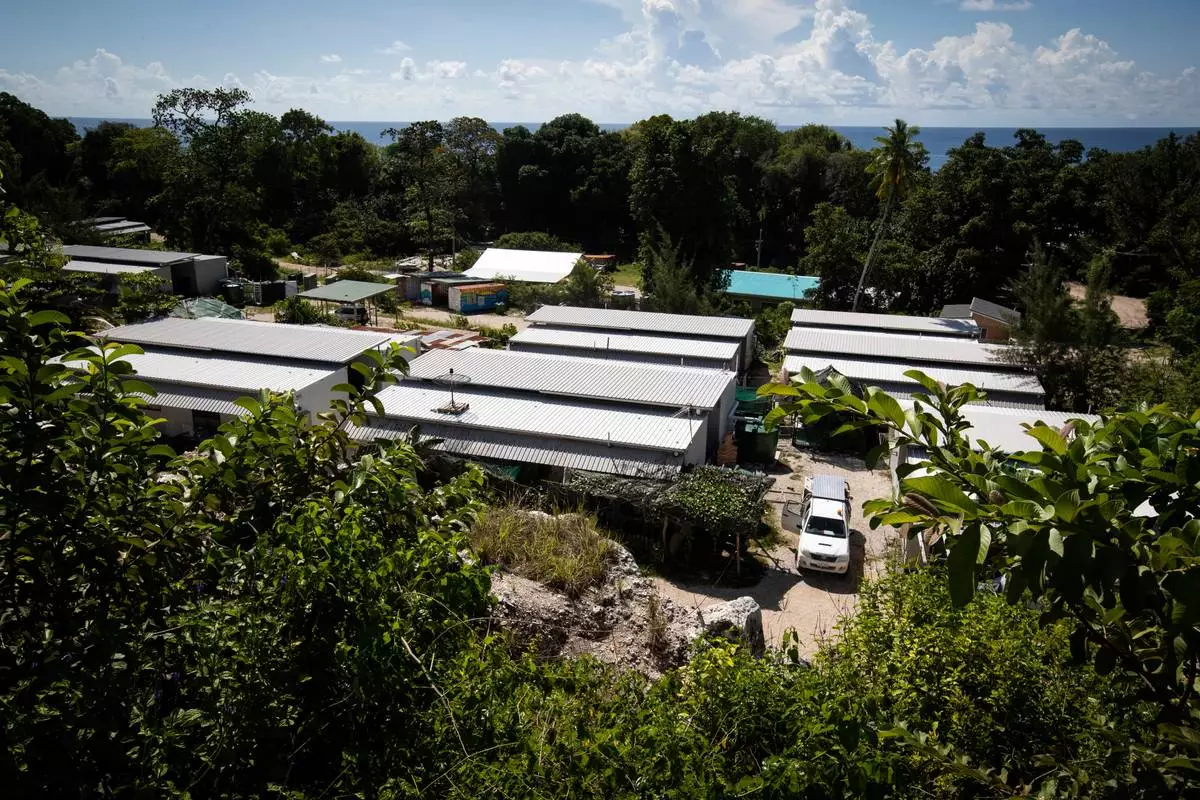
FILE - The Nibok refugee settlement on Nauru is shown from the air, Sept. 4, 2018. (Jason Oxenham/Pool Photo via AP, File)

FILE - The Nibok refugee settlement on Nauru is shown from the air, Sept. 4, 2018. (Jason Oxenham/Pool Photo via AP, File)

Recommended Articles