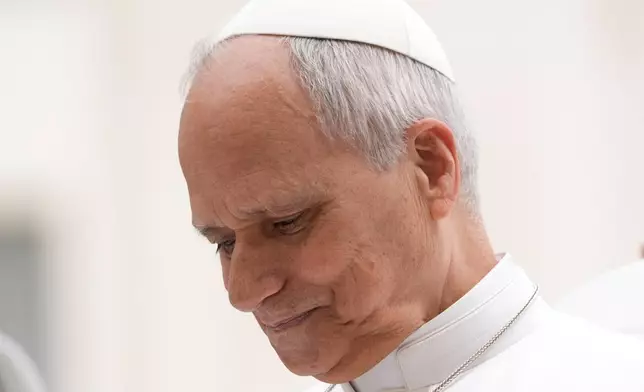
ROME (AP) — Pope Leo XIV will inaugurate the soaring central tower of Barcelona’s famed Sagrada Familia basilica when he visits Spain next month in a weeklong trip that will also take him to a migrant reception center in the Canary Islands, the Vatican said Wednesday.
The June 6-12 visit will first bring Leo to Madrid for meetings with the government, parliament and King Felipe VI and Queen Letizia. He will also preside over a prayer vigil with young people that will recall the last time a pope visited Spain: 2011, when Madrid hosted World Youth Day with Pope Benedict XVI.
Click to Gallery
Pope Leo XIV holds his weekly general audience in St. Peter's Square, at the Vatican, Wednesday, May 6, 2026. (AP Photo/Gregorio Borgia)
Pope Leo XIV holds his weekly general audience in St. Peter's Square, at the Vatican, Wednesday, May 6, 2026. (AP Photo/Gregorio Borgia)
Pope Leo XIV holds his weekly general audience in St. Peter's Square, at the Vatican, Wednesday, May 6, 2026. (AP Photo/Gregorio Borgia)
Pope Leo XIV blesses a child as he arrives for his weekly general audience in St. Peter's Square, at the Vatican, Wednesday, May 6, 2026. (AP Photo/Gregorio Borgia)
Pope Leo XIV arrives as he holds his weekly general audience in St. Peter's Square, at the Vatican, Wednesday, May 6, 2026. (AP Photo/Gregorio Borgia)
In Barcelona, Leo will be on hand to mark the 100th anniversary, on June 10, of the death of Catalan architect Antoni Gaudí, who designed Sagrada Familia, the world’s tallest church. Leo will celebrate an evening Mass in the basilica and inaugurate its Tower of Jesus Christ, the soaring central piece that was moved into place in February.
The tower brought Sagrada Familia to its maximum height, 172½ meters (around 566 feet) above Barcelona, but the building is still far from complete. When Benedict visited in 2010, he consecrated the basilica, and there will still be unfinished related business when Leo visits: Gaudí is on the path to possible sainthood, but he won't be canonized during the pope's trip, Spain's bishops said Wednesday.
The head of the Spanish Catholic bishops conference, Archbishop Luis Argüello of Valladolid, highlighted Leo’s planned address to parliament while in Spain as particularly significant. Only on rare occasions do popes address foreign legislatures, and the speeches often end up among the most noteworthy of a pontificate.
“I believe it’s of great importance,” said Argüello, because parliament “as the embodiment of national sovereignty, needs to reflect on what an ethical and spiritual reference means at a time of the undoubtedly necessary renewal of our democratic life.”
Leo is in many ways carrying out an intention of his immediate predecessor, Pope Francis, by visiting the Canary Islands, the Spanish archipelago off northwest Africa which is the main gateway for migrants from Africa to enter Spain.
Francis had made reaching out to migrants and refugees a hallmark of his papacy, and Leo has followed suit by demanding dignified treatment of migrants, especially in his native United States. Francis had planned to visit the Canary Islands, even while staying away from the Spanish mainland for his entire 12-year pontificate, as he prioritized smaller destinations far from the centers of traditional Catholicism.
Spain’s government under Socialist Prime Minister Pedro Sánchez has championed legal immigration at a time when many governments in Europe are trying to decrease migrant arrivals and step up deportations.
Underway in the Iberian nation of 50 million is a migrant amnesty measure that aims to legalize the status of an estimated 500,000 people the government says are living in Spain without authorization.
Conservative opposition parties have criticized the approach, especially the far-right Vox party, which has described the legalization push as an “attack on our identity.”
But Spain’s leftist government has said that the measure has the support of a broad coalition that includes the Catholic Church and many Spanish business leaders. Spain's population is aging, and Sánchez has repeatedly said that the country needs more workers to maintain its growing economy and contribute to social security.
Spain’s population now includes around 10 million foreign-born residents — or one in every five people. Many are from Latin America and Africa.
Leo will meet with organizations working with migrants in Las Palmas, Canary Islands. The following day he will meet with migrants at a reception center in Tenerife and separately with Spanish groups that work with them.
The Canary Islands are roughly 65 miles (105 kilometers) from the closest point in Africa, but to avoid security forces, many migrants attempt longer journeys that can take days or weeks.
The islands have been a steppingstone for migrants trying to reach Europe from West Africa and Morocco for decades. Arrivals peaked in 2024 with nearly 47,000 arrivals, according to Spain’s Interior Ministry statistics. Following pressure and deals between the European Union, Spain and the governments of Morocco, Mauritania, Senegal and Gambia, arrivals have fallen dramatically, with just over 2,000 migrants landing in the Canaries in the first four months of 2026.
A few weeks after Leo visits the Canary Islands, history's first U.S.-born pope will travel to the main migrant entry point to Europe, the Italian island of Lampedusa, Sicily, on July 4, to meet with migrants there. That's the same day the United States celebrates the 250th anniversary of its independence.
Suman Naishadham reported from Madrid, and Renata Brito from Barcelona, Spain.
Associated Press religion coverage receives support through the AP’s collaboration with The Conversation US, with funding from Lilly Endowment Inc. The AP is solely responsible for this content.

Pope Leo XIV holds his weekly general audience in St. Peter's Square, at the Vatican, Wednesday, May 6, 2026. (AP Photo/Gregorio Borgia)

Pope Leo XIV holds his weekly general audience in St. Peter's Square, at the Vatican, Wednesday, May 6, 2026. (AP Photo/Gregorio Borgia)

Pope Leo XIV holds his weekly general audience in St. Peter's Square, at the Vatican, Wednesday, May 6, 2026. (AP Photo/Gregorio Borgia)

Pope Leo XIV blesses a child as he arrives for his weekly general audience in St. Peter's Square, at the Vatican, Wednesday, May 6, 2026. (AP Photo/Gregorio Borgia)

Pope Leo XIV arrives as he holds his weekly general audience in St. Peter's Square, at the Vatican, Wednesday, May 6, 2026. (AP Photo/Gregorio Borgia)
PRAIA, Cape Verde (AP) — Three patients with suspected hantavirus infections were evacuated from a cruise ship and being flown to the Netherlands on Wednesday, the U.N. health agency said, as the vessel at the center of a deadly outbreak remained off Cape Verde with nearly 150 people on board waiting to head to Spain’s Canary Islands.
Eight cases have been recorded, three confirmed by laboratory testing, according to the World Health Organization. Three people have died. Hantavirus usually spreads by inhaling contaminated rodent droppings and can spread person-to-person, though the WHO calls that rare.
Among the patients being evacuated is the ship's doctor who earlier was in “serious condition” but has improved, Spain’s health ministry said. The company has also told The Associated Press the doctor is in stable condition.
The Dutch foreign ministry said the three being evacuated were a 56-year-old British national, a 41-year-old Dutch national and a 65-year-old German national who would be "immediately transferred to specialized hospitals in Europe.”
Two of them present acute symptoms, ship operator Oceanwide Expeditions said.
Spanish officials said the passengers and crew members left on the ship are without symptoms. The journey to the Canary Islands will take three or four days, Spain’s health ministry said. The arrival of the boat “won´t represent any risk for the public,” Health Minister Mónica García said.
Meanwhile, authorities in Switzerland said a former passenger of the Dutch-flagged MV Hondius luxury cruise ship was being treated at a Zurich university hospital after testing positive for the Andes strain, which WHO says may spread between people.
South African authorities earlier said two other passengers who were transferred there tested positive for that strain. One died in South Africa.
Hantavirus infections are relatively uncommon. The WHO says eight countries in the Americas documented 229 cases and 59 deaths last year.
The ship left Argentina on April 1 on an Atlantic cruise and was scheduled to include stops in Antarctica and several remote South Atlantic Ocean islands. However, the itinerary may have changed because of the situation on board.
The ship is now in the Atlantic off West Africa's island nation of Cape Verde, and the World Health Organization said passengers are isolating in their cabins.
WHO chief Tedros Adhanom Ghebreyesus said the three patients with suspected hantavirus cases were on their way to the Netherlands.
“At this stage, the overall public health risk remains low,” Tedros said.
Harald Wychgel, a spokesperson for the Dutch National Institute for Public Health and the Environment, said two doctors were on their way from the Netherlands to Cape Verde to join the ship.
Spain’s health ministry said late Tuesday it would receive the ship in the Canary Islands after a request from WHO and the European Center for Disease Prevention and Control, despite some opposition from local authorities.
The regional president of Spain’s Canary Islands, Fernando Clavijo, said Wednesday he was worried the ship's arrival could put the local population at risk and demanded an urgent meeting with Prime Minister Pedro Sánchez.
South African health authorities said they identified the Andes strain of hantavirus in two passengers and Swiss authorities said they identified the same virus in their affected patient.
The WHO says the Andes virus, a specific species of hantavirus, is found in South America, primarily in Argentina and Chile. It can be spread between people, though this is rare and only through close contact such as by sharing a bed or food, experts say.
The South African Department of Health said its results came from tests performed on the passengers after they were removed from the ship and flown to South Africa.
One of them, a British man, is in intensive care. The other collapsed and died in South Africa and tests on that person were performed posthumously.
The Swiss health office initially said the patient hospitalized there had “returned from a trip to South America” with his wife at the end of April. Simon Ming, a spokesperson for the office, clarified in an email the patient got off the ship during its stop in St. Helena, an island in the South Atlantic.
It was not immediately clear when or how he returned to Switzerland, but the cruise company previously said the woman who died in South Africa was flown there from St. Helena. It's not clear if the man and the woman who died got off the ship at the same time.
The patient’s wife hasn’t shown symptoms but is self-isolating as a precaution, the statement said.
“There is currently no risk to the Swiss public," the public health office said.
The WHO has said the ship's itinerary included stops across the South Atlantic, including mainland Antarctica and the remote islands of South Georgia, Nightingale Island, Tristan da Cunha, St. Helena and Ascension.
The cruise company had announced some details of two stops: at St. Helena, where the body of the Dutch man suspected to be the first hantavirus case on board was taken off the ship. His wife left the ship at St. Helena and flew to South Africa, where she died.
The company said a British man was later evacuated from the ship at Ascension Island and taken to South Africa.
The company has not said if other people left the cruise ship at those or other locations.
The South African health ministry said officials had traced 42 out of 62 people, including health workers, they believe had contact with the two infected passengers who traveled there. Those 42 tested negative for hantavirus.
But 20 people still needed to be traced, including five people who may have been on flights to South Africa with some of the passengers as well as flight crew members. Some may have now traveled overseas, the ministry said.
Keaten reported from Geneva, Asadu from Abuja, Nigeria, and Imray from Cape Town, South Africa. Renata Brito and Joseph Wilson in Barcelona, Geir Moulson in Berlin, and Mike Corder in The Hague, Netherlands, and Michelle Gumede and Mogomotsi Magome in Johannesburg contributed to this report.
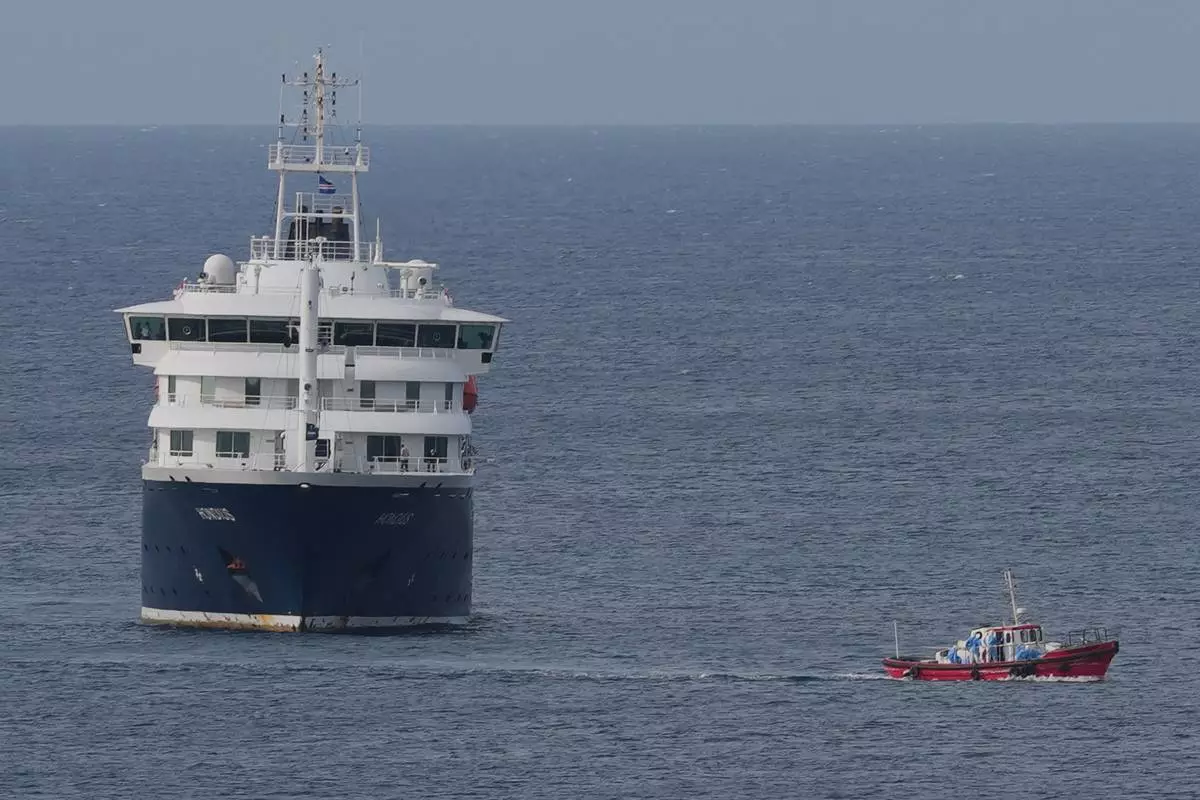
The MV Hondius cruise ship is anchored at a port in Praia, Cape Verde, Wednesday, May 6, 2026. (AP Photo/Misper Apawu)
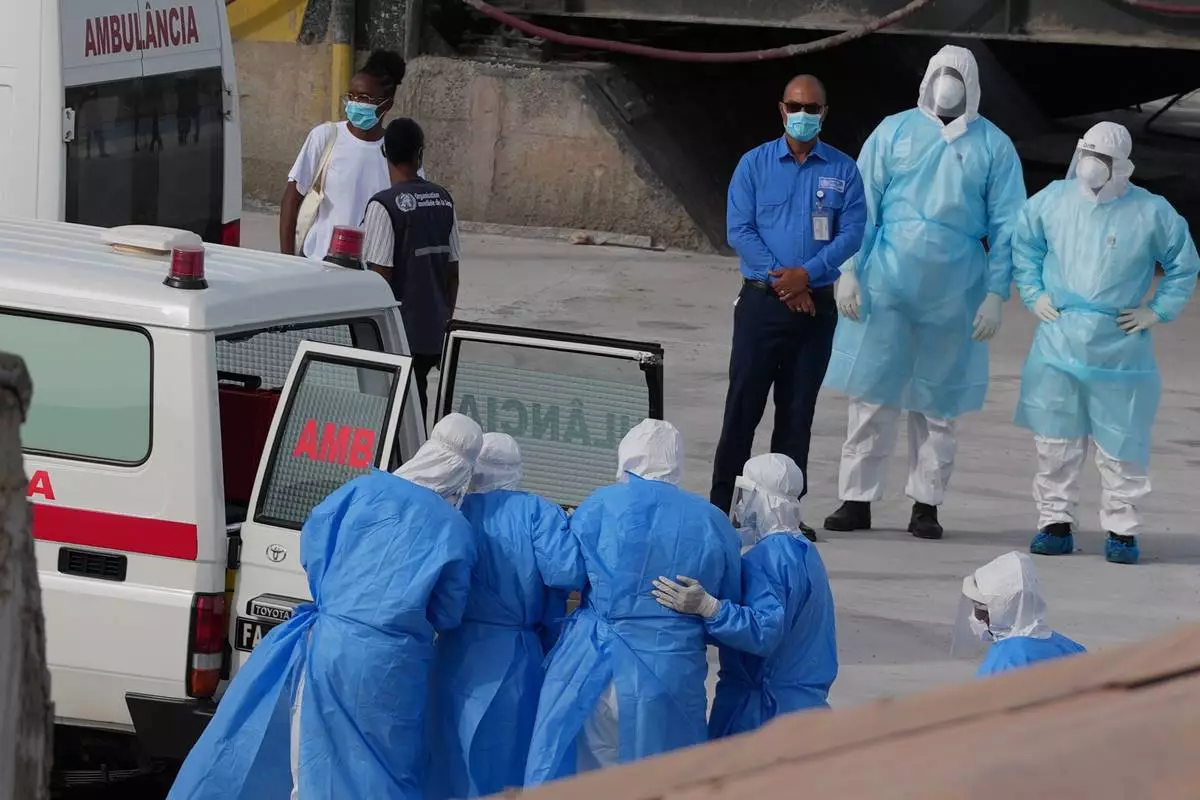
Health workers in protective gear evacuate patients from the MV Hondius cruise ship into an ambulance at a port in Praia, Cape Verde, Wednesday, May 6, 2026. (AP Photo/Misper Apawu)
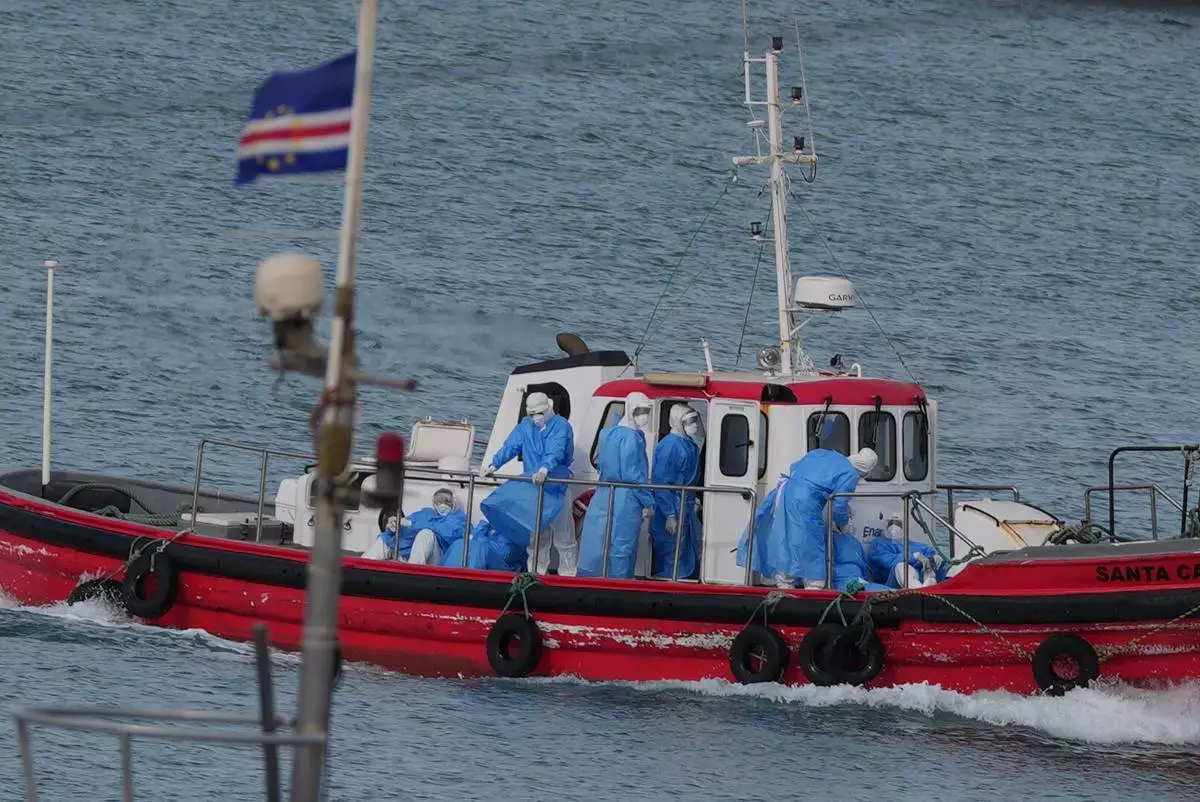
Health workers in protective gear arrive to evacuate patients from the MV Hondius cruise ship at a port in Praia, Cape Verde, Wednesday, May 6, 2026. (AP Photo/Misper Apawu)
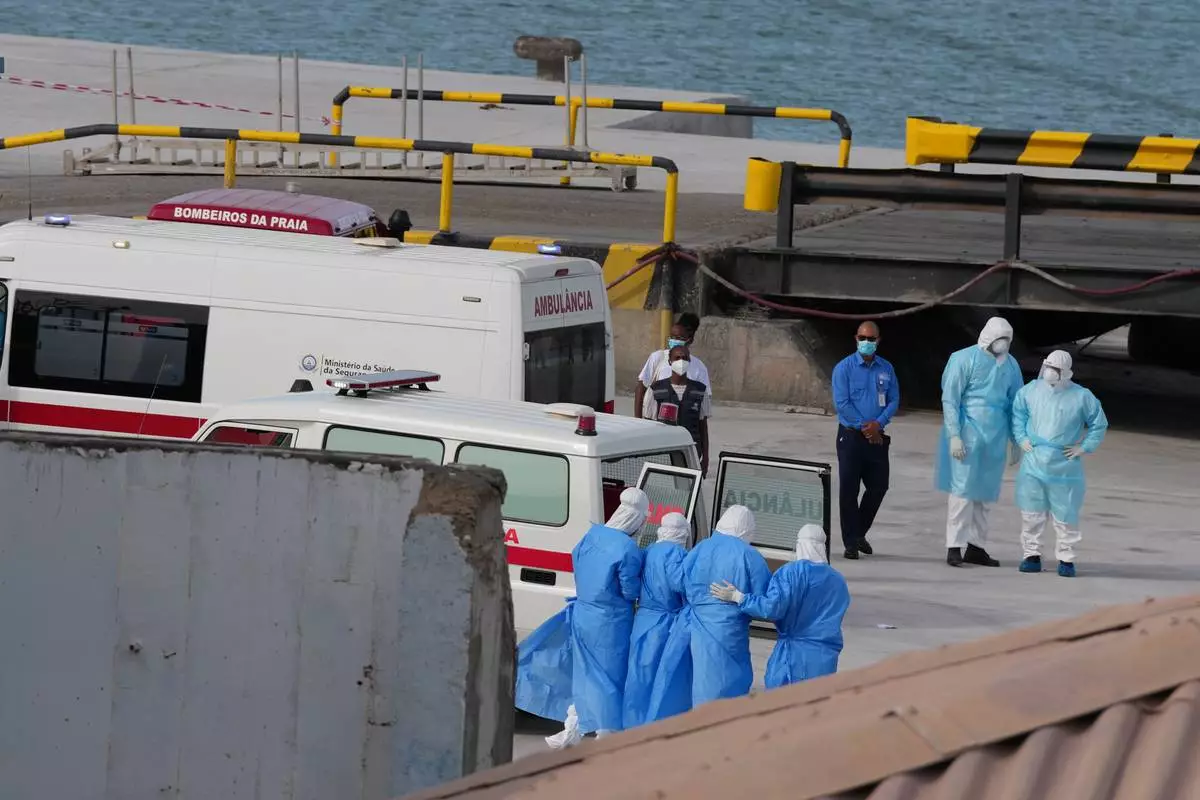
Health workers in protective gear evacuate patients from the MV Hondius cruise ship at a port in Praia, Cape Verde, Wednesday, May 6, 2026. (AP Photo/Misper Apawu)
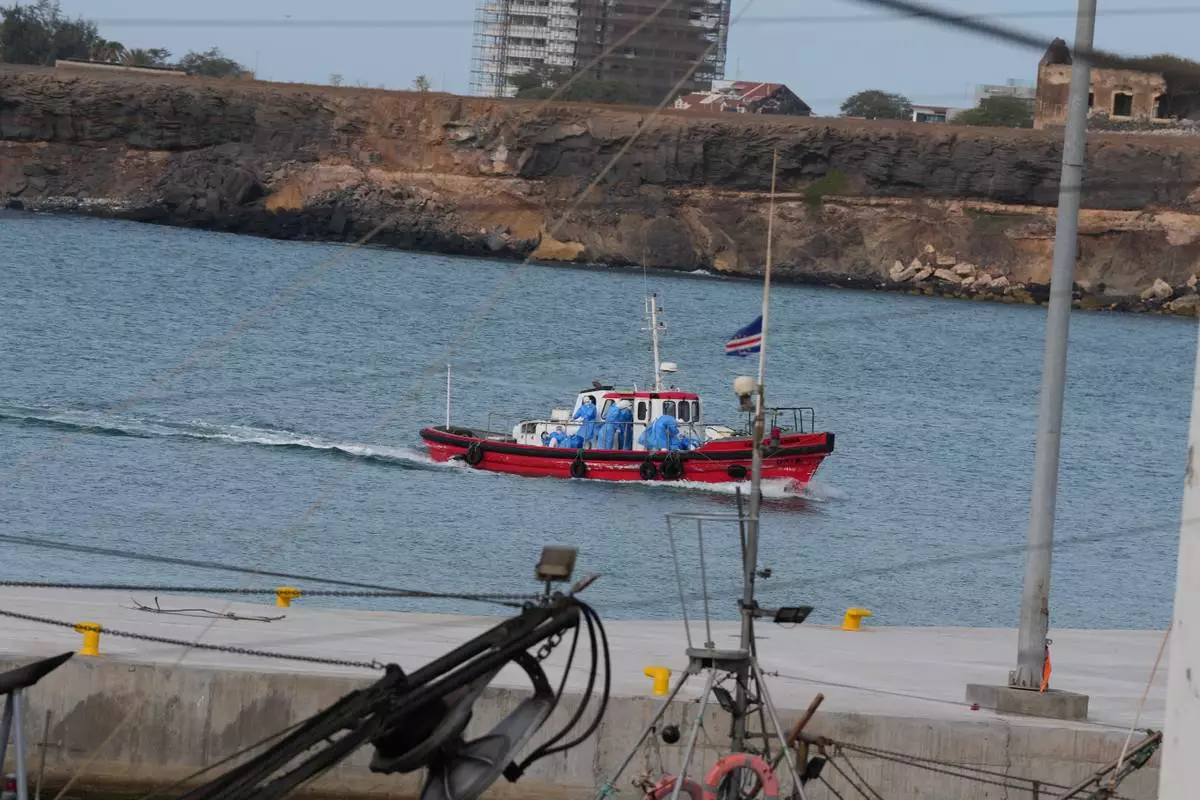
Health workers in protective gear evacuate patients from the MV Hondius cruise ship at a port in Praia, Cape Verde, Wednesday, May 6, 2026. (AP Photo/Misper Apawu)
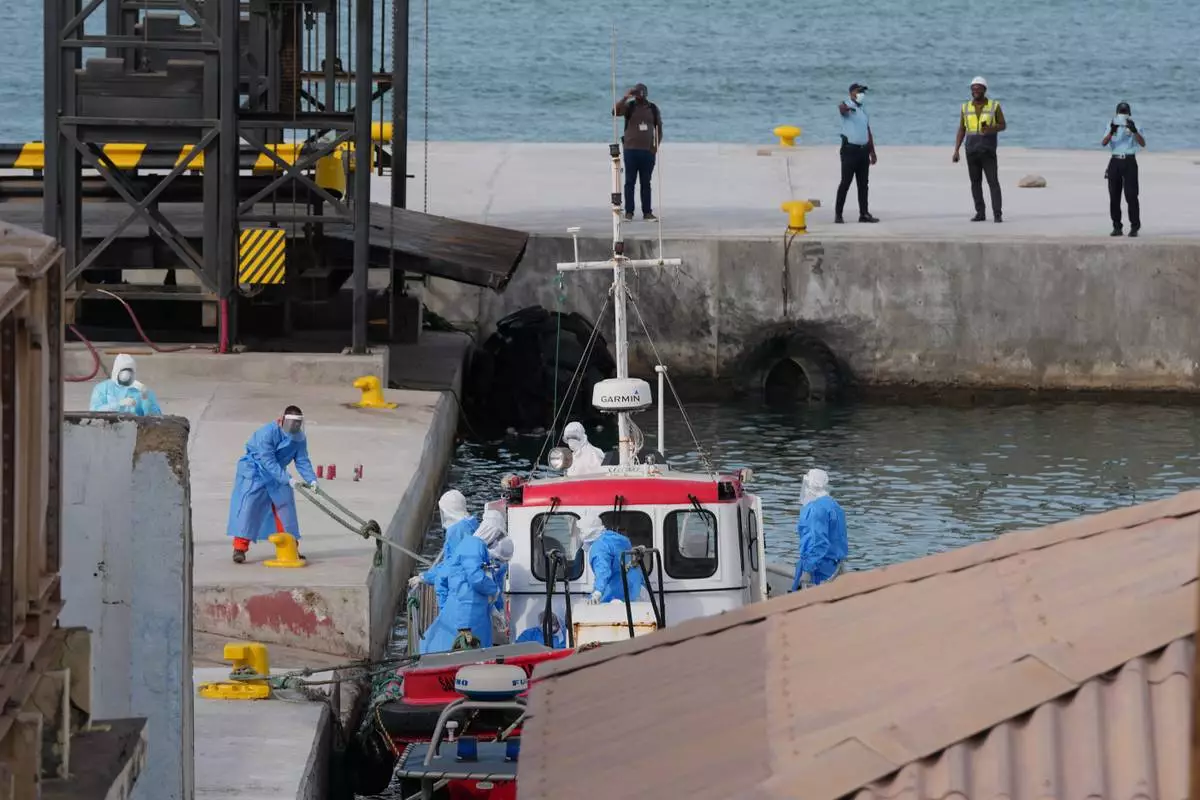
Health workers in protective gear evacuate patients from the MV Hondius cruise ship at a port in Praia, Cape Verde, Wednesday, May 6, 2026. (AP Photo/Misper Apawu)
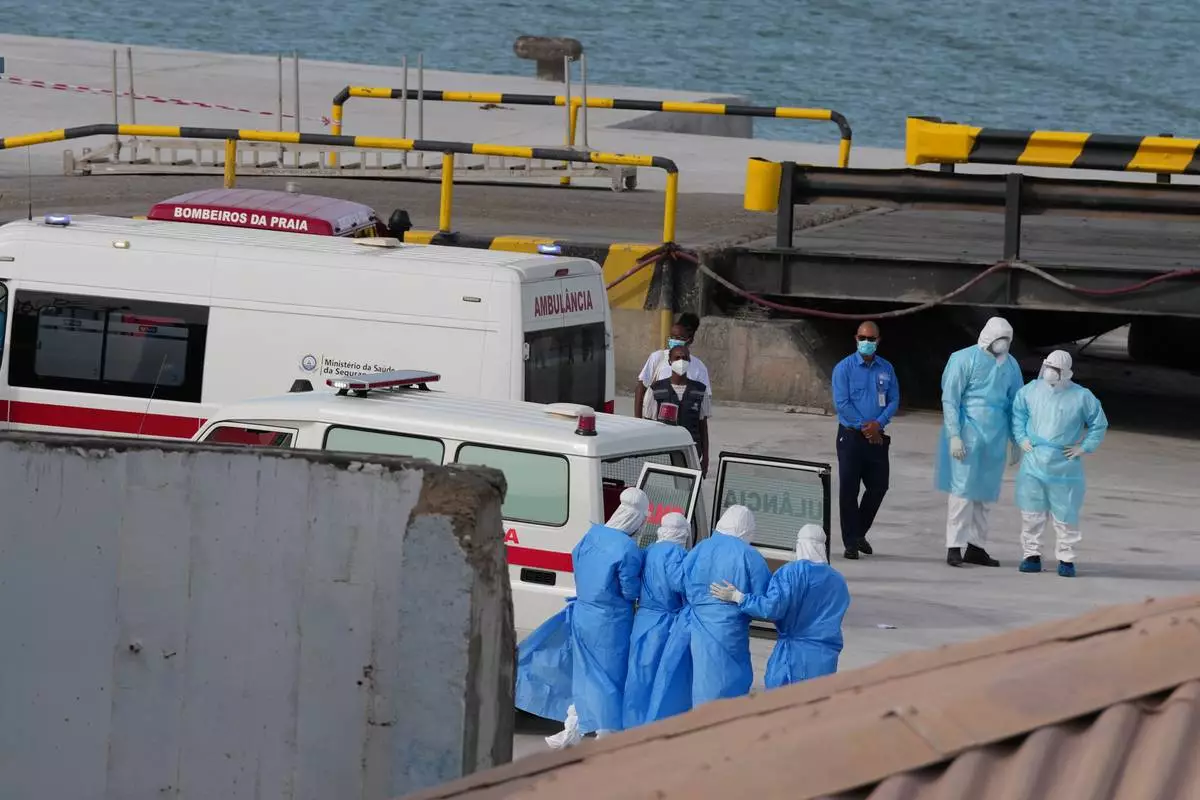
Health workers in protective gear evacuate patients from the MV Hondius cruise ship at a port in Praia, Cape Verde, Wednesday, May 6, 2026. (AP Photo/Misper Apawu)
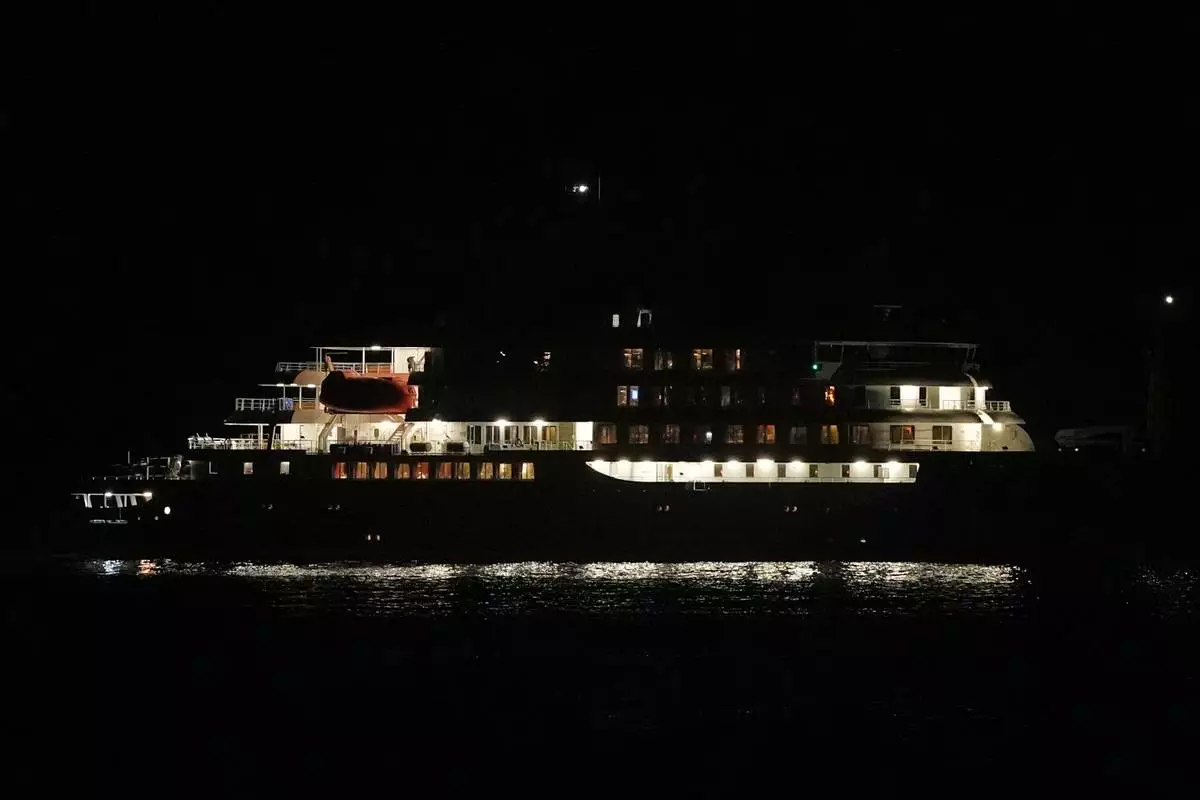
A night view of the MV Hondius cruise ship anchored at a port in Praia, Cape Verde, Tuesday, May 5, 2026. (AP Photo/Misper Apawu)
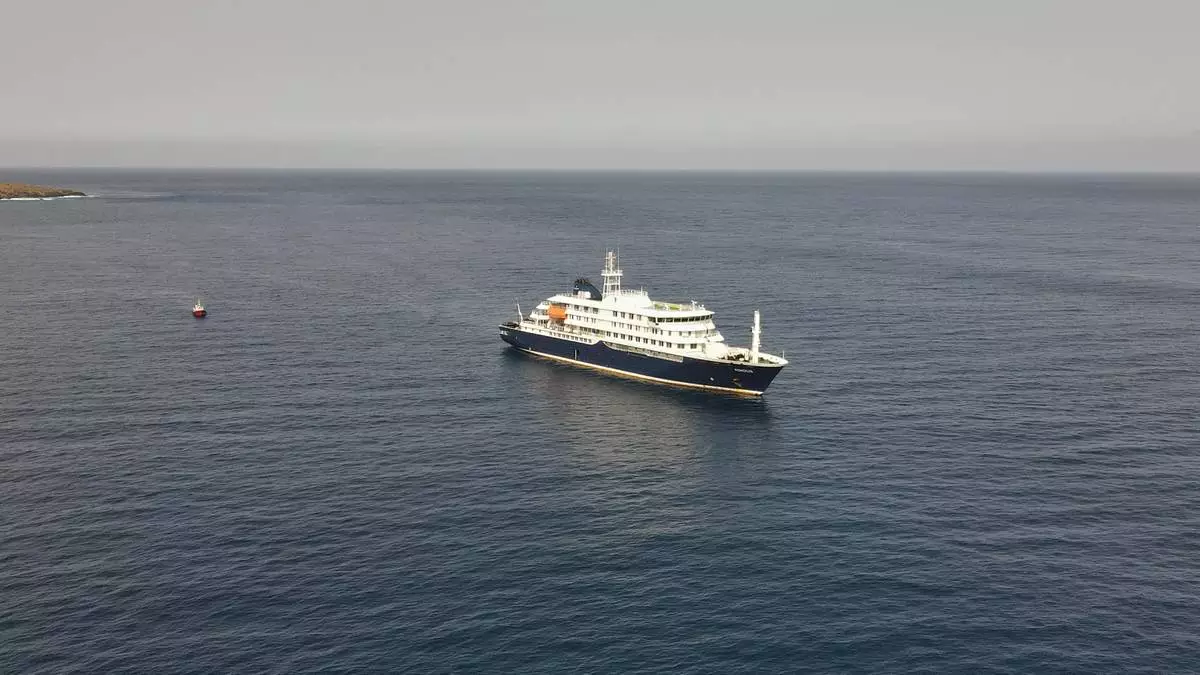
An aerial view of the MV Hondius Dutch cruise ship anchored in the Atlantic off Cape Verde, Tuesday, May 5, 2026. (AP Photo/Arilson Almeida)
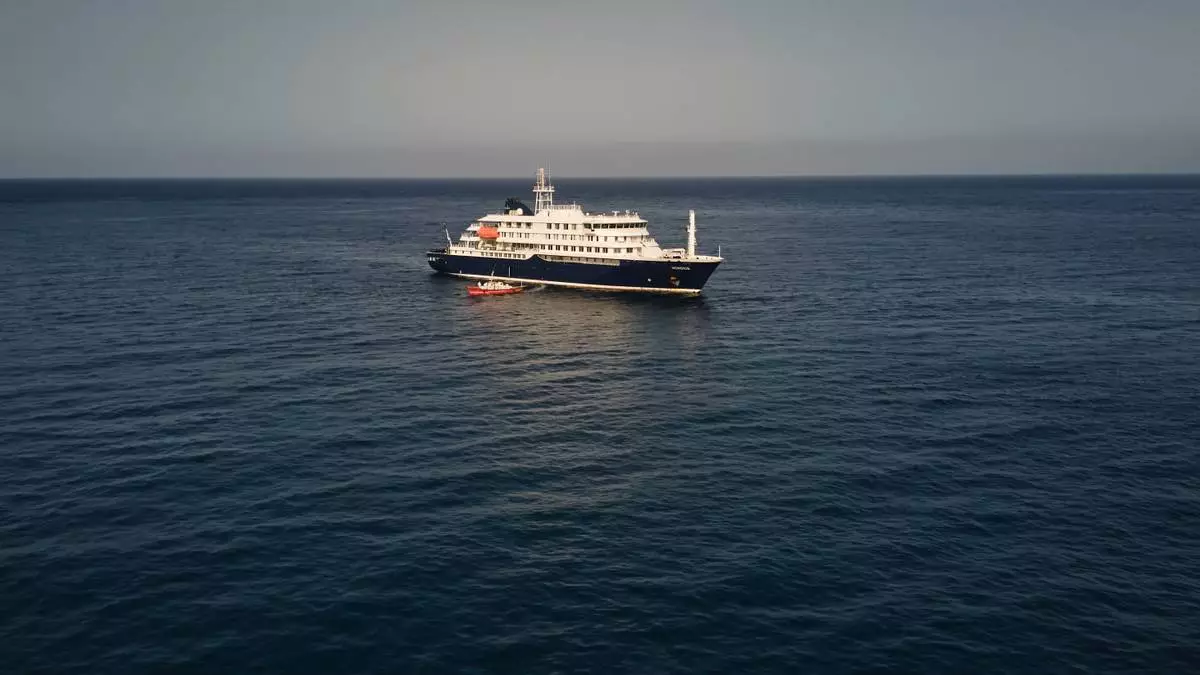
An aerial view of the MV Hondius Dutch cruise ship anchored in the Atlantic off Cape Verde, Tuesday, May 5, 2026. (AP Photo/Arilson Almeida)