Intelligent robots and automated systems are increasingly engaged in handling the most physically demanding tasks at China's grain depots, replacing manual labor in loading, leveling and safety patrols.
At the Renhe Grain Depot in Hangzhou City, east China's Zhejiang Province, the transformation is already underway. Where workers once would manually carry grain sacks, climb silos and clear dust by hand, a new generation of smart equipment has stepped in.
At the depot's inland port terminal along the Grand Canal, a cargo vessel just docks. A large suction grain pipe extends into the hold, drawing wheat upward like water and transporting it directly into storage warehouses through sealed conduits.
From unloading to warehousing, not a single granule of grain is spilled, and the work site remains virtually dust-free. Despite continuous loading and unloading operations, the area is remarkably quiet -- a stark contrast to the noise and chaos traditionally associated with grain handling.
"The entire grain handling pipeline operates through fully enclosed conduits, ensuring that operations remain unaffected by any weather conditions, thereby strengthening our emergency supply guarantee capabilities," said Ma Guojun, director of the depot's storage and transportation department.
The modernization extends beyond unloading. Working in coordination with the grain suction system are elevators at the terminal, roof-mounted grain distributors, and hydraulic grain turners. These advanced machines operate synergistically to enable 24/7 uninterrupted operations, significantly boosting efficiency and throughput.
Once a batch of grain enters the warehouse, another historically labor-intensive task -- leveling the grain pile -- has been delegated to robots. Previously, workers had to descend several meters into deep grain piles to manually push and spread the contents, a process that was both exhausting and hazardous. Today, this critical job is handled by "leveling robots".
The latest second-generation model, unveiled just one year after its predecessor, features a sleeker design and substantially upgraded performance.
"The power output is stronger, performance is more robust, and battery life has been significantly extended. Our second-generation robots can now operate for approximately eight hours on a single charge," said Ma Luyao, technical team leader for on-site leveling robots at the grain depot.
Covering an area of over 600 mu (about 40 hectares), the Renhe Grain Depot relies on intelligent surveillance to maintain safety and operational integrity. A quadruped "robotic dog" has become an essential patrol partner, capable of autonomous navigation and real-time anomaly detection.
During an on-site demonstration, when a person entered a designated safety-helmet-required zone without proper protective gear, the robotic dog immediately responded with a clear voice alert.
As China continues to advance its agricultural modernization strategy, the deployment of robotics and AI-driven systems in grain logistics represents a critical step toward building a more resilient, efficient and sustainable national food reserve network.
"Centering on integrated development of green and intelligent technologies, we are building grain depots that are safe, eco-friendly, and smart -- ensuring every single granule of grain stays fresh. New quality productive forces are empowering our food security with tremendous potential and have already injected fresh momentum into our future development," said Zhang Zhongjie, chief researcher of the Academy of National Food and Strategic Reserves Administration.
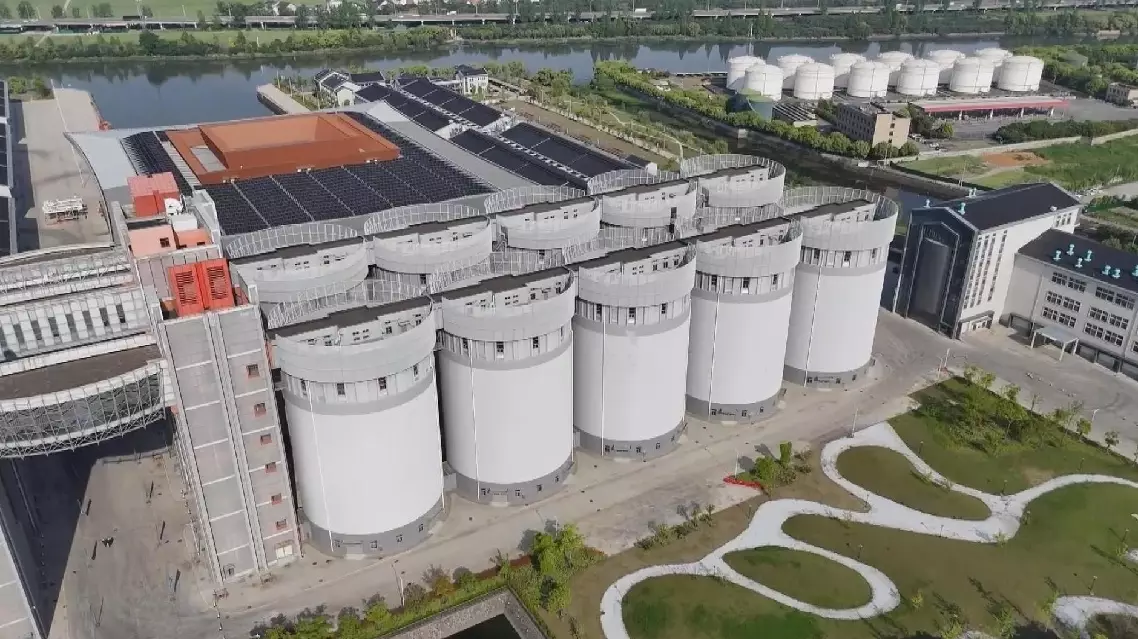
Smart equipment takes over heavy lifting at modern grain depots in China