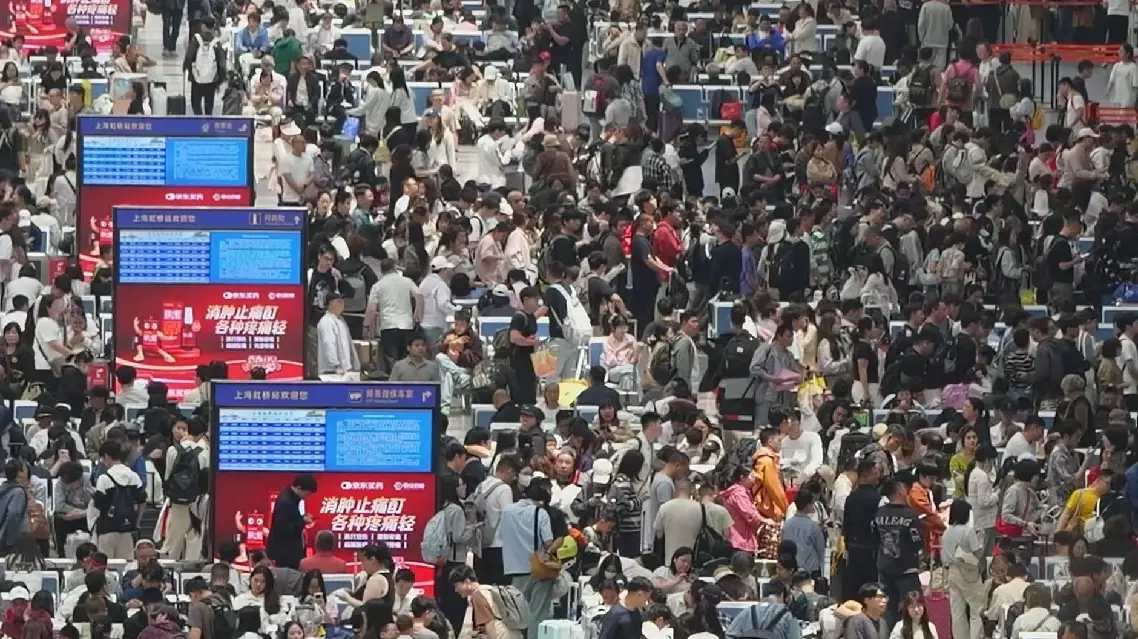
Shanghai saw a notable rise in passenger flow during the five-day May Day holiday which ended on May 5, with transportation hubs in the city rolling out various measures to ensure smooth travels for passengers.
According to local authorities, Shanghai recorded around 17 million passenger trips during the holiday season, marking an increase of more than two percent from last year's May Day holiday.
On the last day of the holiday, the 10 major railway stations in Shanghai said they estimate to have handled passenger trips of over 800,000 during the holiday, a year-on-year increase of over 11 percent.
"Passenger trips during the May Day holiday are mainly for tourism and family visits, and the passenger traffic is highly concentrated," said Sun Jun, on-duty manager at the Shanghai Hongqiao Railway Station.
Next to the Hongqiao Railway Station, Shanghai's Hongqiao Airport also handled a large visitor flow during the holiday.
"My husband and I made full use of our marriage leave to travel abroad during the holiday for over ten days," said a tourist.
As of 16:00 on May 5, the number of passengers passing through the Shanghai Hongqiao Airport's border checkpoints had risen by more than 12 percent year on year.
"Given the huge inbound and outbound passenger flow during the May Day holiday, we have continuously strengthened the monitoring of port operation, conducted forecast on passenger flow in advance, scientifically assigned official duties based on the situation on site, optimized police force deployment, and adopted measures including crowd guidance, diversion of passenger flows, and dynamically adjusted passageways," said Liu Tao, deputy director at the Shanghai Hongqiao Inspection Station.
Shanghai sees notable rise in passenger flow during May Day holiday
Geopolitical tensions and energy supply disruptions have risen to become the top concerns for U.S. financial stability, a Federal Reserve report said on Friday.
The Fed's latest semi-annual Financial Stability Report revealed a dramatic shift in how professionals view risks to the U.S. financial system, as the U.S.-Israeli war against Iran has sent shock waves through the global economy.
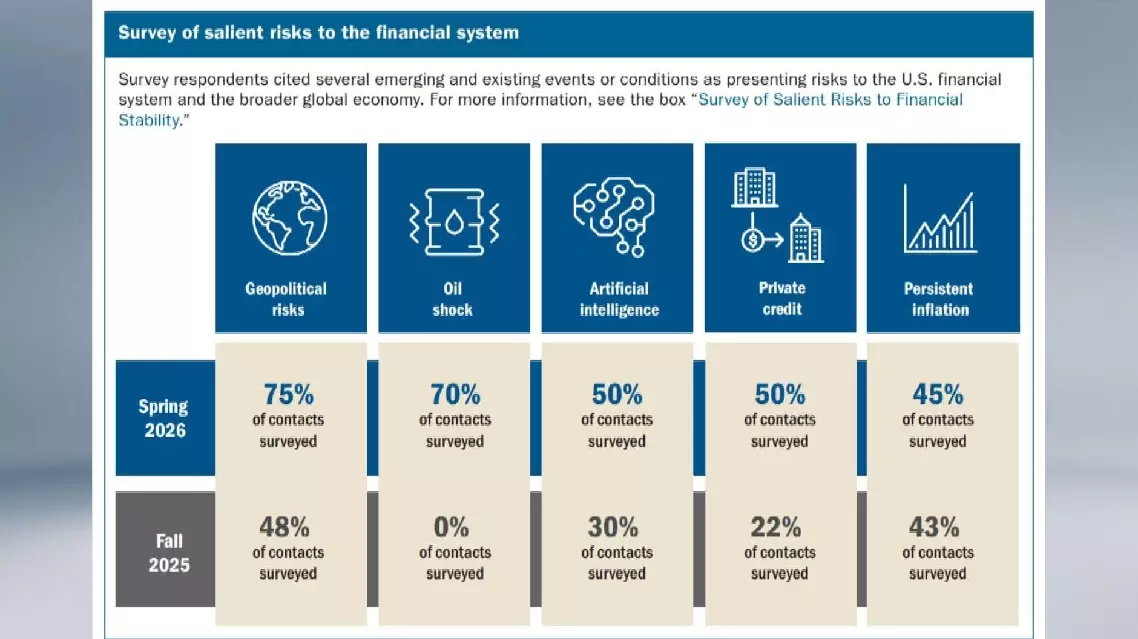
According to a survey conducted by the Federal Reserve Bank of New York between March and April, 75 percent of respondents cited geopolitical tensions as a major risk, a sharp jump from 48 percent just six months earlier. Even more striking, 70 percent now see oil supply shocks as a threat, a concern that was not mentioned at all in the survey from last fall. Respondents widely pointed to the war with Iran as a potential trigger for prolonged energy market disruptions, which could also keep inflation higher for longer.
Half of those surveyed raised concerns about artificial intelligence. They pointed to equity valuations, rising leverage in the financial system as capital spending becomes increasingly reliant on debt, and potential job losses from widespread AI adoption.
Private credit was also flagged as a threat by 50 percent of respondents. The market faces mounting pressure from investor redemptions and worsening market sentiment, they warned. In addition, fast-evolving AI could weaken the credit quality of some borrowers, which, in turn, might tighten credit conditions and spill over into broader markets.
Meanwhile, 45 percent of respondents identified persistently high inflation as a salient risk, with many worrying that prolonged energy supply shocks from the U.S.-Israeli war against Iran could force the Fed to adopt tighter monetary policy.
Geopolitical tensions, oil supply shocks pose primary risks to US financial system: Fed report