China saw a record high number of inter-regional passenger trips during the just-concluded five-day May Day holiday, the Ministry of Transport said on Wednesday.
The country recorded around 1.517 billion inter-regional passenger trips during the holiday that ended on Tuesday, a 3.49-percent increase compared with the same period last year.
Tourist trips accounted for 60 percent of all travel.
Railways operated an average of over 12,000 passenger trains per day, with passenger trips rising 4.6 percent to 106.38 million.
Road travel remained the dominant mode of transportation, with over 1.39 billion trips recorded, or about 91 percent of the total. Notably, the number of new energy vehicles on expressways averaged more than 15 million per day, up 33 percent from a year ago.
Waterway passenger trips dipped 1.37 percent to 8.49 million, while Civil aviation handled 10.54 million trips during this period, down 5.74 percent year on year.
"We have increased transportation capacity scheduling in key areas such as popular tourist cities, major scenic spots, and transportation hubs, enhanced rapid distribution capabilities, and made every effort to ensure smooth transport network operations," said Yang Yong, deputy head of the Transport Services Department of the Chinese Ministry of Transport.
China's May Day holiday travel boom is driven by strong demand for tourism, family visits and leisure activities.
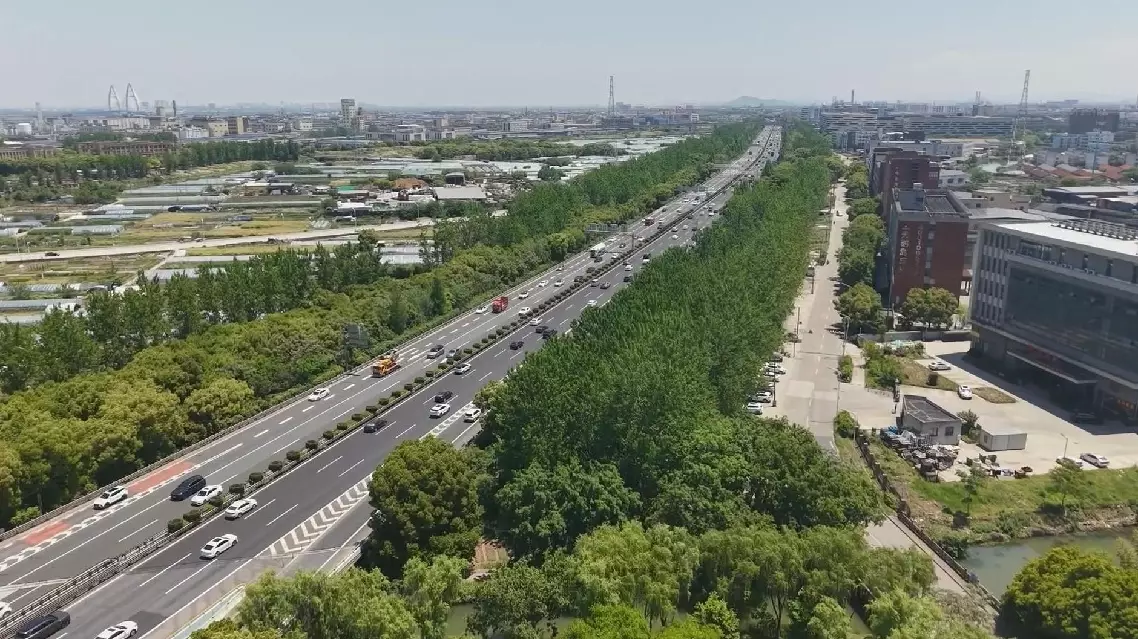
China logs record high inter-regional passenger trips in May Day holiday
Japan's reliance on U.S. economic policy is allowing foreign funds to acquire Japanese assets at bargain prices, according to Japanese economist Kazuhide Uekusa.
He warned that the government's economic and defense strategies prioritize foreign capital and political profits over public welfare, failing to bring true prosperity to ordinary citizens.
The Bank of Japan (BOJ) on Friday raised its policy interest rate by 0.25 percentage points to 1.25 percent, the highest in about 31 years, following a two-day board meeting.
According to Uekusa, the timing of the shift aligns perfectly with the interests of large American funds.
"The Takaichi Cabinet has been reluctant to raise interest rates, thus allowing the yen to continue to depreciate. I think this is actually equivalent to helping foreign capital purchase Japanese assets at a low price. However, U.S. Treasury Secretary Scott Bessent has recently made a clear adjustment to the policy direction of the U.S. dollar against the Japanese yen, promoting the appreciation of the Japanese yen. The reason is that some large funds in the United States have basically completed their investment layout in Japanese assets," said Uekusa.
Uekusa also said Japan cannot attempt to revitalize its economy by expanding military spending and supporting the defense industry, and such a military buildup strategy is unlikely to bring about true prosperity and stability.
"I think it is true that the Japanese economy has been stagnant for a long time. However, to expand military spending in an attempt to revitalize the economy is, in my opinion, an extremely foolish and even crazy move. To achieve peace and stability in Japan, the foundation should be to establish friendly relations with neighboring countries rather than military expansion. The reason why the Japanese government attaches so much importance to the military industry is that it can generate huge profits, and a part of these profits may flow back to political parties or political figures through various means. I don't think this is at all for the benefit of the people," he said.

Japanese economist criticizes gov't policies for enabling cheap asset sales to foreign funds