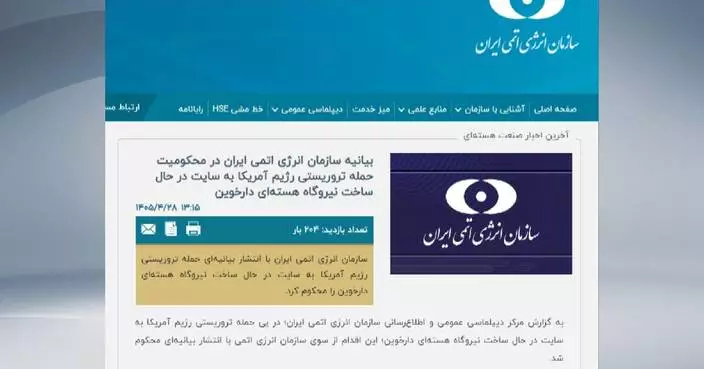
The Iranian armed forces announced on Saturday that they hit U.S. bases in Kuwait, Bahrain and Jordan in waves of retaliatory missile and drone attacks launched earlier the day.
The Islamic Revolution Guard Corps (IRGC) said in a statement that its ground forces targeted the gathering place of U.S. forces at a backup center at Camp Arifjan in Kuwait, killing a number of them.
Iranian forces also launched a drone attack that destroyed a radar system, a weapons depot and a hangar of drones at the Ali Al Salem Air Base in Kuwait, the IRGC added.
In a post on X, U.S. Central Command (CENTCOM) said on Saturday that two U.S. service members were killed and another remains missing after Iran's strikes on a base in Jordan on Friday.
The deaths bring the total number of U.S. military personnel killed to 16 since the United States and Israel launched attacks on Iran on Feb 28.
CENTCOM said on Friday that U.S. forces struck multiple military infrastructure targets and underground weapons storage facilities in Iran and were implementing a comprehensive naval blockade against Iran.
Iran said on Saturday that its armed forces destroyed a U.S. unmanned boat storage base in Bahrain and struck U.S. targets in Kuwait, Jordan and Syria.
The IRGC warned that if the United States continues to attack Iran's transportation infrastructure, Iran would launch larger-scale retaliation against U.S.-linked economic and technological assets.
As tensions between the two countries escalated, international crude oil futures closed up more than four percent on Friday, with New York crude oil futures returning above 80 U.S. dollars per barrel for the first time in a month.
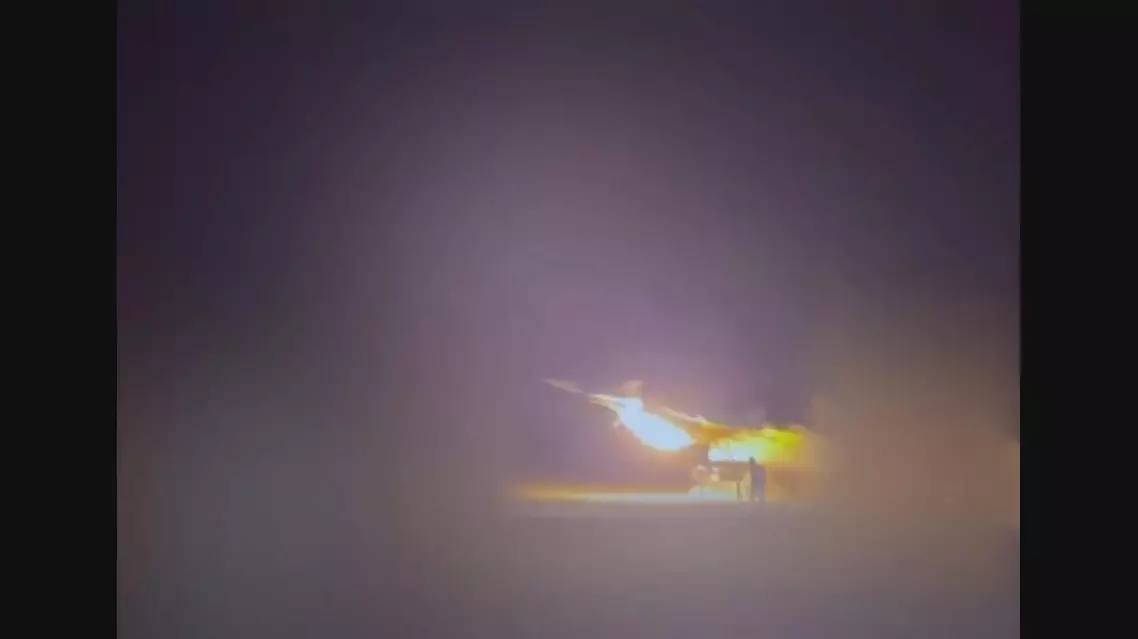
Iran's armed forces claim hits on US bases in Kuwait, Bahrain, Jordan in in retaliation
Business leaders, researchers and entrepreneurs from around the world gathered at the 2026 World Artificial Intelligence Conference (WAIC), where discussions are focusing on turning AI innovation into cross-border partnerships and real-world applications.
The 2026 WAIC is running in Shanghai from Friday to Monday under the theme "AI Partnership for a Brighter Future."
Across the exhibition halls, conversations often extended beyond product demonstrations, with visitors exploring potential partnerships, supply chains and overseas expansion.
Among them was Paolo Brizzi, chief information officer of Italy's Competence Center for Industry and Manufacturing (CIM), who met with a Chinese AI company to discuss cooperation ranging from industrial applications to entering the European market.
"My point is not to be a customer or a provider of technologies, but to identify parts [where we can] actually collaborate and work together," he said.
The four-day conference has also created opportunities for startups to connect with investors, researchers and potential customers. One startup launched an online networking group on the opening day, attracting hundreds of participants who exchanged ideas, explored business opportunities and sought technical solutions.
Participants said AI innovation depends not only on technological breakthroughs but also on cooperation across industries and countries.
"Collaboration is important because alone you cannot do so much. It needs to be a team support ecosystem," said Florian Wohlrab, CEO of Canada-based OpenHW Foundation.
For many international visitors, the conference is also an opportunity to explore how AI can help address practical challenges. Omar Khan, a participant from Pakistan, said international cooperation is essential to ensuring AI benefits everyone.
"I think, for me, we are all the one. We're human and I think we can cooperate a lot," he said.
Some attendees were looking for solutions to challenges in their home countries. A visitor from Kenya said AI applications such as weather forecast and soil analysis could help improve agricultural productivity across many parts of Africa, where farming remains a cornerstone of the economy.
As countries race to advance AI technologies, participants at this year's WAIC said the conference has become a platform for connecting ideas, technology and demand across borders, helping turn AI innovation into practical international cooperation.

World AI Conference highlights growing demand for global AI partnership