LAS VEGAS (AP) — Handguns could be mailed through the United States Postal Service for the first time in nearly 100 years if a proposed rule under the Trump administration takes effect. Democratic attorneys general in two dozen states sent a letter this week in opposition.
In 1927, Congress passed a law barring the USPS from mailing concealable firearms unless they were from licensed dealers in an effort to curb crime. In January, the Department of Justice revisited the 1927 law, calling it unconstitutional and arguing that it violated the Second Amendment, and urged the postal service to change its regulations.
The Department of Justice said that as long as Congress chooses to run a parcel service, “the Second Amendment precludes it from refusing to ship constitutionally protected firearms to and from law-abiding citizens, even if they are not licensed manufacturers or dealers.”
Last month USPS proposed a new rule that would allow anyone to mail concealable firearms like pistols and revolvers. USPS currently allows some firearms like long-barreled rifles and shotguns to be mailed, however they must be unloaded and securely packaged. Similar protections would be in place for handguns, which have evolved since 1927. The USPS said in a statement that it is reviewing public comments — which were due Monday — before making final changes.
Nevada Attorney General Aaron Ford, a Democrat who is running for governor, said the rule change would undo the work states like Nevada have done to curb gun violence. Nevada experienced the deadliest mass shooting in modern U.S. history, when a gunman on Oct. 1, 2017 opened fire from the Mandalay Bay casino hotel in Las Vegas, killing 60 people. Following the shooting, Nevada passed a law requiring state-administered background checks on most private gun sales or transfers.
“Our state has suffered enough, and to suggest we make it easier for criminals and abusers to access firearms is a slap in the face to gun violence survivors and law enforcement,” Ford said in a statement.
Under the proposed rules, someone could sell and ship a gun to a person within state lines. The rules are tighter for mailing guns across state lines — people could only mail it to themselves in the care of another person and would be required to open it themselves. That's designed to assist people who are traveling to another state where they might want to use a gun for recreation.
The Department of Justice argues the patchwork of state laws around guns makes it difficult to take them across state lines for lawful purposes like target shooting, hunting and self-defense. It said that in many cases, people have no ability to travel with a firearm, making mail the "only viable method of transportation.”
Ford and other attorneys general in around two dozen states sent a letter Monday urging the USPS to withdraw the proposed rule, saying it will make it easier for people who can't legally possess guns, like people convicted of felonies or domestic violence, to access them. They also said it'll make it more difficult to solve gun crimes. They said the executive branch does not have the authority to ignore a law Congress passed and the rule will override state gun laws.
State laws include requirements like firearms safety courses, background searches and mental health history checks, according to the attorneys general. Those requirements are regulated through state entities, which would be bypassed if the rule change would be implemented, they argued. There will be no way to guarantee that someone is following the rules and not shipping a handgun across state lines to another person, they argued.
Law enforcement will have to create a new tracking structure to account for firearms mailed through the postal service, which would place added burdens on state budgets, the attorneys general said.
Private companies like UPS and FedEx also restrict gun shipments to customers with federal firearms licenses, such as importers, manufacturers, dealers and collectors. FedEx requires shippers with a federal firearms license to work with a FedEx account executive to obtain approval, according to the company's website.
Firearm advocacy groups applauded the proposed change, while gun safety organizations expressed their concern.
John Commerford, executive director of the lobbying arm of the National Rifle Association of America, called it a key victory for law-abiding gun owners.
“Thanks to President Trump and his administration, USPS will finally allow these firearms to be shipped under the same commonsense safety conditions as rifles and shotguns,” Commerford said in a Wednesday statement.
John Feinblatt, president of Everytown for Gun Safety, said the rule change will turn USPS into a “gun trafficking pipeline” for illegal weapons "while stripping law enforcement of the tools they need to prevent and investigate gun crime.”

FILE - The United States Postal Service logo is shown on delivery vans parked outside the main post office March 23, 2026, in east Denver. (AP Photo/David Zalubowski, File)
NEW YORK (AP) — The U.S. stock market is hanging just below its records Thursday as oil prices keep dropping on hopes that a deal may be nearing to allow tankers to deliver crude once again from the Persian Gulf to customers.
The price for a barrel of Brent crude oil, the international standard, fell 0.5% to $100.71, down from more than $115 early this week. It and gasoline are still much more expensive than they were before the war with Iran began, but hope is rising in financial markets as Iran said it was reviewing the latest U.S. proposals on ending their war.
On Wall Street, the S&P 500 fell 0.3% from its all-time high set the day before after a spokesperson for Pakistan’s Foreign Ministry said, “We expect an agreement sooner rather than later.” Pakistan has been acting as a mediator between the United States and Iran, and the hope is that they will reopen the Strait of Hormuz. Its closure during the war has kept oil tankers trapped in the Persian Gulf and sent prices higher for crude and all kinds of products.
The Dow Jones Industrial Average was down 285 points, or 0.6%, as of 2:09 p.m. Eastern time, and the Nasdaq composite fell 0.1% from its own record.
Of course, Wall Street has rallied strongly before on hopes for a coming end to the war with Iran, only to get quickly disappointed. That could happen again, and tensions are still high in the Middle East after a U.S. fighter jet shot out the rudder of an Iranian oil tanker in the Gulf of Oman Wednesday as it tried to breach the American blockade of Iran’s ports.
Despite all those uncertainties, a powerful parade of U.S. companies saying they made even bigger profits during the first three months of the year than analysts expected has helped support the U.S. stock market. Stock prices tend to follow the path of corporate profits over the long term.
Datadog leaped 28.2% to help lead the U.S. market after the monitoring and security platform for cloud applications topped analysts' expectations for profit in the latest quarter.
Albemarle rose 5.7% after the lithium products and specialty chemicals company likewise delivered better-than-expected results. Taser maker Axon Enterprise rallied 10.7% after raising its forecast for revenue this year in part because of big growth for its counter-drone products.
They helped offset a 13.2% drop for Whirlpool, which tumbled after reporting much weaker results than analysts expected. It announced the largest price increases in a decade for its major appliances in North America, while accelerating cuts to its costs, as it contends with weaker confidence among U.S. consumers.
Shake Shack dropped 29% after its results for the latest quarter fell well below analysts' expectations.
McDonald’s was mostly unchanged even though its revenue for the latest quarter edged past analysts’ expectations. CEO Chris Kempczinski said high gasoline prices and consumer anxiety over the Iran war could dent its sales this spring.
In the bond market, Treasury yields held relatively steady. The yield on the 10-year Treasury rose to 4.39% from 4.36% late Wednesday, but remains down from 4.45% early this week.
Lower yields can bring down rates for mortgages and other kinds of loans going to U.S. households and businesses, which in turn can give the economy a boost. Lower yields also tend to push upward on prices for stocks and other kinds of investments.
The 10-year Treasury yield, though, remains well above its 3.97% level from just before the war.
Several reports on the U.S. economy also came in mixed. One said more U.S. workers applied for unemployment benefits last week, but the increase was not as bad as economists expected. Another report suggested that productivity for U.S. workers improved by only half of what economists expected for the latest quarter.
In stock markets abroad, indexes fell in Europe following a stronger finish in Asia.
Japan’s Nikkei 225 roared 5.6% higher as trading in Tokyo reopened following a holiday and caught up with big gains for Asian markets from earlier in the week. It’s at a record after soaring nearly 71% in the last 12 months on strength for tech stocks benefiting from the boom in artificial intelligence.
“I think it’s a kind of bubble because buying activity concentrated on leading AI, artificial intelligence stock and semiconductor-related stocks. It’s a situation where only semiconductor stocks are being bought,” said Takashi Hiroki, chief strategist at MONEX.
AP Business Writers Matt Ott and Elaine Kurtenbach contributed to this report.
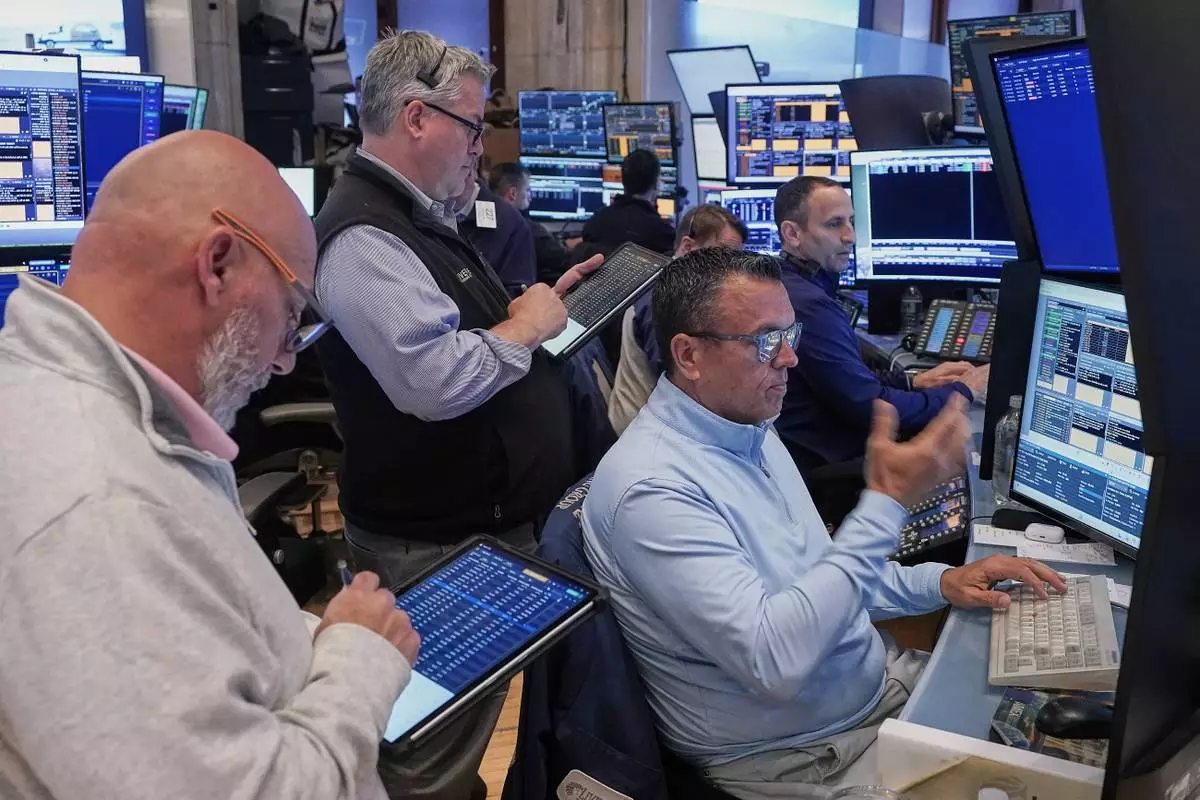
Robert Finnerty, Jr., foreground right, works with colleagues on the floor of the New York Stock Exchange, Thursday, May 7, 2026. (AP Photo/Richard Drew)
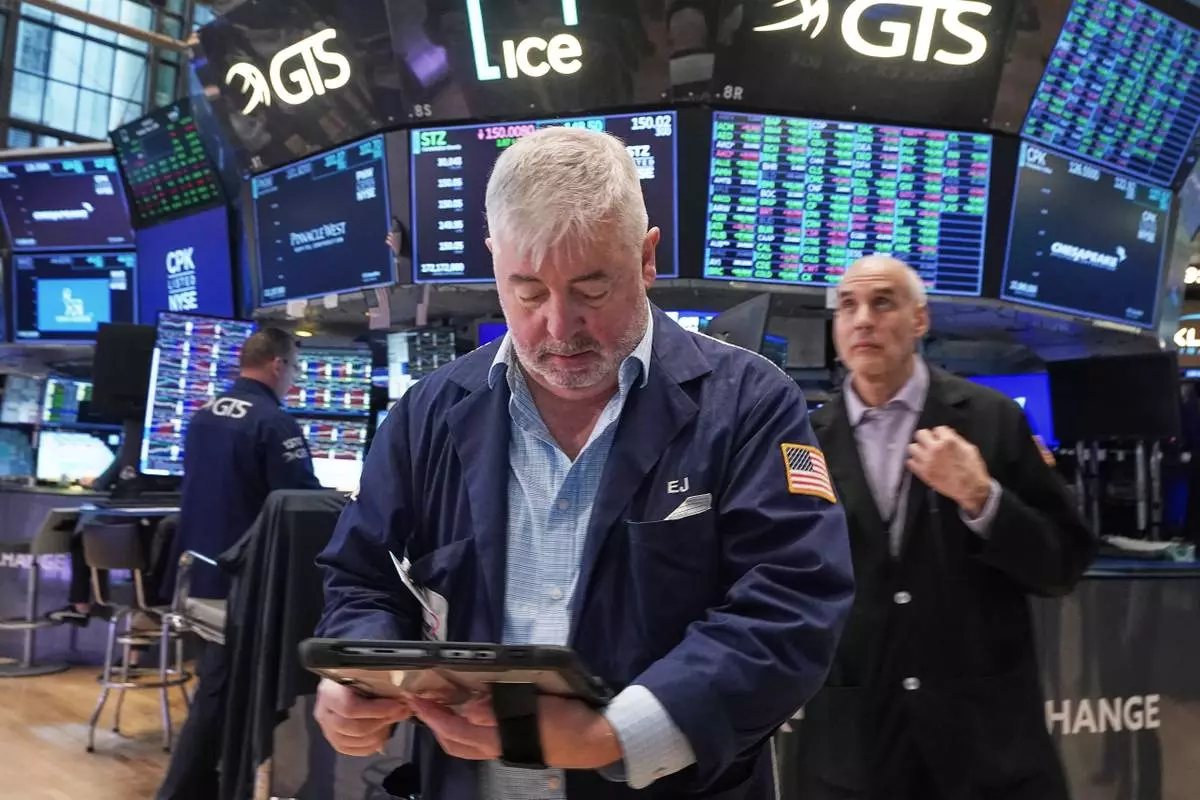
Trader Edward McCarthy, center, works on the floor of the New York Stock Exchange, Tuesday, May 5, 2026. (AP Photo/Richard Drew)
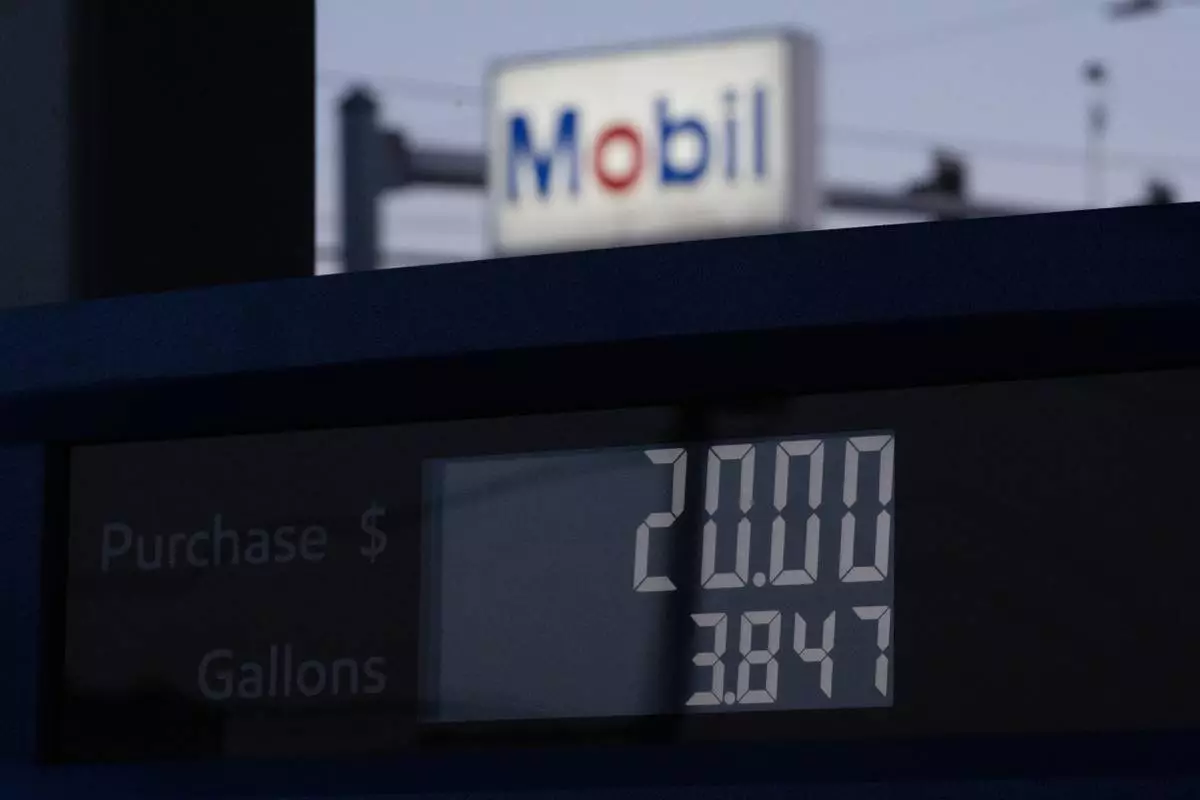
A display shows $20 for gasoline on a gas pump at a Mobil gas station on Wednesday, April 29, 2026, in Portland, Ore. (AP Photo/Jenny Kane)
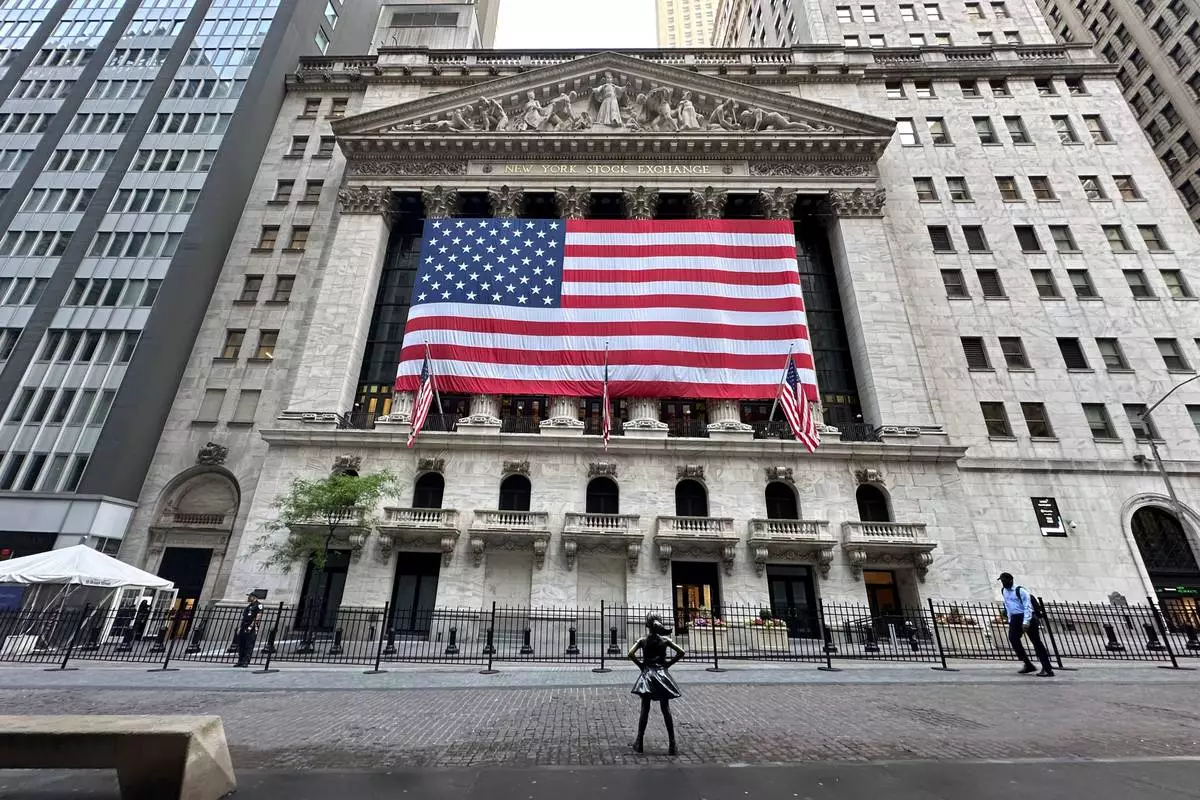
FILE - People pass the New York Stock Exchange on May 28, 2024, in New York. (AP Photo/Peter Morgan, File)
FILE - American flags fly outside the New York Stock Exchange, Friday, Sept. 23, 2022, in New York. (AP Photo/Mary Altaffer, File)
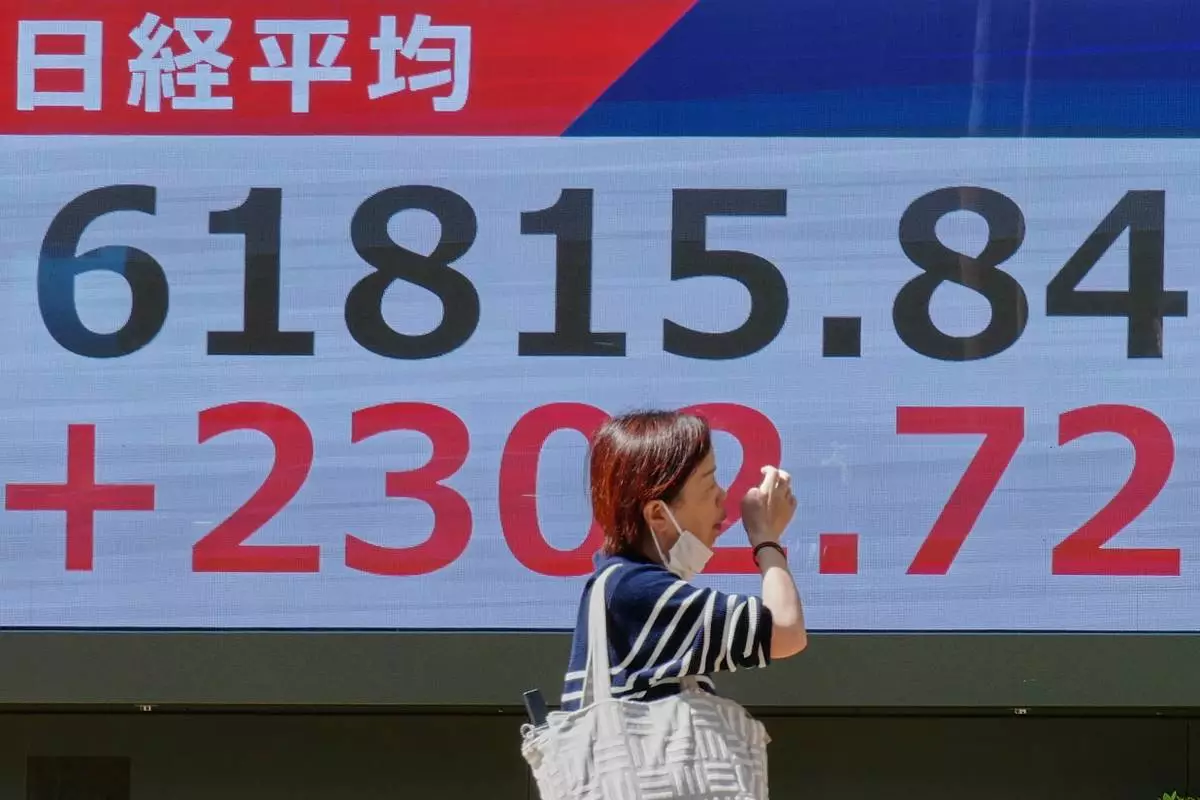
A person walks in front of an electronic stock board showing Japan's Nikkei index at a securities firm Thursday, May 7, 2026, in Tokyo. (AP Photo/Eugene Hoshiko)

A person walks in front of an electronic stock board showing Japan's Nikkei index at a securities firm Thursday, May 7, 2026, in Tokyo. (AP Photo/Eugene Hoshiko)

A person walks in front of an electronic stock board showing Japan's Nikkei index at a securities firm Thursday, May 7, 2026, in Tokyo. (AP Photo/Eugene Hoshiko)
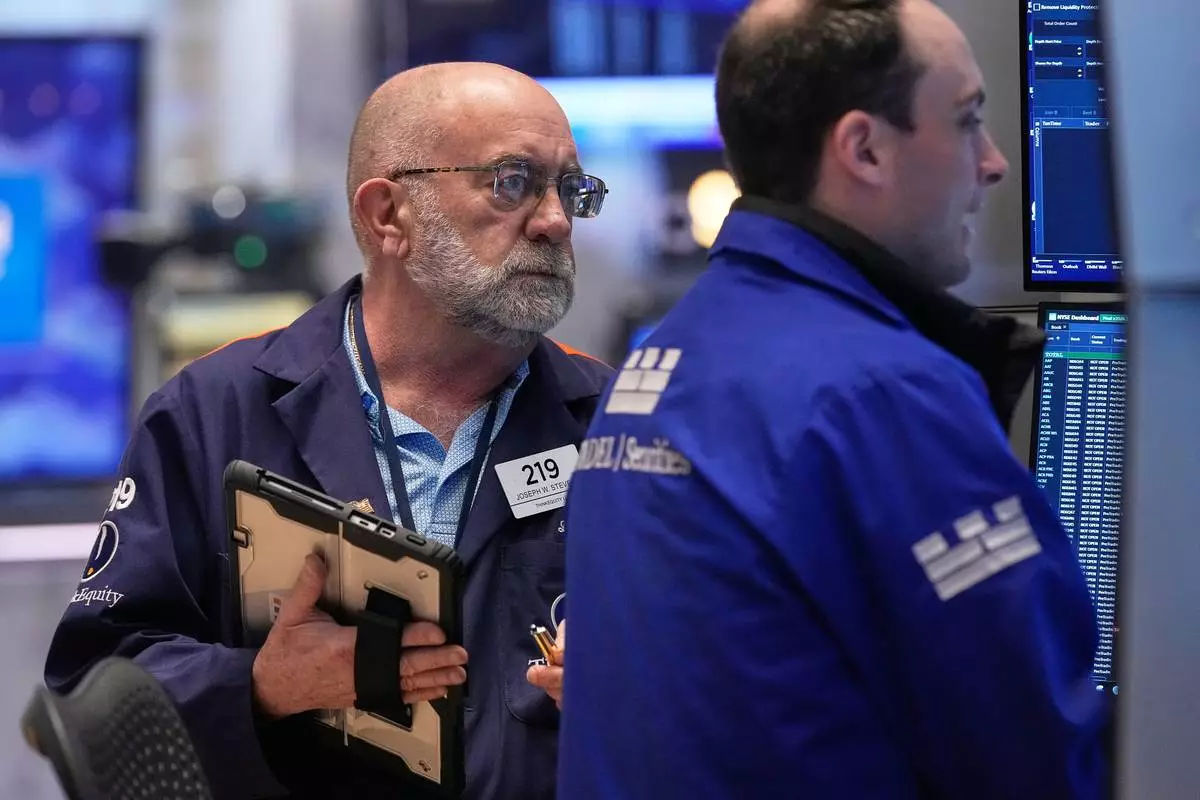
Trader Joseph Stevens, left, works on the floor of the New York Stock Exchange, Tuesday, May 5, 2026. (AP Photo/Richard Drew)