Skip to Content Facebook Feature Image

Trump-appointed FEMA Review Council proposes sweeping changes to federal disaster support

News

Trump-appointed FEMA Review Council proposes sweeping changes to federal disaster support
News

News

Trump-appointed FEMA Review Council proposes sweeping changes to federal disaster support

2026-05-08 03:31 Last Updated At:03:49

A council meant to reform the Federal Emergency Management Agency proposed Thursday a series of long-awaited changes to the disaster recovery body that stop short of the administration’s promises to dismantle it, but could reduce the number of disasters the federal government supports and the amount of money it doles out.

The council appointed by President Donald Trump approved a highly anticipated report that outlines ways the Trump administration could potentially put far more responsibility on states, tribes and territories for disaster preparedness, response and recovery.

It proposes upending how the federal government determines which disasters to support, how FEMA pays states and other governments for disaster recovery costs, and what kind of FEMA assistance survivors receive, among other reforms.

“These recommendations are all about accelerating federal dollars, streamlining the process, making it less bureaucratic so that Americans can get the help they need on the worst day of their lives,” former Virginia Gov. Glenn Youngkin, a council member, said in a public meeting Thursday with nearly 6,000 virtual attendees.

There is broad agreement that FEMA needs reforms to move faster and relieve bureaucracy. However, the council’s recommendations raise concerns among some disaster experts that shifting responsibilities will be more than some state and local governments, the private sector, or survivors can handle.

Homeland Security Secretary Markwayne Mullin said the report offered him “a clear direction and an oversight of an agency that is in need of reform, but is still mission capable.”

The recommendations will now be sent to Trump, though many of the reforms would require congressional action. The White House did not immediately respond to questions about whether Trump endorses the recommendations or what actions the administration might take next.

Among the council’s most significant recommendations is changing how states, tribes, and territories qualify for federal support from a decision informed by a per-capita formula that weighs costs against population to a pre-defined set of metrics for a disaster to trigger federal support.

It also recommended giving states direct payments within 30 days of a disaster, with a potential for another payment further down the line, replacing the current system of reimbursing states after recovery work is done.

Survivors’ assistance would be upended, too: The council proposed limiting housing assistance to those whose homes are rendered uninhabitable and offering survivors a one-time payment instead of multiple channels for rental, repair, and replacement assistance.

FEMA would focus its survivor aid on emergency housing, moving away from long-term housing assistance and giving states the option to run their own housing programs while adhering to federal standards.

“States, figure it out,” said council member and Florida emergency management director Kevin Guthrie. “Do what’s best for you.”

Other recommendations include shifting most flood insurance policies away from the National Flood Insurance Program, which is over $20 billion in debt, to the private market, and continuing to align premium costs more closely with risk.

Trump has threatened to dismantle FEMA and has repeatedly said he wants to push more responsibility for disaster preparedness, response and recovery to the states.

The 12-person council he appointed is co-chaired by Mullin and Defense Secretary Pete Hegseth. It is made up of current and former officials and emergency managers from predominantly Republican-led states.

Emergency managers, local leaders, nonprofits involved with disaster management and survivor groups have anxiously awaited the council’s findings, which were due roughly six months ago but were delayed as former Homeland Security Secretary Kristi Noem and council members clashed over drafts.

The final recommendations seemed to move away from at least one of the most controversial reforms included in past drafts: Cutting the FEMA workforce by 50%, a recommendation included in a December draft reviewed by The Associated Press.

In a statement to The Associated Press, a spokesperson for The National Emergency Management Association said the group “broadly supports the overarching principles outlined by the council of less complexity in federal programs, faster assistance, and cost savings at all levels."

Some disaster experts worry local governments and nonprofits won't be able to fill in potential voids left by a federal pullback. Limiting survivor aid to those whose houses are uninhabitable, for example, “would dramatically increase the level of displacement and economic insecurity" for low-income survivors, said Noah Patton, director of disaster recovery at the National Low-Income Housing Coalition.

Most major changes would require legislative action. A FEMA reform act passed out of a House committee last year, but no further action has been taken.

Patton said he was skeptical that lawmakers could pass FEMA reform soon, especially with limited time before the midterm elections, and said the recommendations are not a foregone conclusion.

“It is important to remember that these are suggestions — they aren’t set in stone,” he said.
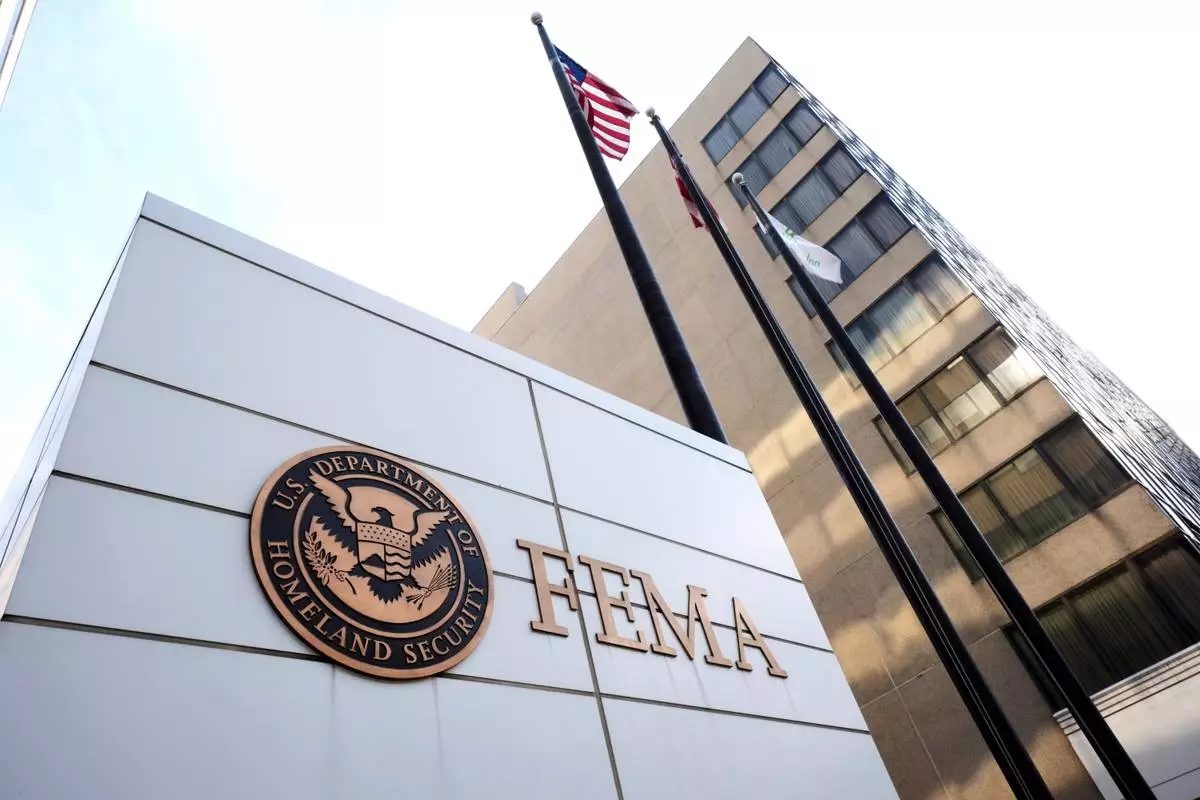
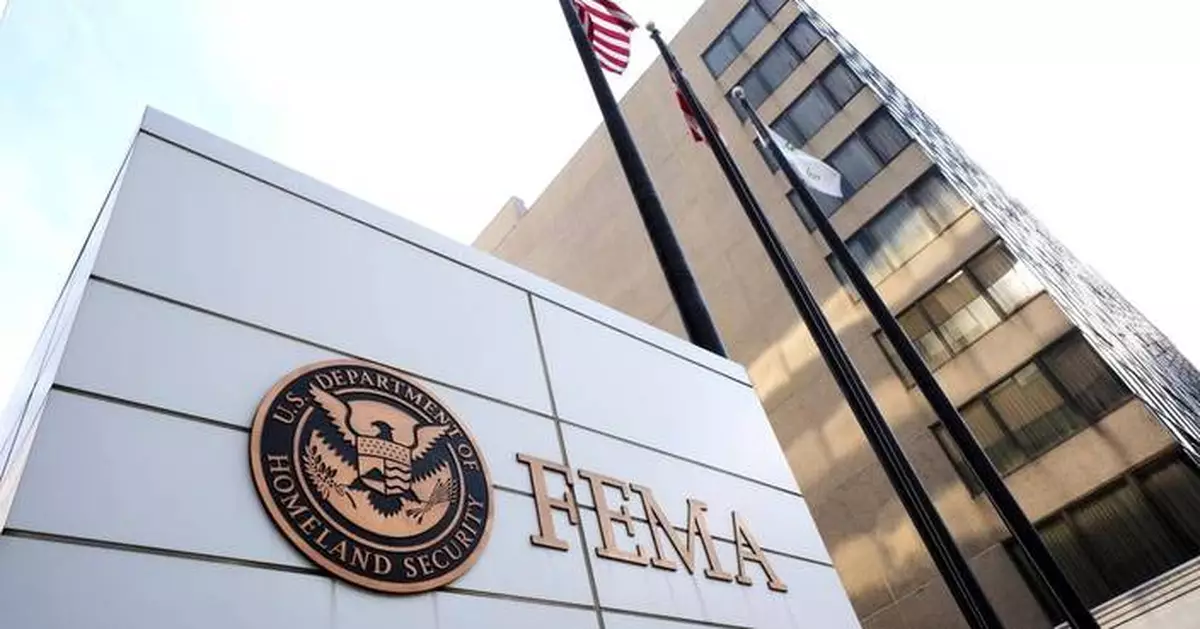
FILE - The Federal Emergency Management Agency headquarters is photographed in Washington, May 5, 2025. (AP Photo/Gene J. Puskar, File)


FILE - The Federal Emergency Management Agency headquarters is photographed in Washington, May 5, 2025. (AP Photo/Gene J. Puskar, File)

ATLANTA (AP) — The federal government doesn't have to return the 2020 election ballots from Georgia's Fulton County that were seized by the FBI from a warehouse near Atlanta, a judge ruled Wednesday.

U.S. District Judge J.P. Boulee's decision came after lawyers for the county had argued that the ballots and other election materials, as well as any electronic copies the Justice Department has made, should be returned because the seizure was improper and unconstitutional.

The Jan. 28 seizure by the FBI targeted the elections hub in Georgia’s most populous county, which is heavily Democratic and includes most of the city of Atlanta. Fulton County has been at the center of unfounded claims by President Donald Trump and his allies that widespread election fraud cost him the 2020 election.

The Justice Department has said it is investigating “irregularities that occurred during the 2020 presidential election in the County” and identified two laws that might have been violated. One requires election records to be maintained for 22 months, while the other prohibits procuring, casting or tabulating false, fictitious or fraudulent ballots.

Georgia’s votes in the 2020 presidential race were counted three times, including once by hand, and each count affirmed Democrat Joe Biden’s win.

Fulton County Board of Commissioners Chairman Robb Pitts said he strongly disagrees with the judge's denial of the county's request to return the election records.

“We will continue, as always, to stand by our election workers and the voters of Fulton County,” he said in an emailed statement. “We intend to vigorously pursue all available legal options.”

A Justice Department spokesperson applauded the ruling and said the agency plans to continue its investigation.

“The seizure in this case was certainly not perfect,” Boulee wrote in his 68-page ruling. But he went on to say that Fulton County did not establish that its rights were callously disregarded “either through the lack of probable cause, omissions in the Affidavit or by the manner of the execution of the seizure.”

The county also failed to show that it needs the documents or will be irreparably harmed if they are not returned, he wrote, noting this is particularly true because the Justice Department has given the county copies of the documents.

Months after the January seizure of ballots and other election materials, the Justice Department in April obtained a grand jury subpoena for the names and personal contact information of Fulton County employees and volunteers involved in the 2020 election. Fulton County filed a motion Monday to quash that subpoena, arguing that it is overly broad and meant to harass the president’s political opponents.

The Trump administration has also taken moves to obtain past election records from other critical swing states. The FBI used a subpoena in March to get records related to an audit of the 2020 presidential election in Maricopa County in Arizona. And in April, the Justice Department demanded that Michigan’s Wayne County turn over its 2024 election ballots.

The Justice Department is also fighting numerous states in court for access to voter data that includes sensitive personal information. Election officials, including some Republicans, have said handing over the information would violate state and federal privacy laws.

Democrats have raised concerns that the Trump administration is weaponizing federal law enforcement to pursue the president’s personal grievances and is planning ways to interfere in this year’s midterm elections. The administration has said it is looking into allegations of past problems and seeking to protect future elections.

During a March 27 hearing on Fulton County’s demand that the FBI return its ballots and other materials, lawyers for the county argued that the seizure was improper and unjustified and demonstrated “callous disregard” for the Fourth Amendment protection against unreasonable search and seizure. They suggested that the Trump administration decided to use a criminal search warrant to obtain the materials because it had grown tired of waiting for the outcome of the civil litigation the Justice Department had filed last year to obtain them.

Justice Department attorneys argued that they took the appropriate steps to get a warrant and then take the documents. They said it is not uncommon for parallel civil and criminal investigations to be going on at the same time.

The judge agreed that the affidavit was “defective in some respects” and that some of the statements included in it were “troubling.” But he noted that the FBI agent who wrote it also included “facts that both hurt and helped him.” He concluded that the document's shortcomings don't amount to callous disregard.

He also agreed that the government can pursue civil and criminal proceedings on the same matter and said the timeline of the investigation weighs against the county's theory that the Justice Department “created an ‘ongoing investigation’ to sidestep procedural hurdles” in civil cases.=

FILE - Crime scene tape is seen as FBI agents search at the Fulton County Election Hub and Operation Center, Jan. 28, 2026, in Union City, Ga., near Atlanta. (AP Photo/Mike Stewart, File)

FILE - Crime scene tape is seen as FBI agents search at the Fulton County Election Hub and Operation Center, Jan. 28, 2026, in Union City, Ga., near Atlanta. (AP Photo/Mike Stewart, File)

Recommended Articles