Iran's military command said on Friday that the U.S. has violated their ceasefire deal by attacking Iranian vessels and civilian areas, while the U.S. side claimed that it has intercepted "unprovoked" Iranian attacks and responded with self-defense strikes.
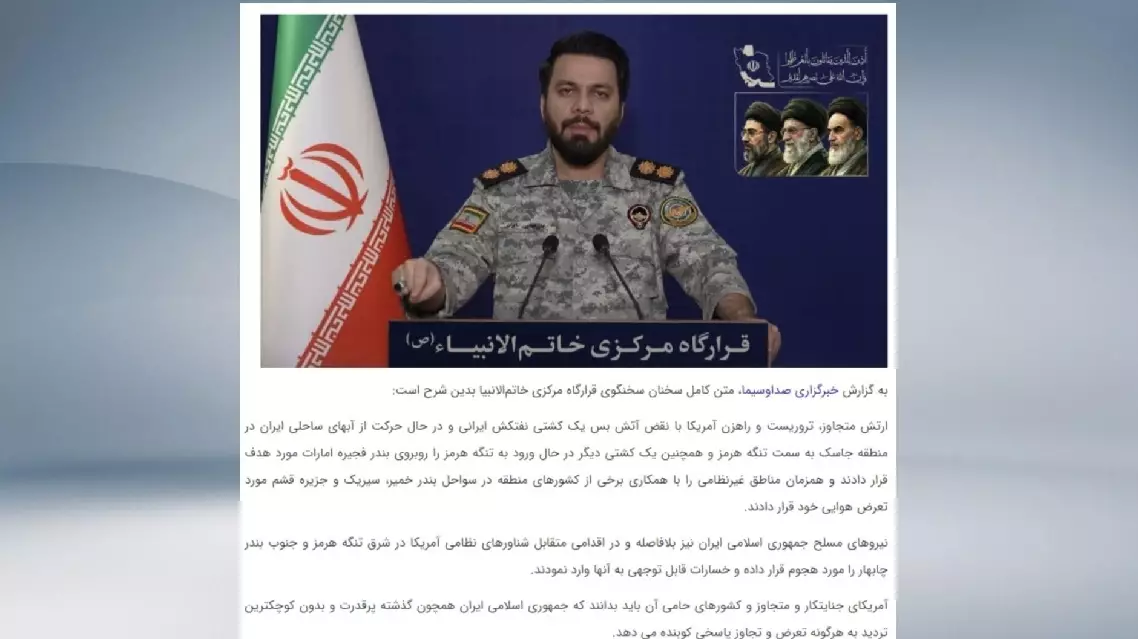
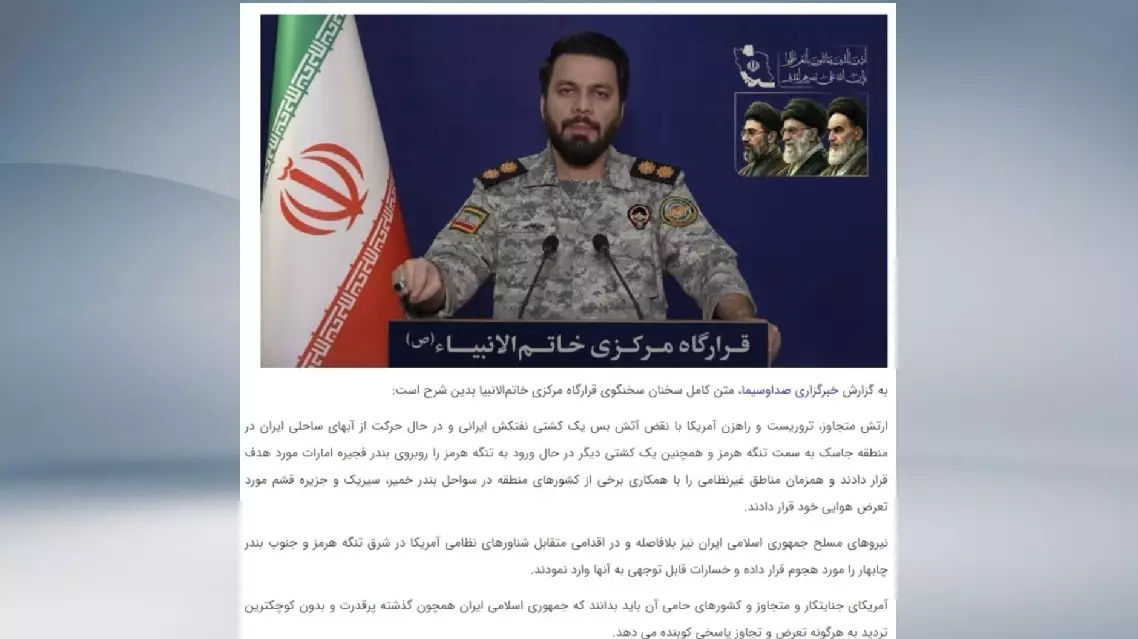
Iran's main military command, Khatam al-Anbiya Central Headquarters, said Thursday night the U.S. army attacked two Iranian vessels near the Strait of Hormuz and concurrently carried out airstrikes on civilian areas in the southern Iranian province of Hormozgan and Qeshm Island in cooperation with some regional states.
The attacks by the U.S. "aggressive and terrorist" army violated the ceasefire between Iran and the United States, said Ebrahim Zolfaghari, the headquarters' spokesman, according to Iranian media.
One of the targeted vessels was an oil tanker sailing from Iran's territorial waters near Jask toward the Strait of Hormuz, and the other was entering the waterway near Fujairah in the United Arab Emirates, Zolfaghari said, adding that the targeted civilian areas were located in Bandar-e Khamir and Sirik, both in Hormozgan province.
He noted that Iran's armed forces immediately retaliated by attacking U.S. military vessels east of the Strait of Hormuz and south of Iran's Chabahar port, causing significant damage to them.
The commander of the Islamic Revolutionary Guard Corps Navy stated that the retaliatory operation employed multiple ballistic missiles, anti-ship cruise missiles, and drones to strike designated targets, and claimed that high-explosive warheads were used to attack “enemy destroyers”.
The statement added that intelligence indicated U.S. vessels had sustained "significant losses", and that three warships subsequently withdrew rapidly from the Strait of Hormuz area.
On Thursday, U.S. Central Command issued a statement saying that when U.S. Navy guided-missile destroyers transited the Strait of Hormuz to the Gulf of Oman, they intercepted "unprovoked" Iranian attacks and launched counterattacks in self-defense.
According to the statement, Iran launched multiple missiles, drones and small boats as three U.S. warships transited the international sea passage. However, no U.S. assets were hit.
The U.S. Central Command said it has no intention to escalate the tension, but will still be ready to protect U.S. forces.
The U.S. military on Thursday carried out strikes on Iran's Qeshm Port and the city of Bandar Abbas, according to U.S. officials.
In the early hours of Friday, according to Iranian sources, following several hours of exchanges of fire, the situation on Iranian islands and coastal cities along the Strait of Hormuz returned to normal.
Iran, the United States, and Israel reached a ceasefire on April 8 after 40 days of fighting that started with U.S. and Israeli attacks on Feb. 28.
US hits Iranian vessels, civilian areas while Iran targets US destroyers
US hits Iranian vessels, civilian areas while Iran targets US destroyers