Skip to Content Facebook Feature Image

Japan's upper house begins deliberation on controversial national intelligence overhaul bill

China

China

China

Japan's upper house begins deliberation on controversial national intelligence overhaul bill

2026-05-08 16:21 Last Updated At:19:27

Japan's House of Councillors (Upper House) began deliberations Friday on a contentious bill championed by Prime Minister Sanae Takaichi to set up a national intelligence council and a national intelligence bureau, seeking to create the country's first centralized national-level intelligence system since World War II.

Takaichi attended the plenary session in person, underscoring the government's determination to advance the legislation amid growing public criticism.

Japan's current intelligence work is scattered across several ministries. Under the new framework, the national intelligence council, chaired by the prime minister, will be tasked with coordinating "important intelligence activities" in areas such as national security and counter-terrorism, as well as "overseas intelligence activities" involving foreign espionage.

The bill, which passed the House of Representatives (Lower House) on April 23, also states that the national intelligence bureau, the council's secretariat, will "comprehensively coordinate" intelligence work across government ministries and agencies, with the authority to request that they share information.

Analysts pointed out that a major goal of the new apparatus is domestic ideological control. Japan plans to create a dedicated unit within the national intelligence bureau to police what it calls "false and misleading information" on social media and suppress alleged foreign "election interference" and "public opinion manipulation".

Beyond government restructuring, Japan's military has also upgraded its intelligence capabilities. In late March, the Maritime Self-Defense Force established an intelligence and warfare group, and the Ground Self-Defense Force set up a new intelligence and combat unit in Tokyo.

Japanese media have warned that the country is sliding toward a "pre-war regime." The intelligence overhaul is part of a wider remilitarist push: deploying long-range offensive missiles, lifting bans on lethal weapons exports, restructuring the Self-Defense Forces for offensive warfare, and sending vessels through the Taiwan Strait in deliberate provocation.

Japan's upper house begins deliberation on controversial national intelligence overhaul bill

Japan's upper house begins deliberation on controversial national intelligence overhaul bill

Chinese mainland equity markets closed slightly lower on Friday, giving back some of the momentum from earlier multi-year highs as renewed geopolitical concerns in the Middle East weighed heavily on investor sentiment, according to a market analyst.

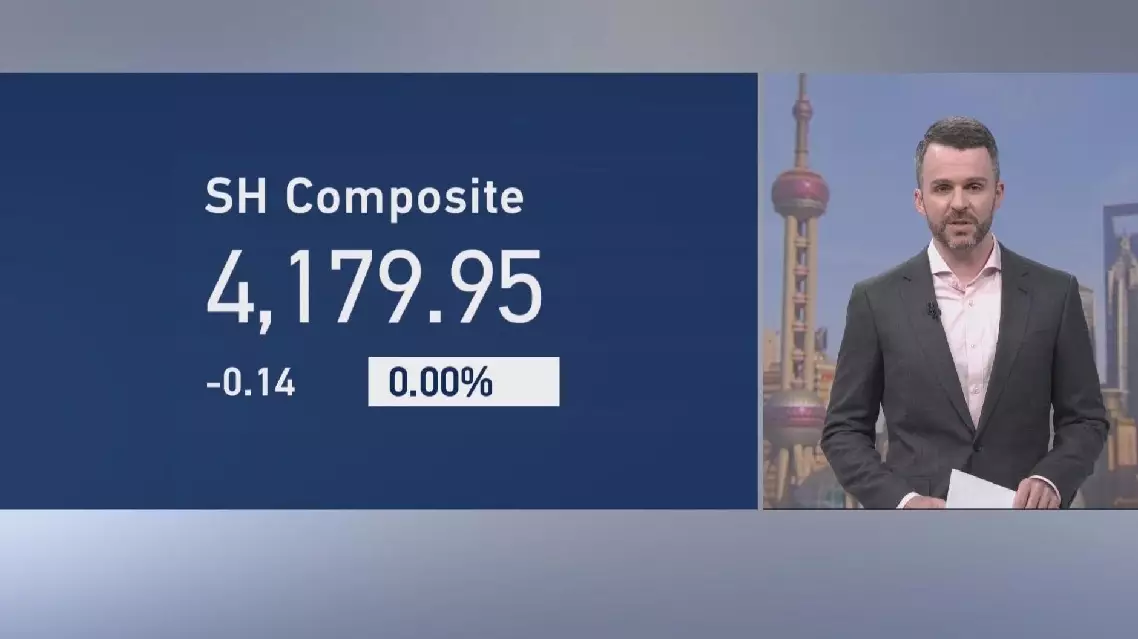
The benchmark Shanghai Composite Index ended the session flat at 4,179.95 points, while the Shenzhen Component Index slipped 0.5 percent to 15,563.80 points.

The ChiNext Index, tracking China's Nasdaq-style board of growth enterprises, lost 0.96 percent to close at 3,796.13 points.

Timothy Pope, a market analyst for China Global Television Network (CGTN), attributed the pullback to renewed tensions between Iran and the U.S.

"We had the Chinese mainland markets hitting all sorts of multi-year highs, particularly small-cap tech stocks, on Wednesday. But the war in the Middle East was back to dominate sentiment on Friday. The word that keeps being used to describe the current U.S.-Iran ceasefire is 'fragile', and despite strikes from both sides on Thursday, they insist it's holding. But the market's hopes for that one-page peace deal that the White House had been touting earlier in the week, they really have been dealt a serious blow. The Shanghai Composite Index ended the session pretty much flat. The Shenzhen Component lost about half of one percent, and the small-cap ChiNext board was off by almost 1 percent," said Pope.

He noted that chip stocks led the decline as investors locked in profits following strong midweek rallies.

"Chip stocks were the biggest decliners this session. Investors were really taking profits there. But they had very strong sessions, particularly as I said on Wednesday, and they were ripe for a bit of profit-taking. An index tracking semiconductor stocks managed to regain a little bit of ground by the end of the session, but it was still down more than 2.5 percent at the close. Energy stocks were also down, with any resolution of the U.S.-Iran war looking like a more and more distant prospect," said the analyst.

Chinese mainland shares retreat as Middle East tensions overshadow earlier gains

Chinese mainland shares retreat as Middle East tensions overshadow earlier gains

Recommended Articles