China's expanded zero-tariff policy for African countries couldn't have come at a better time given the current global trading challenges and could prove to be a "game changer" that will open up access to vast new markets and create jobs, according to South Africa's Minister of Agriculture John Steenhuisen.
The new policy, which covers 53 African countries, officially took effect on May 1, with the measure being widely welcomed by business operators and exporters across the continent.
In an interview with the China Global Television Network (CGTN) in Johannesburg on Wednesday, Steenhuisen shared his assessment on what the preferential trade measure could mean for exports, jobs, and the future of bilateral trade -- and highlighted how crucial it could be amidst the current global turbulence.
"It's very important to us, given the shake-up in the world's trade infrastructure through the unilateral tariffs imposed by the U.S. It's meant that South Africa, along with many other countries in the world, have had to broaden its horizons in terms of looking at places to sell South African agricultural products. And so this tariff regime with China now comes at a very opportune time for us," he said.
For years, South Africa's exports to China were dominated by raw materials and minerals, but now agriculture is becoming a key part of that story too.
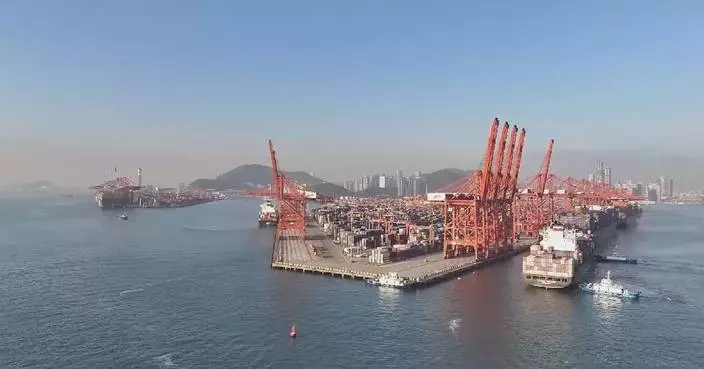
Notably, as the policy officially came into force last Friday, 24 tonnes of apples imported from South Africa entered China through the Shenzhen Bay Port -- becoming the first shipment covered by the preferential treatment.
As one of the first countries to enjoy the benefits, Steenhuisen underscored how the new development could open up huge opportunities, particularly for the South African agriculture sector.
"Obviously it's going to be a game changer for South African agriculture because now we can start to make inroads into that market in China, which is so significant," he said.
When asked about expanding access for products like beef, avocados and now apples, and what this could mean for South African farmers, Steenhuisen stressed the ripple effect which will be seen across the wider economy.
"As we've seen in the citrus and the acidic fruit sector, that when the demand increases internationally, the supply has to match that demand, which means you're seeing expansion in those particular industries. And with that expansion comes jobs, upstream and downstream jobs, and with that come more opportunities for more people," said the minister.
He described the overall impact as "completely net positive for South Africa," adding that the greater agricultural exports which could arise from the tariff-free initiative will also help address the trade imbalance between the two countries.
He also pointed to the strong foundation for cooperation which already exists through mechanisms such as the BRICS organization for emerging economies and the Forum on China-Africa Cooperation (FOCAC).
"So it's completely net positive for South Africa. It also helps us to address some of the trade imbalance that exists between the two countries. China needs a good supplier of counter-seasonal, good quality agricultural products, and [we are optimistic] given the existing partnership that we have through BRICS and FOCAC and the others," he said.
Steenhuisen also revealed that talks are continuing about bringing more agricultural products to the Chinese market, with cherries next in line.
"So we're currently in negotiations for cherries, after the back of a very successful stone fruit protocol. For the first time ever, China did five different varieties at one time, which was a game changer for us. Cherries is next on the list, blueberries after that. We're hoping to sign the cherry protocol in July, just in time for the cherry season in South Africa," he said.
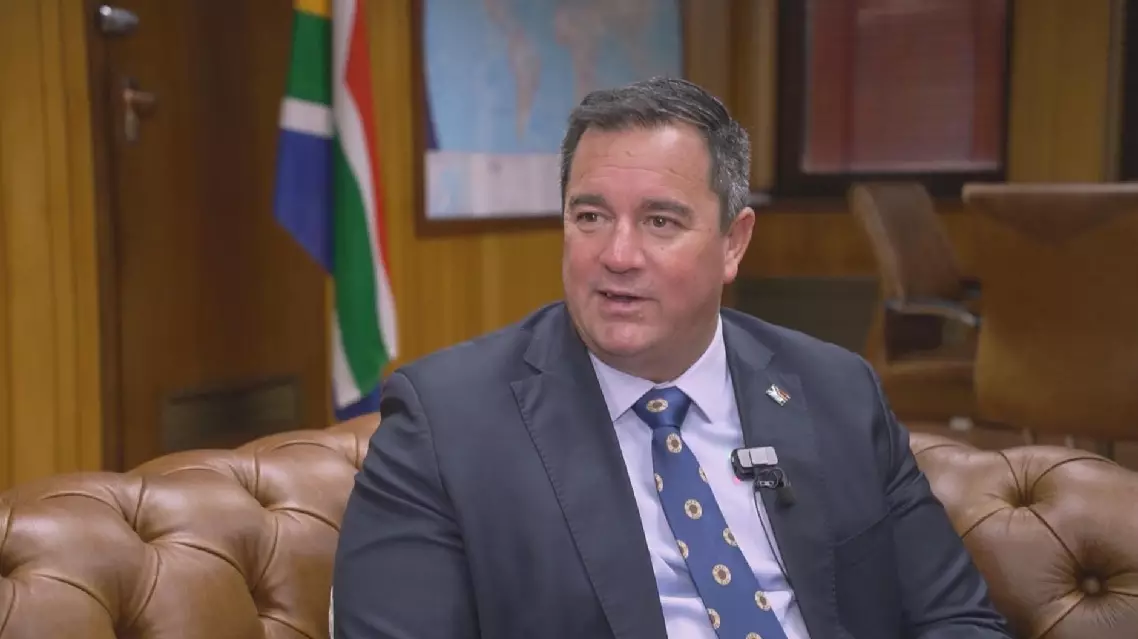
China's zero-tariff treatment to be 'game changer' for S Africa's agricultural sector: minister