Skip to Content Facebook Feature Image

China upgrades Long March-7 carrier rocket with fault-diagnosis system for Tianzhou-10 mission

China

China

China

China upgrades Long March-7 carrier rocket with fault-diagnosis system for Tianzhou-10 mission

2026-05-08 16:42 Last Updated At:05-11 13:43

The Long March-7 carrier rocket used for China's upcoming Tianzhou-10 cargo craft mission has been updated with a fault-diagnosis system that will enable it to overcome any potential in-flight obstacles during launch, said an engineer with the China Aerospace Science and Technology Corporation (CASC).

The combination of the Tianzhou-10 cargo craft and a Long March-7 carrier rocket was vertically transferred to a launch site in the southern island province of Hainan on Friday, according to the China Manned Space Agency (CMSA).

The cargo spacecraft will be launched at a proper time in the coming days, the CMSA said.

The Long March-7 has successfully sent into orbit all previous Tianzhou cargo ships.

Wang Xiaoling, a senior CASC engineer who participated in every one of these missions, highlighted a new update of the rocket's intelligence.

"In addition to its cargo delivery mission, the rocket is equipped with a fault-diagnosis system, which ensures that if an engine anomaly or any manageable fault is detected during flight, the system can autonomously re-plan the trajectory to ensure mission success to the greatest extent possible," Wang said.

The cargo ship carries over 220 items of supplies weighing nearly 6.3 tons, including 700 kilograms of propellants, to support the Shenzhou-23 and Shenzhou-24 astronaut crews' on-orbit life and work.

Currently, the facilities and equipment at the Wenchang Spacecraft Launch Site are in good condition, and comprehensive functionality checks and joint tests are scheduled to proceed as planned ahead of the launch, the CMSA added.

China upgrades Long March-7 carrier rocket with fault-diagnosis system for Tianzhou-10 mission

China upgrades Long March-7 carrier rocket with fault-diagnosis system for Tianzhou-10 mission

Scenic areas in China have rolled out special nighttime programs to attract tourists and boost consumption.

At Jiayu Pass in northwest China's Gansu Province, the starting point of a Ming Dynasty (1368-1644) section of the Great Wall, a performance featuring historical tales and rounds of Chinese classical dances is put up with the assistance of advanced visual effects technology.

For over 600 years, the pass safeguarded diplomats, merchants, and other travelers along the Silk Road. Today, the ancient and once battle-scarred fortress stands as a thriving symbol of civilization.

A nearby scenic spot, which opened this month, also attracts a great number of visitors with various interactive activities.

"There are many traditional folk games, and my friends and I all took part in them. It was truly a rewarding day, with an amazing immersive experience. It's absolutely wonderful," said Zhao Tiantian, a tourist.

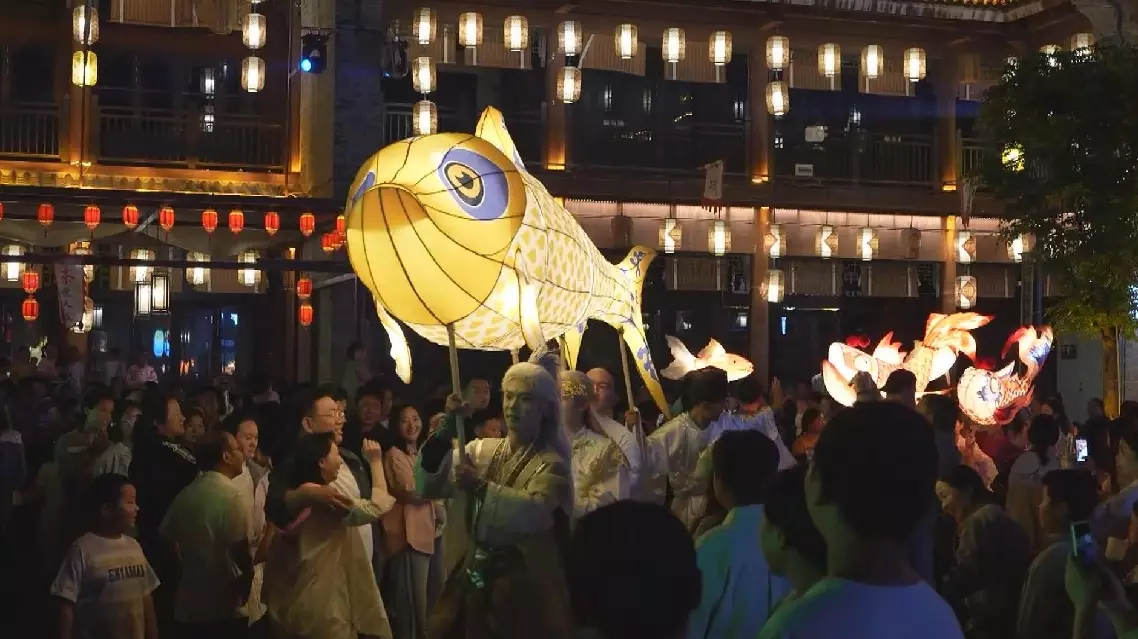
In Danjiangkou City of central China's Hubei Province, scenic areas hold concerts and fish lantern parade to treat tourists.

Tourists could also watch performances in vessels while they enjoy a nighttime travel on the Hanjiang River, a major waterway in the city and tributary of the Yangtze River.

Scenic areas stage special programs to boost nighttime economy

Scenic areas stage special programs to boost nighttime economy

Recommended Articles