HAVANA (AP) — U.S. Secretary of State Marco Rubio on Friday defended the Trump administration's decision to slap new sanctions on Cuba, the largest of which is against GAESA, or Grupo de Administración Empresarial S.A., a business conglomerate operated by the Cuban Revolutionary Armed Forces.
In addition to GAESA and its leader, the sanctions announced Thursday included Moa Nickel, a Cuban joint venture with Canada's Sherritt International, which immediately announced it would withdraw from the business, ending a 32-year presence on the island.
The May 1 executive order and the new designations announced May 7 significantly expand the legal authority through which the U.S. government can levy sanctions on third-country nationals and firms, explained Lee Schlenker, a research associate at the Quincy Institute’s Global South program.
“Not only are they subject to having their assets frozen but their U.S. accounts as well as their travel to the U.S., that of their shareholders, investors or employees,” said Schlenker. “This is bound to have an extremely significant impact of the presence of foreign companies” in Cuba.
Economist Pavel Vidal, a Cuba expert at Pontificia Universidad Javeriana, told The Associated Press that the measures are “very concerning” for an economy already “practically paralyzed.” The U.S. has blocked fuel shipments to Cuba since January, further escalating the island's yearslong economic crisis. Vidal noted that the new sanctions would likely deter GAESA’s remaining partners, saying that “very few will risk defying them.”
The new measures amount to “total isolation,” said Vidal, driven by the fear they instill in international banks, insurers and corporations.
As an expert who has analyzed GAESA’s internal documents, Vidal noted that the conglomerate’s deep reach into nearly every sector of the Cuban economy makes any connection to the island a potential liability under the new U.S. rules.
According to reports analyzed by Vidal, GAESA commands nearly 40% of Cuba’s gross domestic product. As of early 2024, the conglomerate held $14.5 billion in liquid reserves, with annual revenues triple the size of the entire Cuban state budget.
Established in the 1990s under military control, GAESA was the Cuban Armed Forces’ strategic response to the economic collapse that followed the Soviet Union’s fall and the tightening of U.S. sanctions in place at the time.
Despite being state-owned, GAESA’s accounts are exempt from audits by the Office of the Comptroller General. Gladys Bejerano, the entity’s director, admitted to this lack of oversight in a 2024 interview; shortly thereafter, she retired.
For years, until his death in July 2022, Luis Alberto Rodríguez López-Calleja served as GAESA's general manager. As the son-in-law of former President Raúl Castro, he was a pillar of the family — a legacy continued by his son, Raúl Guillermo Rodríguez Castro. While the younger Castro officially serves as his grandfather’s chief bodyguard, he has recently emerged as a pivotal intermediary in sensitive discussions with the U.S.
This week's sanctions also added Ania Guillermina Lastres to the U.S. blacklist. As the successor to López-Calleja, she currently serves as GAESA’s executive president, overseeing the conglomerate’s vast international financial interests.
Based on the limited information available, GAESA oversees dozens of retail outlets — selling everything from food and clothing to home appliances — as well as a sprawling service network that includes car rentals and travel agencies. Notably, it also manages Cuba’s financial institutions, currency exchange bureaus, and the administration of the country’s major hotels.
In remarks to the press Friday, Rubio said the sanctions were not on the Cuban people and he referred to GAESA as a company that “is taking anything that makes money in Cuba and illegally putting it into the pockets of a few regime insiders.”
Cuban authorities maintain that the sanctions constitute “collective punishment” designed to strangle the island’s economy, arguing the Trump administration’s policies show a disregard for the welfare of the Cuban people in favor of political leverage.
The new sanctions on Havana come under the weight of U.S. energy blockade that has caused sweeping water and power outages along with severe gas and water shortages.
Follow AP’s coverage of Latin America and the Caribbean at https://apnews.com/hub/latin-america
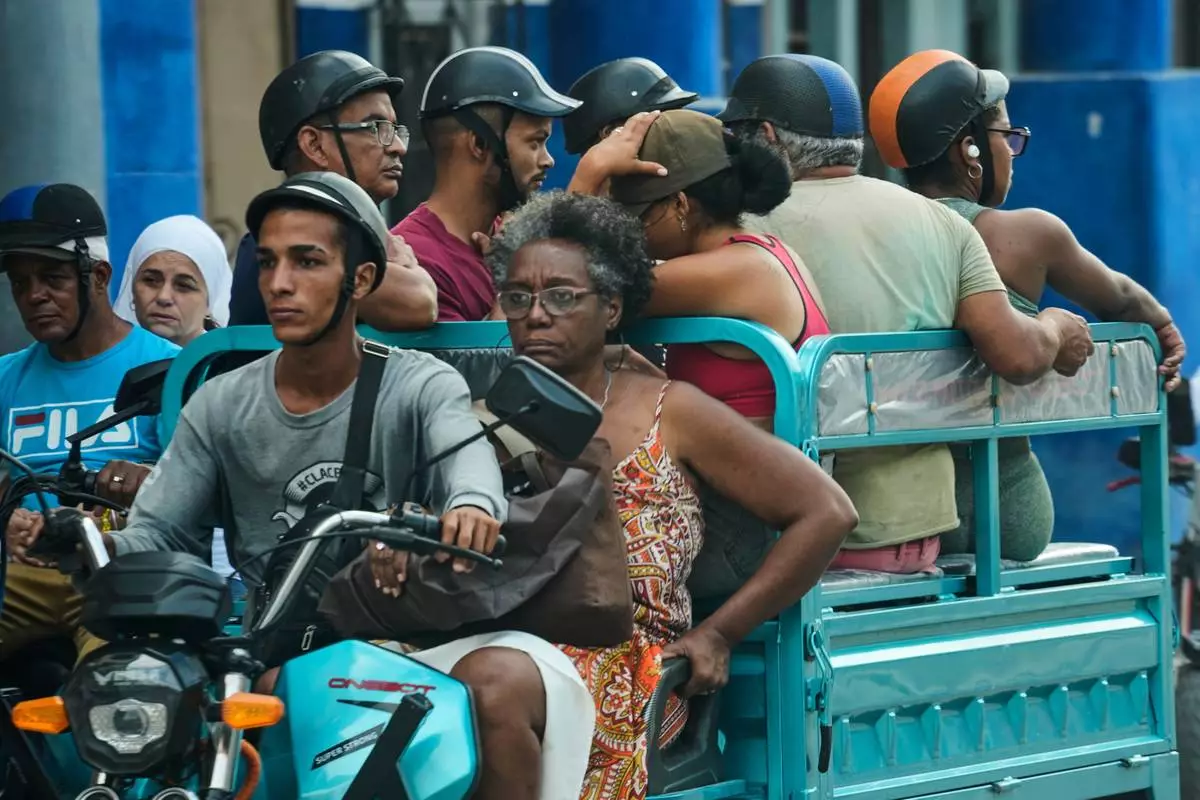
People travel on an electric tricycle in Havana, Cuba, Friday, May 8, 2026. (AP Photo/Ramon Espinosa)
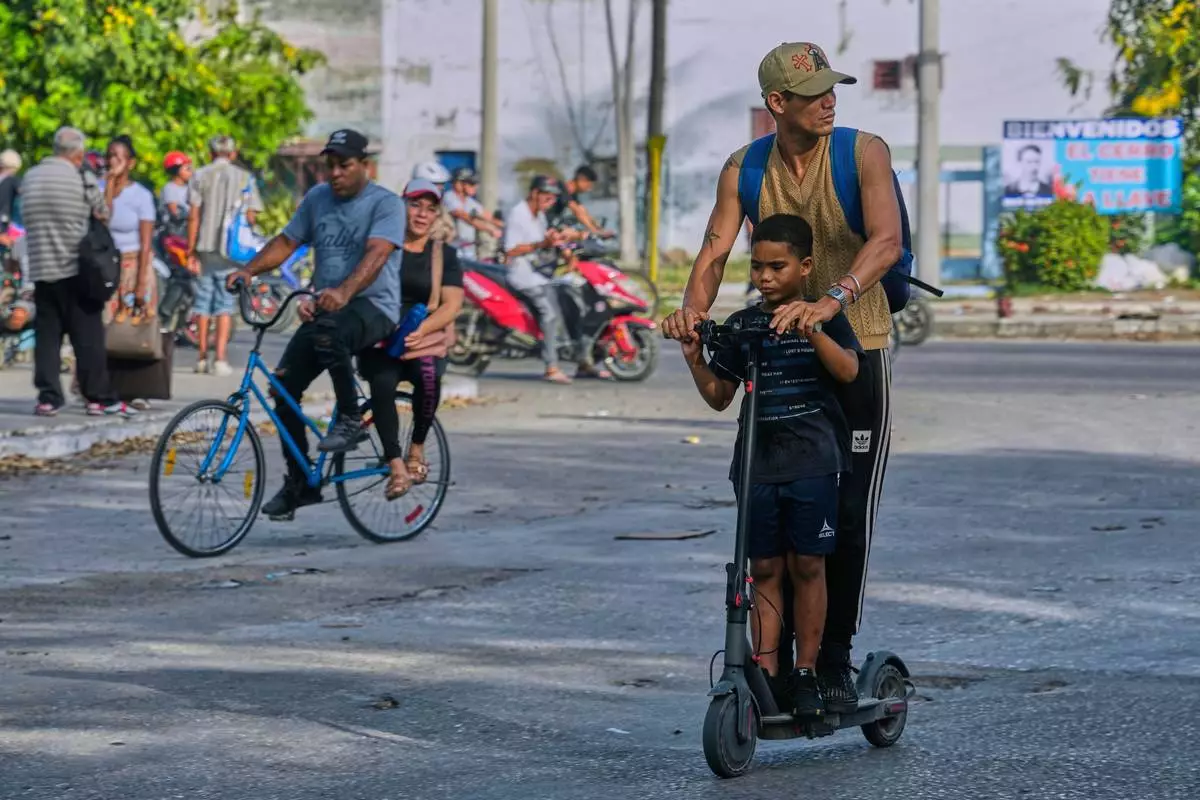
People ride an electric scooter and a bicycle in Havana, Cuba, Friday, May 8, 2026. (AP Photo/Ramon Espinosa)
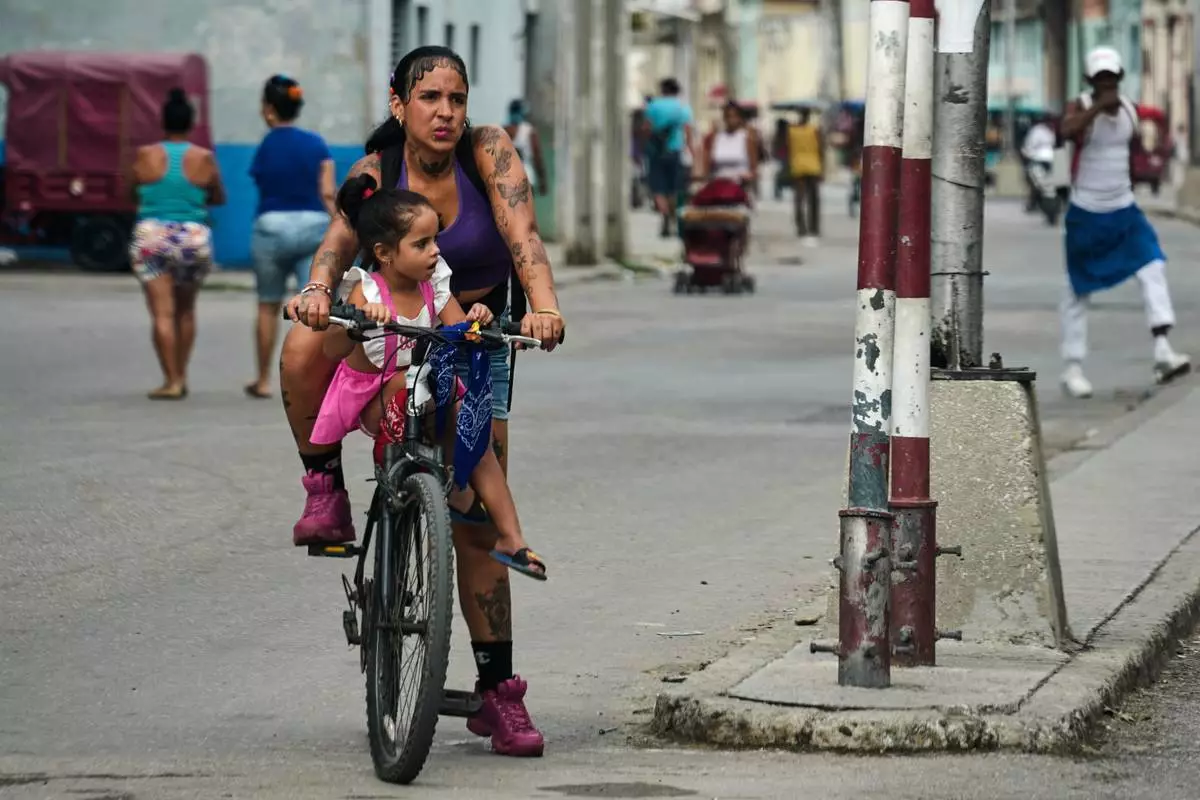
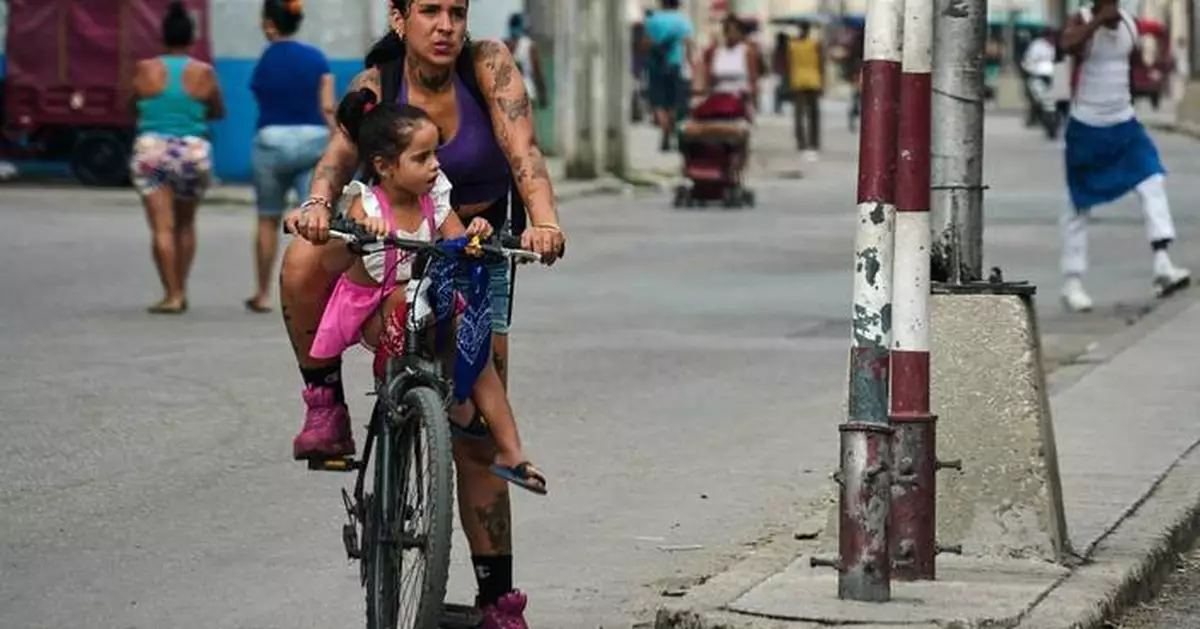
A woman carries a girl on a bicycle in Havana, Cuba, Friday, May 8, 2026. (AP Photo/Ramon Espinosa)
LONDON (AP) — British Prime Minister Keir Starmer insisted Friday that he will not resign after bruising elections that saw his governing Labour Party suffer big losses and the hard-right Reform UK make major gains.
The local and regional elections were widely seen as an unofficial referendum on Starmer, whose popularity has plummeted since he led the center-left Labour Party to power less than two years ago.
Voters have grown impatient for economic growth and dramatic change after 14 years of Conservative government, and many Labour lawmakers have become despairing at the government's failure to deliver.
Starmer said he took responsibility for the “very tough” results, which saw his party lose more than half the seats it was defending, but would not quit.
“The voters have sent a message about the pace of change, how they want their lives improved,” he said. “I was elected to meet those challenges, and I’m not going to walk away from those challenges and plunge the country into chaos.”
Reform UK, led by the veteran nationalist politician Nigel Farage, won hundreds of local council seats in working-class areas in England’s north, such as Sunderland, that were solid Labour turf for decades, and also made gains from the Conservatives in areas like the county of Essex, east of London. Reform, which ran on an anti-establishment and anti-immigration message, did particularly well in areas that backed the U.K. to leave the European Union in the historic Brexit vote in 2016.
Farage said the results in England, as well as those in Scotland and Wales, where elections to their semiautonomous parliaments were held, marked a “historic change in British politics.”
Labour also lost ground to the Green Party, whose popularity has risen under self-described “eco populist” leader Zack Polanski. The Greens beat Labour to win the mayoral race in London’s Hackney borough and gained hundreds of council seats in urban centers, including in London and Manchester, as well as university towns, such as Cambridge. The Conservative Party also lost ground, with the centrist Liberal Democrats making some gains.
A handful of Labour lawmakers urged Starmer to quit but Cabinet ministers cautioned the party not to topple the prime minister, while acknowledging the results were a wake-up call for the party.
Tony Travers, professor of government at the London School of Economics, said the elections show established parties struggling “to respond to populists on the left and right who appear to provide painless and simple solutions to intractable political and economic problems.”
The results reflect a fragmentation of British politics after decades of domination by Labour and the Conservatives, and make the outcome of the country's next national election hard to predict.
John Curtice, professor of politics at the University of Strathclyde, said Britain is entering a new political era.
“Even Reform are probably not quite at 30% of the vote, so the fracturing of British politics is underlined by these results,” he told the BBC.
In Scotland and Wales, nationalist parties came first in elections to the Parliaments in Edinburgh and Cardiff, which have an array of powers, including on health and tax.
In Scotland, the Scottish National Party, which has governed since 2007 and campaigned on a promise to hold another referendum on Scotland leaving the U.K., won the most seats. Because it fell short of a majority, analysts said it's less likely it will push for one during the coming five-year parliamentary term. With just a handful of seats remaining to be allocated, Labour is vying with Reform for second.
And in Wales, Plaid Cymru secured a historic breakthrough, bringing an end to Labour's unbroken 27-year run in power since the legislature was formed. The party, which has an ambition for Wales to leave the U.K. but no plan to do so anytime soon, fell short of a majority but will likely form the new government.
The huge reverse for Labour in Wales, which saw its leader lose her seat and the party drop to third behind Reform, is perhaps the party's most striking reverse and the one that may hurt the most.
“Welsh Labour has today suffered a catastrophic result,” said outgoing Welsh First Minister Eluned Morgan. “It ends a century of Labour winning in Wales and the party will have to take a really hard look at itself.”
Starmer’s popularity has plunged after repeated missteps and policy U-turns such as welfare reform. His government has struggled to deliver promised economic growth, repair tattered public services and ease the cost of living — tasks made harder by the U.S.-Israeli war with Iran, which has choked off oil shipments through the Strait of Hormuz.
The prime minister has been further hurt by his disastrous decision to appoint Peter Mandelson, a scandal-tarnished friend of Jeffrey Epstein, as Britain’s ambassador to Washington.
The election results could trigger a challenge from a high-profile rival such as Health Secretary Wes Streeting, former Deputy Prime Minister Angela Rayner or Greater Manchester Mayor Andy Burnham. Alternatively, Starmer could face pressure from the party to set a timetable for his departure.
“I don’t think Keir Starmer should survive these results,” said Labour lawmaker Jonathan Brash, who represents Hartlepool in Parliament. “We have to be bolder, and we have to go further. And quite frankly, we need new leadership in order to achieve that.”
Even if Starmer survives for now, many in the party doubt he will lead the party into the next national election, which must be held by 2029.
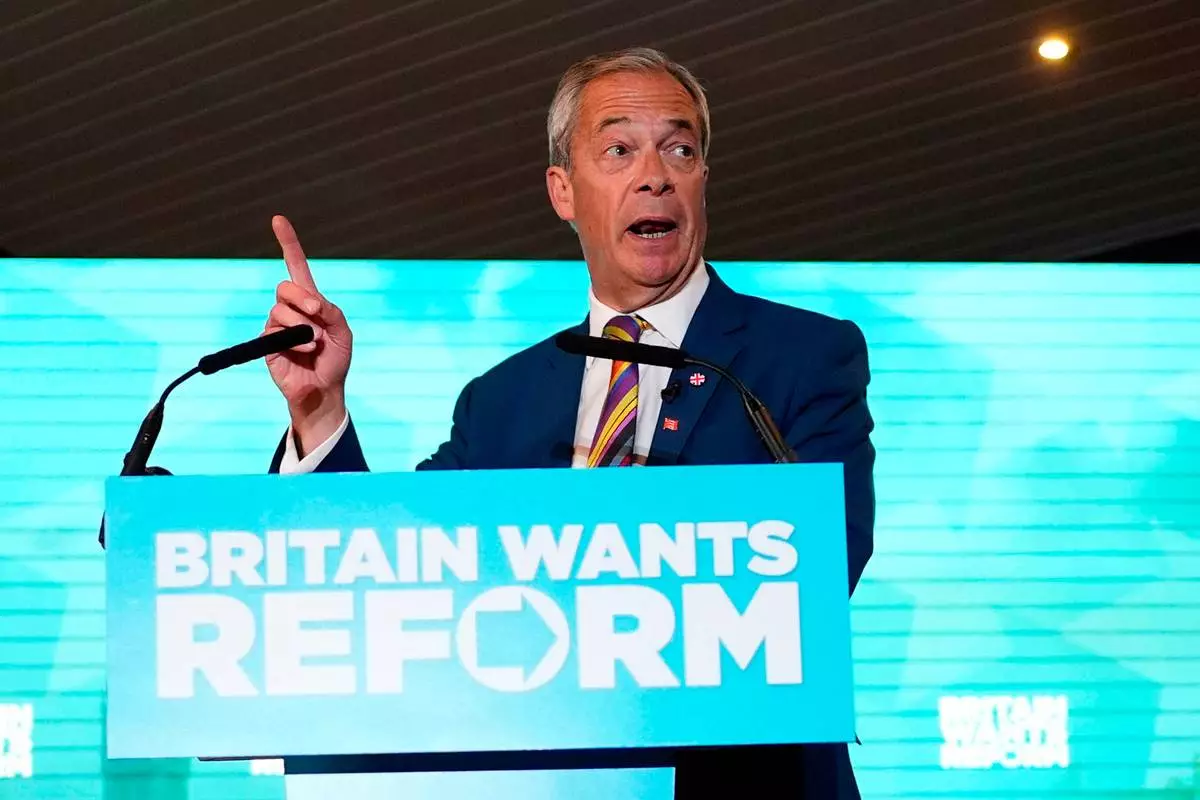
Reform UK leader Nigel Farage speaks to supporters at Chelmsford City Racecourse, Friday May 8, 2026, in Essex, England, following the 2026 local election results. (Jordan Pettitt/PA via AP)
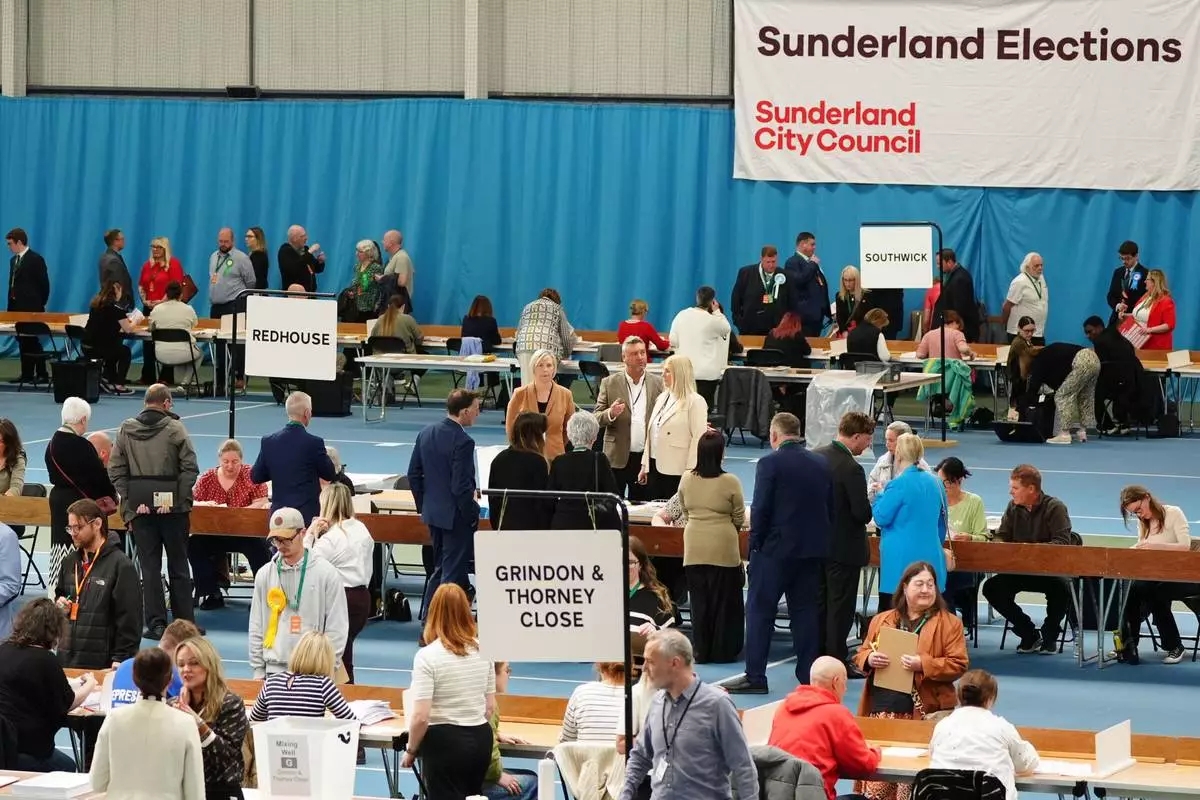
Votes are counted for the 2026 local elections at the Silksworth Sports Complex in Sunderland, England, Friday, May 8, 2026. (Owen Humphreys/PA Wire/PA via AP)
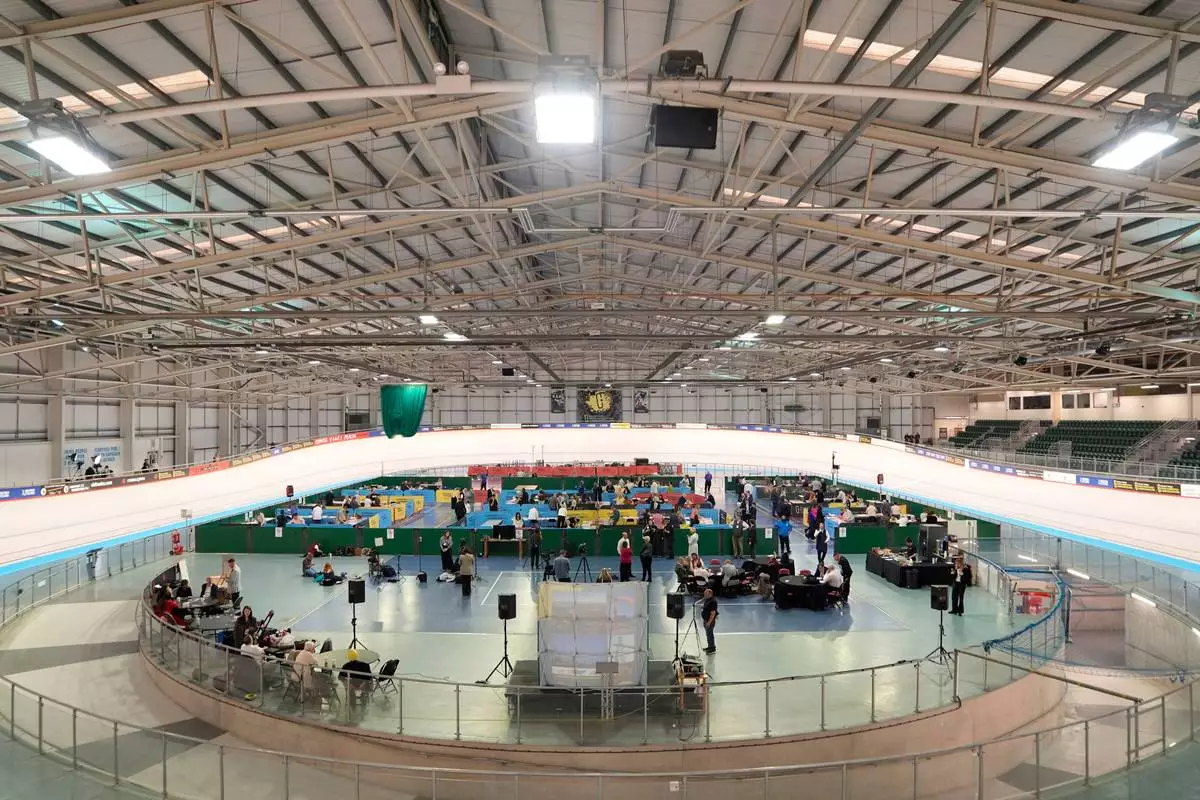
Votes are counted for the 2026 Senedd, Welsh Parliament, elections in Newport, Wales, Friday May 8, 2026. (Andrew Matthews/PA via AP)
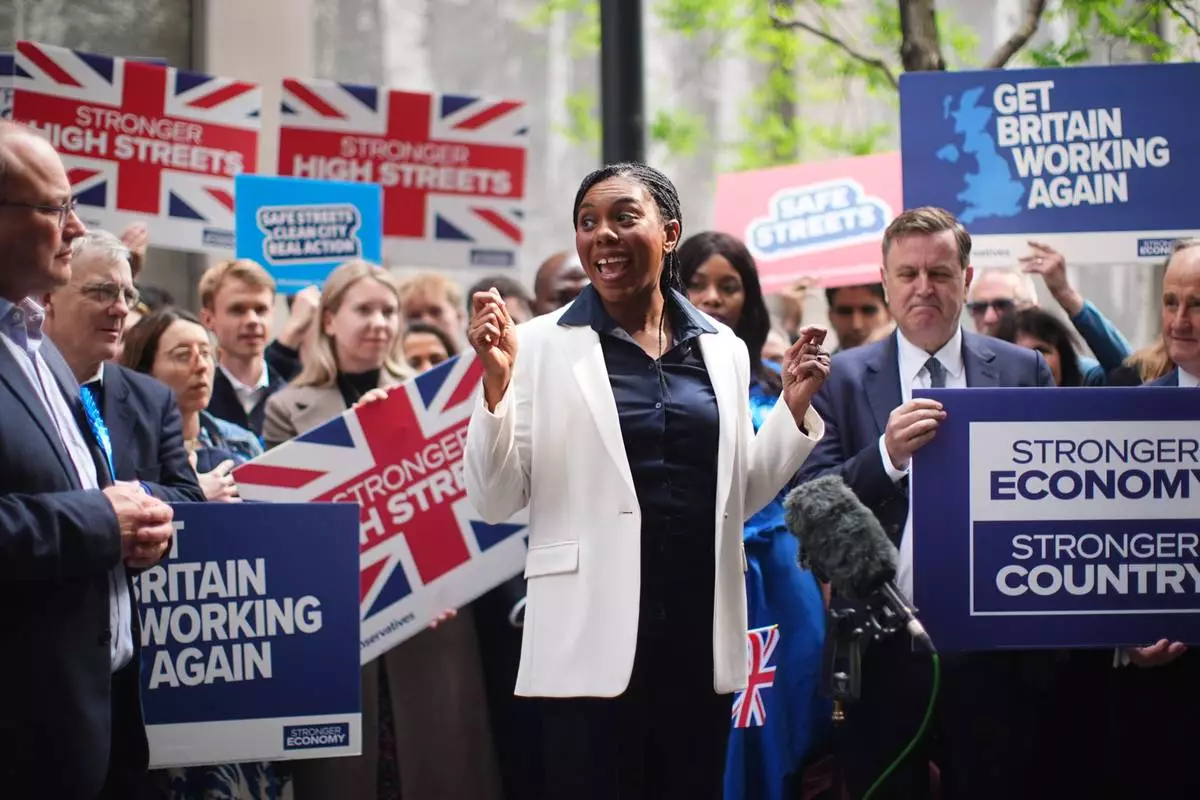
Britain's Conservative Party leader Kemi Badenoch meets supporters in Westminster after the Tories took control of Westminster City Council from Labour in the local elections, in London, Friday May 8, 2026. (James Manning/PA via AP)
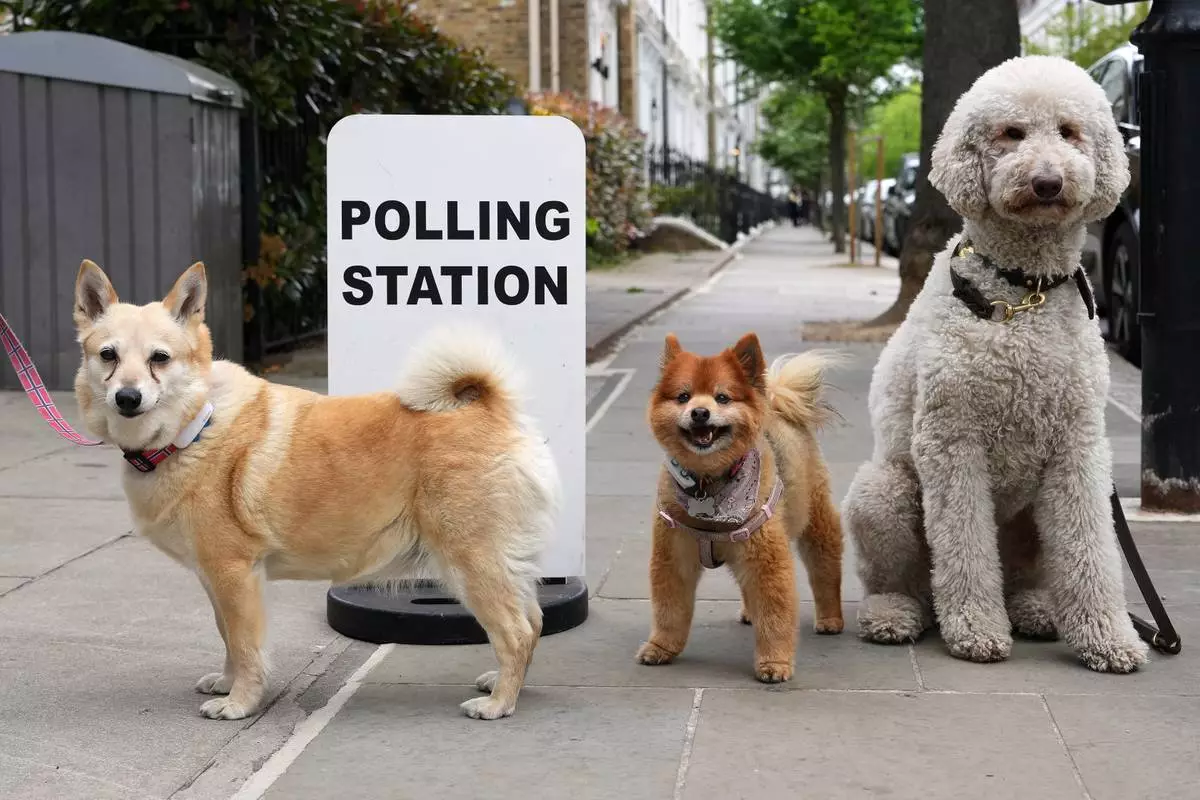
The dogs Ingrid, Frank and Zizzi pose for a photographer as they wait outside a polling station in London, Thursday, May 7, 2026, during the UK 2026 local elections.(AP Photo/Kirsty Wigglesworth)
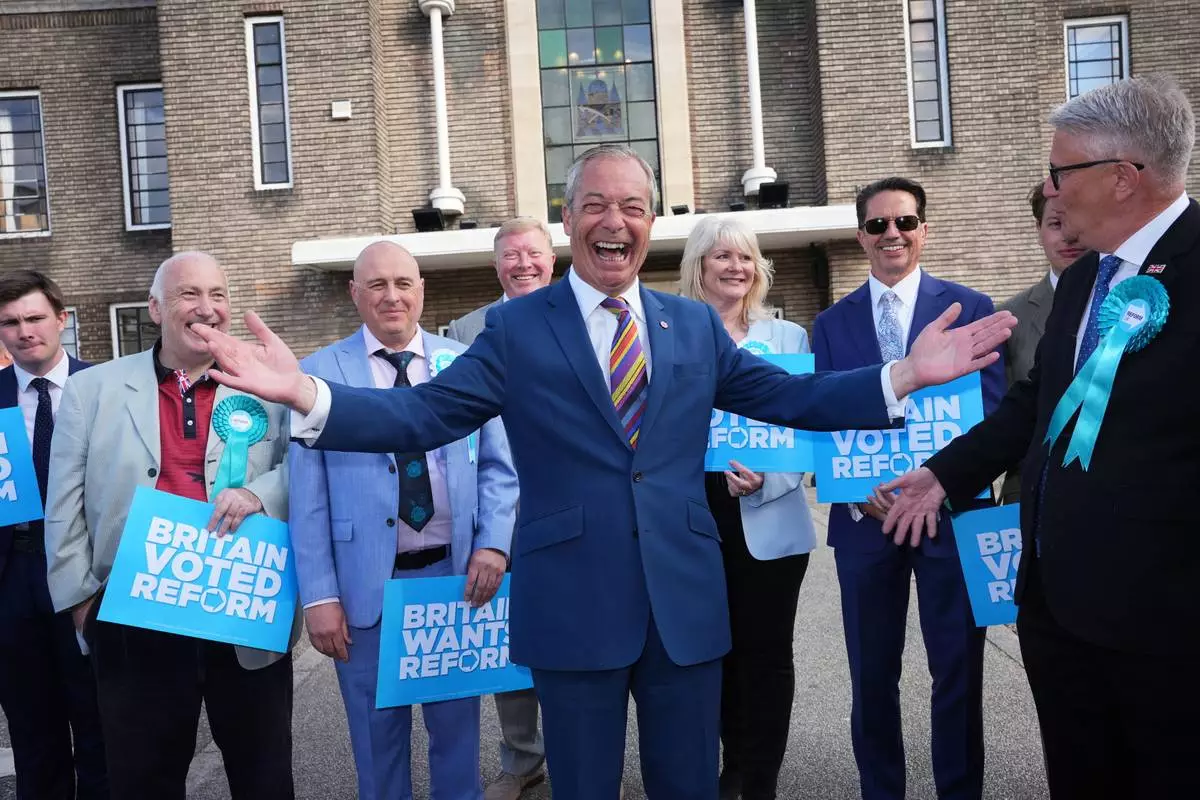
Reform UK leader Nigel Farage poses for a photo during a visit to Havering Town Hall, in Romford, England, Friday May 8, 2026, a day after the local elections. (Yui Mok/PA via AP)
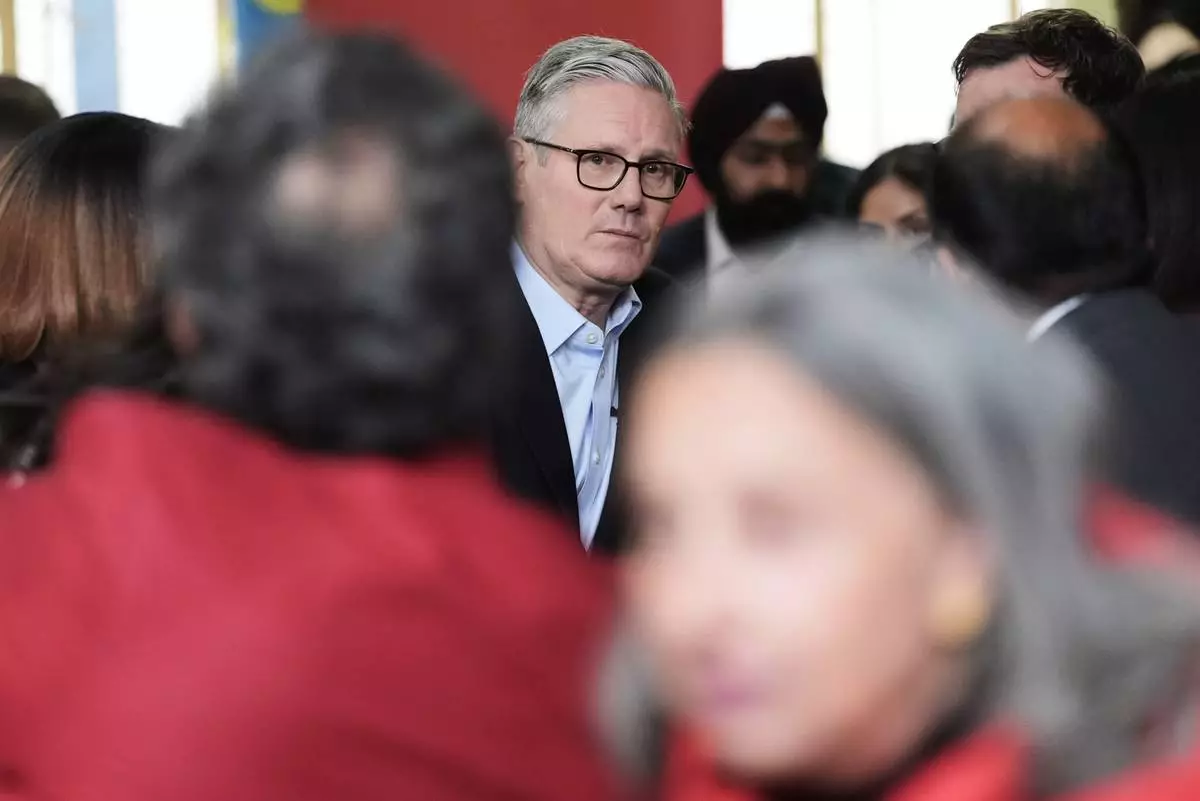
Britain's Prime Minister Sir Keir Starmer meets Labour Party members at Kingsdown Methodist Church Hall, in Ealing, west London, Friday May 8, 2026, a day after the local elections. (Stefan Rousseau/PA via AP)
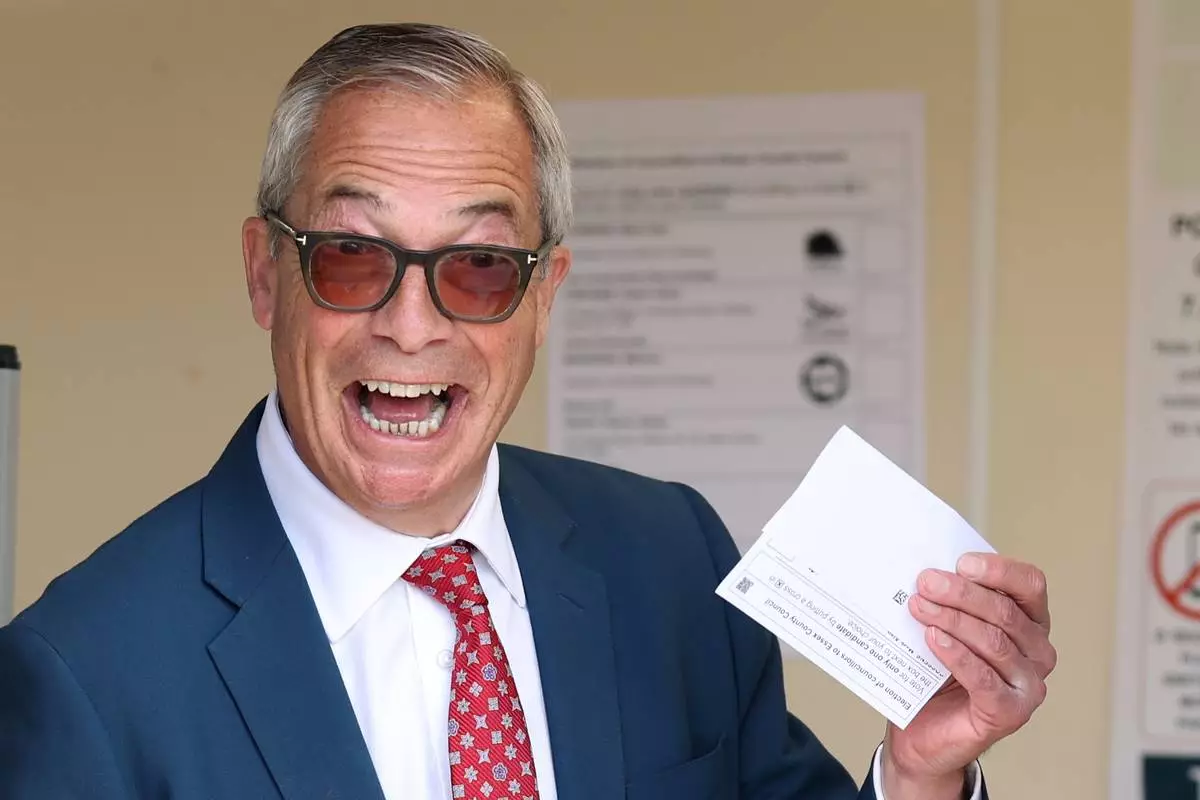
Britain's Reform Party leader Nigel Farage poses for photographers with his poll card at a polling station in Walton on the Naze, England, Thursday, May 7, 2026 before he casts his vote in the local elections.(AP Photo/Richard Pelham)
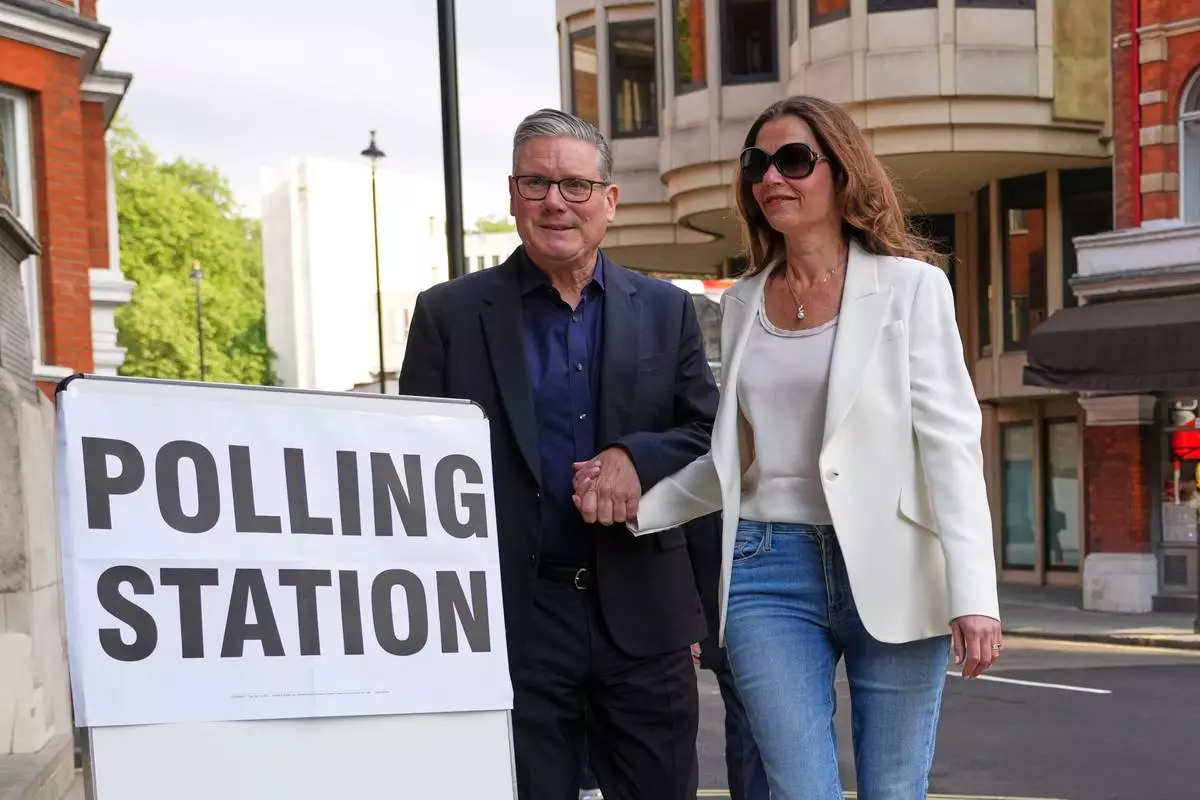
Britain's Prime Minister Keir Starmer and wife Victoria arrive at a polling station in central London, Thursday, May 7, 2026 to cast their votes in the local elections.(AP Photo/Kirsty Wigglesworth)