China's logistics industry dipped in April after a robust rebound in March, industrial data showed Saturday.
The logistics industry prosperity index stood at 49.7 percent in April, down 0.5 percentage points from the previous month, according to the China Federation of Logistics and Purchasing (CFLP).
A reading above 50 indicates expansion, while a reading below 50 reflects contraction.
A CFLP official said the decline was partly due to holiday factors and the rapid progress of projects in the early stages, and is a normal fluctuation based on historical data.
"It's a technical pullback. Looking at the sub-indices, 7 out of 11 showed a month-on-month increase, reflecting generally coordinated operations of upstream and downstream logistics," said CFLP Vice President He Hui.
To be specific, the new orders sub-index has rebounded for two consecutive months, especially noticeable in the eastern and western regions, and in postal and express delivery, road transportation, railway transportation, and air transportation industries.
The postal and express delivery industry's total business volume index remained in a high-growth range. Surveyed e-commerce platforms saw a 2 percent year-on-year increase in average daily parcel deliveries in April.
Driven by demand for bulk raw materials such as coal and steel, railway and road transportation maintained expansionary operations.
In the consumer sector, commodity turnover accelerated, chain stores and supermarkets increased inventory, and full truckload and less-than-truckload (LTL) trunk line transportation businesses rebounded. The road transportation industry's total business volume index was 53.7 percent, up 0.3 percentage points month on month.
The air transportation industry's total business volume index remained at a high level of around 55 percent, with electronic components, electronic products, and fresh fruits and vegetables showing relatively rapid growth among major cargo categories.
"On the one hand, this reflects a recovery and improvement in logistics for people's livelihood and consumption. On the other hand, it reflects a steady and positive development in logistics for production and construction," said He.

China's logistics sector dips slightly in April
The 2026 Beijing Xiangshan Forum Navigator Meeting has provided a platform for dialogue over confrontation amid escalating global unrest and regional tensions, said a Chinese defense researcher at the forum.
More than 120 defense officials, experts and scholars from 43 countries and international organizations have gathered for the three-day meeting, which opened on Friday.
"I think it reflects everyone's concern about the current situation, and there is a particular need to find solutions through communication and dialogue. The current international situation serves as a platform for addressing respective security concerns, especially given the serious problems that have arisen in global security governance. Therefore, we must both confront its risks and challenges and seek solutions," said Li Shuyin, director of Beijing Xiangshan Forum secretariat office, also a researcher at the People's Liberation Army (PLA) Academy of Military Science, during an exclusive interview with China Central Television (CCTV).
Under the theme of "Global Security Governance: Challenges and Approaches," the meeting was designed with four sub-topics: international order and the international rule of law, new challenges to Asia-Pacific security, responsibility for maintaining global common security, and risk management of the military applications of emerging technologies.
Faced with the current severe situation of deficits in peace, development, security, and governance, representatives from various countries hope to find effective solutions through dialogue, according to Li.
"Our first topic is international order and the rule of law. We know that the international order has become somewhat disordered because some countries believe that might makes right and try to govern according to their own ideology. They use international rules and law only when it suits them and discard them when it doesn't. I think this is closely related. Asia-Pacific security has always been a recurring topic at the Beijing Xiangshan Forum. It is the main engine of the global economy and an important part of the world's geopolitical landscape. For example, some countries have already abandoned some of the lessons of their past and are now taking risks again. This poses a threat to regional security and stability, which requires our high vigilance," said Li.
Li said that all countries, regardless of size or strength, have the right to pursue security, while also bearing corresponding responsibilities, and the meeting creates more opportunities for conversation to eliminate misunderstandings and enhance mutual trust.
"The international forum is neither a policy maker nor an implementer; it provides a platform for equal dialogue, consensus building, and resolving differences. It offers more venues for expressing viewpoints, enhances mutual trust, and creates more opportunities for peace," said Li.
The navigator meeting, a key forward-looking event for the main forum, is co-hosted by the China Association for Military Science and the China Institute for International Strategic Studies. It aims to build an open, inclusive, and equal international platform for security dialogue, and make an intellectual contribution to improving global security governance and building a more just and equitable international order through multilateral discussions and in-depth exchanges, said the Chinese Ministry of National Defense.
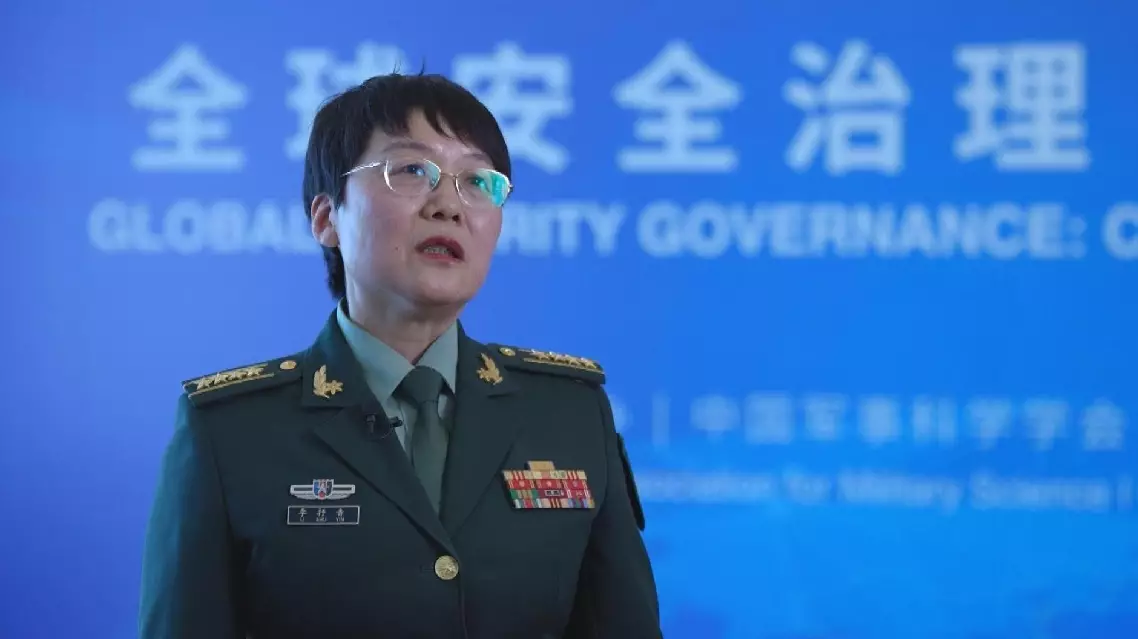
Xiangshan Forum navigator meeting in Beijing fosters dialog over confrontation: official