Family virtues and traditions gave Xi Jinping great strengths in implementing governance in China.
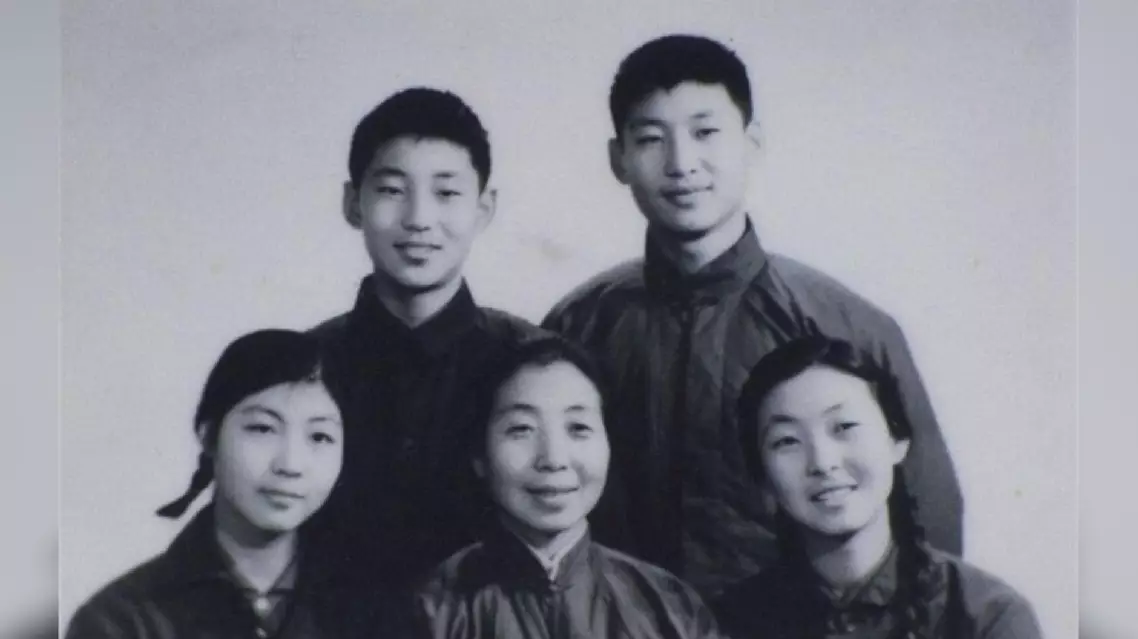
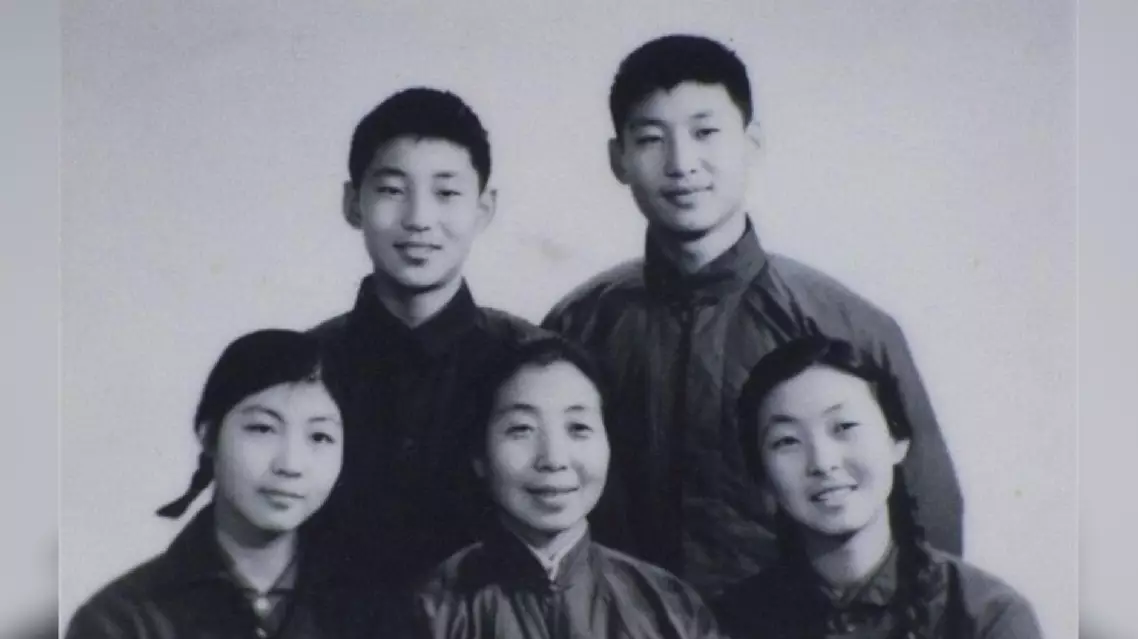
Chinese President Xi Jinping was born to a revolutionary family in which family virtues and traditions had a profound influence.
At the Museum of the Communist Party of China (CPC) in Beijing, those on display include a simple sewing kit made for Xi Jinping by his mother Qi Xin, who participated in the revolution at a young age.
The gift bestowed Xi the courage to weather through a difficult time.
In 1969, 15-year-old Xi was sent to Liangjiahe, a small rural village in northwest China's Shaanxi Province, as an "educated youth" -- urban youth sent to remote rural areas to learn from farmers. Upon learning this, Qi Xin, who was then working at a farm in central China's Henan Province, carefully made the sewing kit for him.
On the coarse cloth of the kit bag, Qi used red threads to stitch the words "niang de xin (mother's heart)" on it.
"From the threads a mother's hands weaves, a gown for parting son is made. Sown stitch by stitch before he leaves, for fear his return be delayed. Such kindness is like young grass that receives warmth from the vernal sun and can never be repaid," Xi once quoted the poem "Song of the Parting Son" by Meng Jiao in Tang Dynasty (618-907) to explain how the Chinese tradition of strong family ties remains unchanged throughout history.
Xi kept the gift from his mother throughout the seven years he spent in Liangjiahe, where he overcame numerous challenges -- from the infestation of fleas and strenuous labor to perplexing challenges that required a great deal of thought. Xi learned to do all kinds of farm work -- reclaiming wasteland, farming, hoeing, herding, hauling coal, mounding, and carrying manure -- and came to understand what reality, seeking truth and the masses meant.
In his own words, Liangjiahe is the place where he stepped out the first step of life.
"I'm very proud that I was born to a revolutionary family, where I received very strict revolutionary tradition education," Xi once said.
Due to tight work schedules, sometimes Xi was unable to stay by Qi's side. And Qi often wrote letters to Xi according to family traditions to ask him to be strict with himself.
A TV documentary recorded a tender moment from 2001, where Xi, serving as the governor of east China's Fujian Province at the time, told his mother over the phone that he might not be able to make the family reunion during that year's Spring Festival. "I'm glad to hear that you are busy with work. It doesn't matter if you come or not. You doing your job well is the greatest piety for your father and mother," Qi said to Xi in the call.
Stressing family ties, values, and traditions was profoundly included in Xi's governance of China.
"Family is not only the dwelling of people's bodies, but also the home of people's hearts. A nation can do well only when families do well," Xi once said.
Xi draws strength from family traditions in governance of China
Xi draws strength from family traditions in governance of China