By leveraging its unique advantages in computing capacity, abundant green energy and high-altitude geography, Qingyang, a city in northwest China's Gansu Province, is rapidly emerging as a global "AI token factory", fueling the next wave of artificial intelligence innovation.
As AI models become increasingly embedded in everyday life, from accelerating scientific research and content creation to streamlining food delivery orders, the fundamental unit powering these operations is the "token".
In 2025, China's daily token invocation volume surged dramatically, rising from over one trillion at the start of the year to 100 trillion by year-end. This exponential growth has triggered an unprecedented demand for computing power.
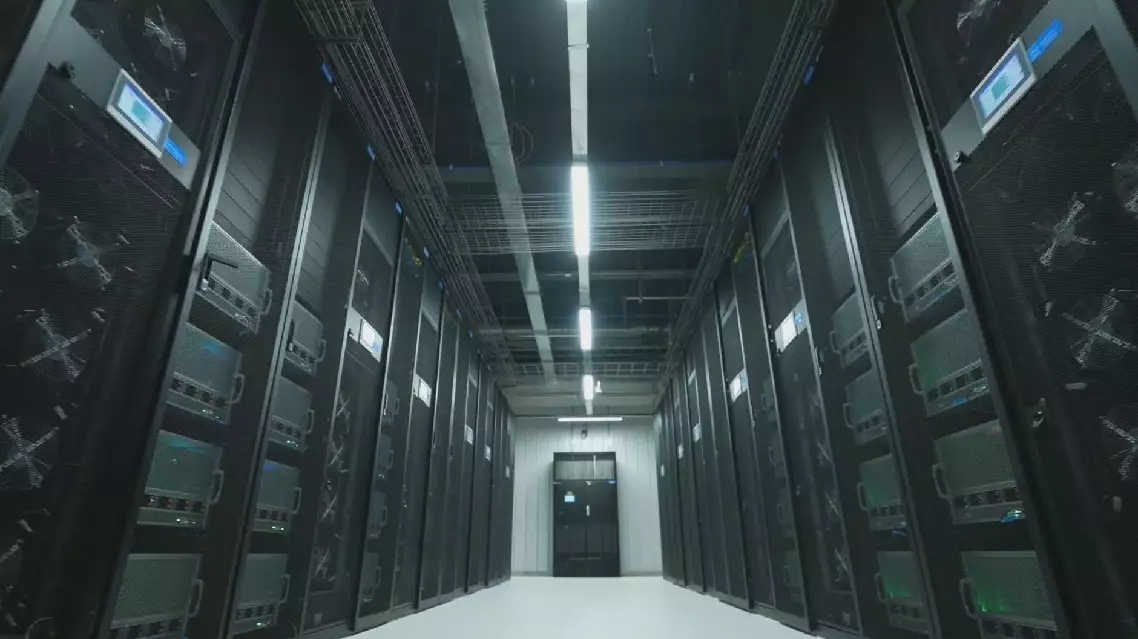
Capitalizing on its distinctive advantages, Qingyang has attracted a wave of leading AI computing enterprises. When you order a cup of milk tea via an AI assistant on your smartphone, the tokens and computing resources behind that simple command may well originate from the Qingyang Computing Power Center, thousands of kilometers away.
Inside the facility, rows of servers operate at full capacity around the clock, processing a steady stream of domestic and international requests with remarkable efficiency.
"We have accelerated the construction of computing infrastructure, specifically data centers. We are currently building two new server buildings. By the end of the year, our computing capacity in Qingyang is expected to double," said Jing Lirong, manager of the Qingyang computing power center of China Mobile.
"Many enterprises have been visiting Qingyang to conduct investigation and discuss computing power demand and orders. This year, we plan to build 22 new data center buildings. By the end of 2026, our total computing capacity is expected to exceed 200,000P (PetaFLOPS)," said Shi Taixu, an official with Qingyang Municipal Data Bureau.
According to experts, 1P (PetaFLOPS) of computing power equals the combined capacity of roughly 500 high-performance computers.
By the end of 2025, the computing capacity of the Qingyang Data Center Cluster reached an impressive 114,000P, cementing its status as China's national hub for AI computing infrastructure.
A key driver of this success lies in Qingyang's abundant green energy and competitive electricity costs. The region boasts rich wind and solar resources, enabling data centers to operate sustainably while significantly reducing operational expenses. For a facility with a 10,000P computing scale, this translates to annual electricity savings exceeding 10 million yuan (about 1.47 million U.S. dollars).
Qingyang's high-altitude location also provides natural cooling advantages, substantially lowering heat dissipation costs and enhancing overall energy efficiency.
"Regarding electricity costs, we can save 30 to 50 percent per kilowatt-hour (kWh). For a medium-sized data center, with a monthly electricity consumption of about 10 million kWh, the annual cost savings would amount to roughly 30 to 50 million yuan," said Jing.
"By leveraging new energy sources to address the growing electricity demands of computing power, we are tapping into one of our country's significant strategic advantages. Renewable energy represents a critical resource for China, and in terms of computing power supply, our resource endowment is exceptionally abundant. This creates highly favorable conditions for us to achieve global leadership in this field," said Guan Xiaohong, an academician of the Chinese Academy of Sciences and a professor at the Faculty of Electronic and Information Engineering of Xi'an Jiaotong University.
Northwest China city emerges as global 'AI token factory'