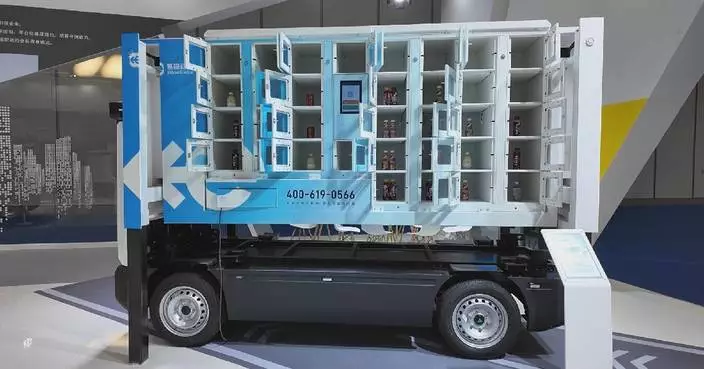
China-Europe freight trains have made a cumulative 130,000 trips and transported goods with a total value exceeding 520 billion U.S. dollars, according to China State Railway Group Co., Ltd. (China Railway).
The 130,000th milestone trip was marked by the departure of a freight train on Saturday from Zhengzhou, capital of central China's Henan Province, heading to Hamburg, Germany.
The freight train, loaded with goods including monitor stands, laminate flooring, and furniture, with a total value of approximately 19 million yuan (about 2.8 million U.S. dollars), departed from Putian Station in Zhengzhou. It will travel westward along the Lanzhou-Lianyungang Railway and the Lanzhou-Xinjiang Railway, exit China through the Alataw Pass, and is expected to arrive in Hamburg in about 16 days.
It is also the 333rd China-Europe freight train departing from Zhengzhou so far this year, highlighting the steadily improving efficiency of the China-Europe Railway Express.
"When the China-Europe Railway Express began operations, we only had eight reserve drivers per day, and we dispatched just one train a month. Now, we run up to six trains daily. We have assigned 16 dedicated shunting drivers to meet the increased transport demands," said Gu Fengshou, a driver with the Zhengzhou locomotive depot of China Railway Zhengzhou Group Co., Ltd.
While freight volume has grown, the transportation costs for the China-Europe Railway Express, both within and outside China, have dropped by more than 40 percent from the early stages of operation. The trains now carry goods of 53 different categories, encompassing over 50,000 types of products.
Outbound shipments have been upgraded from low-value goods like clothing, footwear, and small commodities to high-value products like new energy vehicles, machinery and equipment, and electronics.
On the return journeys, European timber, paper pulp, specialty agricultural products, and daily consumer goods are brought into the Chinese market via the railway.
At China-Europe Railway Express import goods supermarkets in Zhengzhou, over 3,000 kinds of European products -- including French wine, Belgian chocolate, and German cookware -- are available for one-stop shopping.
"We have lately updated more than 200 kinds of products in popular categories including cosmetics, daily chemical products, beverages, and food. German beer, French cosmetics, and British household chemical products have become everyday items," said Ruan Ying, a store manager of the Jingguang Road Branch of China-Europe Railway Express import goods supermarket.
Behind the ever-increasing freight volume lies closer trade ties along the entire China-Europe Railway Express route, which depends on robust cargo safety during transit.
"We have developed and promoted the use of electronic seals, which enable full-trip tracking and breach alerts for cargo transported on the China-Europe Railway Express. We have also creatively applied specialized equipment like temperature-controlled reefer containers, bulk bags for 40-foot containers, and auto containers. This has improved our capacity to transport special goods, effectively expanding the variety of items we can carry," said Wang Yanbo, logistics official of the China State Railway Group Co., Ltd.
Currently, 129 cities across China have launched China-Europe Railway Express services, which reach 235 cities in 26 European countries and over 100 cities in 11 Asian countries, covering nearly all of the Eurasian continent.

China-Europe freight train trips hit 130,000
Amidst overlapping global challenges, international experts at the 2026 Global Governance Forum in north China's Hebei Province emphasized that rebuilding confidence and cooperation in global governance requires enhanced dialogue, the establishment of common rules in emerging fields, and a fairer, more inclusive international system that amplifies the voice of the Global South.
Held from October 23 to 25 in Xiong'an, China's "city of the future" built on the North China Plain, the forum brought together nearly 400 representatives from over 90 countries. Spanning five major sectors and 22 thematic seminars, the event provided a platform for diverse stakeholders in politics, economy, technology, culture, and think tanks to jointly address governance challenges and promote inclusive, multi-stakeholder global governance reform.
"In this conference, I met some American representatives, a remarkable businessman. I asked him, 'what are you doing here?' And he said, 'I wanted to discuss Global Governance Initiative.' I said, 'Listen, I don't believe because whatever China proposes, the U.S. will object. And he said no. And he mentioned specific subject -- AI. He said, 'I want to make my humble contribution into establishing (of) global governance in AI.' So among Americans, this idea is also receiving some understanding. More dialogue is required and I would underline the weight of this forum," said Djoomart Otorbaev, former prime minister of Kyrgyzstan.
In today's world, where deficits in peace, development, security, and governance are intertwined, rebuilding confidence and cooperation is the most scarce international public good. In response, China has proactively set the agenda to address pressing concerns, such as advancing the reform of the UN-centered governance system, cooperating on new frontiers like cyberspace, outer space, and AI, and bridging civilizational divides amidst geopolitical rivalry.
"And there were some specific initiatives which we also have discussed, which is to set the global governance for the outer space, for the deep seas, for some areas of the planet like the Antarctica, where there is various needs for more common rules. One area the world is looking for is artificial intelligence and we need to regulate globally and efficient intelligence to avoid the worst. So if we work together, we can get the benefits and make sure that we make it much more difficult to do the harm," said Erik Solheim, chairman of the EU-Asia Centre and former UN under-secretary-general and former executive director of the UN Environment Programme.
"The world has become a global village, but this global village is now fighting. There's a problem going on in the Middle East, there's a problem going on in Africa, but China is trying to promote a conclusive thing so that the world can be peaceful. Because of this Global Governance Initiative, China has been able to tell the world (that) how to work together," said Khalid Taimur Akram, executive director of the Pakistan Research Center for a Community with a Shared Future.
Since its proposal over a year ago, the Global Governance Initiative has garnered support and responses from over 160 countries and international organizations.
During the forum, China announced pragmatic measures to further implement the initiative, reaffirming its firm support for multilateralism and the core status of the United Nations, while emphasizing the need to enhance the representation and voice of the Global South in international affairs to translate the initiative from a Chinese proposal into broader international practice.
"It's that combination of defense of the games that arise from the existence of the international system, but improving it, updating it, performing it, making it fairer, particularly to the great mass of developing countries, which is why the Chinese proposals meet a lot of support, particularly from the Global South, but also from fair minded people in other countries," said Keith Bennett, vice chairman of UK 48 Group Club.
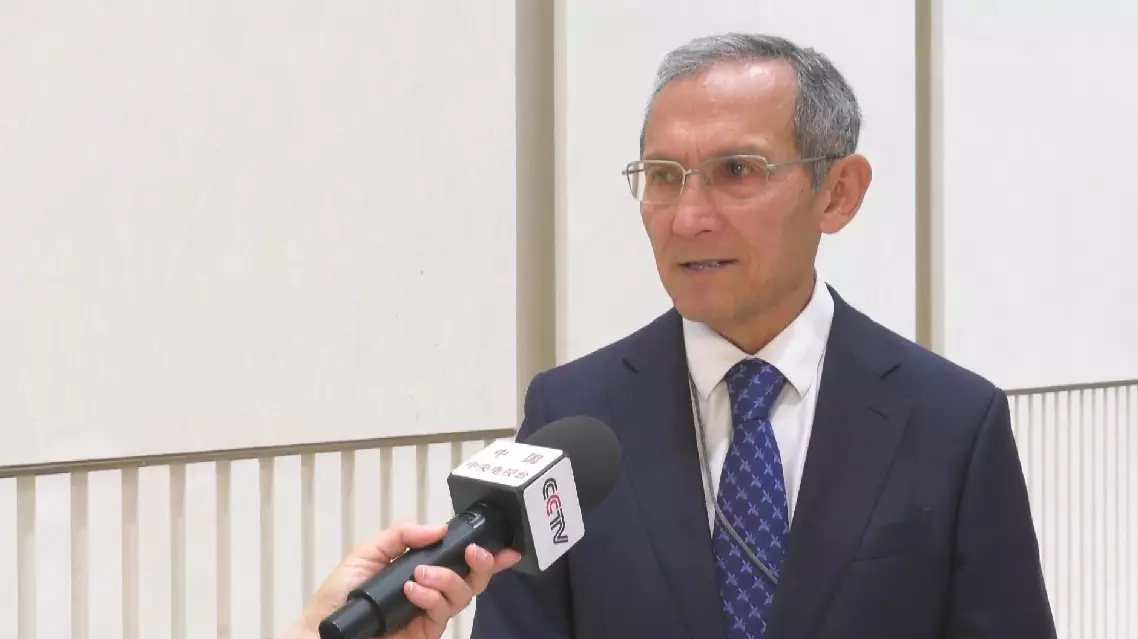
Participants of Global Governance Forum hail China's contribution to fairer international order