Michael Levitt, the 2013 Nobel laureate in chemistry, has spoken highly of the exceptional level of safety he personally felt in China.
Born in South Africa in 1947, Levitt emigrated to Britain when he was a teenager. He initially studied physics before turning to biology. He became one of the first scientists to apply computer technology to biochemistry, setting up conceptual and theoretical framework for computational biology.
Levitt is a member of the U.S. National Academy of Science and a fellow of the British Royal Society, as well as the Honorary Dean of the Multiscale Research Institute for Complex Systems at Shanghai-based Fudan University.
In 2013, Levitt and his two colleagues were awarded the Nobel Prize in Chemistry for developing multiscale models of complex chemical systems.
In an interview with the China Media Group (CMG), which aired on Friday, Levitt said he and his wife, who once taught for six years at Peking University in Beijing, have very favorable impression of China.
"We enjoy being here and we feel very much at home here in Shanghai and in China. We certainly enjoy how clean [it is here]; the subways here are amazing. There's a very nice feeling of safety. You can leave your phone, and it will probably get back to the hotel before you get back. And this is something that I think is very important," he said.
Levitt also noted growing ties between his family and China.
"Another connection I have with China is that my eldest grandson is now studying in Peking University in the Yenching program. And he actually is learning Chinese. And he is able to speak to the Didi drivers (ride-hailing drivers), speak to people in the street. He likes to speak to people in the street. And I don't have that. So, I think it's nice to be able to speak [in Chinese]," he said.
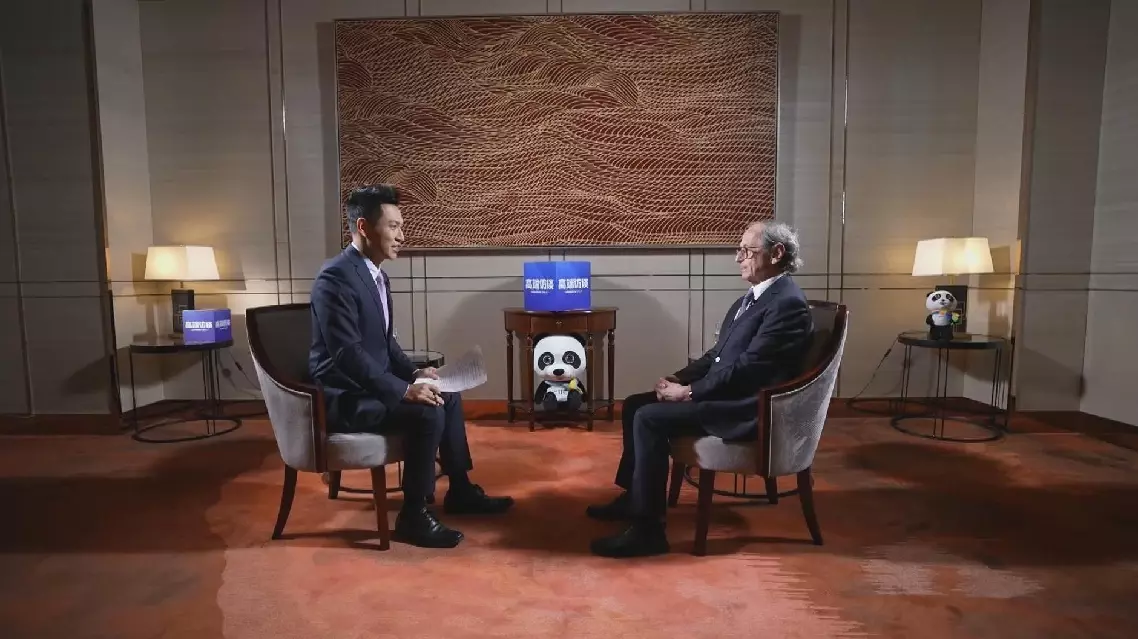
Nobel laureate praises exceptional level of safety in China