Hantavirus-hit cruise ship MV Hondius arrived off the Port of Granadilla on the Spanish island of Tenerife early Sunday, where Spanish authorities will launch a large-scale operation to evacuate passengers and part of the crew following the deadly outbreak aboard.
Germany, France, Belgium, Ireland, and the Netherlands will send planes to evacuate their citizens aboard the ship, said Spanish Interior Minister Fernando Grande-Marlaska on Saturday.
Maria Van Kerkhove, director of epidemic and pandemic preparedness and prevention of the World Health Organization (WHO), said on Saturday that all people aboard a cruise ship affected by a hantavirus outbreak should be considered "high-risk" contacts and actively monitored for 42 days.
According to the WHO, as of Friday, eight symptomatic cases have been reported, including three deaths. Six cases are laboratory-confirmed as Andes virus (ANDV) hantavirus infections. One of those infected on the ship is believed to be a doctor.
"Having only one doctor on the ship is far from enough, and the doctor later was infected with the virus,"a passenger named Ruhi Cenet questioned the ship's response measures to the epidemic.
Hantavirus is primarily transmitted to humans through contact with infected rodents such as rats and mice. Infection can occur through inhaling contaminated dust, touching contaminated surfaces, or exposure to rodent droppings. In rare cases, certain strains, such as the Andes virus, can spread between humans through close contact.

Hantavirus-hit ship arrives at Spanish island
Chicago youth said the United States should not view China as its No.1 enemy and the two countries should have more technological exchanges.
The youth expressed themselves in random street interviews with China Global Television Network (CGTN).
They said there are competitions between China and the U.S., but China is doing a great job of building their cities.
"China is doing a good job with how it's handling the U.S. given the volatility of the government here," said a local resident.
"We're definitely in competition economically speaking," said another interviewee.
"I don't think there's necessarily a reason why they have to then be enemy number one in that sense. They're doing a great job kind of building up their cities. I think we have a lot to learn from them," said still another interviewee.
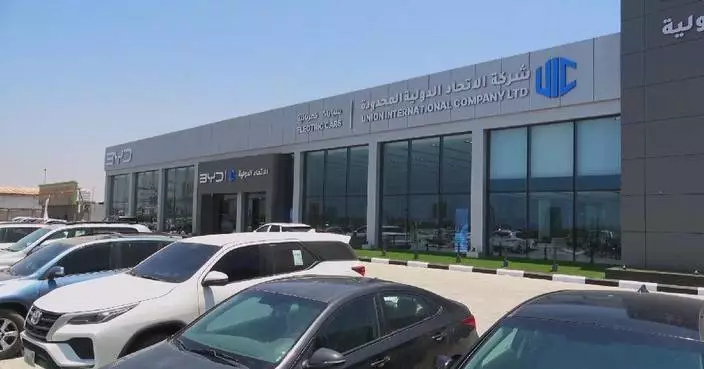
In terms of China's technological advancement, the interviewees said China's automobile industry is developing at a rapid pace and they are looking forward to seeing more Chinese cars in the U.S. and more technological exchanges between two sides.
"Chinese vehicles, I would love to see them in the U.S. I think they're miles ahead in terms of production and cost and especially electronic vehicles," said an interviewee.
"Probably some more Chinese cars here. Really cheap, really great cars from what I hear and what I saw when I was there," said another interviewee.
"I feel like there's a lot to learn like technology-wise. I feel like the U.S. kind of holds itself back," said still another interviewee.

Random street interviews catch Chicago youth's impression on China