President of the German Association of the Automotive Industry (VDA) Hildegard Muller has called for accelerated reforms in Germany and Europe, saying that only then can a win-win situation be created together with China.
In an interview with China Radio International (CRI) in Beijing which was aired on Saturday, Muller acknowledged that Germany, as a manufacturing base, is in a deep crisis as the global automotive industry is suffering from declining sales figures, and the impact of the COVID-19 pandemic and the profound changes brought about by the Ukraine crisis are affecting everyone in Germany through rising costs, she said.
Therefore, Germany and the European Union (EU) must accelerate their reforms, Muller said.
"It is all the more important that we can continue to preserve jobs in the future despite these major transformations. For example, to achieve that, we need to work even more on our own competitiveness in Germany and Europe, we need to become faster. We need to lower costs -- whether energy, taxes, or levies -- and above all, we need much less bureaucracy so that innovations can quickly reach the market," she said.
Regarding cooperation with China, the VDA president emphasized that both Germany and China are export-oriented, innovative, and known for high quality and reliability.
"China is a growing economy. Looking at automobiles, about 176 out of every 1,000 Chinese people own a car. There is still great potential. It is different than in Europe, which is why the market is important. But at the same time, the manufacturing location is also important -- both in China for China, and perhaps also in China for other countries and regions. And in this regard, the German automotive industry companies have recently announced further investments, including at the Beijing Auto Show," Muller said.
Muller also highlighted that both countries have their own, yet complementary, strengths: China's outstanding speed in research and innovation stands opposite Germany's extensive know-how in engineering, safety, and scaling issues.
To advance climate goals and electromobility, Germany must massively expand infrastructures such as power grids and charging stations. Only then can consumer confidence in electric cars be strengthened and the transition to electromobility be enabled. For this, Muller said, the country can certainly draw on the strengths of the Chinese automotive industry.
"This is how we can bring together the strengths of both sides. We can use their strengths to further develop cars in Europe, and they can use our strengths to make cars safer here, to avoid accidents and more. These are all points where companies can offer customers a better deal through this cooperation," she said.
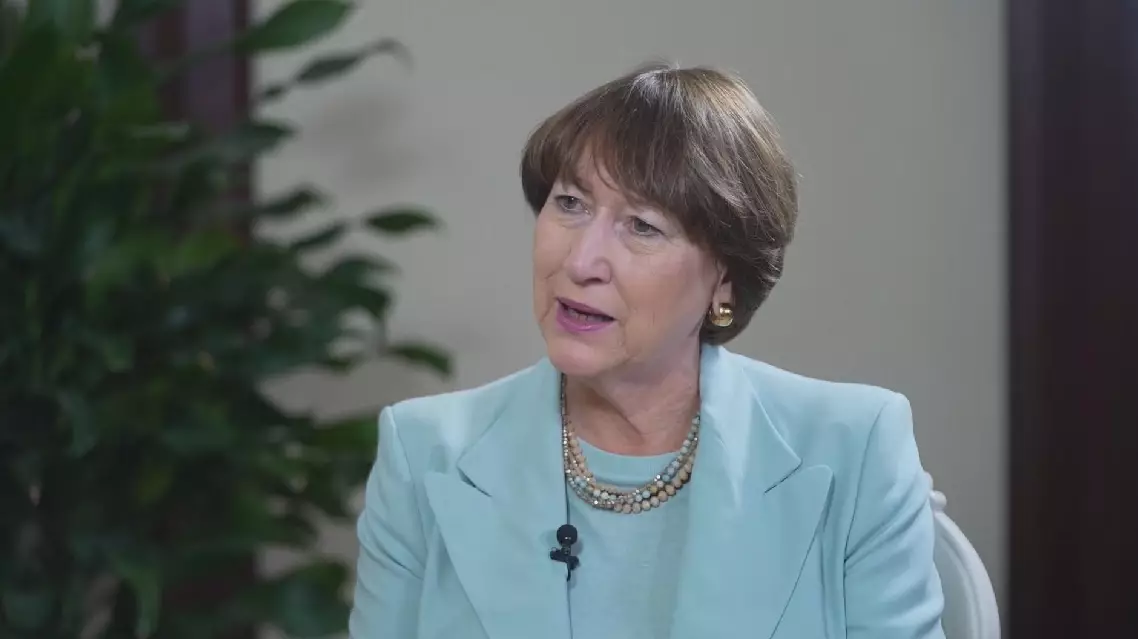
VDA president calls for accelerated reform in Europe, cooperation with China