China launched the cargo spacecraft Tianzhou-10 from the Wenchang Spacecraft Launch Site on Monday morning to deliver supplies for its orbiting Tiangong space station, a mission which also highlights the remarkable journey of technological evolution.
Nearly a decade since the debut of the Tianzhou series, China's cargo spacecraft have transitioned from individually crafted prototypes to a streamlined, batch-production model.
Since the maiden flight of Tianzhou-1 in 2017, the Tianzhou cargo spacecraft series have undergone continuous technological refinement.
Tianzhou-1 validated on-orbit propellant refueling technology, concluding China's space laboratory phase with success. Tianzhou-2 docked with the core module of the Tiangong station, verifying multi-module complex management capabilities. Beginning with Tianzhou-3, the series entered a batch-production development mode. Tianzhou-5 achieved a world-record 2-hour fast rendezvous and docking. And with Tianzhou-6, a major redesign boosted the pressurized module volume by approximately 20 percent and raised cargo capacity to over 7 metric tons.
"Starting with Tianzhou-6, we implemented a major design upgrade that significantly expanded the volume of the pressurized module by approximately 20 percent, and increased the cargo payload capacity to over 7 metric tons. We have continued to refine and optimize the design through Tianzhou-10, with iterative improvements at every step," said Yu Lei, a member of China Aerospace Science and Technology Corporation (CASC).
Yu said that the shift to batch production has redirected engineering focus from crafting a single premium product to ensuring consistency across multiple units.
"A single spacecraft can be meticulously hand-finished by skilled craftsmen to achieve a premium product. However, ensuring data consistency across multiple units requires tremendous effort. In our daily work, we have developed many strategies for product management and quality control to meet this challenge," he said.
These efforts span from optimized development workflows, rigorous product status monitoring, and ergonomic improvements to the cabin environment. Each refinement may appear incremental, but collectively they advance the spacecraft's reliability and functionality.
As Yu emphasized, the ultimate goal is to make the Tianzhou cargo spacecraft more user-friendly, more practical, and more durable for sustained support of China's space exploration.
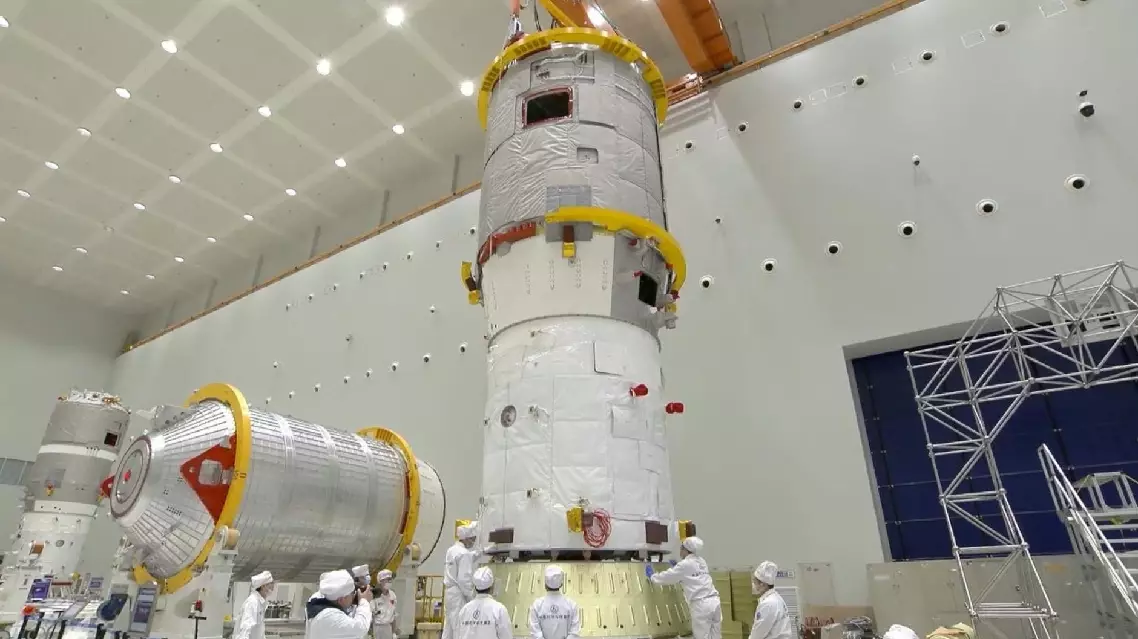
China's Tianzhou-10 cargo craft marks decade of upgrades in space logistics