As Canada works to expand its renewable energy landscape, the potential collaboration with a leading Chinese company could play a crucial role in addressing the energy needs of the country's remote communities.
This partnership aims not only to boost renewable energy output but also to enhance technological innovation within Canada's energy sector.
Envision, a Shanghai-based company and the world's second-largest manufacturer of wind turbines, has proposed combining wind power with artificial intelligence to tackle a potential energy crunch in Canada's most isolated regions.
"Canada has a lot of catching up to do with countries like China when it comes to building out renewables like wind and solar on our electricity system," said Stephen Thomas, clean energy manager of David Suzuki Foundation.
Thomas hoped that if a partnership moves forward, some wind turbine manufacturing could occur in Canada.
Currently, most of Canada's wind turbines are located in Ontario, followed by Quebec and Alberta. The Canadian Renewable Energy Association projects that solar, wind, and energy storage capacity in Canada will double by 2035.
Despite these advancements, experts warn that Canada still faces significant challenges in combating the climate crisis.
"We are behind when it comes to action on climate change and moving away from fossil fuels. So I think it's that change in our economy in Canada, away from fossil fuels and toward clean technologies that will help Canada be a better actor on the global stage when it comes to climate change," said Thomas.
Experts believe that using AI to manage wind turbines can lower costs while maintaining high efficiency, partly by generating more reliable weather forecasts.
"What AI can do is unify weather models and your wind turbine models. And now they can talk to each other and come up with energy extractions. You can have grid balancing. It becomes a whole infrastructure energy grid. Everything can be unified through your data," said Rajeev Jaiman, a professor of mechanical engineering at University of British Columbia.
Jaiman emphasized the importance of data sovereignty, advocating for the storage of data within the country that generates it.
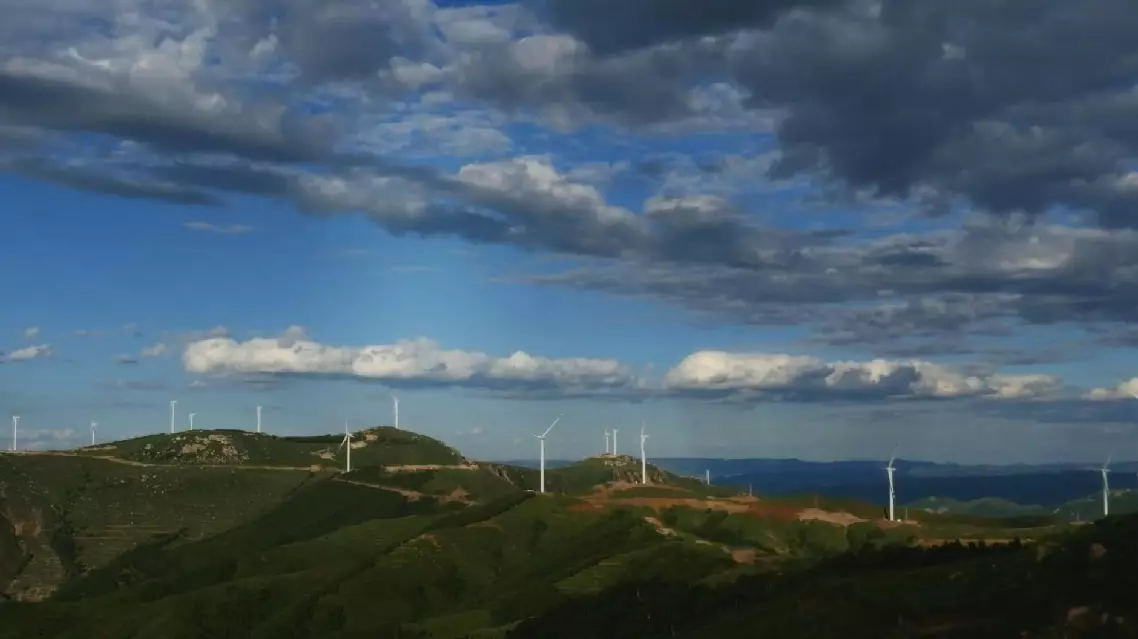
Chinese company proposes AI-enhanced wind hubs to address energy crunch in remote Canadian areas