Skip to Content Facebook Feature Image

Tulsa Race Massacre reparations is soul-redeeming work for the US, Oklahoma civil rights lawyer says

News

Tulsa Race Massacre reparations is soul-redeeming work for the US, Oklahoma civil rights lawyer says
News

News

Tulsa Race Massacre reparations is soul-redeeming work for the US, Oklahoma civil rights lawyer says

2026-05-11 21:12 Last Updated At:21:21

NEW YORK (AP) — It wasn’t until his junior year of college that civil rights attorney Damario Solomon-Simmons learned about a devastating massacre that took place in his hometown of Tulsa, Oklahoma.

His African American studies professor lectured about what is known today as the Tulsa Race Massacre — the days in 1921 when white mobs carried out a scorched-earth campaign against an outnumbered Black militia protecting the fabled Black Wall Street, a prosperous all-Black community.

“I actually told a teacher, ‘I’m from Tulsa. That’s not true,’” Solomon-Simmons recalled. “And of course, I was wrong.”

That day planted a seed for the then-aspiring attorney, who went on to lead a reparations campaign for the living survivors of the massacre and their descendants. Nearly 105 years later, no one has been compensated for what they lost, and none of the culprits have been held accountable.

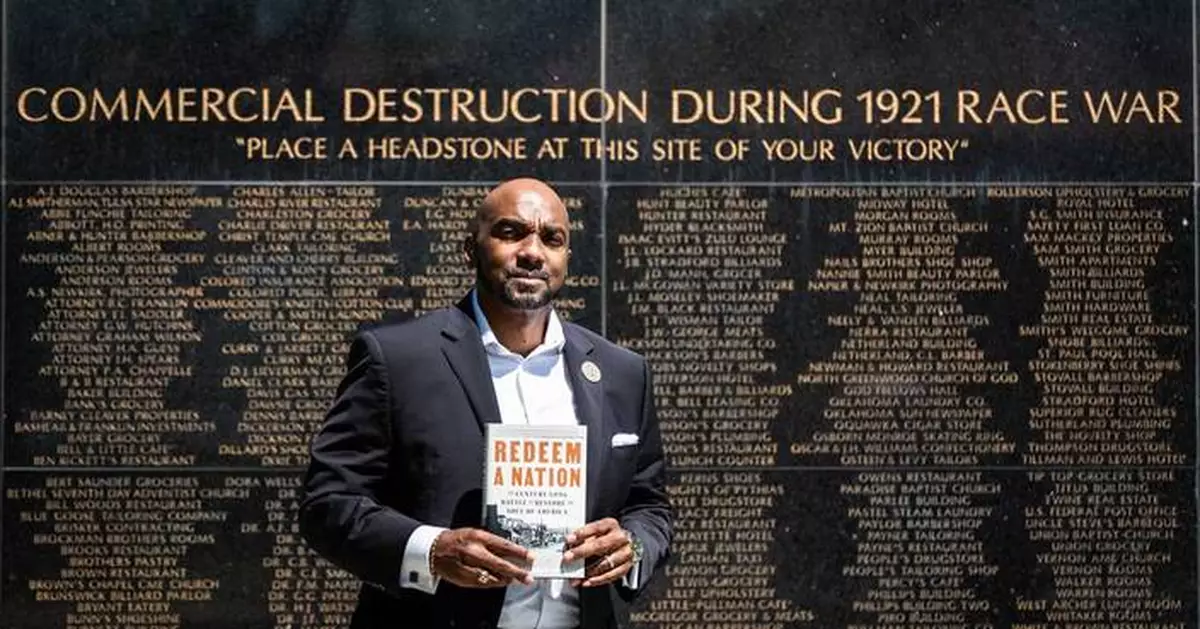
That fight for reparations is the subject of Solomon-Simmons’ first book, “Redeem a Nation: The Century-Long Battle to Restore the Soul of America,” which is intended as a blueprint for justice in historic atrocities that Black Americans endured but never received reparations for. The book hits shelves Tuesday.

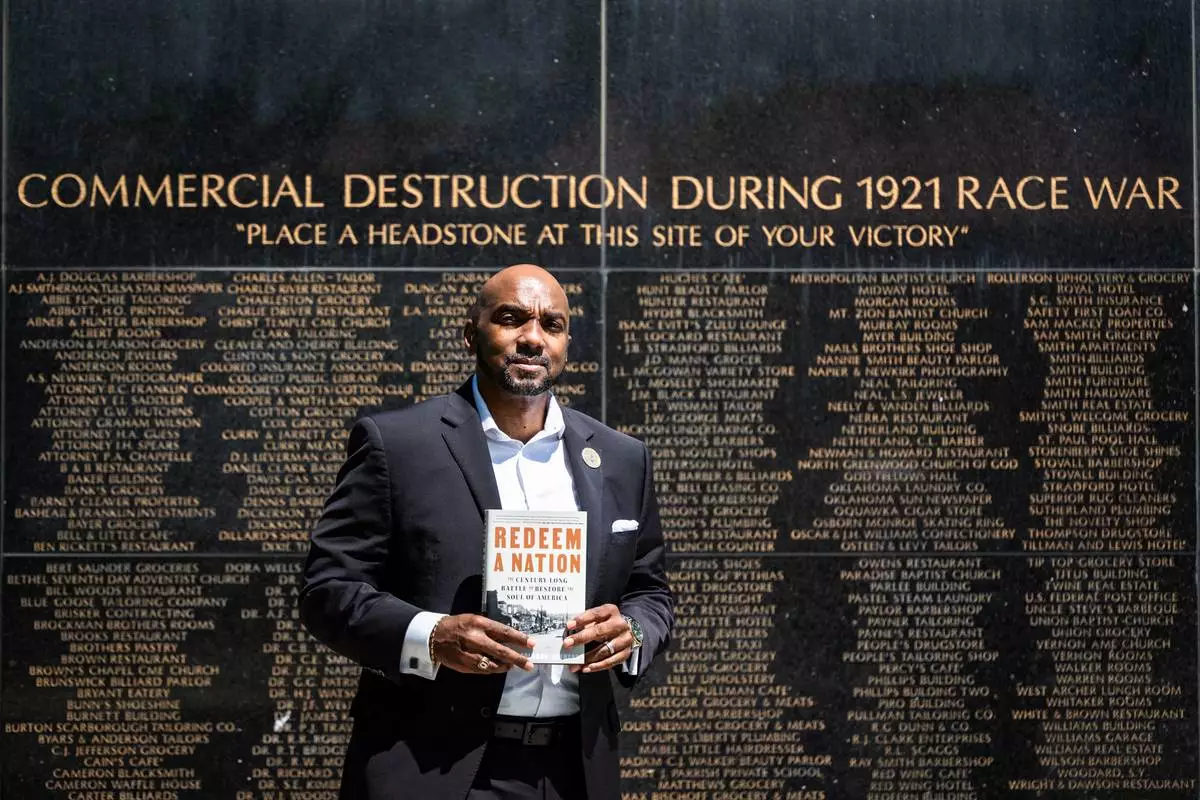
After the massacre, more than 35 city blocks of the neighborhood known as Greenwood were leveled in fires, an estimated 191 businesses were destroyed, and roughly 11,000 Black residents were displaced. The state of Oklahoma declared the death toll to be only 36 people, although many historians and experts who have studied the event put the death toll between 75 and 300.

Greenwood, founded in 1906, had been a bustling city within a city, with Black-owned grocery stores, soda fountains, cafes, barbershops, a movie theater, music venues, cigar and billiard parlors, tailors and dry cleaners, rooming houses and rental properties.

“If you can ignore Greenwood, which was the beacon of Black prosperity and Black progress in the history of this country, then you can ignore Black people in general,” Solomon-Simmons recently told The Associated Press. “I think that’s why people around the nation are so focused on the work that we’re doing, because they understand what it means to all of Black America.”

Solomon-Simmons’s book comes just months before the United States will mark 250 years since its founding in 1776. That was 89 years before the institution of chattel slavery — meaning an enslaved person was held as legal property of another — was abolished. The civil rights attorney questions the idea that Americans can truly celebrate the country's accomplishments when it has yet to pay reparations, which historians say informs modern day disparities in wealth between Black and white people.

“We cannot talk about what America has been and will be, without making sure that these issues are discussed and we get reparatory justice for both” slavery and the Tulsa massacre, Solomon-Simmons said.

In 343 pages, Solomon-Simmons does more than recite the history of the massacre or make a legal thriller out of his reparations campaign. For him, securing justice for the survivors and descendants of the massacre is also about healing a nation whose earliest promises of equality for all rang hollow.

“When I speak of repairing America’s soul, I do not mean restoring something that was once whole,” Solomon-Simmons writes in the book. “America has never had a soul. … There was no moral center to recover.”

He suggests that America's soul cannot be repaired if it is forced to choose between rebuilding the nation or repairing Black America. They must do both, he says.

“The struggle for justice in Greenwood is not about returning to a mythical past. It is about proving whether America can build a soul at all through truth, through justice, through repair.”

Reparations for slavery and other historical racial injustices has been debated in the U.S. since Reconstruction, through the Civil Rights Movement and for much of the 21st century. Jennifer L. Morgan, a professor of history at New York University, said such debates are complicated by the question of exactly who pays the reparations and exactly who receives the payment.

“I don’t think that we’re talking about individuals who owe anybody else reparations. I think we’re talking about states, about institutions, about the nation,” Morgan said. “America is still grappling with reparations because America is still grappling at the legacy of slavery, racial discrimination, Jim Crow, and violent exclusion of Black people from the body politic.”

Some opponents of reparations argue there are no living culprits or direct victims of enslavement, much less people with verifiable claims of harm that can be presented in a court of law.

Solomon-Simmons disagrees.

“We know who did the massacre — the perpetrators are still living in Tulsa,” he said referring to the city and the chamber of commerce, which plaintiffs alleged had a hand in obstructing Greenwood's recovery.

There is one remaining massacre survivor involved in the reparations lawsuit: 111-year-old Lessie Benningfield Randle.

“If we cannot get her reparations while she’s alive, for the massacre, it’s gonna make it that much harder for us to get reparations for enslavement, Jim Crow, redlining and all those things that we are owed,” Solomon-Simmons said.

In the book, Solomon-Simmons reflects on what committed him to the reparations fight.

While in law school, he was introduced to high profile civil rights attorneys working for the Reparations Coordinating Committee — the late Harvard Professor Charles Ogletree Jr., who mentored Barack and Michelle Obama; and the late Johnnie Cochran, who is widely known for defending O.J. Simpson during his trial for murder of his ex-wife. Solomon-Simmons became a law clerk for the committee.

After witnessing Ogletree argue a Tulsa reparations case in federal court in 2004, Solomon-Simmons said the practice of law stopped being just a credential for speaking, writing, or teaching. It became a calling.

In 2020, Solomon-Simmons led a lawsuit on behalf of 11 plaintiffs, including the last three known living survivors of the massacre, against the City of Tulsa and seven defendants. The suit was the first of its kind in state court and the first to get far enough to see a judge. In 2024, the Oklahoma Supreme Court dismissed the lawsuit. In the final days of the Biden administration, the Justice Department released a report saying it had determined there is no longer an avenue for criminal prosecution over the massacre.

But the fight continues, Solomon-Simmons says, for cash payment to Randle and other descendants, as well as the return of land stolen after the massacre and during a period of urban renewal in Tulsa.

In 2025, the city’s first Black mayor, Monroe Nichols, endorsed a broad proposal dubbed Project Greenwood, which calls for financially compensating Randle, funding a scholarship program for descendants of victims, and designating June 1 as Tulsa Race Massacre Observance Day.

Solomon-Simmons also runs the nonprofit Justice for Greenwood, which he founded a year before the community marked the centennial of the massacre in 2021.

“One thing I’ve learned from this work, and as a lawyer in general, is that people want justice,” he said. “People want reparations, but people (also) want acknowledgment. They want to be seen. They want people to understand that something happened to them and their family, and they want an apology.”

Aaron Morrison is the race and ethnicity news editor at AP.
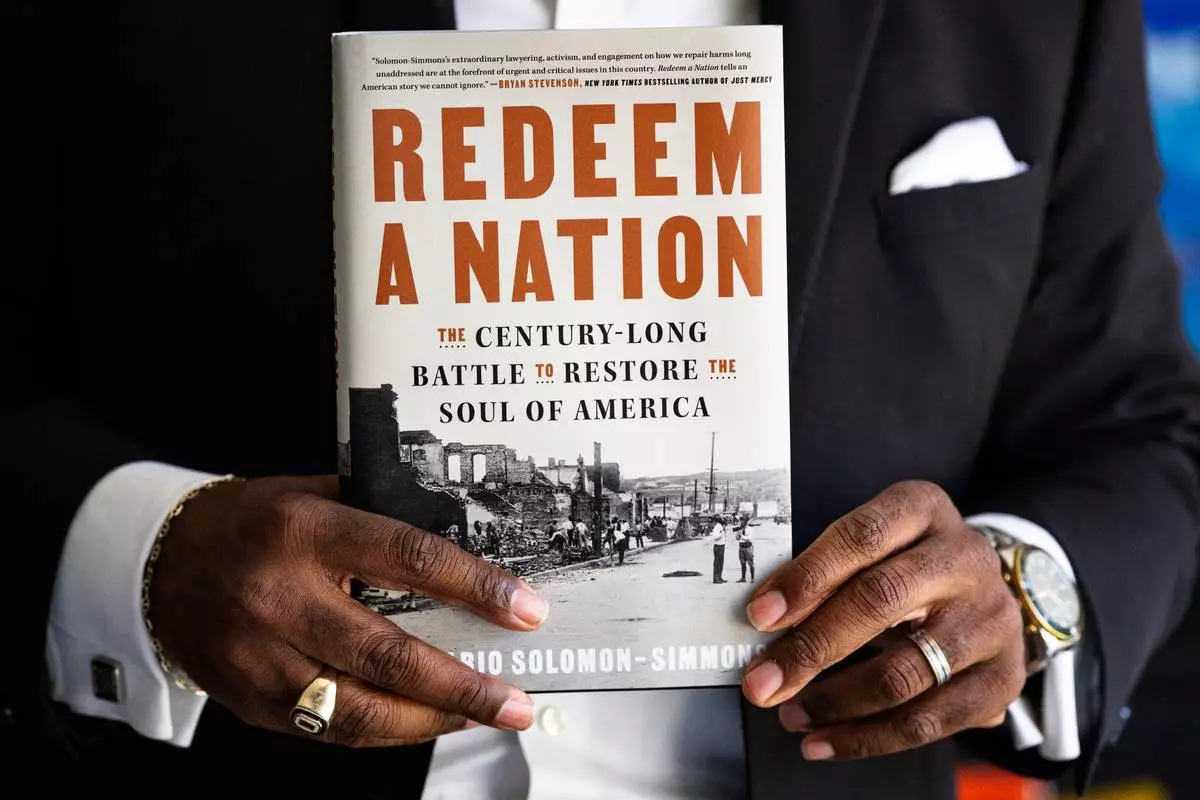
Damario Solomon-Simmons poses for a portrait at The Root Co-working space on Saturday, May 2, 2026, in Tulsa, Okla. Solomon-Simmons is the author of a new book about reparations over the Tulsa Race Massacre (AP Photo/Milo Gladstein)
Damario Solomon-Simmons poses for a portrait at The Root Co-working space on Saturday, May 2, 2026, in Tulsa, Okla. Solomon-Simmons is the author of a new book about reparations over the Tulsa Race Massacre (AP Photo/Milo Gladstein)

Damario Solomon-Simmons poses for a portrait at the memorial for the 1921 Tulsa Race Massacre on Saturday, May 2, 2026, in Tulsa, Okla. Solomon-Simmons is the author of a new book about reparations over the Tulsa Race Massacre (AP Photo/Milo Gladstein)
Damario Solomon-Simmons poses for a portrait at the memorial for the 1921 Tulsa Race Massacre on Saturday, May 2, 2026, in Tulsa, Okla. Solomon-Simmons is the author of a new book about reparations over the Tulsa Race Massacre (AP Photo/Milo Gladstein)
DUBAI, United Arab Emirates (AP) — U.S. President Donald Trump on Monday said the Iran ceasefire is on “life support” after he rejected Tehran’s latest proposal to end the war. Officials said the proposal included some concessions on Iran's disputed nuclear program, but Trump dismissed it as “garbage.”

The stalled diplomacy and recent exchanges of fire could tip the Middle East back into open warfare and prolong the worldwide energy crisis sparked by the conflict, with Iran’s chokehold on the Strait of Hormuz and America’s blockade of Iranian ports still in place.

Asked at an unrelated White House event if the ceasefire was still in place, Trump said it’s “unbelievably weak” and on “life support.”

“I would call it the weakest right now after reading that piece of garbage they sent us,” Trump added. “I didn’t even finish reading it.”

Trump said he would suspend the federal tax on gasoline to help Americans shoulder higher fuel prices caused by the war.

Trump is expected to use a trip this week to China to urge President Xi Jinping to pressure Iran. Beijing is the biggest buyer of Iran’s sanctioned crude oil, giving it leverage.

But the U.S. and Iran remain far apart on a host of issues. Trump has demanded a major rollback of Iran’s nuclear activities, while Iran is pushing for a more limited agreement that would reopen the strait and lift the blockade ahead of further negotiations.

Two regional officials told The Associated Press that Iran has offered to dilute part of its highly enriched uranium and transport the rest to a third country. Russia has previously offered to take it. The officials spoke on condition of anonymity to discuss the sensitive diplomacy.

Trump has demanded that the nuclear material be removed completely, and is unlikely to accept other Iranian proposals for the formalization of its control of the strait and for U.S. reparations.

Trump said Sunday that Iran’s response to his latest proposal was “TOTALLY UNACCEPTABLE!” Ending the blockade before discussing Iran’s nuclear program would eliminate a major point of leverage for Trump.

In the meantime, the standoff over the strait, which is a key transit point for the world's oil and natural gas exports, has sent fuel prices skyrocketing and rattled world markets.

Israeli Prime Minister Benjamin Netanyahu, who launched the war with Trump on Feb. 28, insisted that the conflict was “not over,” telling CBS’ “60 Minutes” in an interview that aired Sunday that a critical goal is getting the nuclear material out of Iran. If that can't be accomplished with negotiations, Netanyahu said that Israel and the U.S. agree “we can reengage them militarily.”

Netanyahu also said the current Iranian government's “days are numbered — but it could take a lot of days.”

The U.S. and Israel have killed dozens of high-ranking Iranian officials, including the country’s supreme leader in the opening salvos of the war, and the conflict has inflicted heavy damage to Iran’s economy, but its theocracy maintains its grip on power.

Iran's proposal asked that the U.S. recognize its sovereignty over the Strait of Hormuz, formalizing its control over the international waterway. Iran has effectively closed the strait since the start of the war, allowing only a small number of ships to pass and charging tolls.

But experts say such an arrangement would likely violate international law that provides for freedom of navigation. That proposal is also likely to be widely rejected by the international community. The strait was open to international traffic before the war.

Iran is also demanding war reparations from the U.S., the lifting of international sanctions, the unfreezing of Iranian assets held abroad and an end to the war between Israel and Lebanon's Iran-backed Hezbollah, according to Iranian state TV.

Israel and Hezbollah have continued to exchange blows, mainly in southern Lebanon, since a nominal ceasefire took hold last month.

“We did not demand any concessions — the only thing we demanded was Iran’s legitimate rights,” Iranian Foreign Ministry spokesman Esmail Baghaei said Monday. “The American side still insists on its one-sided views and unreasonable demands.”

Iran still insists on its right to enrich uranium and that its nuclear program is entirely peaceful. The U.S., Israel and others have long accused it of seeking a nuclear weapon and want most of its program dismantled.

Two regional diplomats familiar with the ongoing talks said that Pakistan was continuing its efforts to broker a compromise.

One of the diplomats said Pakistan was trying to arrange a memorandum of understanding aimed at ending the war and paving the way for a broader dialogue on issues where the two sides remain divided.

Pakistan had hoped to help finalize the memorandum last week, but the effort did not materialize, and mediators are still working on various proposals, the diplomat said.

The diplomat, speaking on condition of anonymity to discuss the behind-the-scenes diplomacy, added that Islamabad is receiving support from other regional countries in its peace efforts.

Meanwhile, Iran executed another man it accused of spying for both the CIA and Israel's Mossad intelligence service. Iran's state-run IRNA news agency said Erfan Shakourzadeh had worked on satellite communications and relayed classified information to those intelligence services.

Iran has carried out a string of executions since nationwide protests swept the country in January. Activist groups have long accused Iran of carrying out closed-door trials during which defendants are unable to fully defend themselves. Iran's judiciary chief has repeatedly said that Tehran would increase the speed with which it carried out hangings to fight back against its enemies at home and abroad.

Magdy reported from Cairo. Associated Press reporter Munir Ahmed in Islamabad contributed.

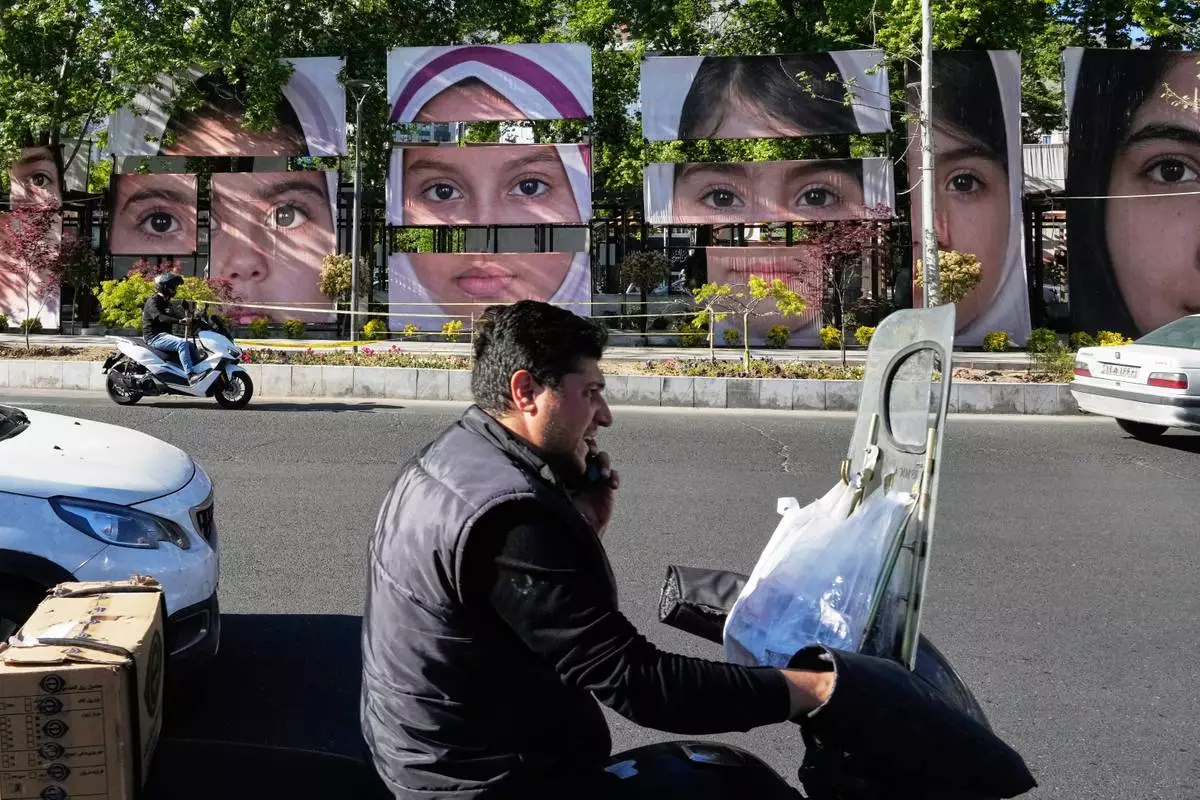
Vehicles drive past banners showing portraits of the school children who were killed during a strike on a school in southern town of Minab on Feb. 28, at Tajrish square in northern Tehran, Iran, Sunday, May 10, 2026. (AP Photo/Vahid Salemi)

Vehicles drive past banners showing portraits of the school children who were killed during a strike on a school in southern town of Minab on Feb. 28, at Tajrish square in northern Tehran, Iran, Sunday, May 10, 2026. (AP Photo/Vahid Salemi)

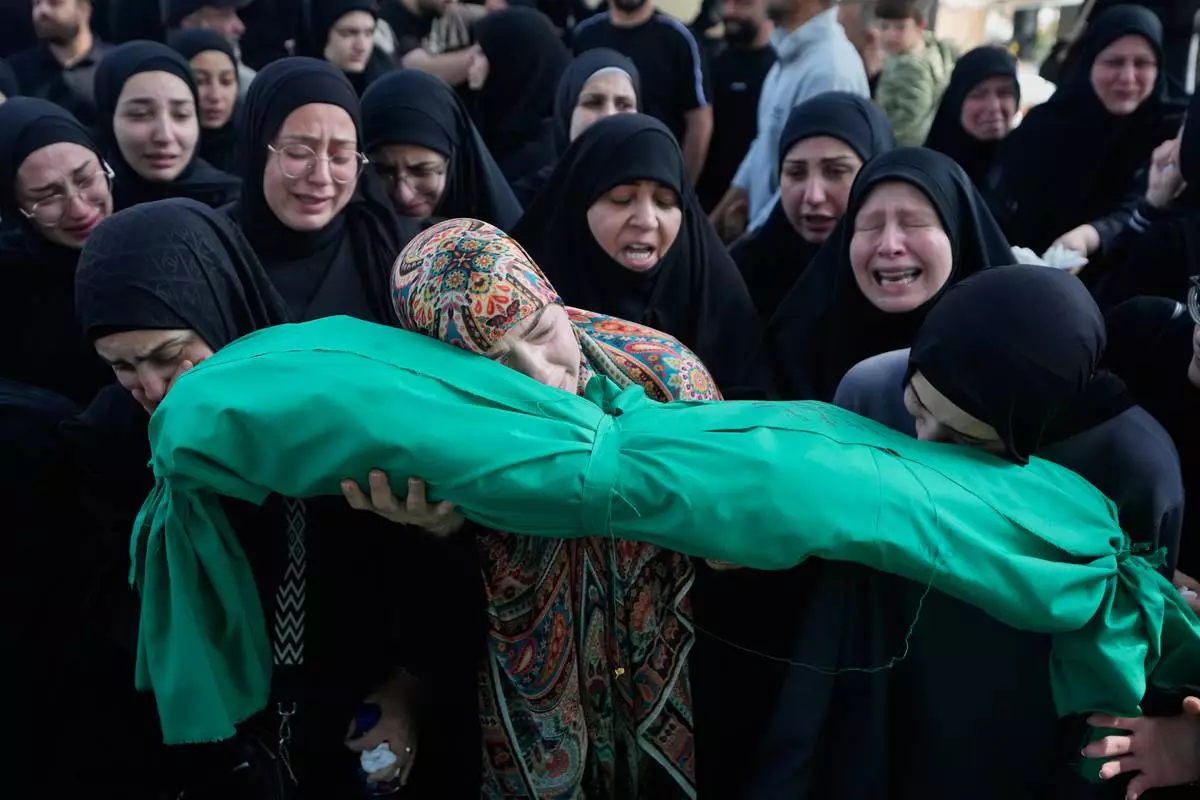
Women grieve as they carry the body of 6-month-old Mariam Fahos during a funeral procession for people killed a day earlier in an Israeli airstrike in the village of Saksakieh, in the southern port city of Sidon, Lebanon, Sunday, May 10, 2026. (AP Photo/Mohammed Zaatari)

Women grieve as they carry the body of 6-month-old Mariam Fahos during a funeral procession for people killed a day earlier in an Israeli airstrike in the village of Saksakieh, in the southern port city of Sidon, Lebanon, Sunday, May 10, 2026. (AP Photo/Mohammed Zaatari)

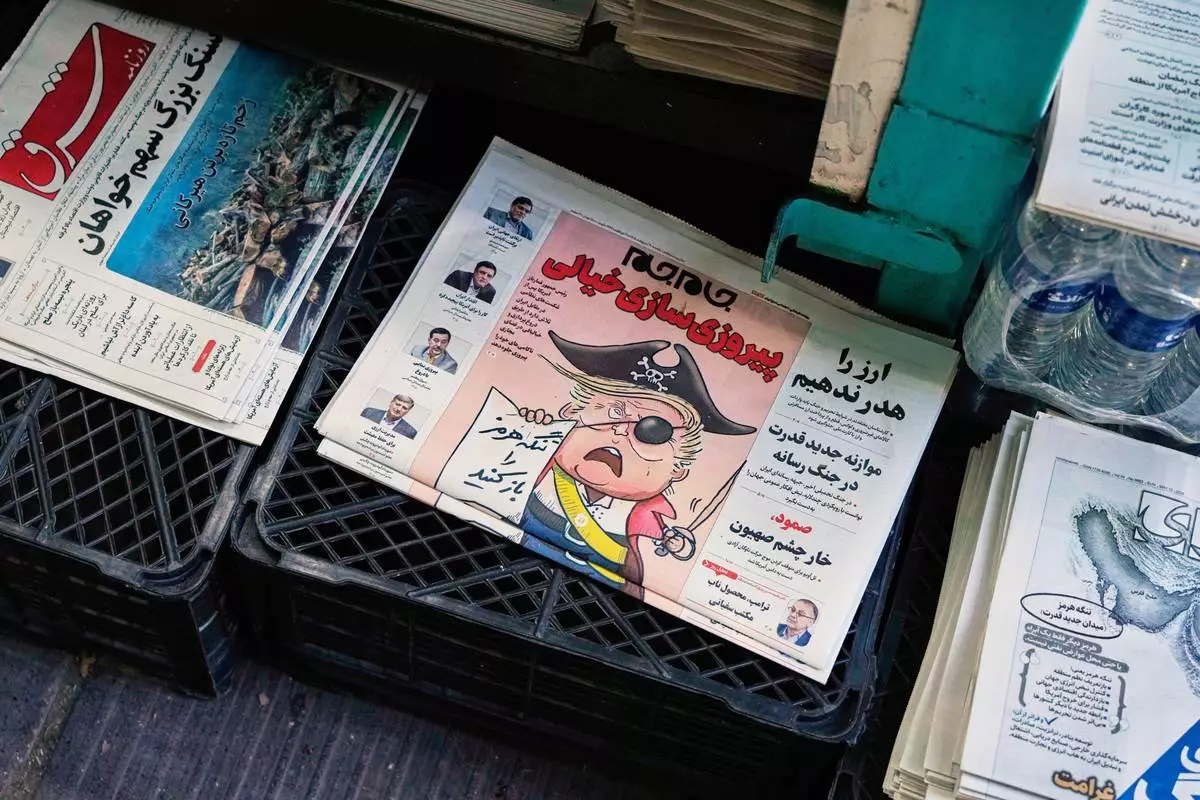
The front page of the Sunday May 10, 2026, edition of Iranian newspaper, Jamejam, is seen with a cartoon satirizing the U.S. President Donald Trump that asks: "Open the the Strait of Hormuz" on a news stand in northern Tehran, Iran, Sunday, May 10, 2026. (AP Photo/Vahid Salemi)

The front page of the Sunday May 10, 2026, edition of Iranian newspaper, Jamejam, is seen with a cartoon satirizing the U.S. President Donald Trump that asks: "Open the the Strait of Hormuz" on a news stand in northern Tehran, Iran, Sunday, May 10, 2026. (AP Photo/Vahid Salemi)

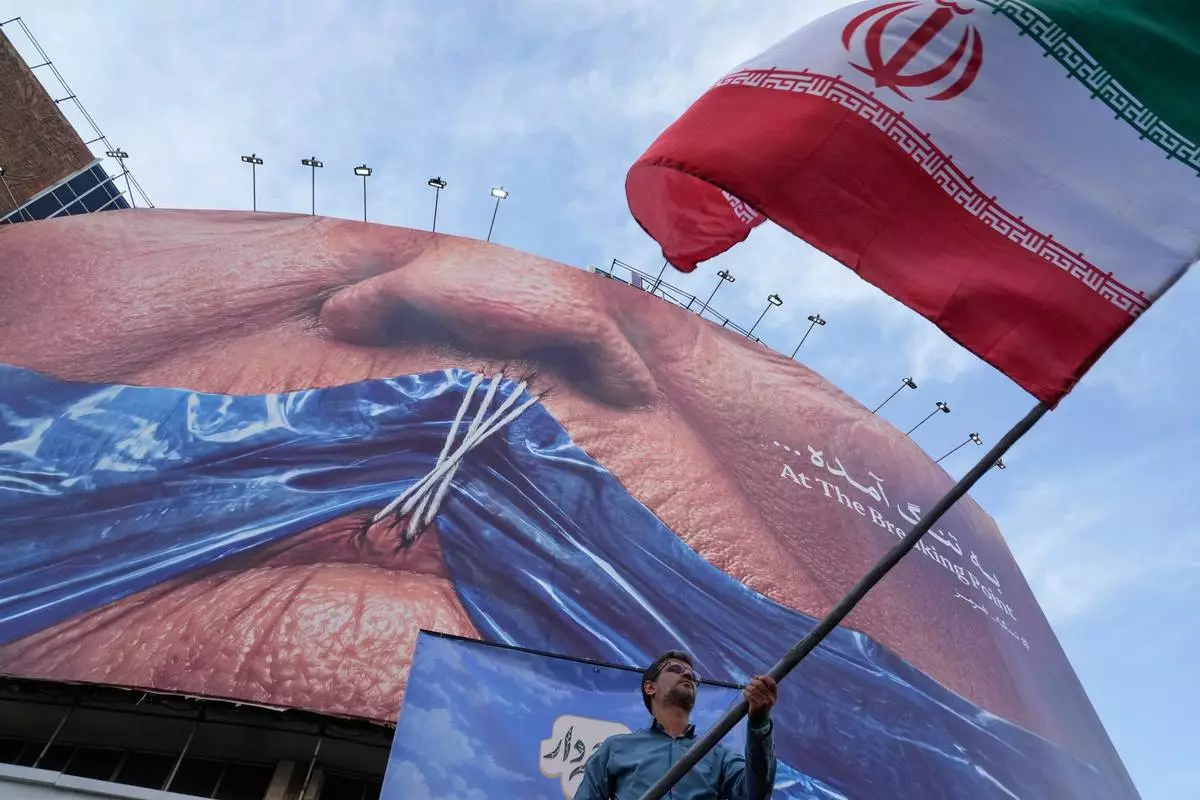
A man waves an Iranian flag for a pro-government campaign under a billboard with graphic showing Strait of Hormuz and sewn lips of U.S. President Donald Trump in a square in downtown Tehran, Iran, Wednesday, May 6, 2026. (AP Photo/Vahid Salemi)

A man waves an Iranian flag for a pro-government campaign under a billboard with graphic showing Strait of Hormuz and sewn lips of U.S. President Donald Trump in a square in downtown Tehran, Iran, Wednesday, May 6, 2026. (AP Photo/Vahid Salemi)

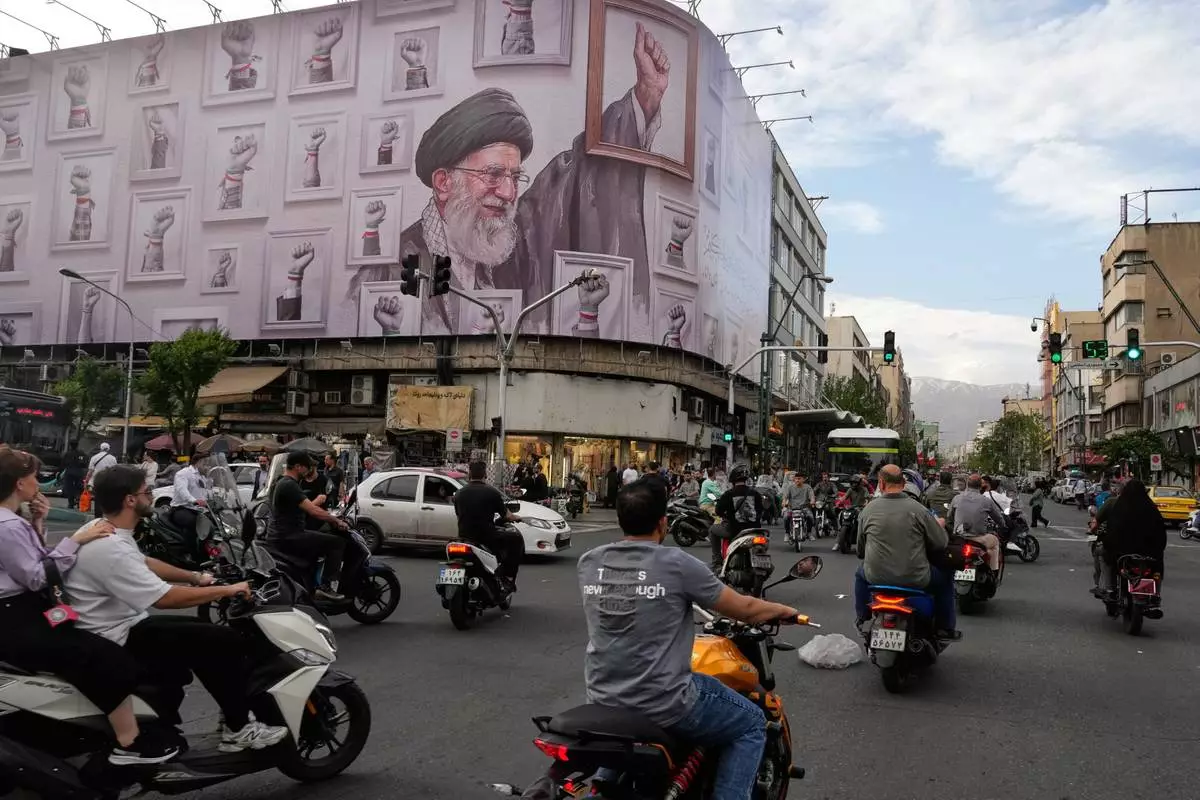
Motorbikes drive past a billboard with graphic showing the late Iranian Supreme Leader Ayatollah Ali Khamenei, who was killed in the U.S. and Israel strikes on Feb. 28, with his framed fist amongst his supporters framed fists in downtown Tehran, Iran, Wednesday, May 6, 2026. (AP Photo/Vahid Salemi)

Motorbikes drive past a billboard with graphic showing the late Iranian Supreme Leader Ayatollah Ali Khamenei, who was killed in the U.S. and Israel strikes on Feb. 28, with his framed fist amongst his supporters framed fists in downtown Tehran, Iran, Wednesday, May 6, 2026. (AP Photo/Vahid Salemi)

Recommended Articles