Skip to Content Facebook Feature Image

Kept Alive by ECMO Until Heart Transplant: Sahara Romero's Story of Survival and Recovery, with ECMOlife by Eurosets

Business

Kept Alive by ECMO Until Heart Transplant: Sahara Romero's Story of Survival and Recovery, with ECMOlife by Eurosets
Business

Business

Kept Alive by ECMO Until Heart Transplant: Sahara Romero's Story of Survival and Recovery, with ECMOlife by Eurosets

2026-05-12 16:46 Last Updated At:17:00

MEDOLLA, Italy--(BUSINESS WIRE)--May 12, 2026--

“Now, for the first time in years, I can live without constantly fearing something could go wrong.” That's how Sahara Romero told her story, presented at the EuroELSO Congress in Dublin (6-8 May), dedicated to lifesaving extracorporeal therapies. Hers is a remarkable journey back to life, where clinical expertise and advanced life-support technologies came together to radically change her fate.

This press release features multimedia. View the full release here: https://www.businesswire.com/news/home/20260511305446/en/

Sahara has lived with a serious heart condition since early adolescence. The first signs of heart failure appeared when she was eleven. “When I was doing simple activities, like gymnastics lessons, I got very tired and experienced pain in my chest. At first it wasn't clear what was happening.” That was the start of a routine of constant medical check-ups, daily limitations, and continual vigilance.

As the years went by, the situation worsened. “Sahara had to rely on ECMO support on four different occasions. The last time, in March 2023, her heart stopped working and she began to experience multi-organ failure. At that stage, the clinical goal was to maintain vital functions and stabilize the patient while awaiting a heart transplant,” explained Dr. Mario Andrés Mercado Díaz, critical care specialist at the Shaio Clinic in Bogotá.

At this critical stage, ECMOlife played a central role. The system for extracorporeal life support was developed by Eurosets, an Italian biomedical company. At the Shaio Clinic, a cardiovascular center of excellence, ECMOlife became a critical component of Sahara's care. “The technology enabled us to provide mechanical circulatory support, continuously monitor the patient's vital signs, and safely manage an extraordinarily complex clinical situation," said Estefanía Giraldo Bejarano, a nurse specializing in ECMO. "We had to ensure that Sahara reached transplant in the best possible condition.”

After a difficult year marked by waiting and hope, during which Sahara – supported by ECMO – celebrated her birthday in hospital, the call finally came: a donor heart had become available.

Today, Sahara is living a normal life, an outcome that for years had seemed totally out of reach. "Now I can think about tomorrow without being afraid.” Those words capture the true value of a complex clinical pathway: not just surviving, but getting back to living and doing the things people most want to do.

Her case highlights how advances in extracorporeal life-support technologies can offer precious time at the most critical moments, expanding treatment options. “Solutions such as ECMO systems make it possible to tackle situations in which, until only a few years ago, the options were extremely limited, improving the prospects for patients' recovery and quality of life,” stressed Antonio Petralia, CEO of Eurosets.

Sahara's story embodies the true meaning of medical expertise and innovation: showing how technology can become not an end in itself, but a silent ally in a patient's recovery.

The original source-language text of this announcement is the official, authoritative version. Translations are provided as an accommodation only, and should be cross-referenced with the source-language text, which is the only version of the text intended to have legal effect.
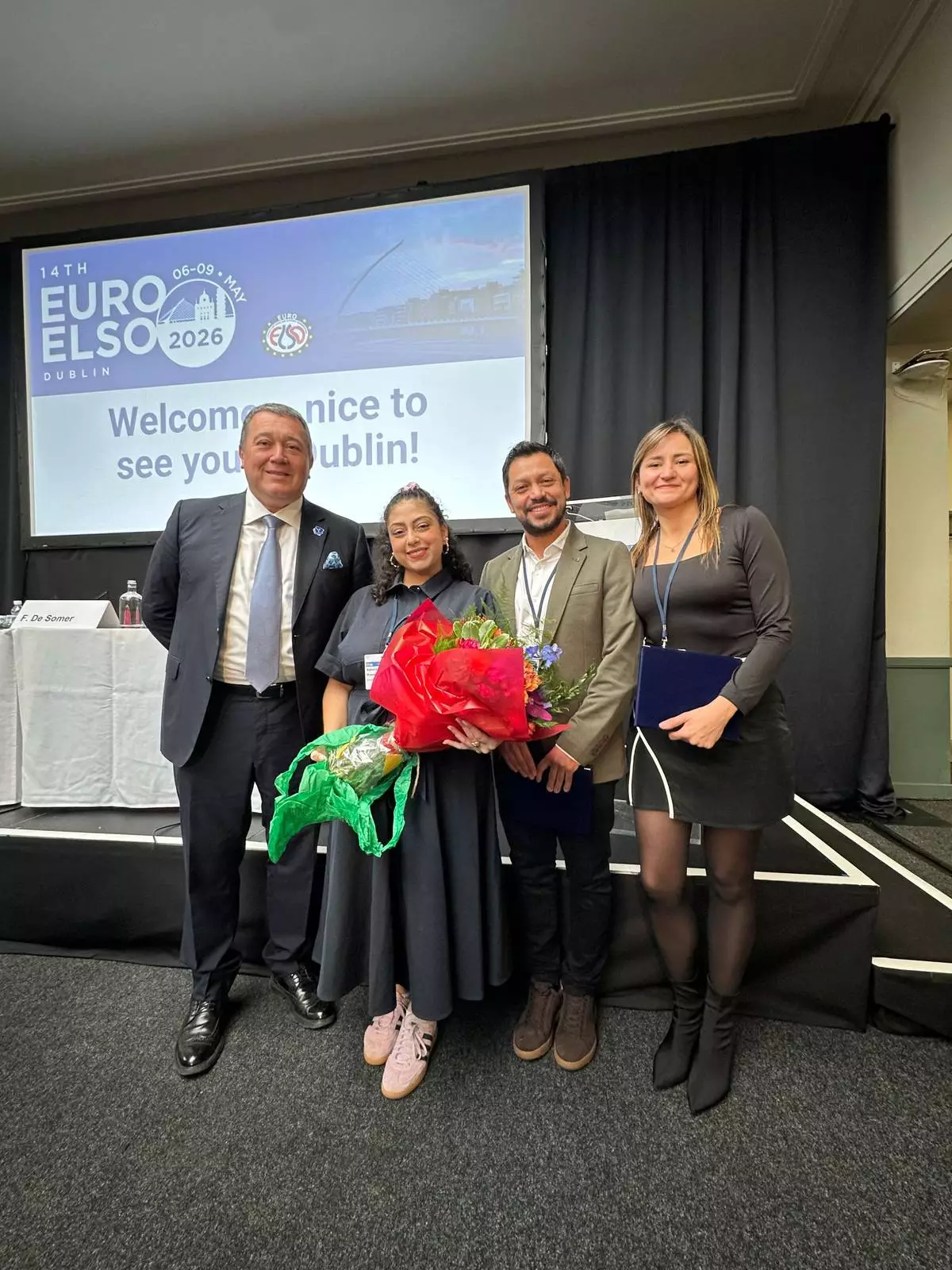
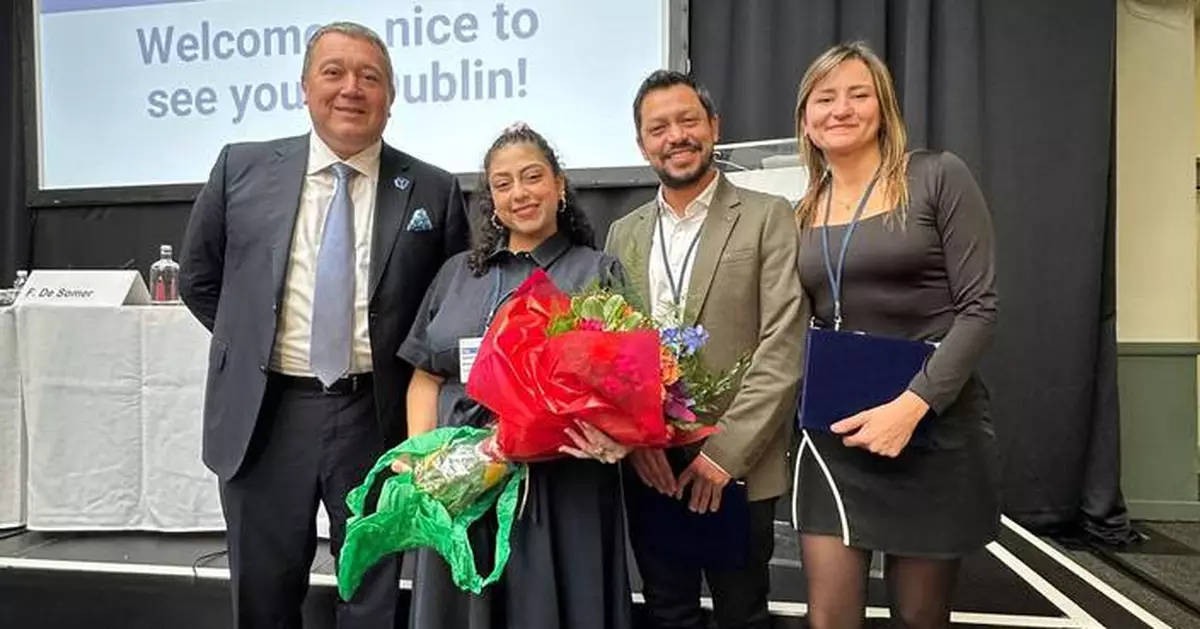
Antonio Petralia, CEO of Eurosets; Sahara Romero, patient; dr. Mario Andrés Mercado Díaz, Intensive care specialist at the Clínica Shaio in Bogotá; Estefanía Giraldo Bejarano, specialist ECMO nurse at the Clínica Shaio in Bogotá

Antonio Petralia, CEO of Eurosets; Sahara Romero, patient; dr. Mario Andrés Mercado Díaz, Intensive care specialist at the Clínica Shaio in Bogotá; Estefanía Giraldo Bejarano, specialist ECMO nurse at the Clínica Shaio in Bogotá
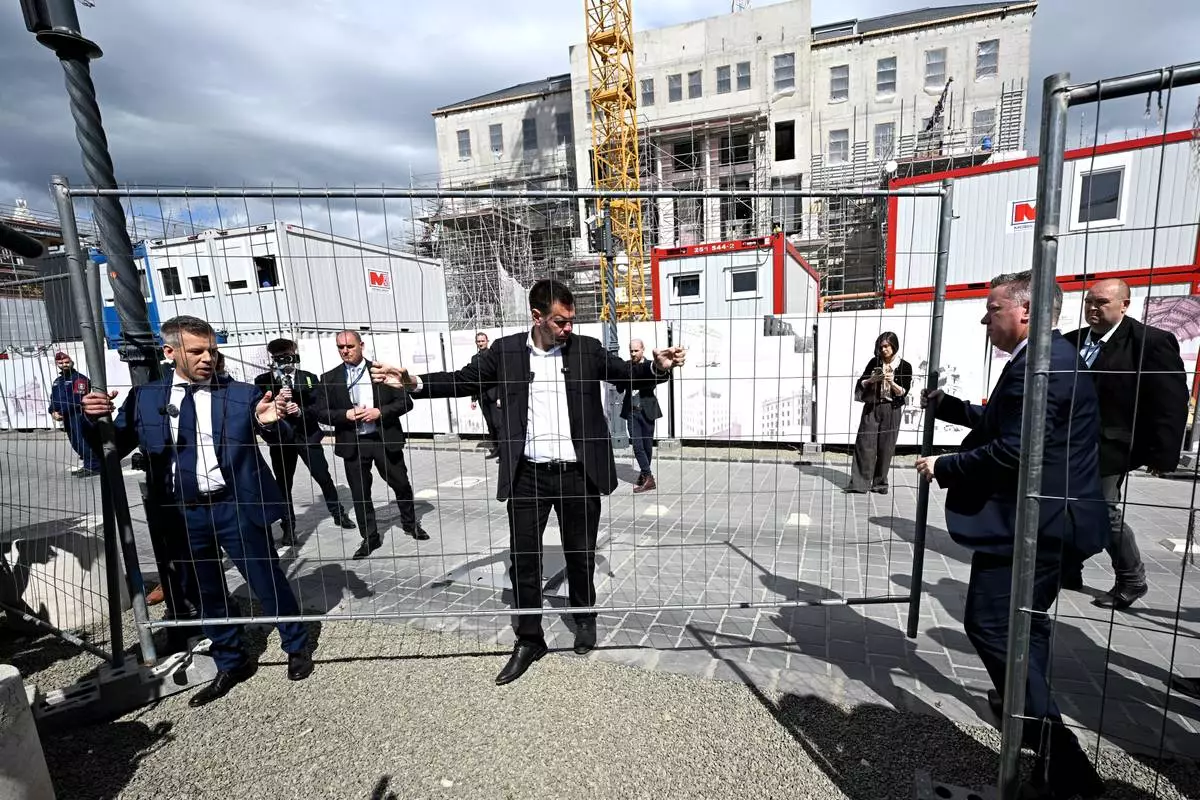
BUDAPEST, Hungary (AP) — Hungary’s new Prime Minister Péter Magyar on Friday personally removed fencing around a historic building in the capital Budapest that served as the office of his autocratic predecessor Viktor Orbán.

Magyar announced that the famous Karmelita, located at Budapest's landmark Castle Hill, overlooking the Danube river, will be open for public until authorities decide on its future role.

The former Catholic monastery become a symbol of Orbán’s rule after he had it cordoned off in 2021.

“There is no place for cordons in Hungary after the change of regime,” Magyar told reporters as he symbolically pushed open the fences. He said the institutions had been built “from the money of the Hungarian taxpayers and made so beautiful with those funds.”

Magyar and his center-right Tisza party swept Orbán from power in an election in April, winning a two-thirds majority that gave him a clear mandate for major changes after his predecessor's 16 years in power.

Magyar has vowed to restore democratic institutions and governmental checks and balances that were heavily eroded during Orbán’s rule, and to clamp down on alleged corruption.

He has revealed the luxury renovations that former government members carried out on their offices. Magyar himself has said he would move his seat to the administrative part of the city on the other bank of the Danube.

The Karmelita building, he said, will now be accessible for an “extensive period.” Already, a website has been set up where visitors can book a tour. Magyar said some buildings in the castle zone have been renovated while other are under construction.

The situation “is likely to generate a number of new ideas,” he added without elaborating.

The prime minister has promised to repair his country’s ties with its European Union partners and restore Hungary’s place among Western democracies.

Magyar plans to form a National Asset Recovery and Protection Office, an authority tasked with investigating and seeking to recover public funds misused during Orbán’s tenure.

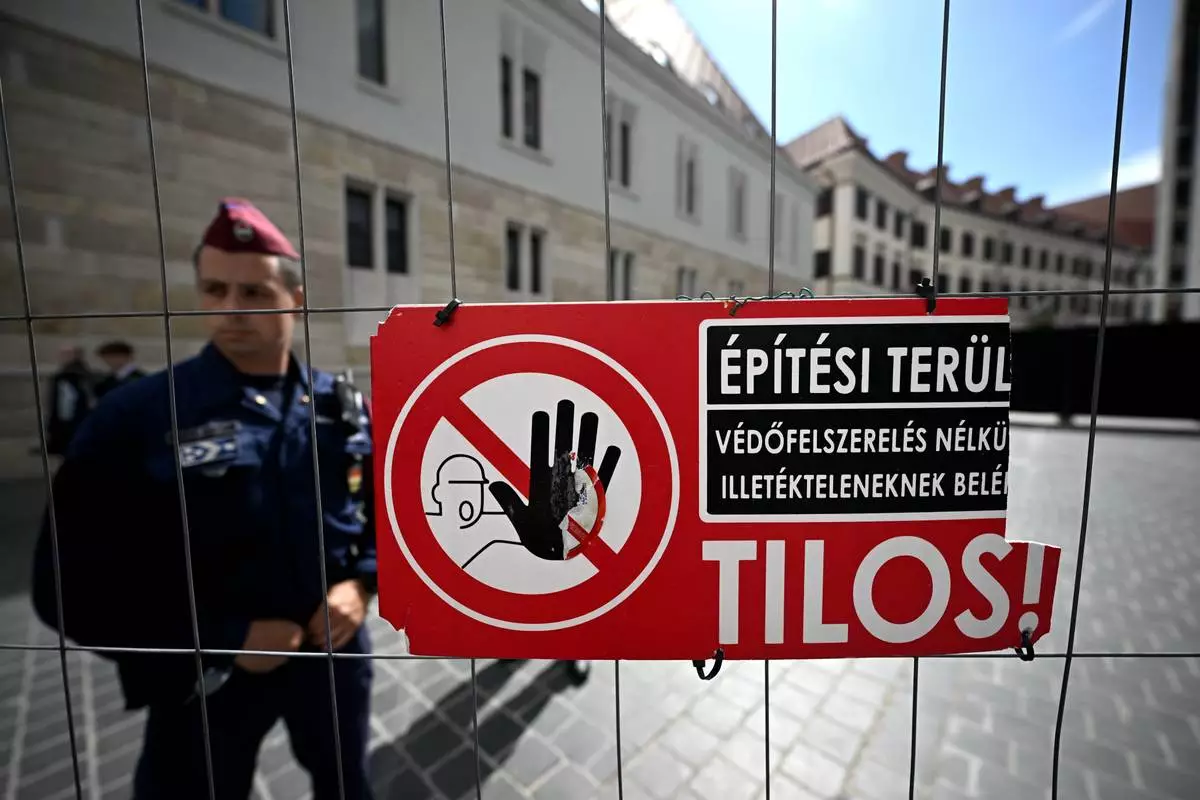
A construction sign prohibits entry to the former Karmelita Palace, which has previously housed the Prime Minister's Office, in the Castle District of Budapest, Hungary, Friday, May 15, 2026. (Robert Hegedus/MTI via AP)

A construction sign prohibits entry to the former Karmelita Palace, which has previously housed the Prime Minister's Office, in the Castle District of Budapest, Hungary, Friday, May 15, 2026. (Robert Hegedus/MTI via AP)

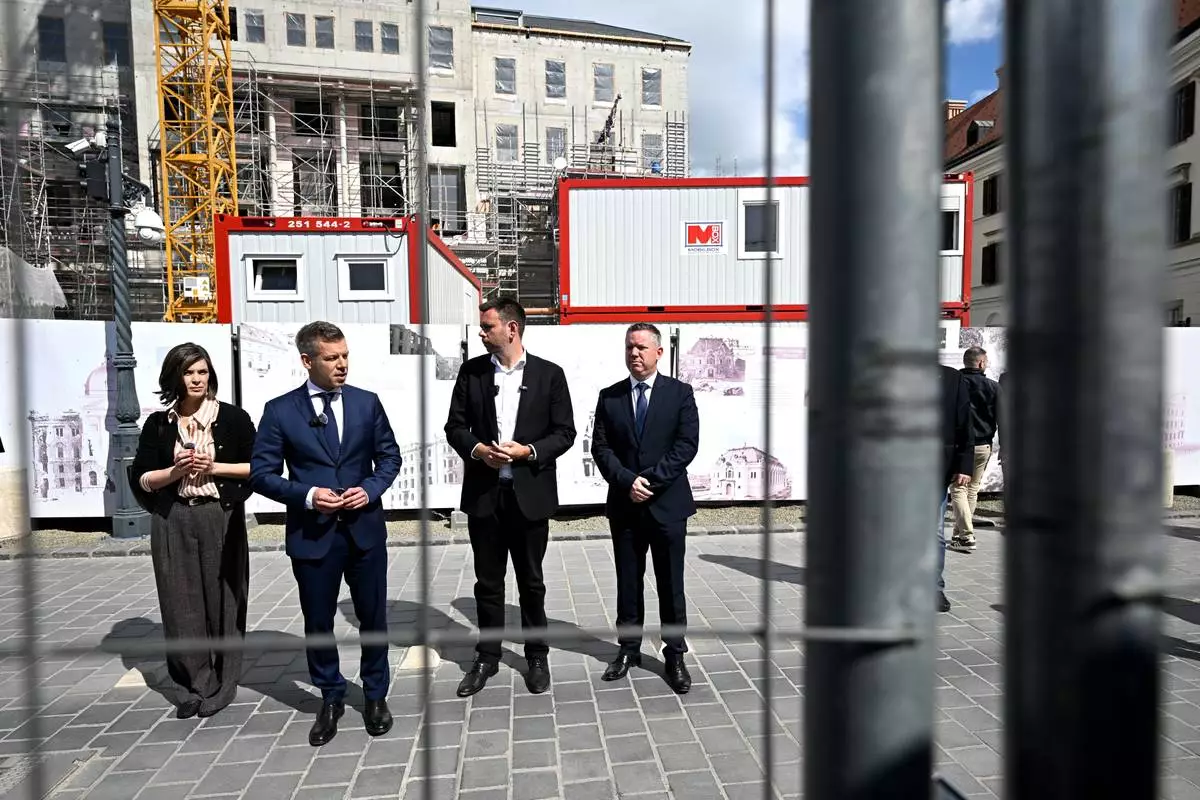
Hungary's Prime Minister Peter Magyar, second left, flanked by Minister of Transport and Innovation David Vitezy, second right, Minister of Interior Gabor Posfai, right, and Government Spokeswoman Vanda Szondi, attend the public dismantling of the barricade surrounding the former Karmelita Palace, which has previously housed the Prime Minister's Office, in the Castle District of Budapest, Hungary, Friday, May 15, 2026. (Robert Hegedus/MTI via AP)

Hungary's Prime Minister Peter Magyar, second left, flanked by Minister of Transport and Innovation David Vitezy, second right, Minister of Interior Gabor Posfai, right, and Government Spokeswoman Vanda Szondi, attend the public dismantling of the barricade surrounding the former Karmelita Palace, which has previously housed the Prime Minister's Office, in the Castle District of Budapest, Hungary, Friday, May 15, 2026. (Robert Hegedus/MTI via AP)

From left, Hungary's Prime Minister Peter Magyar, Minister of Transport and Innovation David Vitezy and Minister of Interior Gabor Posfai begin to dismantle the barricade surrounding the former Karmelita Palace, which has previously housed the Prime Minister's Office, in the Castle District of Budapest, Hungary, Friday, May 15, 2026. (Robert Hegedus/MTI via AP)

From left, Hungary's Prime Minister Peter Magyar, Minister of Transport and Innovation David Vitezy and Minister of Interior Gabor Posfai begin to dismantle the barricade surrounding the former Karmelita Palace, which has previously housed the Prime Minister's Office, in the Castle District of Budapest, Hungary, Friday, May 15, 2026. (Robert Hegedus/MTI via AP)

Recommended Articles