German businesses are hoping that the United States President Donald Trump's upcoming visit to China will bring some reprieve for them that have borne the brunt of tariffs.
Germany's auto sector is among the hardest hit, from major car brands to suppliers downstream in the supply chain.
Strained relations between China and the United States have cost RA Consulting's business a lot.
The German company develops software tools and electronic systems for vehicles.
It has offices in both the United States and China, and that's where the tariffs have hit the company hardest.
In software business, it has a stable business in China over the last years, but the problem emerges as they need to import some technical hardware from the United States, according to Armin Rupalla, managing director of RA Consulting GmbH.
The tariffs have only added to the problems facing an already struggling auto industry. For Germany's crucial auto sector, it's been devastating.
"Companies like BMW, Audi, Volkswagen, they've had a decrease in sales all over the world. We have too much capacity worldwide and this effect runs to everybody. I'm already 40 years in business, I would say it's the biggest massacre I've ever seen in our automotive industry," said Rupalla.
Germany's broader manufacturing base has also been affected.
"The trade conflict with the US directly impacts us, particularly the punitive tariffs imposed last year on steel, aluminum, and machinery. These tariffs have negatively impacted exports, which is always bad for an export-oriented industry like ours. The U.S. is actually our largest single sales market. However, our exports there have plummeted by 12.7 percent, which is substantial," said Claudia Barkowsky, managing director of German Engineering Federation's China Office.
While globalization has improved efficiency by spreading production across countries, the interconnected supply chains have exposed manufacturers to tariffs, adding uncertainty for long-term investment.
"Companies always look for predictability. They look for stable markets where you can plan ahead and everything that's going on is taking away this reliability. If you know ok, it will most likely be stable in the next couple of years, you can take investment decisions," said Christoph Angerbauer, director for International Affairs at the Chamber of Commerce Munich.
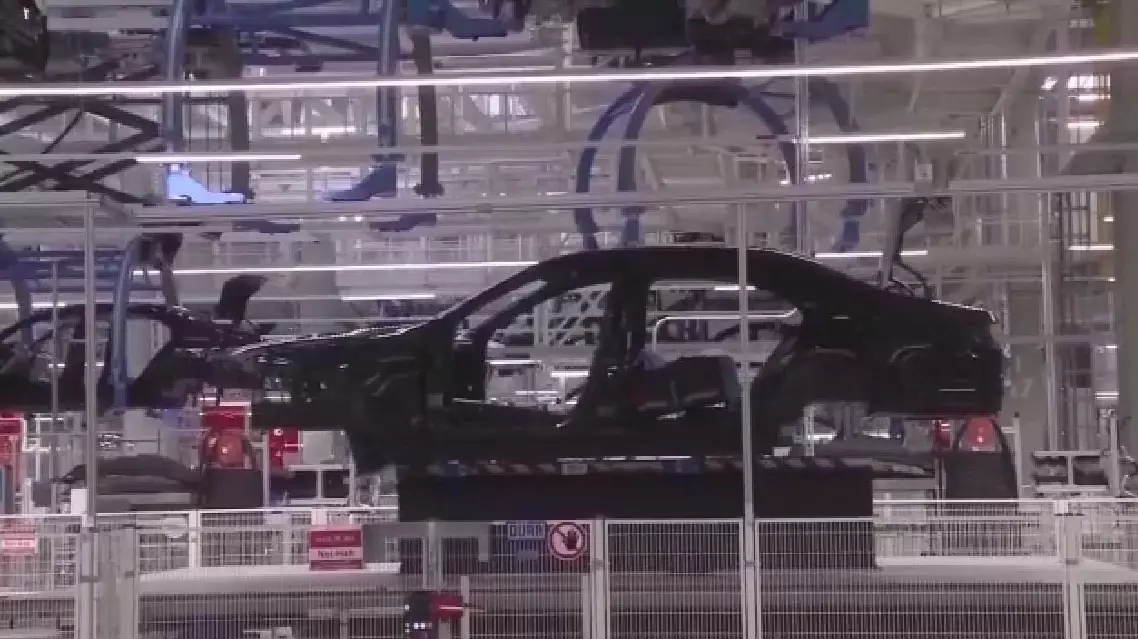
German companies hope for improved China-US ties to keep business stable