AUSTIN, Texas--(BUSINESS WIRE)--May 12, 2026--
MirrorWeb, the communications supervision platform for regulated financial services firms, today launched Mira, the first supervision agent built for native communications data.
This press release features multimedia. View the full release here: https://www.businesswire.com/news/home/20260512895535/en/
Drag a compliance handbook into Mira. Minutes later, a tailored set of supervision policies, grounded in SEC and FINRA rules, guidance, and a decade of enforcement decisions, is live and reviewing every message your advisors send. No six-month implementation, no professional services engagement, no manual keyword lists. Policies stop being aspirational and start being enforced.
For a decade, MirrorWeb has been the system of record for communications at more than 1,000 regulated firms — capturing every message natively, with full metadata and conversation context intact. Mira isn't a generic AI model retrofitted for compliance. It was built on this data. No bolt-on can replicate that foundation.
A traditional lexicon policy flags the word “gift” and generates noise. Mira knows a Michelin-starred dinner is $400 a head, that the firm’s G&E policy caps at $250, and raises a potential violation accordingly. It is software that maps to your handbook, not a handbook limited by your software.
That contextual judgment — the kind a compliance officer makes every day — is what separates Mira from traditional lexicon and AI bolt-ons. Early customers have seen an 80% reduction in time spent on communications review while remediating more issues, not less. When Mira surfaces something that needs human review, it routes it to the right reviewer, applies the firm’s escalation logic, and builds a full audit trail as supervision happens, not reconstructed months later when an examiner asks. The firms with the clearest picture of advisor behavior are the best-run compliance programs — and the ones best positioned regardless of how the regulatory environment shifts.
Jamie Hoyle, VP Product at MirrorWeb said: "Compliance teams have spent decades writing sophisticated handbooks, then reducing their supervision policies to keywords and rules that increase both risk and false positives. Mira reads your policies as you wrote them, grounds them against SEC and FINRA precedent, and reviews every single message against those policies. It knows the difference between dinner down the street and dinner at a Michelin-starred restaurant, and flags potential violations accordingly. With Mira, compliance teams stop reviewing noise and start remediating real risk.”
The volume of advisor communications has outpaced what manual supervision can handle. Leading compliance teams are no longer asking whether AI can help — they're asking which AI was actually built for this data. Mira is the answer.
Mira is available now. Visit mirrorweb.com to learn more, or contact the MirrorWeb team to get started.
About MirrorWeb
MirrorWeb is the communications supervision platform built for compliance leaders at regulated financial services firms. We help CCOs and their teams supervise every channel their advisors use — email, iMessage, WhatsApp, LinkedIn, and more — using AI that surfaces what carries real risk, routes it to the right reviewer, and builds a defensible audit trail as supervision happens. The result is a compliance program that scales with the firm and gives compliance the infrastructure to say yes.
MirrorWeb serves RIAs, broker-dealers, global asset managers, and other SEC and FINRA-regulated firms across the US. Learn more at www.mirrorweb.com and follow us on LinkedIn.

Upload your compliance documentation and Mira generates tailored supervision policies, grounded in SEC and FINRA precedent, in minutes.
WASHINGTON (AP) — U.S. consumer prices climbed sharply again last month as the 10-week war with Iran delivered higher gasoline prices and more pain for Americans.
The Labor Department's consumer price index rose 3.8% from April 2025, the biggest jump in three years, and up from a 3.3% year-over-year gain in March. On a month-to-month basis, April prices rose 0.6% from March as gasoline prices rose 5.4%, according to the data released Tuesday. The month-over-month gain was down from 0.9% increase in overall prices from February to March, when the initial shock of the war hit the U.S. economy.
Labor Department figures showed that gasoline prices are up more than 28% compared with a year ago. However, the AAA motor club listed the average regular gallon of gasoline above $4.50 on Tuesday, about 44% more than it cost last year at this time.
Excluding volatile food and energy costs, so-called consumer core prices rose 0.4% last month from March and 2.8% from April 2025, relatively modest readings that suggest the energy price burst has yet to spill over more broadly into prices for other goods.
Grocery prices rose 0.7% from March to April as meat prices rose after they had declined slightly in the month before.
Prices are rising at time when Americans are already frustrated by the high cost of living. Affordability is likely to be a key issue when voters go to the polls Nov. 3 to determine whether President Donald Trump's Republican Party maintains control of the U.S. Senate and House of Representatives.
“Inflation is the key drag on the U.S. economy now,” Heather Long, chief economist at Navy Federal Credit Union, wrote. “There is a real financial squeeze underway. For the first time in three years, inflation is eating up all wage gains. This is a setback for middle-class and lower-income households and they know it. They are having to cut back on spending and stretch every dollar.”
In April, average hourly wages fell 0.3% from a year earlier after accounting for inflation – the first year-over-year drop in three years.
Inflation had been dropping more or less steadily since peaking with a 9.1% year-over-year spike in June 2022, a surge caused by supply chain bottlenecks at the end of COVID-19 lockdowns and a jolt for energy prices following the Russian invasion of Ukraine. But inflation remained has above the Federal Reserve’s 2% target.
Then, the United States and Israel attacked Iran on Feb. 28, and Tehran responded by shutting off access to the Gulf of Hormuz through which a fifth of the world’s oil and liquefied natural gas passes. That has sent oil prices, and most visibly gasoline, racing higher.
The Fed, which had been expected to cut its benchmark interest rate in 2026, has turned cautious as it waits to see how long conflict lasts and whether higher energy prices spill over into other products and cause a broader inflationary outbreak.
Trump has lambasted the Fed and its outgoing chair, Jerome Powell, for refusing to slash rates to boost the economy. Kevin Warsh, the president’s hand-picked choice to succeed Powell, is expected to be confirmed by the Senate this week; but it’s unclear whether Warsh would pursue lower rates given the uncertainties arising from the war — or whether he could persuade his colleagues on the Fed’s rate-setting committee to go along if he tried.
Some companies are also starting to feel the pain.
Whirlpool, which makes KitchenAid and Maytag appliances, reported last week that revenue dropped nearly 10% in its most recent quarter and said that the war has caused a “recession-level industry decline″ that has undermined consumer confidence.
Grace King of Ames, Iowa said that higher prices in the food aisle and at the pump are making her cut back on spending for things like clothing. The administrative assistant, 31, used to spend $200 per month on clothing, mostly on Amazon, but not anymore.
“There’s pressure basically everywhere from the groceries that I buy to the gas to fill up the tank,” she said. “I’ve severely cut back on my frill spending.”
For example, King noted that while it’s only a five-minute drive to work, she makes the trip twice a day. And if she needs to do any big shopping, that’s a 40-minute drive to malls in Des Moines, Iowa.
AP Retail Writer Anne D'Innocenzio in New York contributed to this story.
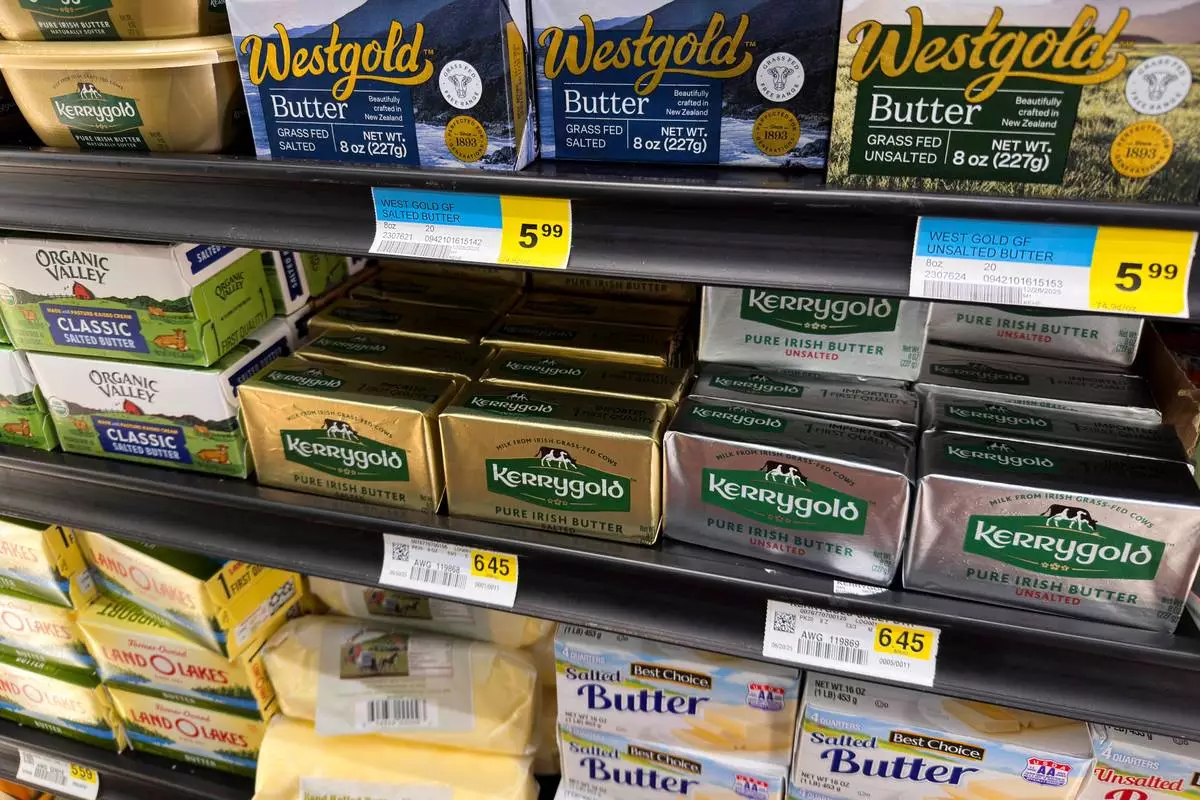
Butter is displayed for sale at a grocery store Wednesday, April 29, 2026, in Chicago. (AP Photo/Erin Hooley)

Beef is displayed for sale at a grocery store Wednesday, April 29, 2026, in Chicago. (AP Photo/Erin Hooley)
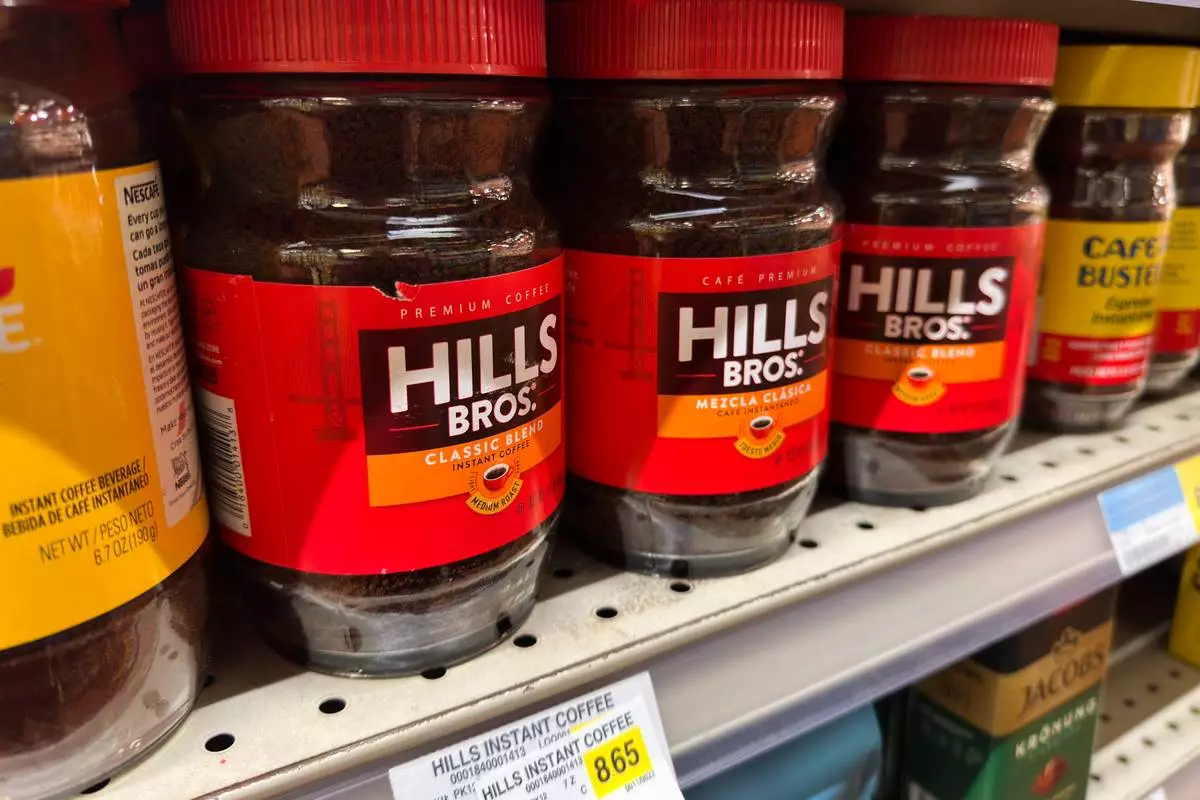
Coffee is displayed for sale at a grocery store Wednesday, April 29, 2026, in Chicago. (AP Photo/Erin Hooley)
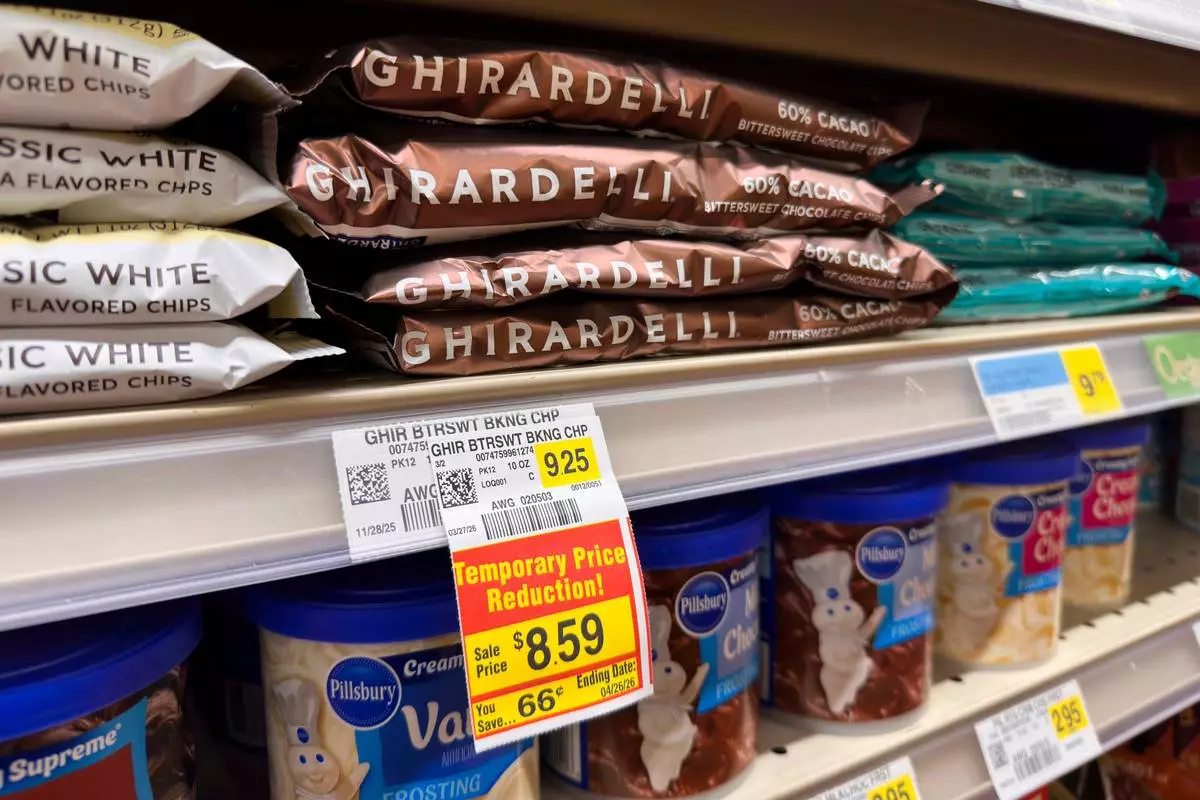
Chocolate is displayed for sale at a grocery store Wednesday, April 29, 2026, in Chicago. (AP Photo/Erin Hooley)

FILE - A motorist pumps fuel at a Shell station Wednesday, July 5, 2023, in Englewood, Colo. (AP Photo/David Zalubowski, File)

FILE - A shopper peruses cheese offerings at a Target store Wednesday, Oct. 4, 2023, in Sheridan, Colo. (AP Photo/David Zalubowski, File)