MOSCOW (AP) — Russia on Tuesday test-fired a new intercontinental ballistic missile as part of efforts to modernize the country's nuclear forces, a launch hailed by President Vladimir Putin just days after his claim that the fighting in Ukraine is nearing an end.
Putin said that the nuclear-armed Sarmat missile would enter combat service at the end of the year. It was built to replace the aging Soviet-built Voyevoda.
Click to Gallery
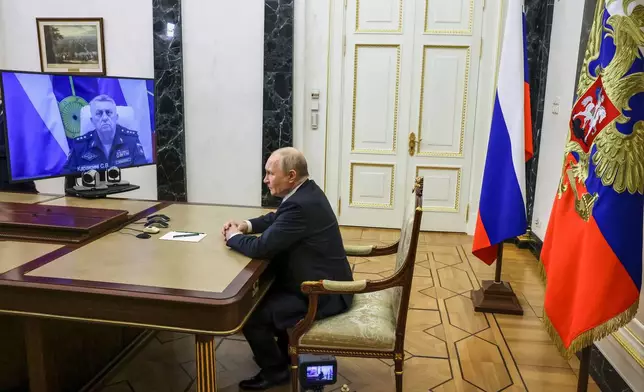
Russian President Vladimir Putin listens as Russian Strategic Missile Forces chief, Col. Gen. Sergei Karakayev reports to him on a successful test launch of the Sarmat intercontinental ballistic missile. at the Kremlin in Moscow, Tuesday, May 12, 2026. (Mikhail Metzel/Sputnik, Kremlin Pool Photo via AP)
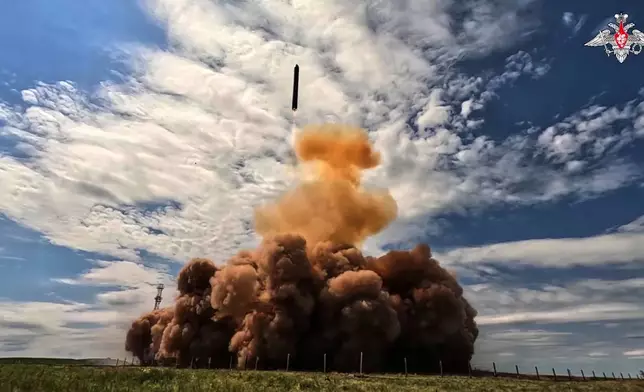
In this image made from video provided by Russian Defense Ministry Press Service on Tuesday, May 12, 2026, Russia's new Sarmat intercontinental ballistic missile is test launched at an unspecified location in Russia. (Russian Defense Ministry Press Service via AP)
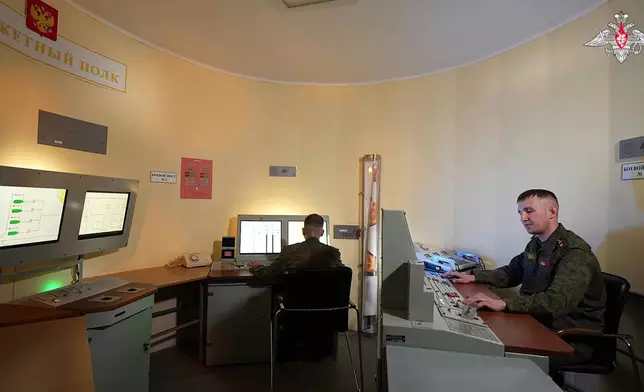
In this image made from video provided by Russian Defense Ministry Press Service on Tuesday, May 12, 2026, Russian servicemen oversee a test launch of the new Sarmat intercontinental ballistic missile at an unspecified location in Russia. (Russian Defense Ministry Press Service via AP)
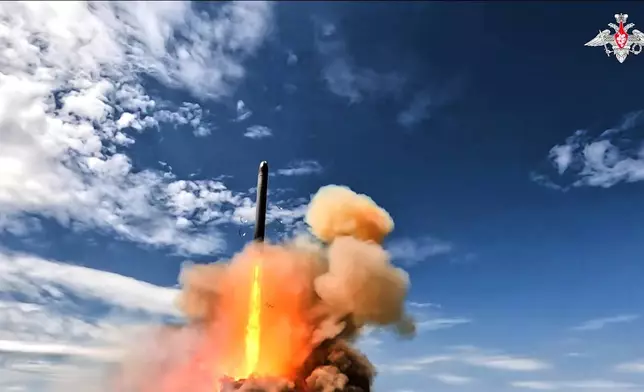
In this image made from video provided by Russian Defense Ministry Press Service on Tuesday, May 12, 2026, Russia's new Sarmat intercontinental ballistic missile is test launched at an unspecified location in Russia. (Russian Defense Ministry Press Service via AP)
Russian Strategic Missile Forces chief, Col. Gen. Sergei Karakayev, left on the screen, reports to President Vladimir Putin on a successful test launch of the Sarmat intercontinental ballistic missile at the Kremlin in Moscow, Tuesday, May 12, 2026. (Mikhail Metzel/Sputnik, Kremlin Pool Photo via AP)
“This is the most powerful missile in the world,” Putin declared, adding that the combined power of the Sarmat’s individually targeted warheads is more than four times higher than that of any Western counterpart.
The Russian leader has repeatedly brandished the nuclear sword after sending troops into Ukraine in February 2022 to try to deter the West from ramping up support for Ukraine.
After overseeing a military parade on Red Square on Saturday commemorating the defeat of Nazi Germany in World War II, which for the first time in nearly two decades didn’t include heavy weapons, Putin declared the conflict in Ukraine is coming to an end.
Since coming to power in 2000, Putin has overseen efforts to upgrade the Soviet-built components of the Russian nuclear triad — deploying hundreds of new, land-based intercontinental ballistic missiles, commissioning new nuclear submarines and modernizing nuclear-capable bombers.
Russia’s effort to revamp its nuclear forces pushed the United States to launch a costly modernization of its arsenal.
The last remaining nuclear arms pact between Russia and the U.S. expired in February, leaving no caps on the world's two largest atomic arsenals for the first time in more than a half-century and fueling fears of an unconstrained nuclear arms race.
The Sarmat — designated “Satan II” in the West — is meant to replace about 40 Soviet-built Voyevoda missiles. Its development began in 2011 and before Tuesday, the missile had only one known successful test and reportedly suffered a massive explosion during an abortive test in 2024.
Putin said Tuesday that the Sarmat — part of a slew of new weapons that Putin revealed in 2018, claiming they would render any prospective U.S. missile defenses useless — is as powerful as the Voyevoda but with a higher precision. It is capable of suborbital flight, he said, giving it a range of more than 35,000 kilometers (21,700 miles) and an extended capability to penetrate any prospective missile defenses.
Moscow's new weapons include the Avangard hypersonic glide vehicle, capable of flying 27 times faster than the speed of sound. The first vehicles have already entered service.
Russia has also commissioned the new nuclear-capable Oreshnik intermediate-range ballistic missile, and used its conventionally-armed version twice to strike Ukraine. Oreshnik's range of up to 5,000 kilometers (3,100 miles) makes it capable of reaching any target in Europe.
Putin also announced Russia was in the “final stages” of the development of the nuclear-armed Poseidon underwater drone and the Burevestnik cruise missile powered by miniature atomic reactors.
The Poseidon is designed to explode near enemy coastlines and cause a radioactive tsunami. The Burevestnik has virtually unlimited range thanks to nuclear propulsion, allowing it to loiter for days, circling air defenses and attacking from an unexpected direction.
Putin has described those new weapons as part of a Russian response to the U.S. missile shield that Washington developed after its 2001 withdrawal from a Cold War-era U.S.-Soviet pact that limited missile defenses.
Russian military planners have feared a missile shield could tempt Washington to launch a first strike that would knock out most of Moscow’s nuclear arsenal in hopes of intercepting a small number of surviving missiles fired in retaliation.
"We were forced to consider ensuring our strategic security in the face of the new reality and the need to maintain a strategic balance of power and parity,” Putin said.

Russian President Vladimir Putin listens as Russian Strategic Missile Forces chief, Col. Gen. Sergei Karakayev reports to him on a successful test launch of the Sarmat intercontinental ballistic missile. at the Kremlin in Moscow, Tuesday, May 12, 2026. (Mikhail Metzel/Sputnik, Kremlin Pool Photo via AP)
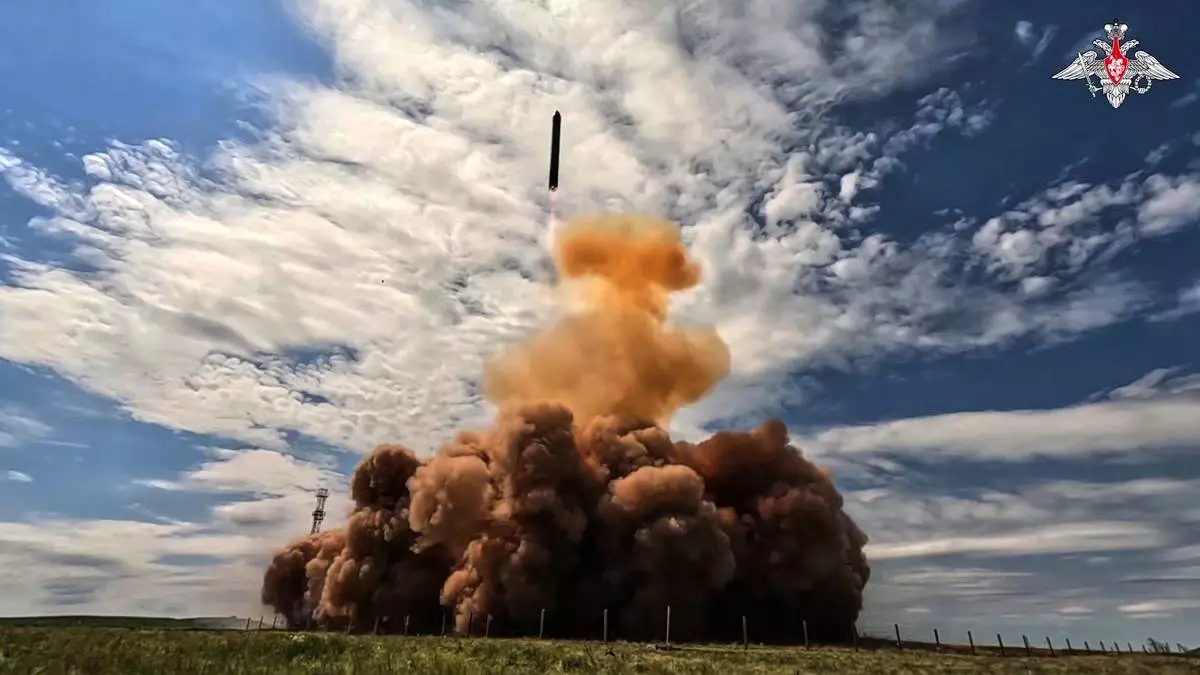
In this image made from video provided by Russian Defense Ministry Press Service on Tuesday, May 12, 2026, Russia's new Sarmat intercontinental ballistic missile is test launched at an unspecified location in Russia. (Russian Defense Ministry Press Service via AP)
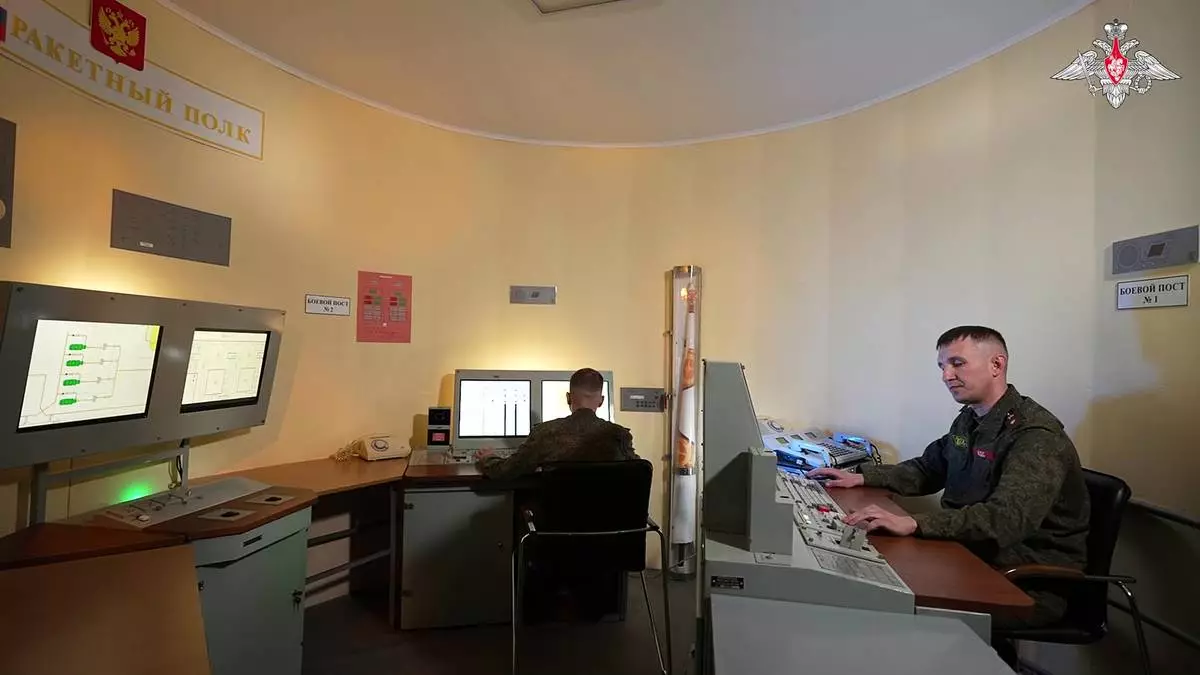
In this image made from video provided by Russian Defense Ministry Press Service on Tuesday, May 12, 2026, Russian servicemen oversee a test launch of the new Sarmat intercontinental ballistic missile at an unspecified location in Russia. (Russian Defense Ministry Press Service via AP)
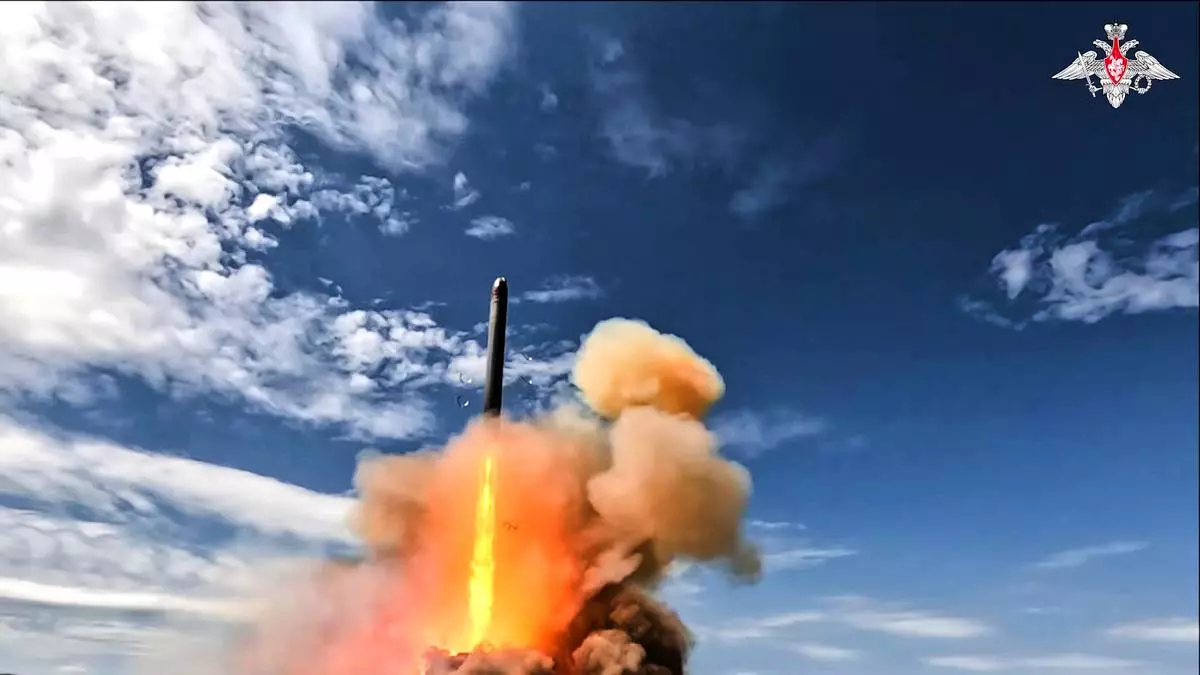
In this image made from video provided by Russian Defense Ministry Press Service on Tuesday, May 12, 2026, Russia's new Sarmat intercontinental ballistic missile is test launched at an unspecified location in Russia. (Russian Defense Ministry Press Service via AP)

Russian Strategic Missile Forces chief, Col. Gen. Sergei Karakayev, left on the screen, reports to President Vladimir Putin on a successful test launch of the Sarmat intercontinental ballistic missile at the Kremlin in Moscow, Tuesday, May 12, 2026. (Mikhail Metzel/Sputnik, Kremlin Pool Photo via AP)
OMAHA, Neb. (AP) — The fate of Nebraska's “blue dot” — a small, but significant factor in presidential politics — will take center stage Tuesday as Democratic voters select a congressional nominee in the state's high-profile 2nd District.
The Omaha-area district, where Republican U.S. Rep. Don Bacon is retiring, is one of the Democratic Party's biggest targets this midterm season. It's also a national focus every four years in presidential contests because Nebraska is one of just two states that splits its electoral votes. The 2nd District has gone to Democratic presidential candidates three out of five times since 2008 — a “blue dot” in an otherwise sea of red.
Three Democrats are seen as the top contenders in Tuesday's primary: state Sen. John Cavanaugh, political activist Denise Powell and district court clerk Crystal Rhoades. Republican Brinker Harding, an Omaha City Council member endorsed by President Donald Trump, is running unopposed on the GOP side.
Cavanaugh, more than anyone else on Tuesday's ballot, has been under attack from both parties.
Some Democratic opponents argue that a primary victory for Cavanaugh would jeopardize the district's “blue dot” status because he'd be leaving his valuable state legislative seat, making it easier for Republicans in the Nebraska Legislature to change the law that allows the state to split its electoral votes.
The issue has defined the primary contest perhaps more than any other.
The Democratic argument against Cavanaugh has little to do with his politics or policies.
His opponents and groups backing them have flooded mailboxes, airwaves and social media warning that if he wins the congressional primary, Nebraska's Republican governor would appoint a conservative Republican to replace him in the Legislature.
That move, they say, could give state Republicans enough votes to enact a conservative wish list that includes stricter limitations on abortion and transgender rights.
It could also empower Republicans to enact midcycle redistricting or change the state's unusual system of splitting presidential electoral votes, some Democrats argue. Republicans failed in 2024 to pass a bill that would have made Nebraska the 49th state to award its Electoral College votes on a winner-take-all basis.
“Our Blue Dot. We fought hard for it. But if John Cavanaugh goes to Congress, it could all fall down,” cautions one TV ad by the super PAC New Democrat Majority.
EMILY’s List, a national group that supports women running for office, has put its reach and money behind Powell, calling Cavanaugh’s candidacy “a gift to MAGA Republicans.”
On Tuesday, Democrat Tony Vargas was out with his wife holding a large campaign sign and encouraging Omaha voters to support him in the county treasurer race. He also was supporting Powell in the congressional race, saying preserving the blue dot is important but not the only reason people might vote for Powell.
“I’m not voting for somebody for the blue dot loss. I’m voting for someone who I think is going to be the best leader in Congress,” Vargas said.
Republican groups have sent out mailers and social media posts claiming Cavanaugh “is in agreement with President Donald Trump” and showing a photo of Cavanaugh overlaid on a photo of the president, making it appear as if the two are standing together.
“Clearly, the Republicans know that I’m the strongest general election candidate,” Cavanaugh said. “And so they’re trying to hurt me.”
The attacks on Cavanaugh show Democrats and Republicans believe he has the best chance of winning the general election, said Paul Landow, a former Nebraska Democratic Party executive director.
He called the “blue dot” attacks disingenuous, noting Republicans already have a filibuster-proof majority in the Legislature but have still failed to pass key elements of their agenda because it is unpopular even among GOP lawmakers. The argument that a Cavanaugh win could weaken the state’s “blue dot” also assumes Democrats won’t pick up additional legislative seats this year, he said.
“There’s so many things that have to fall into place for this alleged danger to the ‘blue dot,’” Landow said. “It’s just wild speculation.”
While all the Democratic contenders cite affordability and opposition to Trump administration policies — from immigration and healthcare to military actions — the top three contenders began attacking one another more aggressively in the days leading up to the primary.
Candidates and allied groups have spent more than $2.6 million on TV and digital advertising since Jan. 1, according to the advertising tracking company AdImpact. Nearly all of that has been by or on behalf of Cavanaugh and Powell.
Cavanaugh has spent about $375,000. Powell's campaign has spent almost as much — $345,000 — but with the help of groups backing her, campaign advertising has been overwhelmingly pro-Powell.
Powell co-founded Women Who Run Nebraska, a political action committee that supports progressive female candidates, and she has a decade of Democratic political activism. She's never held office but said her deep connections have helped her with independents and third-party voters who make up nearly 30% of the district's electorate.
“My name recognition has increased dramatically,” Powell said, adding that "people are really connecting with my message.”
Rhoades carries her own name recognition after 20 years in public service and running a slew of successful local Democratic elections — including that of Omaha Mayor John Ewing, who unseated a longtime Republican last year. Rhoades has raised a fraction of what Cavanaugh and Powell have amassed, but said she's intentionally eschewing campaign ads and instead blanketing the city with door-knocking and personal contact with voters.
Both Powell and Rhoades have leaned heavily into the concern that Democrats' influence in the district will erode if Cavanaugh is elected to Congress.
The winner of Tuesday's primary will head to a highly competitive general election. Trump won the district in 2016, and the retiring Bacon, who has clashed with Trump, has held the House seat for five terms.
Also on Tuesday's ballot is the race for U.S. Senate, where Republican incumbent Pete Ricketts is seeking a full term, following his 2023 appointment and 2024 special election victory to replace Republican Ben Sasse.
Ricketts faces four Republican primary challengers, but he’s already looking ahead to an expected general election contest against independent candidate Dan Osborn, an industrial mechanic and military veteran who came within 7 points of defeating Republican U.S. Sen. Deb Fischer in her 2024 reelection bid. Running in the Democratic primary are William Forbes and Cindy Burbank.
In the race for governor, incumbent Republican Gov. Jim Pillen faces five primary challengers, while former state Sen. Lynne Walz and frequent candidate Larry Marvin compete for the Democratic nomination. Marvin previously ran for U.S. Senate four times since 2012.
Peoples reported from New York. Associated Press writer Josh Funk in Omaha, Nebraska, contributed to this report.

Denise Powell hugs her husband, Hobson, after voting in the Nebraska Primary Election at Omaha Community Playhouse Tuesday, May 12, 2026, in Omaha, Neb. Powell is a candidate for the Democratic nomination to the House of Representatives in Nebraska's second district. (AP Photo/Rebecca S. Gratz)
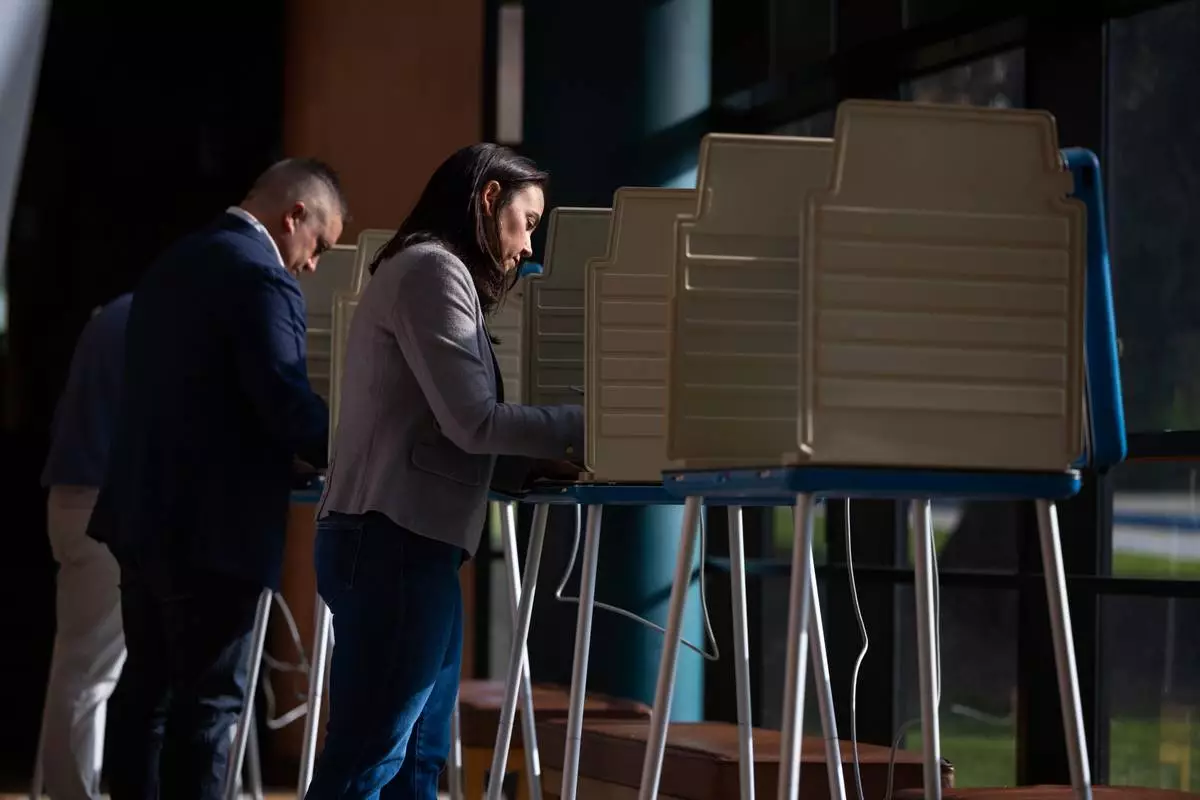
Denise Powell, candidate for the Democratic nomination to the House of Representatives in Nebraska's second district, votes in the Nebraska Primary Election at Omaha Community Playhouse Tuesday, May 12, 2026, in Omaha, Neb. (AP Photo/Rebecca S. Gratz)

District county clerk Crystal Rhoades speaks at a fundraising event Thursday, April 16, 2026, in Omaha, Neb. (AP Photo/Margery A. Beck)

Political activist Denise Powell speaks at a fundraising event Thursday, April 16, 2026, in Omaha, Neb. (AP Photo/Margery A. Beck)

State Sen. John Cavanaugh speaks at an office in Lincoln, Neb., Friday, April 10, 2026. (AP Photo/Margery A. Beck)