Lychee exports from south China's tropical island province of Hainan have surged as local authorities' streamlined customs clearance procedures greatly cut delivery time.
As Hainan enters its peak lychee harvest season, export orders for the tropical fruit are rising sharply. From orchards to cargo ships, every step of the supply chain has been accelerated to get the perishable fruit to international markets faster.
According to statistics from the Haikou Customs, between the start of the lychee harvest season and May 6, Hainan exported 110 batches of lychees, a year-on-year increase of nearly 40 percent.
Currently, some of Hainan's lychee exports are first transported to neighboring Guangdong Province for packaging before being shipped overseas by cargo vessel. Thanks to the adoption of a series of efficiency boosting measures, including moving of sorting points closer to orchards, faster testing, and better data sharing systems, lychees from Haikou can now reach shipping logistics centers in Guangdong's Shenzhen in an average of less than 24 hours.
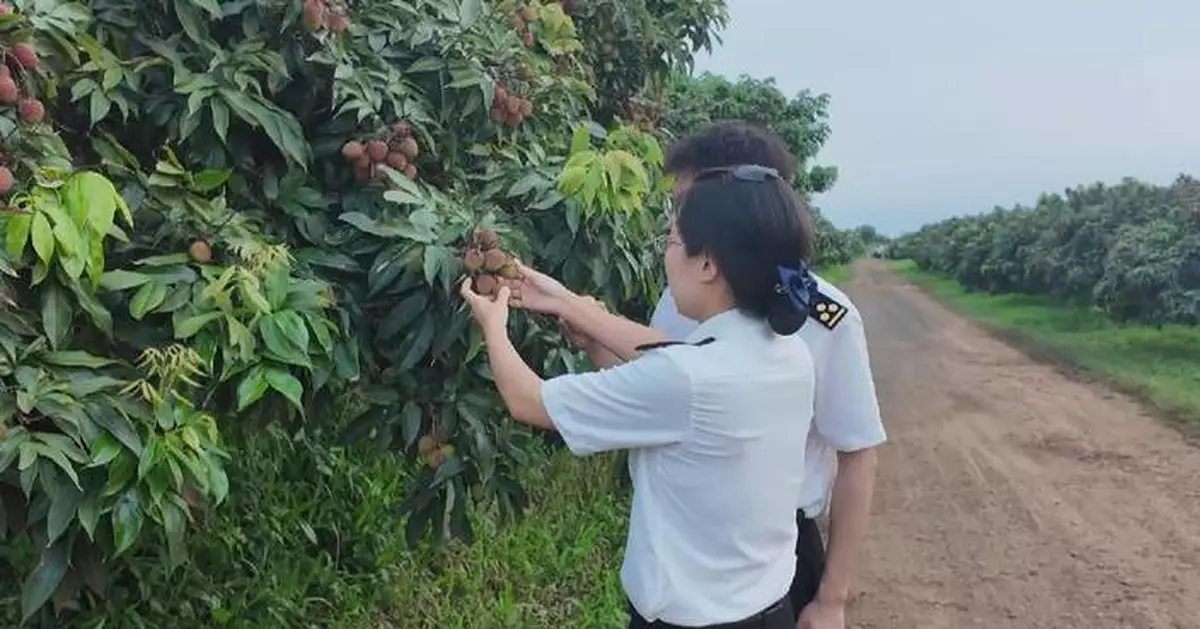
At a lychee orchard in Sanmenpo Town of Haikou, workers are shuttling between fruit trees, carefully selecting ripe lychees. Nearly 90 percent of the fruit from this more than 13-hectares orchard is destined for export. To ensure the lychees are picked at peak quality, workers have been busy for nearly 10 hours a day since late April.
The orchard owner said that as a new sorting site near the orchard began operation this year, lychees now arrive at the site within one hour for subsequent processing, saving 1.5 hours compared to before. Competent authorities can also sample lychees for testing at the sorting site.
"Testing results will come out within 30 minutes, and we ill upload the data to the provincial system. Once the information is received at the Xinhai port, [a refrigerated] truck will head to the dock. After taking a electronic photo, the fruit exports can leave the island quickly," said Cai Fudai, a testing officer at the Sanmenpo Town Agricultural Service Center in Haikou
Zheng Xuezhi, who began exporting lychees two years ago, said that he is planning to expand his investment to tap into even broader markets, leveraging the accelerating development of the Hainan Free Trade Port (FTP) and increased sea and air routes from the island.
"Our orchard covers 400 mu (26.68 hectares), with 10 percent of our produce sold overseas, mainly to Italy and Canada. We will invest in a new packaging facility, so that we can expand into the UK, the U.S. and the Australian markets," said Zheng, owner of Xiaozheng Farmer in Jiuzhou Town, Haikou.
To further improve export efficiency, the Haikou Customs Administration, taking advantage of Hainan's international trade service single window, has digitized the entire process for inspection and quarantine certificates for lychee exports and other specialty agricultural products. Online applications, online reviews, and electronic certificate issuance are now handled entirely through a closed loop online system, enabling "cloud issuance" of the relevant export documentations.
The Customs has also guided farmers in establishing fully traceable and searchable records covering planting, production, harvesting, storage and transport, ensuring that lychee exports meet quality and compliance standards from the source.
"We have adopted a model that combines document review with on-site inspections. Remote inspections can also be performed for on-site examination tasks, significantly reducing processing time. We have fully promoted a paperless certification model, cutting overall inspection and certification time by more than 70 percent," said Liu Tingting, deputy director of the the Yecheng Customs Inspection Office under the Haikou Customs Administration.
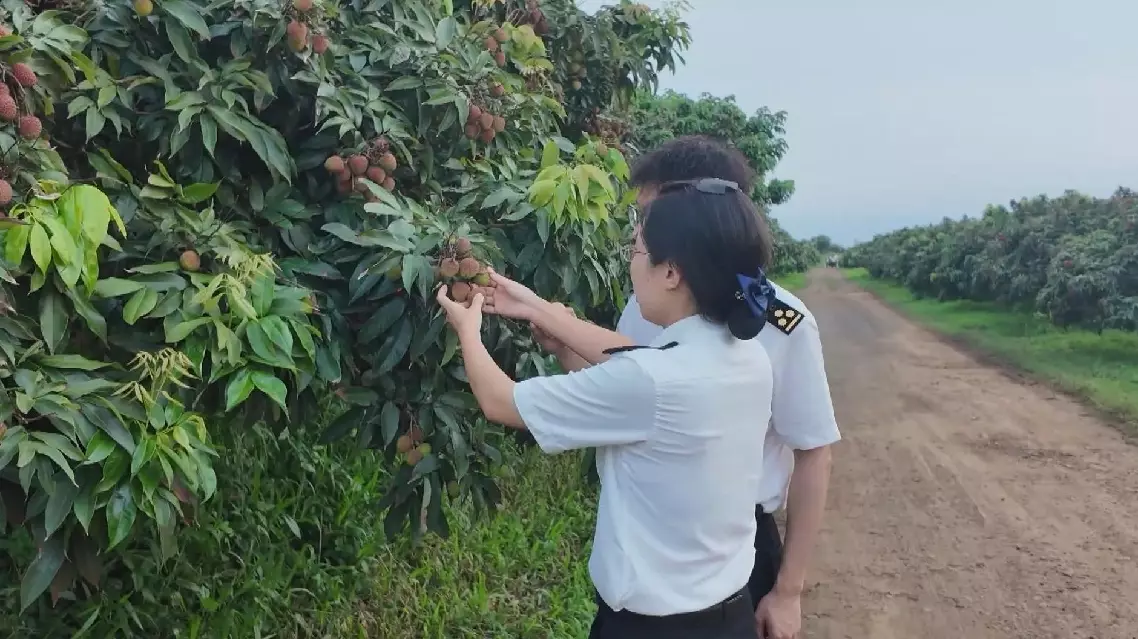
Lychee exports from south China's Hainan surge as streamlined customs procedures cut delivery time