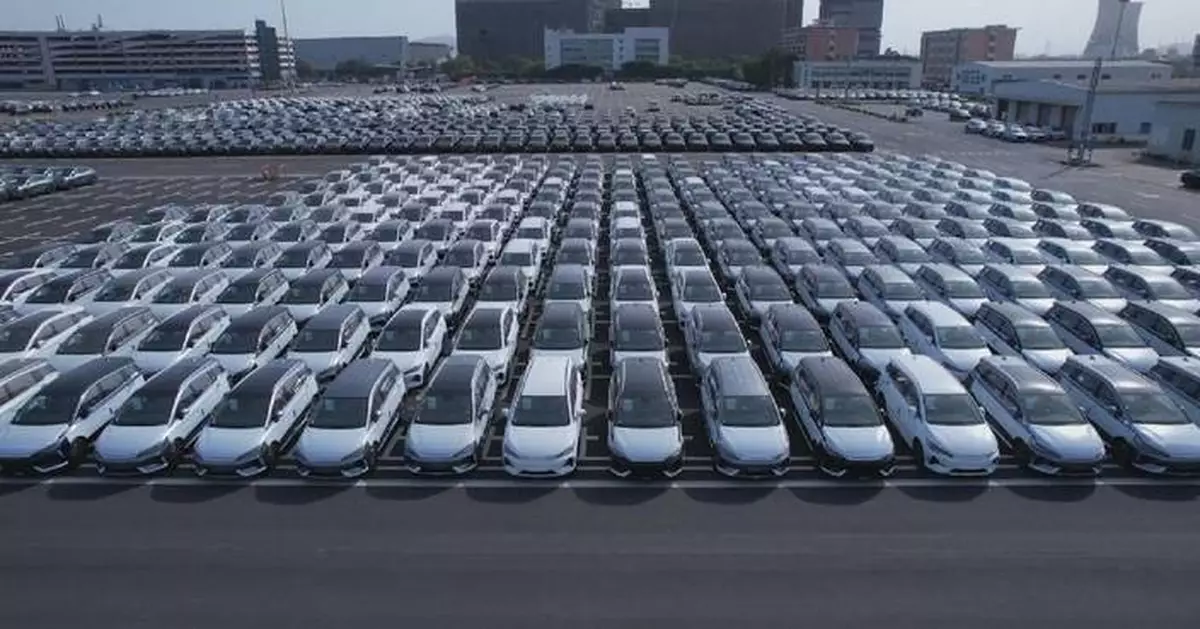
China will work with other economies to build a sustainable and equitable automotive ecosystem within the framework of the Asia-Pacific Economic Cooperation (APEC), a senior official from the Ministry of Industry and Information Technology (MIIT) said on Tuesday.
Addressing the 43rd APEC Automotive Dialogue in Shanghai, Wang Weiming, director of the Equipment Industry Department I under the MIIT, emphasized that China remains committed to contributing its expertise and innovation to the global automotive industry's ongoing transformation.
He highlighted China's recent advancements in key automotive technologies, noting that semi-solid-state batteries have begun deployment on vehicles, while ultra-fast charging systems capable of restoring 80 percent of battery capacity within 15 minutes have entered mass production, he said.
To date, China has opened more than 57,000 kilometers of public roads for intelligent connected vehicle (ICV) testing, with pilot programs for autonomous driving and electrification expanding across multiple cities, according to the official.
On the regulatory front, China has issued 237 sets of national and industry standards for ICVs, with an additional 103 sets of standards currently under development. China has also taken a leading role in shaping global norms, contributing to over 60 international regulations covering electric vehicle safety, autonomous driving systems and related fields, according to Wang.
He noted that the new wave of technological revolution and industrial transformation, particularly with breakthroughs in artificial intelligence and other frontier technologies, has opened new space for the transformation and upgrading of the global automotive sector.
Looking ahead, Wang said, China will continue to deepen international cooperation, uphold open development, and foster a market-oriented, law-based and international business environment.
"We support Chinese and foreign enterprises in deepening practical cooperation in the fields of technology, standards, investment and trade. Meanwhile, we are working to strengthen coordination and mutual recognition in the fields of standards and regulations with other economies. Leveraging platforms such as APEC, we aim to promote technological exchanges, human resources development cooperation, and the global sharing of innovation outcomes," Wang said.
The APEC Automotive Dialogue is APEC's primary public-private forum on automotive policy and emerging vehicle technologies. It convenes government officials, industry leaders and academic experts from across the Asia-Pacific region to exchange views and develop practical, forward-looking policy approaches.
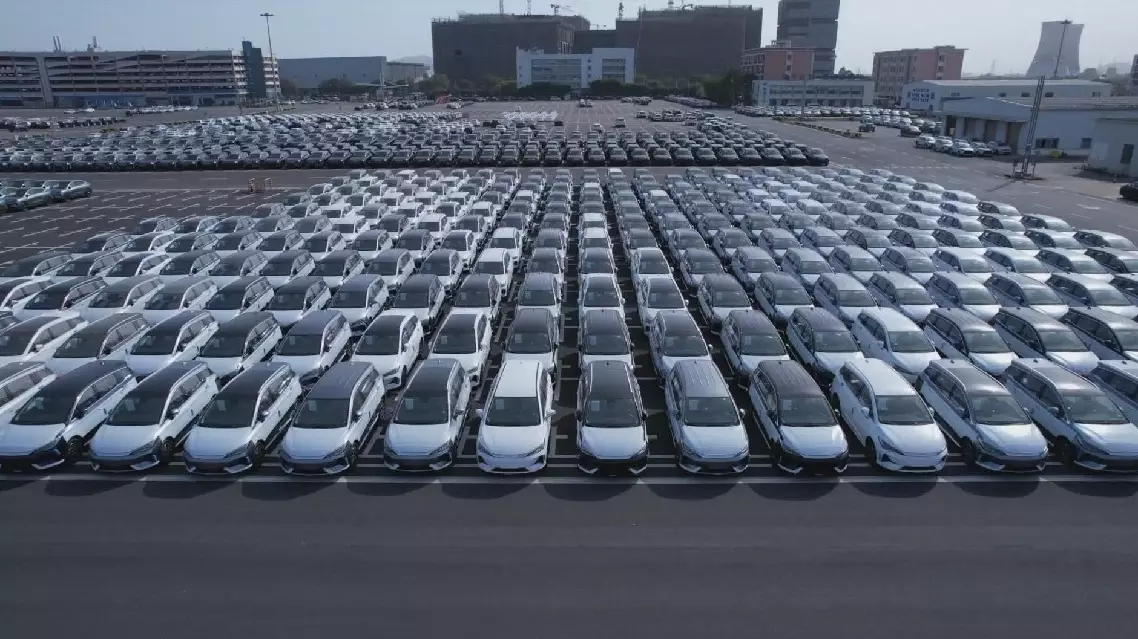
China to work with other economies to build sustainable, equitable automotive ecosystem: official
China stands ready to work with Uzbekistan to usher in a new "golden decade" for bilateral relations, as the two sides celebrate the 10th anniversary of the China-Uzbekistan comprehensive strategic partnership, Chinese President Xi Jinping said on Monday during a meeting with Uzbek President Shavkat Mirziyoyev on the sidelines of the Shanghai Cooperation Organization (SCO) Summit 2026 in Bishkek, Kyrgyzstan.
Xi said that under the guidance of the two heads of state, China and Uzbekistan have elevated and upgraded their bilateral relations, reaped fruitful results in cooperation across various fields, and achieved remarkable success in building a China-Uzbekistan community with a shared future.
China is willing to work with Uzbekistan to consolidate strategic mutual trust, deepen mutually beneficial cooperation, and jointly usher in a new "golden decade" for bilateral relations, he said.
No matter how the international landscape may evolve, China's commitment to deepening China-Uzbekistan friendship remains unwavering, Xi said, adding that China will, as always, support Uzbekistan in pursuing a development path suited to its national conditions.
He called on the two countries to work together to advance bilateral cooperation.
Both sides should promote the high-quality construction of the China-Kyrgyzstan-Uzbekistan railway, expand cooperation in areas such as artificial intelligence and desertification control, and uphold mutual benefit, Xi said.
He stressed the need to speed up the establishment of cultural centers in each other's country, expand cooperation in education and poverty alleviation, and foster people-to-people bonds.
It's important to make full use of the law enforcement and security cooperation mechanism between the two countries, and join hands to fight the three forces of terrorism, separatism and extremism, Xi said.
As the SCO's founding members, China and Uzbekistan should work together to implement the outcomes of the Tianjin Summit, and advance regional development and prosperity, he said.
Mirziyoyev said that Uzbekistan remains firmly committed to developing relations with China and will not change this course amid shifts in the international landscape.
Uzbekistan is willing to work with China to deepen political mutual trust, expand trade and investment, strengthen cooperation in agriculture, transportation, energy, minerals, and science and technology, promote people-to-people exchanges, and fight the three forces of terrorism, separatism and extremism, advancing the further development of bilateral relations, he said.
The Uzbek side firmly upholds the one-China principle, highly values the four global initiatives proposed by President Xi, and stands ready to work with China to advance the SCO development and uphold international fairness and justice, Mirziyoyev said.
Xi arrived in the Kyrgyz capital on Sunday for the SCO Summit 2026 and a state visit to Kyrgyzstan.
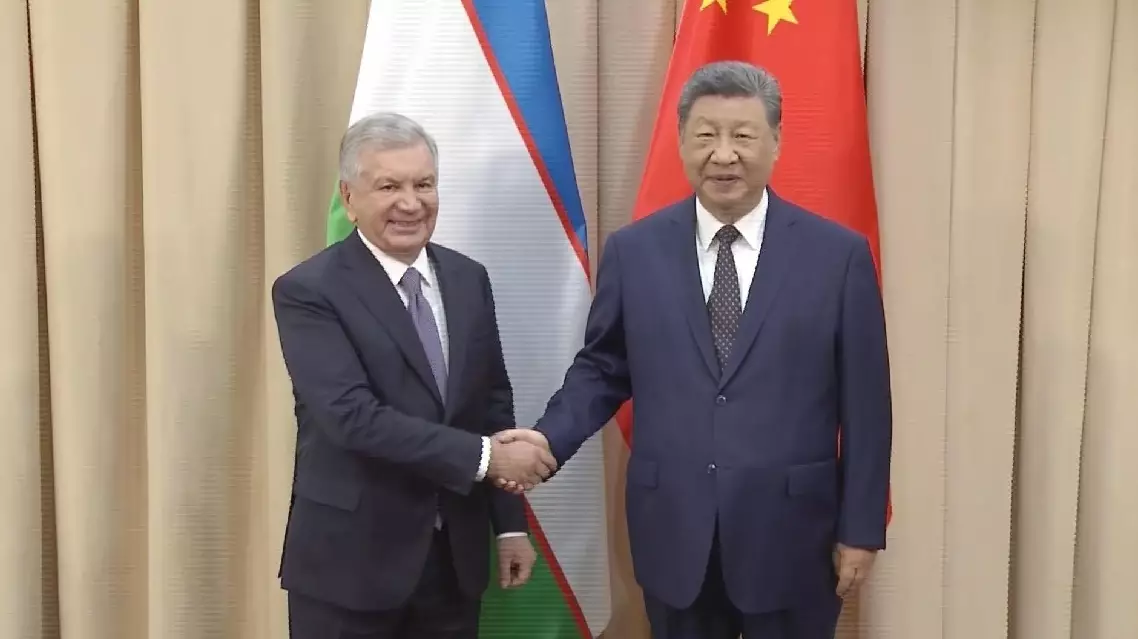
China ready to work with Uzbekistan to usher in new "golden decade" for bilateral relations