China remains a major source of revenue and a key supply-chain base for European companies, according to a new survey by the European Union Chamber of Commerce in China.
Nearly one in four chamber members said revenue generated in China accounted for more than a quarter of their global revenue, the chamber's Business Confidence Survey 2026 showed.
The survey also highlighted China's continuing role in companies' sourcing strategies. Ninety-four percent of respondents said the market was important to their procurement operations, citing its advantages in delivery speed, reliability and quality.
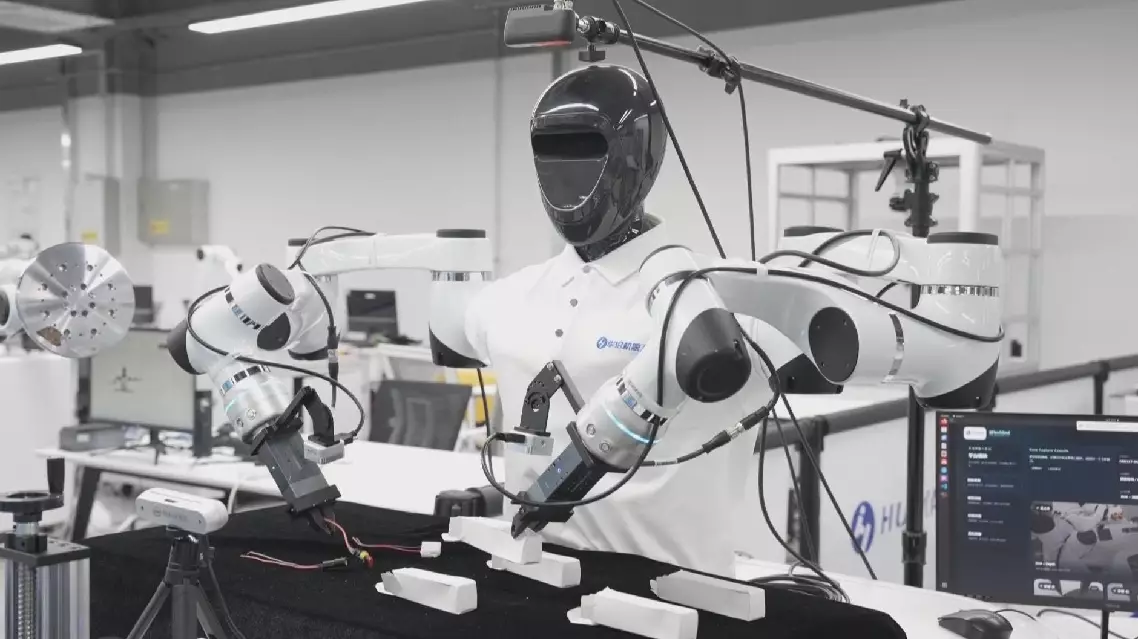
China's manufacturing efficiency remains a major factor. Seventy-five percent of surveyed companies said their production efficiency in China was higher than in other parts of the world, supported by what the chamber described as an efficient and highly cost-competitive supply-chain system.
The findings help explain why European executives have continued to visit China this year, looking beyond established business centers to assess opportunities in regional industrial hubs.
Adam Dunnett, secretary general of the European Union Chamber of Commerce in China, has visited six Chinese cities in the first half of this year. He recently led a delegation of about 120 EU companies to Nanning, capital of the Guangxi Zhuang Autonomous Region in south China, where they examined opportunities in artificial intelligence, energy storage and manufacturing.
"Guangxi, with the new canal that they've built, has now become the gateway to ASEAN (the Association of Southeast Asian Nations) countries. I was in Chongqing earlier this year as well -- [It has] very strong motorcycle industry, computer industry, semiconductor industry. So, in China, there's pockets of, you know, industrial strength in different cities and provinces. And, yeah, you have to go out there and explore it to understand what's happening," Dunnett said.
Mathias Boyer, chair of the Danish Chamber of Commerce in China, said companies needed to increase investment in China-based research and development to keep pace with local innovation.
"My reading of the numbers, and also when I talk to companies, is that China is still an extremely important basis for supply. You need to invest more in China -- in China R and D -- to be on par with Chinese innovation. The Chinese authorities' [decision] to implement this policy of visa-free travel to China [is important], because I think it really is easy for leadership from headquarters to come to China to see innovation," Boyer said.

China remains central to European firms' supply chains, survey finds