NEW YORK (AP) — Open Society Foundations, the family philanthropy founded by hedge fund billionaire George Soros, is putting $30 million toward groups fighting antisemitism and anti-Muslim hate over the next three years.
The major human rights funder pledged Wednesday to strengthen interfaith partnerships and protect those facing heightened threats in response to the rising levels of hate against both Jewish and Muslim communities, coinciding with the Israel-Hamas war and the current fragile ceasefire.
Last year saw the highest level of deadly violence against Jews worldwide in over three decades, according to an annual study released last month by Tel Aviv University, including the December shooting at a Hanukkah celebration in Australia. Meanwhile, anti-Muslim rhetoric has intensified against the backdrop of the Iran war, with one congressional Republican saying Muslims “ don't belong in American society.”
“The deep injustices occurring in the Middle East are fueling indiscriminate prejudice, dehumanization, and violence directed against both Muslims and Jews," Open Society Foundations President Binaifer Nowrojee said in a statement. "Entire communities cannot be targeted simply because of their religion. Bigotry and intolerance in any form must be called out and confronted.”
The announcement marks the foundations' most visible campaign since last fall's reports that the U.S. Department of Justice was considering possible charges against Open Society Foundations. President Donald Trump specifically named Soros as he ordered the FBI to crack down on what he called “left-wing terrorism” — an accusation that OSF has denied in statements emphasizing their mission to strengthen democracy.
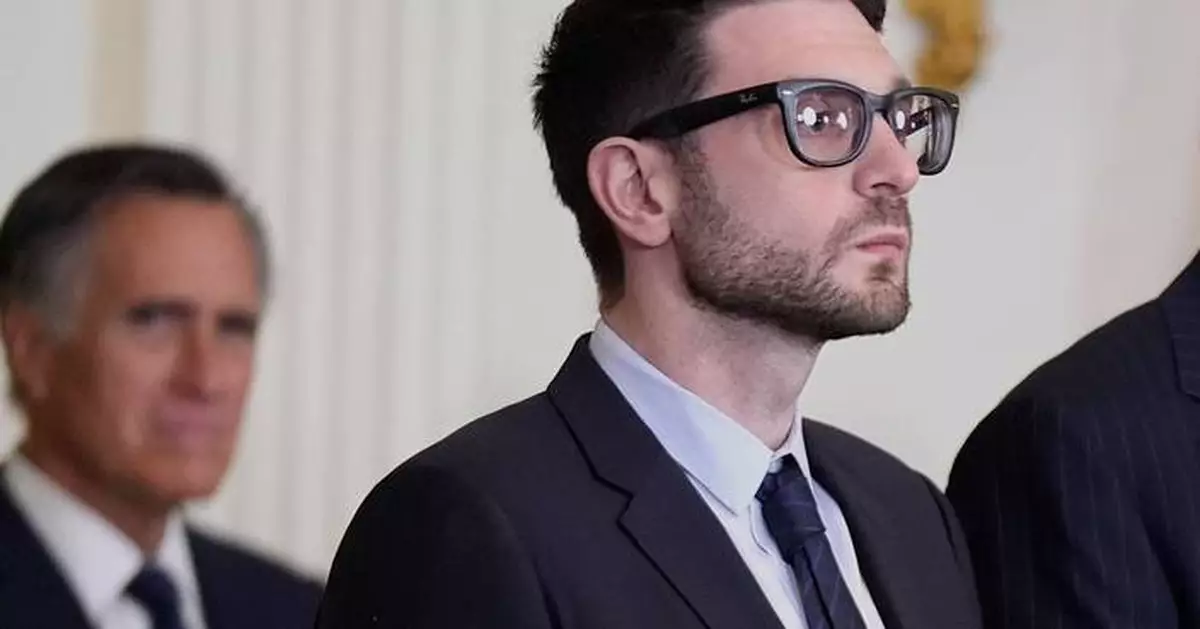
Alex Soros, who took over leadership of his father’s foundations in late 2022, noted that “discrimination and hate” aren’t abstract concepts for him as the son of a Holocaust survivor and husband to a Muslim American. The foundation added that George Soros, who holds significant influence as a liberal megadonor with vast financial investments and philanthropic ties, is frequently targeted by conservative conspiracy theories that twist those powerful connections into antisemitic tropes about behind-the-scenes puppet masters.
“At a moment like this we need to stand together and act,” Alex Soros said in a pretaped video posted on social media. “This investment is about keeping people safe and pushing back against hate.”
The commitment is aimed broadly at expanding education on forms of discrimination, supporting cross-community leaders who build trust and safeguarding free speech rights to lawful expression. The foundations have already selected some grantees and are inviting other nonprofits to apply for funding. Recipients include the Jewish Social Justice Roundtable, the Jewish Council for Public Affairs and the Nexus Project. Shoulder to Shoulder, a multifaith alliance that prepares religious leaders to address anti-Muslim discrimination, is among those leading the work on Islamophobia.
Amy Spitalnick, the CEO of the Jewish Council for Public Affairs, welcomed the strategy to tackle both matters together. The grant will allow JCPA to build upon its solidarity work with Muslim and Arab American communities, Spitalnick said, which have deepened since the start of the Israel-Hamas war. She pointed to a fellowship and a Capitol Hill discussion on Jewish-Muslim solidarity that were both launched with the Muslim Public Affairs Council.
She emphasized that hate is interconnected. The normalization of Islamophobia, racism and broader anti-democratic extremism creates the conditions for antisemitism to flourish, she said.
“We need funders and others to recognize that treating any of these issues in silos doesn’t get at the root cause, doesn’t get at the broader resiliency we need right now," Spitalnick said. "The fact that Jewish safety requires Muslim safety, that Muslim safety requires Jewish safety.”
The Soros' announcement did not say how the foundations will define antisemitism — a point of contention on college campuses and in state legislatures where debates have raged over whether criticism of Israel amounts to hatred of Jewish people. The shortlist of Open Society grantees suggests a more nuanced definition than the Anti-Defamation League, which releases an annual audit of antisemitic incidents in the United States. The ADL holds that vilifying Zionism, or the movement to establish and maintain a Jewish state in Israel, is a form of antisemitism.
In contrast, the Nexus Project promotes definitions of antisemitism that do not include opposition to the Israeli state's policies. Similarly, in opposition to a National Education Association resolution prohibiting the use of the ADL's educational resources, Spitalnick emphasized that “one does not need to align with the ADL on every issue."
Andrés Spokoiny, the president and CEO of the Jewish Funders Network, estimated that the philanthropic sector has dedicated hundreds of thousands of dollars to countering antisemitism — regardless of its definition. Other high-profile efforts include the $25 million “Stand Up to Jewish Hate” ad campaign launched by New England Patriots owner Robert Kraft in March 2023 through his Foundation to Combat Antisemitism.
But the persistence of antisemitism has left some members of Spokoiny's group questioning their approaches.
“There's a lot of perplexity around what actually works,” he said. “So many funders are very frustrated.”
Associated Press coverage of philanthropy and nonprofits receives support through the AP’s collaboration with The Conversation US, with funding from Lilly Endowment Inc. The AP is solely responsible for this content. For all of AP’s philanthropy coverage, visit https://apnews.com/hub/philanthropy.
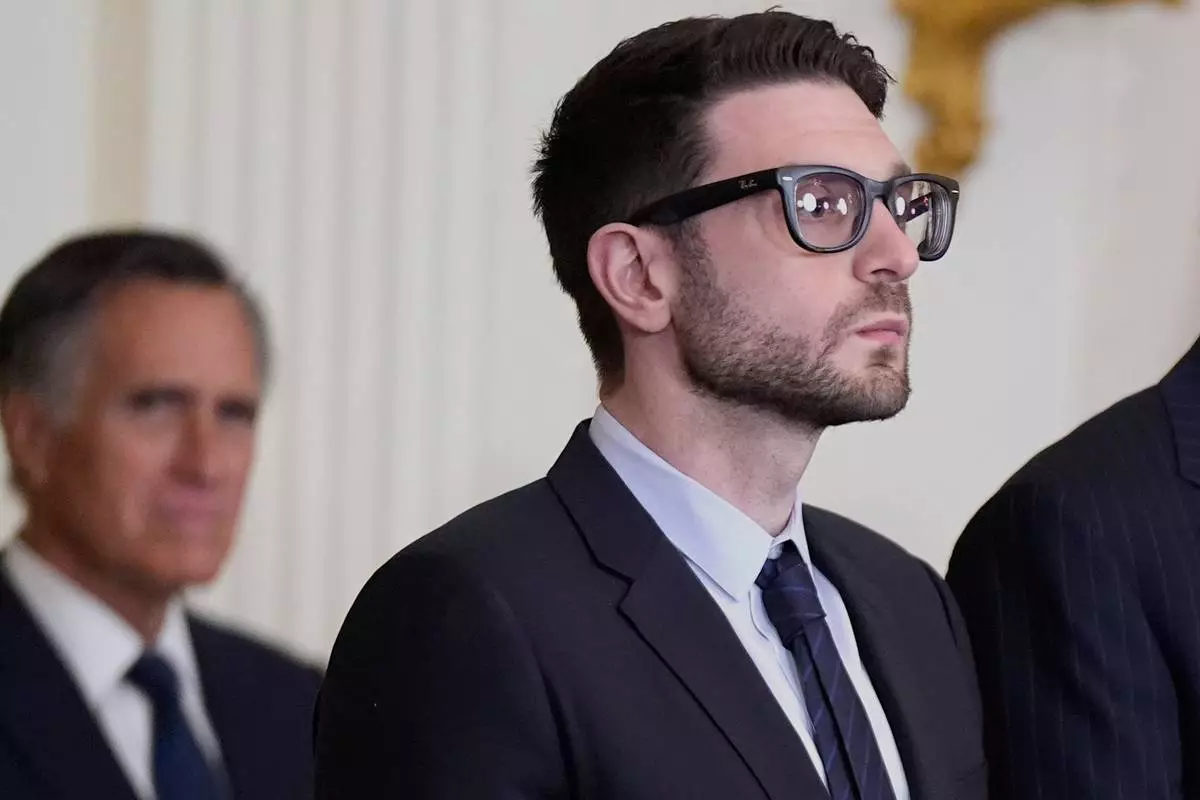
FILE - Alex Soros, on behalf of his father George Soros, stands in the East Room of the White House, Jan. 4, 2025, in Washington. (AP Photo/Manuel Balce Ceneta, File)
KYIV, Ukraine (AP) — Russia fired at least 800 drones in a massive daytime attack Wednesday on about 20 regions of Ukraine, killing at least six people and wounding dozens, including children, President Volodymyr Zelenskyy said.
The prolonged barrage began in midmorning and lasted for hours, hitting the capital of Kyiv, the western city of Lviv near Poland, and the port of Odesa on the Black Sea, among other population centers, he said on the Telegram messaging app.
“Our soldiers are defending Ukraine, but Russia’s obvious goal is to overload air defenses,” Zelenskyy said, as the bombardment stretched into the late afternoon. He cautioned that a cruise and ballistic missile attack could follow the drone barrage.
It was “one of the longest, massive Russian attacks against Ukraine,” he said on social media.
Moscow’s attacks on its neighbor are unrelenting, even as Ukraine is emboldened by its recent military accomplishments and as U.S. President Donald Trump and Russian President Vladimir Putin said — without providing evidence — that the 4-year-old war could be approaching an end.
On Tuesday, Zelenskyy said, 14 Ukrainian regions came under attack, followed by overnight strikes on Ukraine’s residential, energy and railway infrastructure.
“It is important to support Ukraine and not remain silent about Russia’s war. Every time the war disappears from the top of the news, it encourages Russia to become even more savage,” Zelenskyy said, apparently referring to the world's attention being focused on the Iran war.
Trump said Tuesday said he believes Moscow and Kyiv will soon reach a deal to end fighting.
“The end of the war in Ukraine I really think is getting very close,” Trump told reporters as he left the White House for a summit in Beijing. “Believe it or not, it’s getting closer.”
Putin said in a speech last weekend that his invasion of Ukraine is possibly “coming to an end.”
Neither leader elaborated on what persuaded them about the possibility of peace in Europe’s longest conflict since World War II. U.S.-led diplomatic efforts over the past year to end the war have fizzled after making no progress on key issues, such as whether Russia gets to keep Ukrainian land it has seized and what can be done to deter Moscow from invading again.
Kremlin spokesman Dmitry Peskov indicated Wednesday that Moscow’s fundamental terms are unchanged, with Putin insisting that Ukraine pull its troops from the four regions — Donetsk, Luhansk, Kherson and Zaporizhzhia — that Russia illegally annexed in September 2022 but hasn't fully captured.
“At that point, a ceasefire will be established, and the parties can calmly engage in negotiations, which, incidentally, will inevitably be very complex and involve a lot of important details,” Peskov said.
Zelenskyy vowed to keep pressure on Moscow to make concessions in talks.
“We’re not giving up on diplomatic efforts, and we hope that pressure on Russia, together with negotiations in different formats, will help bring peace,” he said in a speech Wednesday in Bucharest, Romania, to representatives of countries on NATO's eastern flank.
“Sanctions are working, our long-range (drone and missile) capabilities are working, and every form of pressure is working,” he said.
Meanwhile, European governments are assessing the merits of opening talks with Putin. Europe has for years tried to isolate the Russian leader and punished his country with international sanctions.
The correlation of forces in the war has shifted in recent months. Ukraine has gone from pleading for international help with its defense to offering foreign countries its expertise on how to counter attacks, thanks to its domestically developed drone technology.
Ukraine’s long-range drone and missile attacks have disrupted energy facilities and manufacturing deep inside Russia, with three regions reporting strikes Wednesday. The Russian Defense Ministry said that its forces intercepted and destroyed 286 Ukrainian drones over Russian regions, the illegally annexed Crimean Peninsula, the Azov Sea and the Black Sea.
On the 1,250-kilometer (780-mile) front line, the advance of Russia’s bigger and better-equipped army has been slowing every month since October, according to the Institute for the Study of War.
Russia’s spring offensive has floundered, with Russian forces recording a net loss of territory last month for the first time since 2024, the Washington-based think tank said.
“Not only are Ukrainian defensive lines holding, but Ukrainian forces have managed to contest the tactical initiative in several areas of the front line even as Russia continues to lose disproportionate amounts of manpower to achieve minimal gains,” the ISW said Tuesday.
Hatton reported from Lisbon, Portugal.
Follow the AP’s coverage of the war at https://apnews.com/hub/russia-ukraine
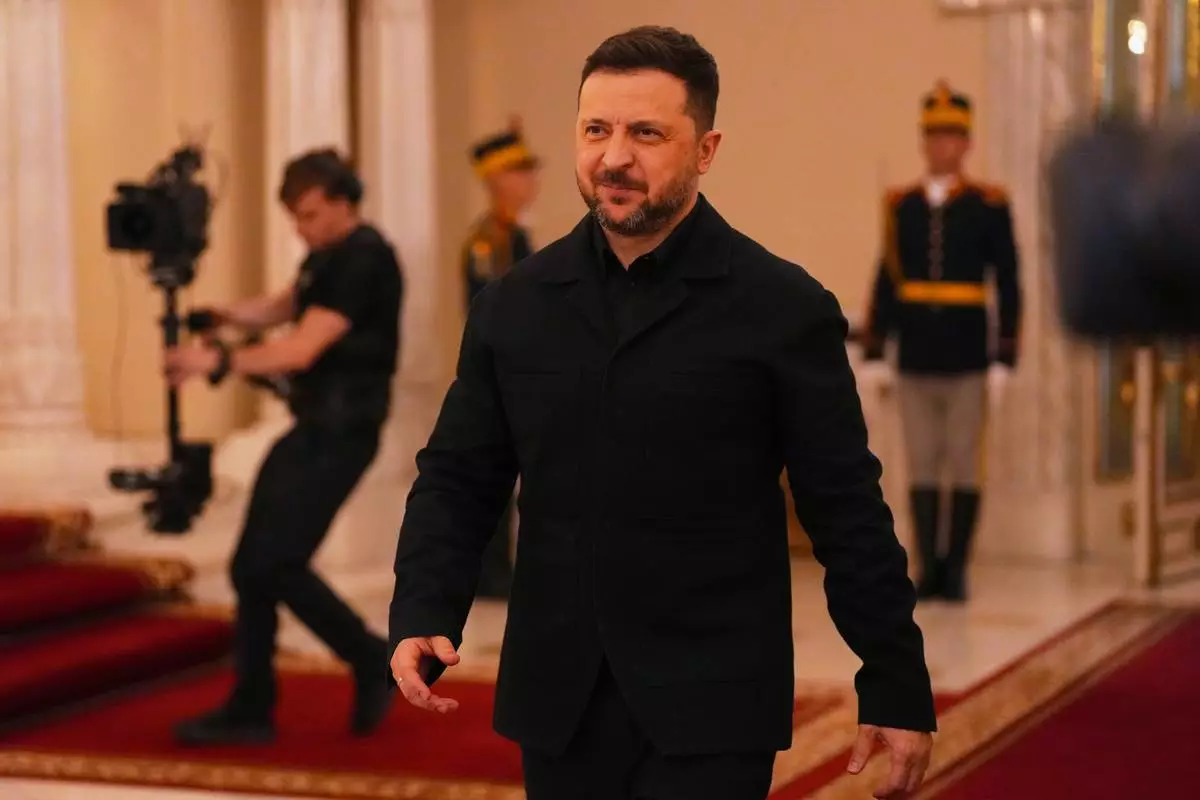
Ukraine's President Volodymyr Zelenskyy arrives at the Bucharest B9 summit held at the Cotroceni Presidential Palace in Bucharest, Romania, Wednesday, May 13, 2026. (AP Photo/Vadim Ghirda)
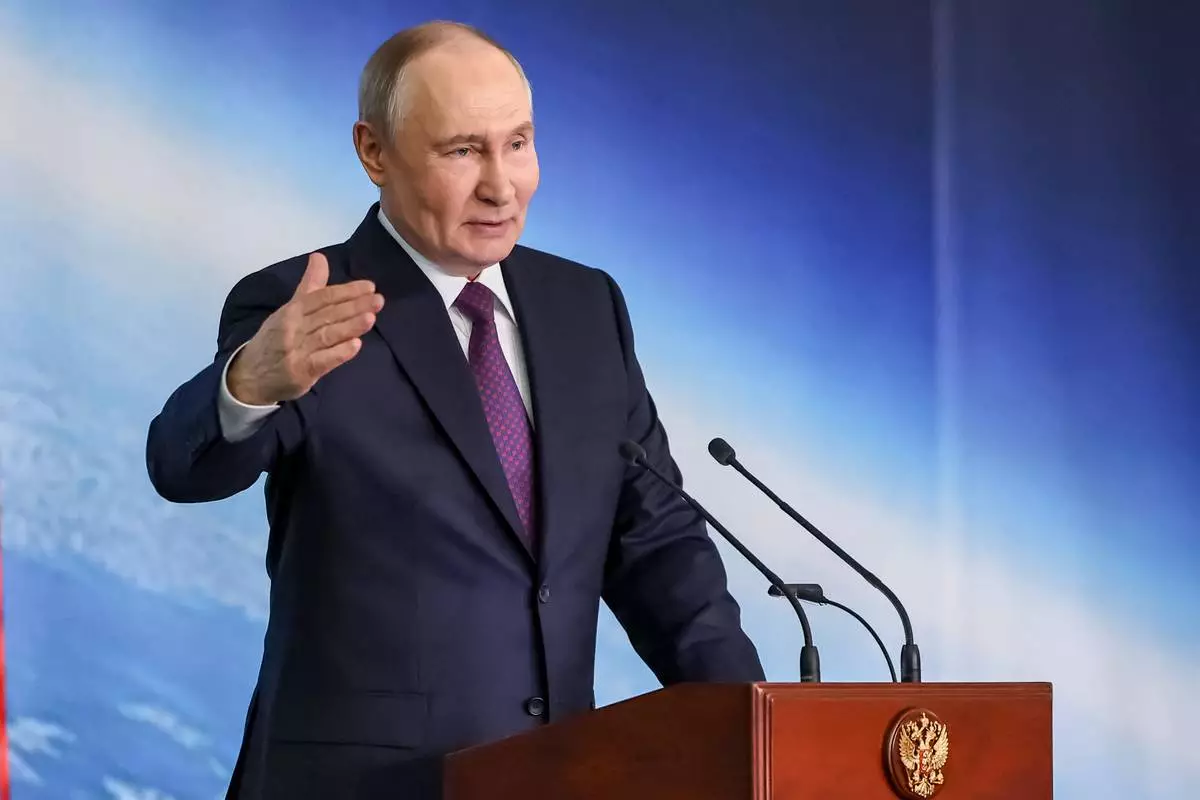
Russian President Vladimir Putin speaks at the awarding ceremony for the Order "For Valiant Labor" to employees of the Moscow Institute of Thermal Technology, part of the Roscosmos state space corporation, in Moscow, Wednesday, May 13, 2026. (Vyacheslav Prokofyev/Sputnik, Kremlin Pool Photo via AP)
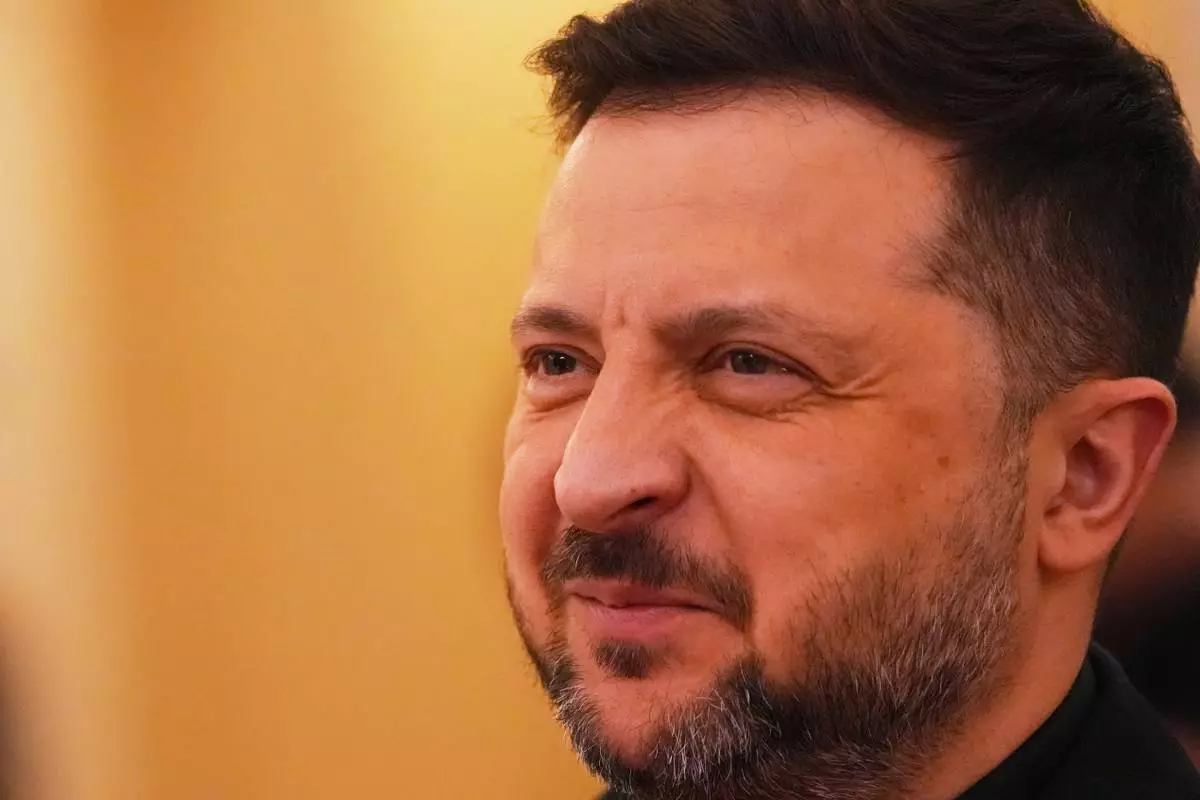
Ukraine's President Volodymyr Zelenskyy arrives at the Bucharest B9 summit held at the Cotroceni Presidential Palace in Bucharest, Romania, Wednesday, May 13, 2026. (AP Photo/Vadim Ghirda)
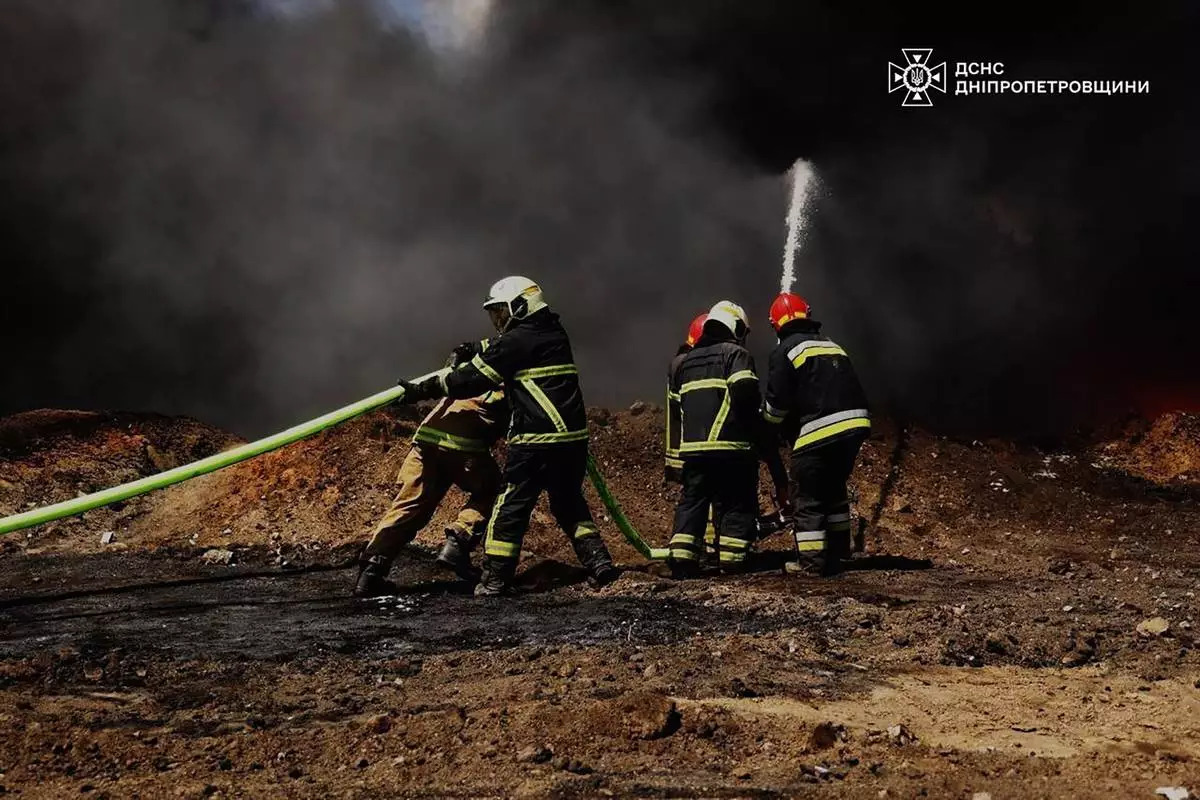
In this photo provided by the Ukrainian Emergency Service, emergency services personnel work to extinguish a fire following a Russian drone attack on a gas pipeline in Dnipropetrovsk region, Ukraine, Wednesday, May 13, 2026. (Ukrainian Emergency Service via AP)
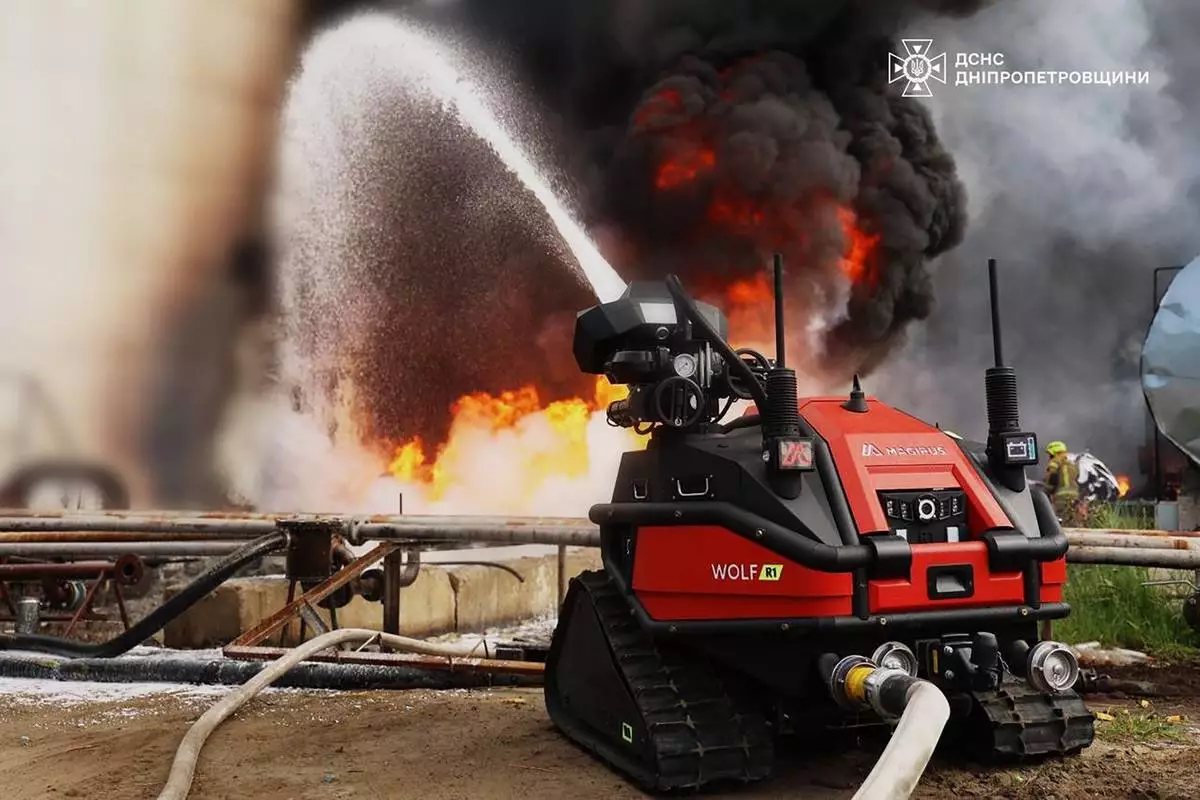
In this photo provided by the Ukrainian Emergency Service, emergency services personnel work to extinguish a fire following a Russian drone attack on a gas pipeline in Dnipropetrovsk region, Ukraine, Wednesday, May 13, 2026. (Ukrainian Emergency Service via AP)