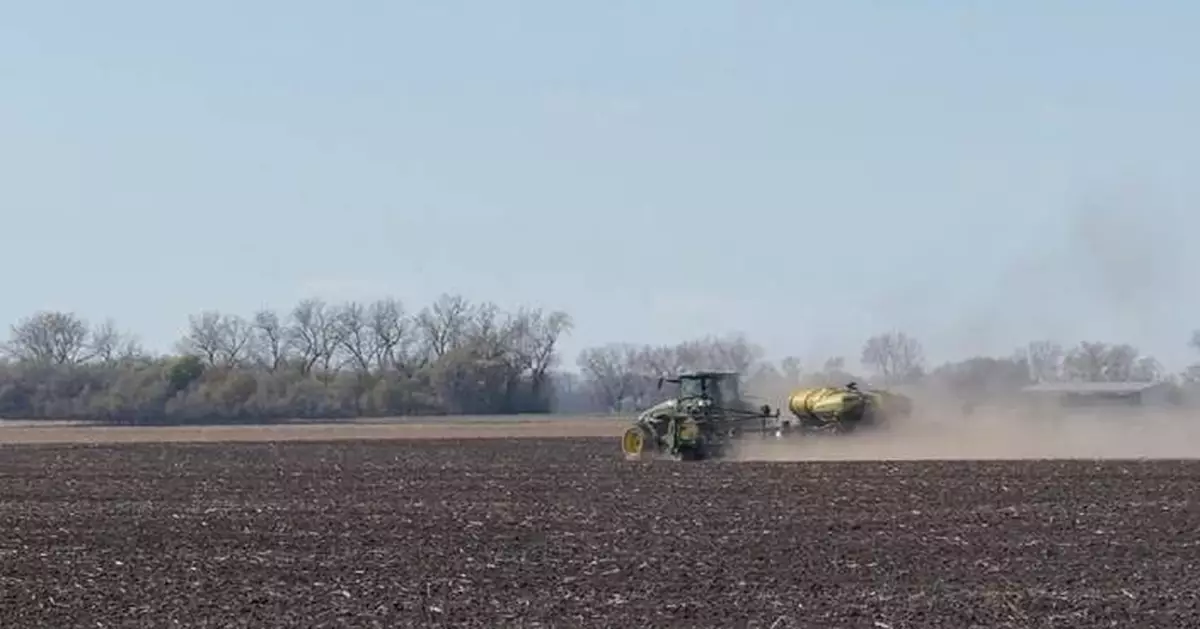
U.S. farmers are hoping to see stabilized China-U.S. agricultural cooperation as President Donald Trump arrives in Beijing for high-level talks.
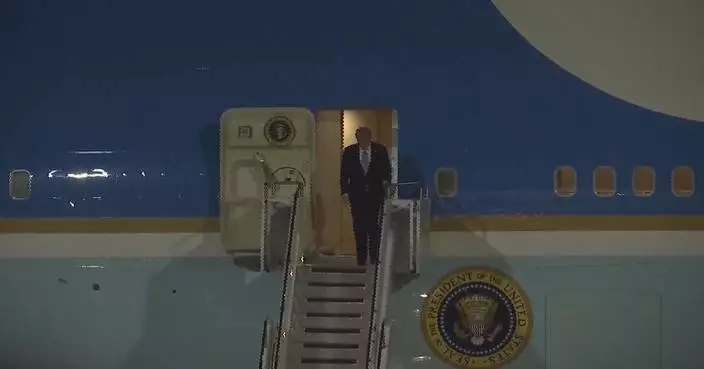
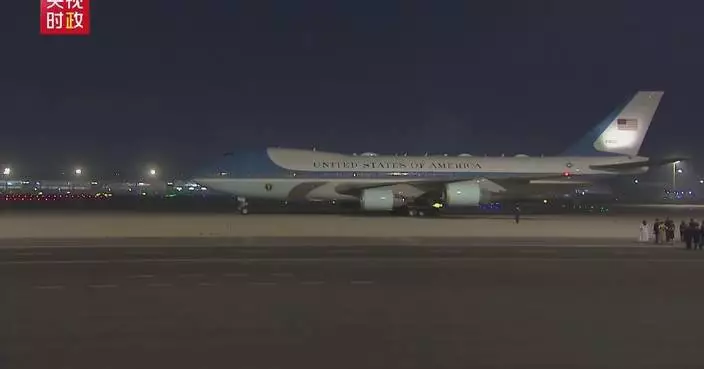
Trump landed in the Chinese capital on Wednesday evening to begin a three-day state visit to China at the invitation of Chinese President Xi Jinping.
The visit marks the first trip to China by a U.S. president in nine years, and the first in-person meeting between the two leaders since they met in Busan, the Republic of Korea (ROK), last October.
During the visit, the two heads of state will have an in-depth exchange of views on major issues concerning China-U.S. relations, as well as world peace and development.
In a recent interview with China Central Television (CCTV), Jim Sutter, CEO of the U.S. Soybean Export Council (USSEC), said that maintaining stable economic and trade ties between the two countries is essential. Sutter described the China-U.S. soybean trade as naturally complementary.
"I sometimes use the terminology that's kind of hand and glove. China needs to import, the U.S. needs to sell. We grow more than we can consume domestically. So it's a great relationship because we can do that," he said.
Sutter said that the upcoming China-U.S. leaders' meeting is expected to bring stability to agricultural collaboration.
"I think our farmers really appreciate the fact that when the leadership of the two countries meet, we seem to get reports out and that continues to be reiterated. And so that gives our farmers that certainty that, what I was talking about earlier about how when they plant a crop, they want to know that they're going to have a market. I just sense a real sincere desire to see the relationship between China and the U.S. at a governmental level, and also at a business level to see that improving. I think there is this recognition that we are 'better together.' That's sort of a saying that we like to use," said the export council chief.
Meanwhile, amid broader supply-chain volatility, many U.S. soybean growers are under new pressure. In South Dakota, prices for items such as fertilizer and fuel have approached nearly double levels, influenced by factors including geopolitical tensions involving the Middle East crisis and continued cost increases.
Mike McCraine, a fourth-generation farmer in South Dakota, said his farm has been relatively stable due to earlier procurement of key inputs. However, he warned that farms without earlier reserves are facing significant difficulties.
"Next year, if things don't stabilize and get back to what we consider normal, it will be a struggle even for us," the farmer said.
US farmers anticipate stable, healthy agricultural cooperation with China