NICOSIA, Cyprus (AP) — The European Union's energy commissioner said Wednesday that while there is no immediate threat to jet fuel supplies, the possibility of a longer-term shortage cannot be ruled out.
Commissioner Dan Jørgensen told reporters that any shortage will depend on how the Iran war and the situation in the Strait of Hormuz will unfold, as well as how airlines will react after some companies — including the German owners of the airline Lufthansa — canceled a significant number of flights.
Fighting around the Strait of Hormuz, from which a fifth of the world’s oil typically passes, has disrupted supplies and caused fuel prices to spike around the world.
While Jørgensen said “we’re not there yet” in terms of a jet fuel shortage, he said the bloc’s executive arm will start talks with member states “on how best to address the situation,” without offering any specifics.
The Iran war has caused the price of jet fuel to more than double in some markets since late February and airlines are particularly vulnerable because fuel costs account for a huge chunk of their operating expenses.
Last month, International Energy Agency Chief Fatih Birol told The Associated Press in an exclusive interview that Europe has “maybe six weeks or so” of remaining jet fuel supplies.
He also warned of possible flight cancellations “soon” if oil supplies remain blocked by the Iran war.
The commissioner said the fact that the bloc has paid 35 billion euros ($41 billion) in additional costs for the same amount of fuel since the start of the Iran war underscores the need for a rapid transition away from fossil fuels.
“Really, this is not an energy crisis. This is a fossil fuel crisis,” Jørgensen said, adding that even though the EU has diversified its energy supply, it has become more energy efficient and has added more renewables since the 2022 Russian invasion of Ukraine.
Michael Damianos, the energy minister of Cyprus which currently holds the EU’s rotating presidency, said fossil fuels such as natural gas will remain in the bloc’s energy mix in the foreseeable future even as the goal of a 90% drop in greenhouse emissions by 2040 remains firm. He added that natural gas from deposits discovered off Cyprus’ southern coast could reach European markets by late next year, early 2028.
Jørgensen said the EU remains “very committed” to reducing greenhouse gas emissions quickly because “the climate crisis will not go away.”
Over the long term, the EU commissioner said the bloc is in talks with Gulf nations to see how the flow of energy from the region is restored after a negotiated peace with Iran is in place.
Last month, EU Council President Antonio Costa and EU Commission President Ursula von der Leyen said the bloc was ready to work with Persian Gulf countries for new projects conveying energy to global markets that wouldn’t be held hostage to war or geopolitical strife.
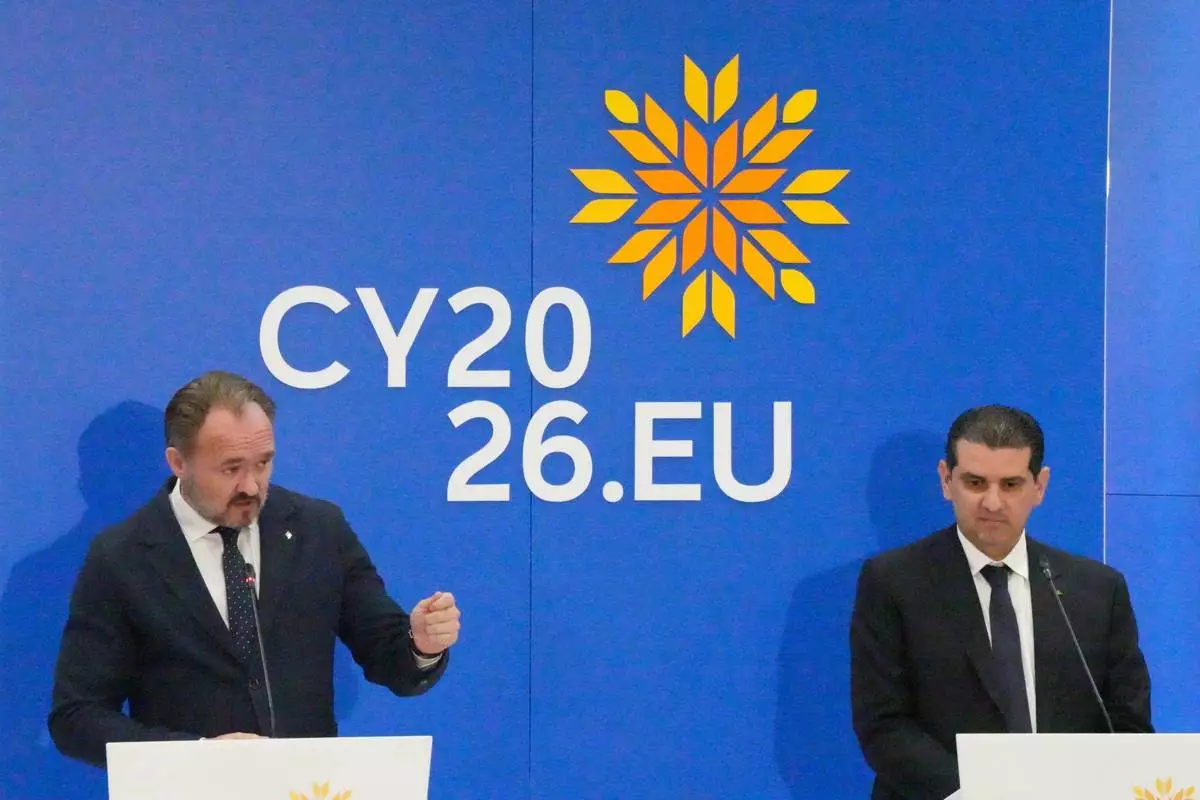
European Commissioner for Energy and Housing Dan Jorgensen, left, and Cyprus' Energy minister Michael Damianos speak during a press conference after the EU informal meeting of Energy Ministers in Capital Nicosia, Cyprus, Wednesday, May 13, 2026. (AP Photo/Petros Karadjias)
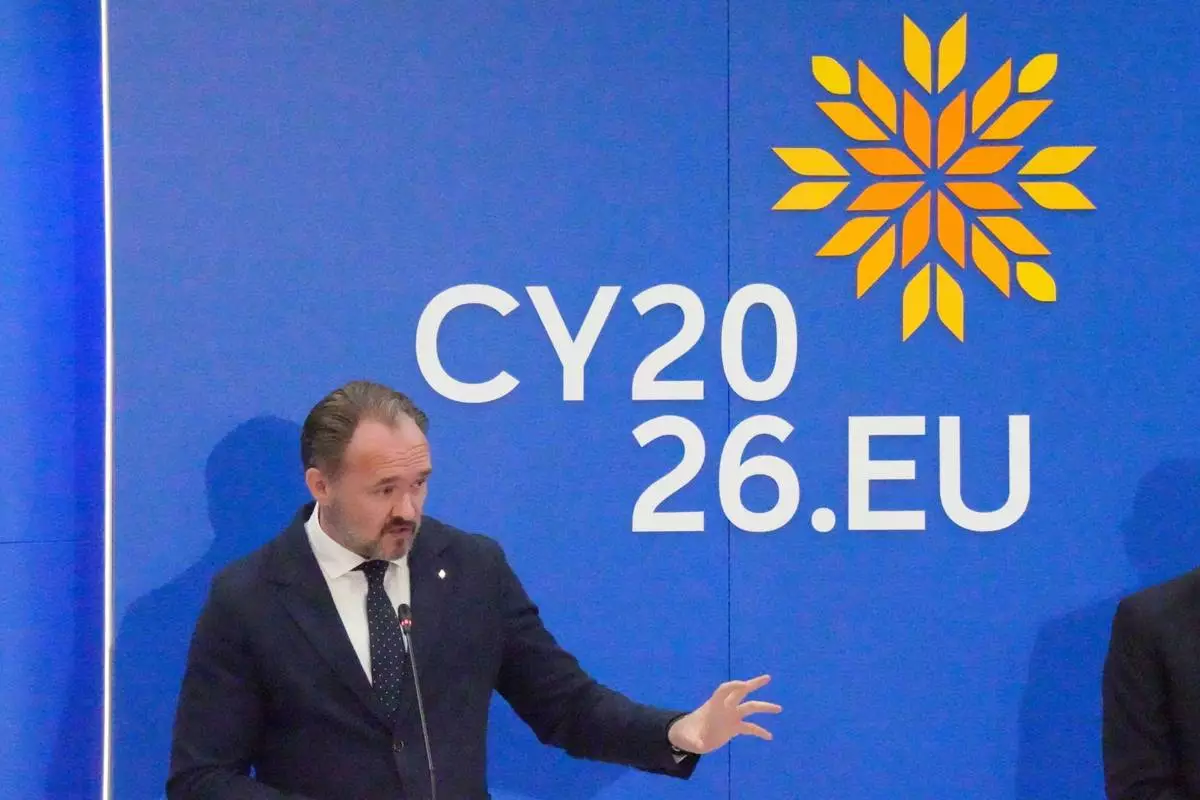
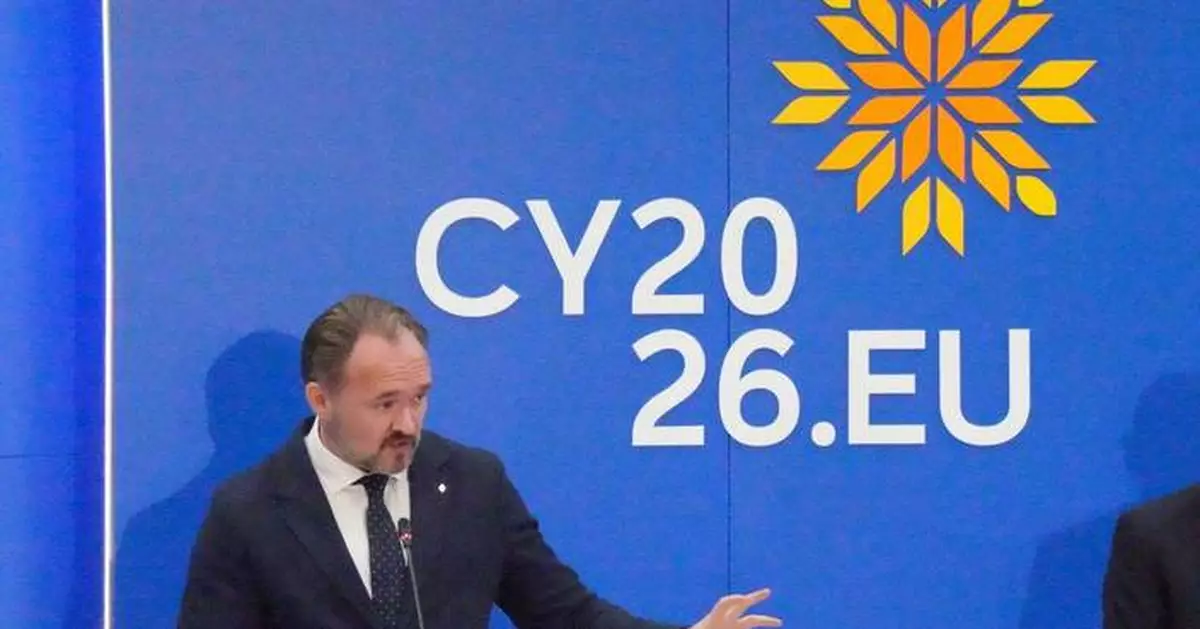
European Commissioner for Energy and Housing Dan Jorgensen speaks during a press conference after the EU informal meeting of Energy Ministers in Capital Nicosia, Cyprus, Wednesday, May 13, 2026. (AP Photo/Petros Karadjias)
KINSHASA, Congo (AP) — Africa’s top public health body on Friday confirmed a new Ebola outbreak in Congo’s remote Ituri province, with 246 suspected cases and 65 deaths recorded so far.
The deaths and suspected cases have been recorded mainly in the Mongwalu and Rwampara health zones, the Africa Centres for Disease Control and Prevention said in a statement.
The Ebola virus is highly contagious and can be contracted through bodily fluids such as vomit, blood or semen. The disease it causes is rare, but severe and often fatal.
“Four deaths have been reported among laboratory-confirmed cases. Suspected cases have also been reported in Bunia, pending confirmation,” the agency said, referring to the capital of Ituri province, near the border with Uganda.
It said preliminary laboratory results had detected the Ebola virus in 13 of 20 samples. The results suggest a non-Ebola Zaire strain of the virus with sequencing ongoing to further characterize the strain, the agency said. The Ebola Zaire strain has been prominent in Congo's past outbreaks.
The World Health Organization said last year that Congo has a stockpile of treatments and some 2,000 doses of the Ervebo Ebola vaccine, However, the vaccine is effective against the Ebola Zaire strain of the virus, it said.
The Africa CDC said results confirming the strain in the new outbreak are expected within the 24 hours.
The latest outbreak comes around five months after Congo’s last Ebola outbreak was declared over after 43 deaths.
Ituri is in a remote eastern part of Congo characterized by poor road networks, and is more than 1,000 kilometers (620 miles) from the nation’s capital of Kinshasa.
Africa CDC said it is concerned about the risk of further spread due to intense population movement, mining-related mobility in Mongwalu, insecurity in affected areas, gaps in contact listing and control challenges.
The proximity of affected areas to Uganda and South Sudan also raises concerns, it said.
The agency said it is convening an urgent high-level coordination meeting Friday with health authorities from Congo, Uganda and South Sudan, together with key partners including U.N. agencies and other countries.
“The meeting will focus on immediate response priorities, cross-border coordination, surveillance, laboratory support, infection prevention and control, risk communication, safe and dignified burials, and resource mobilization,” it said.
This is the 17th outbreak in Congo since the disease first emerged in the country in 1976. An Ebola outbreak from 2018 to 2020 in eastern Congo killed more than 1,000 people. The WHO said that outbreak was characterized by the Ebola Zaire strain.
An earlier outbreak that swept across West Africa from 2014 to 2016 also killed more than 11,000 people.
The new outbreak will create more worry for the Central African country, which has been battling various armed groups in the east, including the M23 rebel group, which launched a rapid assault in January last year and has since occupied key cities.
Ituri in particular is also battling violence from the Allied Democratic Force, an Islamic State-linked militant group which has killed dozens there and in other parts of the east.
Congo, Africa's second-largest country by land area, often faces logistical challenges in responding to disease outbreaks. During last year's outbreak, which lasted three months, the World Health Organization initially faced significant challenges in delivering vaccines due to limited access and scarce funds.
Dr. Gabriel Nsakala, a professor of public health who has been involved in past Ebola outbreak responses in Congo, said the country and health workers on the ground have a high level of experience from past outbreaks, in addition to existing infrastructure such as laboratories.
“In terms of training, people already know what they can do. Now, the expertise and equipment need to be delivered quickly,” Nsakala added.
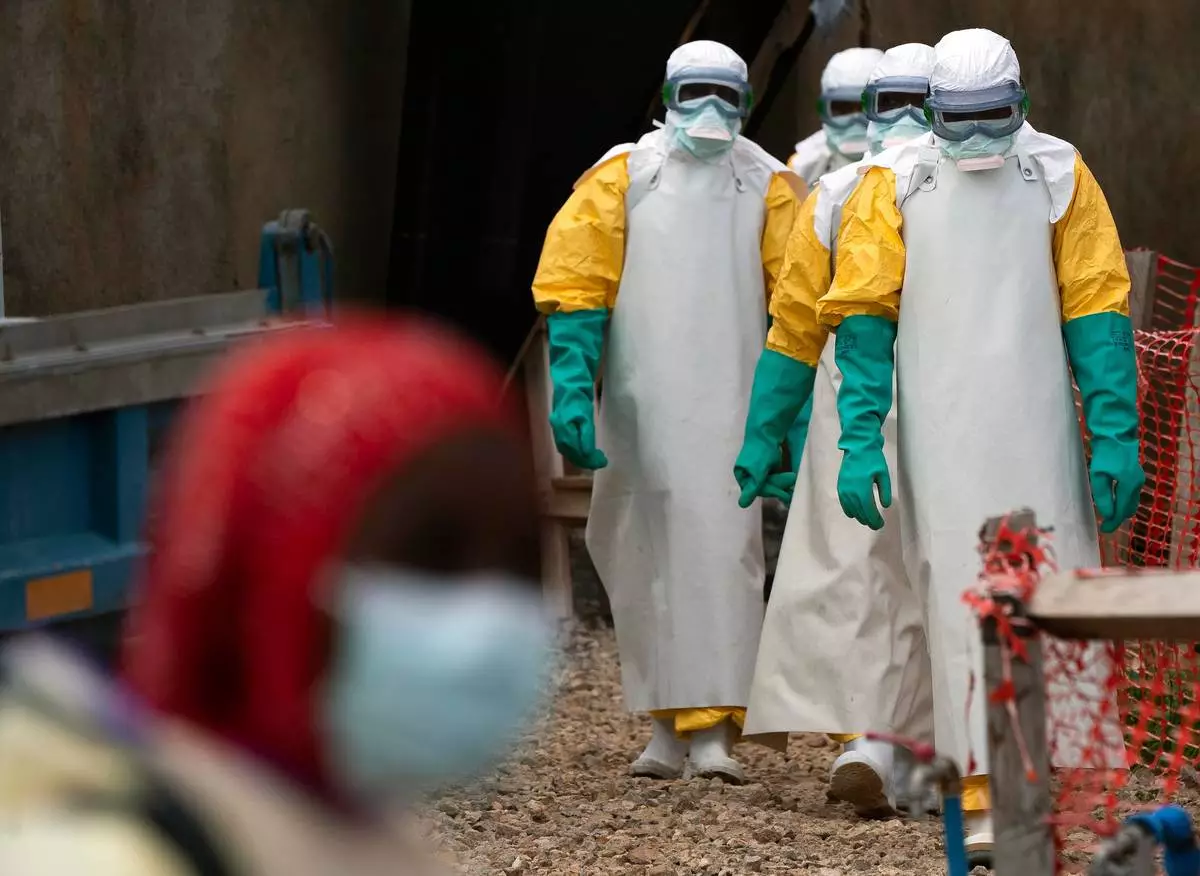
FILE - Health workers dressed in protective gear begin their shift at an Ebola treatment center in Beni, Congo, July 16, 2019. (AP Photo/Jerome Delay, File)
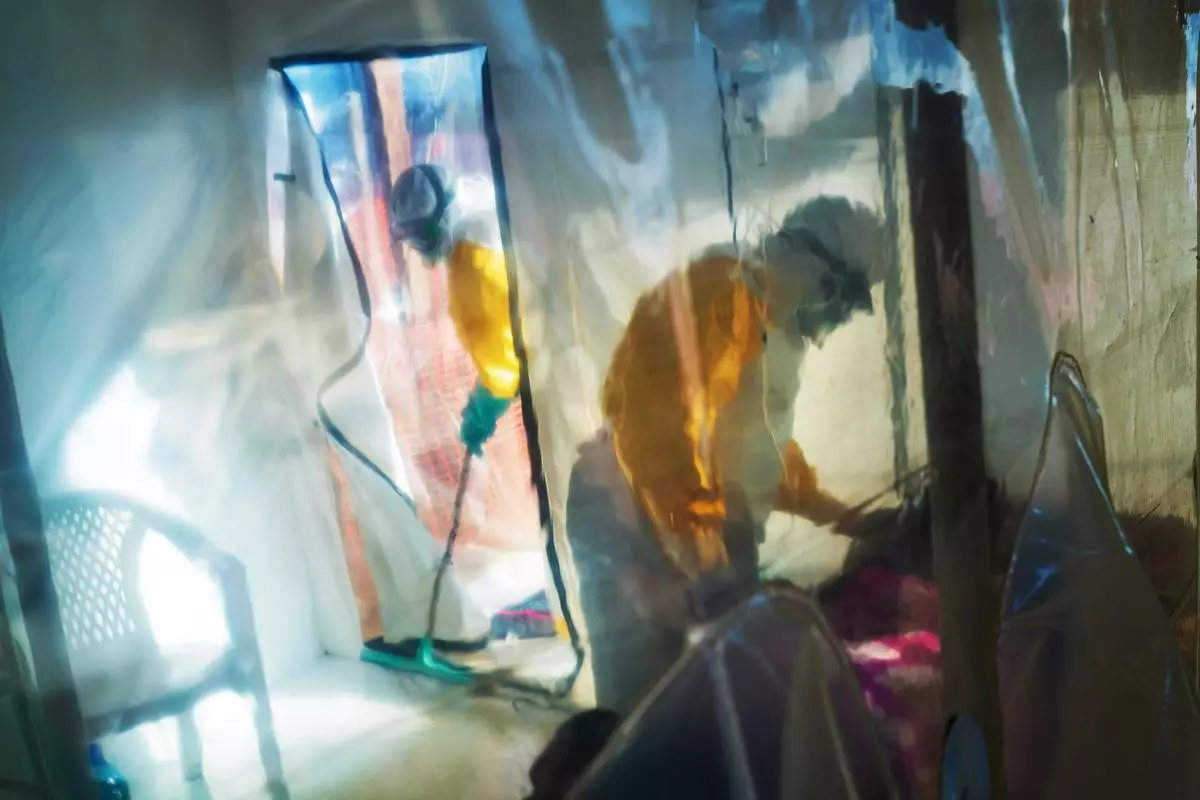
FILE - Health workers wearing protective suits tend to an Ebola victim kept in an isolation tent in Beni, Congo, July 13, 2019. (AP Photo/Jerome Delay, File)
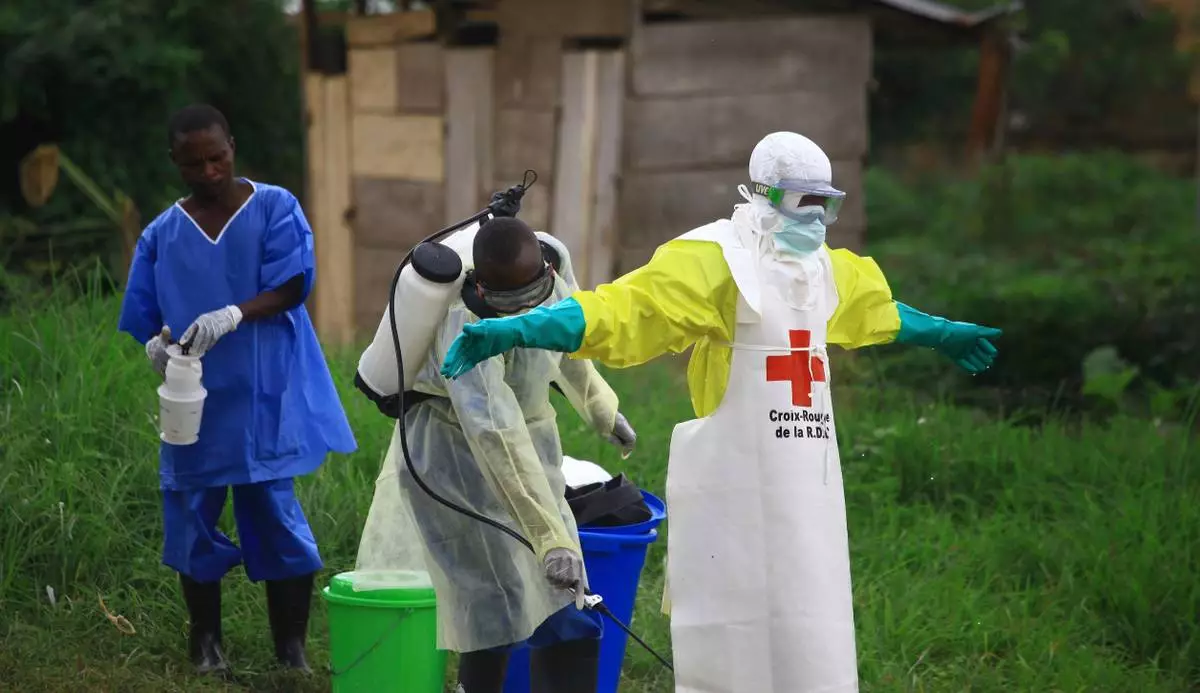
FILE - A health worker sprays disinfectant on his colleague after working at an Ebola treatment center in Beni, eastern Congo, Sept 9, 2018. (AP Photo/Al-hadji Kudra Maliro, File)
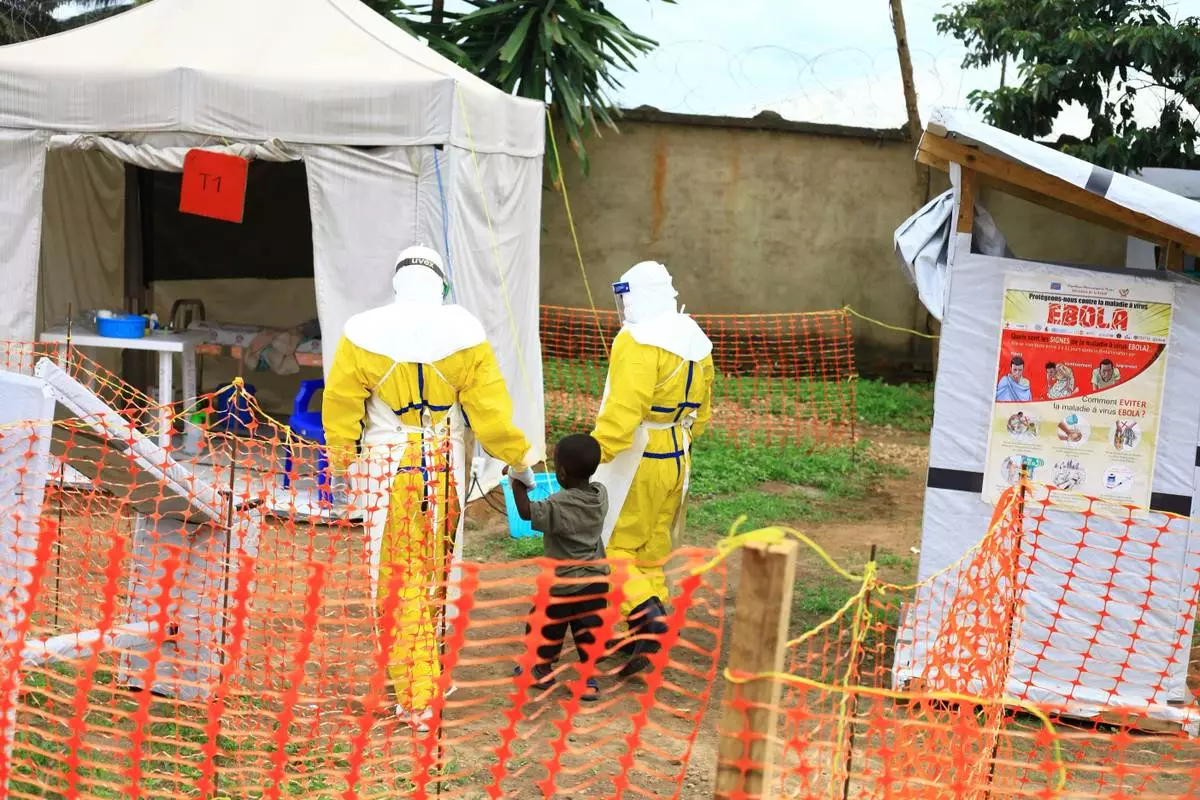
FILE - Health workers walk with a boy suspected of having the Ebola virus at an Ebola treatment center in Beni, eastern Congo, Sept 9, 2018. (AP Photo/Al-hadji Kudra Maliro, File)