德拉瓦州,威明頓--(BUSINESS WIRE)--五月 15, 2026--
(美國商業資訊)-- The LYCRA Company 是 個人護理產業 的創新與永續纖維解決方案的全球先驅; Dukane 是為衛生用品和不織布市場提供超音波貼合技術的製造商。這兩所公司將聯手在5月19日至22日間在瑞士日內瓦舉行的 INDEX™ 26 展示最新超音波貼合技術合作研發成果。
本新聞稿包含多媒體資訊。完整新聞稿請見此: https://www.businesswire.com/news/home/20260515475373/zh-HK/
The LYCRA Company與Dukane自2014年起開始合作改良超音波貼合解決方案,協助尿布製造商提升產品柔軟度、貼合度與機能性,同時減低能源消耗、材料浪費與維護成本。超音波貼合技術可在兩層不織布材料之間形成貼合,以機械方式固定彈性纖維,無需使用黏合劑。Dukane的專利旋轉式及剛性超音波貼合系統能夠將超音波能量準確傳送到不織布材料中,高速完成無黏著劑的貼合。
最初為了防止襪類織物的勾絲進一步導致脫線而開發的 LYCRA FUSION™纖維 現在可以藉由超音波貼合技術與不織布層熔合。其獨特的外層/內芯結構能夠與周圍材料熔合,提高超音波貼合的強度,並賦予紗線優越的蠕變性能(回彈力)。製造商若搭配Dukane的先進超音波貼合模組處理這種纖維,不僅能精準固定彈性材料、提高貼合的一整性並確保產品機能一致穩定,還能消除因使用熱熔黏合劑而產生的種種不確定性。
「衛生用品產業逐漸擴大使用超音波貼合技術,我們與Dukane的長期合作側重拓展技術能力,同時做好大規模商業化生產的準備。」The LYCRA Company產品部執行副總裁Doug Kelliher說,「我們很榮幸向各界介紹應用於個人護理的LYCRA FUSION™纖維。它的斷裂點較少、機能高強,可提高超音波貼合過程的貼合一體性。」
The LYCRA Company與Dukane一致承諾創新,結合纖維開發與超音波製程,推動不織布無黏合劑貼合技術的擴大應用。
「我們的技術從超音波層壓發展到精準縫線密封和切割,目的是穩定品質、全球擴展和永續生產。」Dukane全球不織布產品開發經理Justin Lafferty說,「我們利用LYCRA FUSION™纖維推動超音波貼合技術進步,協助客戶提升產品機能,同時改進生產效率。」
請前來INDEX™ 26參觀The LYCRA Company展位 ( 2151 ) 和Dukane展位 ( 1568 ),認識更多衛生與不織布解決方案。
關於The LYCRA Company
The LYCRA Company為服飾和個人照護產業從事纖維與技術解決方案的創新和生產,旗下擁有以下領先消費品牌:LYCRA ® 、LYCRA HyFit ® 、LYCRA ® T400 ® 、COOLMAX ® 、THERMOLITE ® 、ELASPAN ® 、SUPPLEX ® 和TACTEL ® 。The LYCRA Company總部位於美國德拉瓦州威爾明頓,以永續產品、技術專長和行銷支援享譽全球。The LYCRA Company專注于透過開發獨特的創新技術,滿足消費者對舒適性和持久性能的需求,從而為客戶的產品增添價值。如欲瞭解更多資訊,請造訪 thelycracompany.com 。
關於Dukane
總部位於聖查爾斯市的 DUKANE 是應用超音波貼合技術製造衛生與個人護理產業的全球先驅。Dukane的技術與單一模式貼合系統不同,它用一系列超音波貼合模組取代衛生及個人護理產品生產過程中的黏合製程。製造商可依產品設計、生產速度以及長期營運目標選擇合適的貼合技術。Dukane的靈活平台不僅支援間歇貼合與連續貼合,也適用於刮刀式與旋轉式技術,故製造商得免於被綑綁於單一技術路徑中。進一步資訊,請見: dukane.com/nonwoven 。
免責聲明:本公告之原文版本乃官方授權版本。譯文僅供方便瞭解之用,煩請參照原文,原文版本乃唯一具法律效力之版本。
請前往 businesswire.com 瀏覽源版本:https://www.businesswire.com/news/home/20260515475373/zh-HK/
CONTACT: Karie J. Ford
Karie.j.ford@lycra.comShivani Singh
ssingh@dukane.com
KEYWORD: DELAWARE EUROPE SWITZERLAND UNITED STATES NORTH AMERICA
INDUSTRY KEYWORD: BABY/MATERNITY MANUFACTURING SPECIALTY WOMEN SENIORS FASHION OTHER MANUFACTURING RETAIL TEXTILES HOME GOODS CONSUMER
SOURCE: The LYCRA Company
Copyright Business Wire 2026.
PUB: 05/15/2026 08:00 AM/DISC: 05/15/2026 08:02 AM
http://www.businesswire.com/news/home/20260515475373/zh

請前來日內瓦INDEX™ 26展會參觀The LYCRA Company與Dukane展示最新超音波貼合不織布技術,包括回彈力優異、適用於個人護理產品的新LYCRA FUSION™纖維。
NEW YORK (AP) — The U.S. stock market is falling from its records Friday and joining a worldwide drop for stocks, as higher oil prices send a shiver through the bond market. Stocks that had been caught up in the euphoria around artificial-intelligence technology led the way lower.
The S&P 500 fell 0.9% from its all-time high set the day before. The Dow Jones Industrial Average was down 428 points, or 0.9%, as of 11 a.m. Eastern time, and the Nasdaq composite was down 1.3% from its own record.
Technology stocks tumbled in a sharp turnaround from their meteoric rises for much of the year, which had carried markets worldwide to records but also raised criticism that they had gone too far.
Nvidia, the stock that quickly became the face of the AI revolution, dropped 4.2% and was the heaviest weight on the S&P 500. It had come into the day with a gain of more than 26% for the year so far.
Applied Materials fell 1.3% even though it reported stronger profit growth for the latest quarter than analysts expected, thanks to the global build out of AI. The company, whose products help make chips and displays, came into the day with a gain of more than 70% for the year so far.
“To us, it looks like markets have pushed into overbought territory,” according to Brian Jacobsen, chief economic strategist at Annex Wealth Management. He said the strong corporate profits and durable U.S. economy that launched U.S. stocks to records remain intact, but “the path is unlikely to be smooth. Periods like this call for discipline more than hope.”
In the meantime, rising oil prices are raising the pressure after already worsening inflation by more than economists had feared. The war with Iran is continuing, and the Strait of Hormuz remains shut to oil tankers, which is preventing them from delivering crude to customers worldwide and driving up oil’s price.
The price for a barrel of Brent crude oil, the international standard, rose 3.3% to $109.16 and is well above its level of roughly $70 from before the war.
Many big U.S. companies have been saying their customers have been able to keep spending on their products and services despite having to pay higher prices for gasoline. But U.S. households have also been telling surveys they’re feeling discouraged about the economy and the pressures building on them because of the war and tariffs.
The worries were most clear Friday in the bond market, where Treasury yields climbed. The yield on the 10-year Treasury rose to 4.57% from 4.47% late Thursday. That’s a notable move for the bond market, and it’s well above its 3.97% level from before the war. The yield on the 30-year Treasury is near its highest level since 2023 after breaking above 5%.
Higher yields can make mortgages and other kinds of loans going to U.S. households and businesses more expensive, which slows the economy. They also tend to push downward on prices for stocks and all kinds of other investments.
Stocks of smaller companies had some of Friday’s sharpest drops. Many of them need to borrow cash to grow, which means higher borrowing costs can hurt them more than their big rivals. The Russell 2000 index of the smallest U.S. stocks fell 2.2%, more than double the S&P 500’s loss.
Yields have been climbing since the war on worries about higher inflation and how it may tie the Federal Reserve’s hands when it comes to short-term interest rates. Not only have traders abandoned virtually all expectations that the Fed will resume its cuts to interest rates this year, they’ve been building some bets that it may even hike rates in 2026, according to data from CME Group.
A couple of reports on the U.S. economy that came in better than expected also helped to lift yields. One said U.S. industrial production improved by more last month than economists expected, while another said manufacturing in New York state is expanding at a faster rate.
In stock markets abroad, indexes fell sharply across Europe and Asia.
South Korea’s Kospi dropped 6.1% for one of the biggest moves. It had been reaching records this year because of the influence of AI beneficiaries like SK Hynix. But it quickly reversed momentum Friday after briefly topping the 8,000 level for the first time.
Some on Wall Street have been warning about a possible break in momentum for tech stocks in general and AI winners in particular.
“If nothing else this should be a ‘shot across the bow’ for how volatility works both ways,” according to Jonathan Krinsky, chief market technician at BTIG.
AP Business Writer Chan Ho-him contributed.

Trader Patrick Casey works on the floor of the New York Stock Exchange, Wednesday, May 13, 2026. (AP Photo/Richard Drew)

President Donald Trump, left, walks with Chinese President Xi Jinping at the Temple of Heaven on Thursday May 14, 2026, in Beijing. (AP Photo/Mark Schiefelbein)
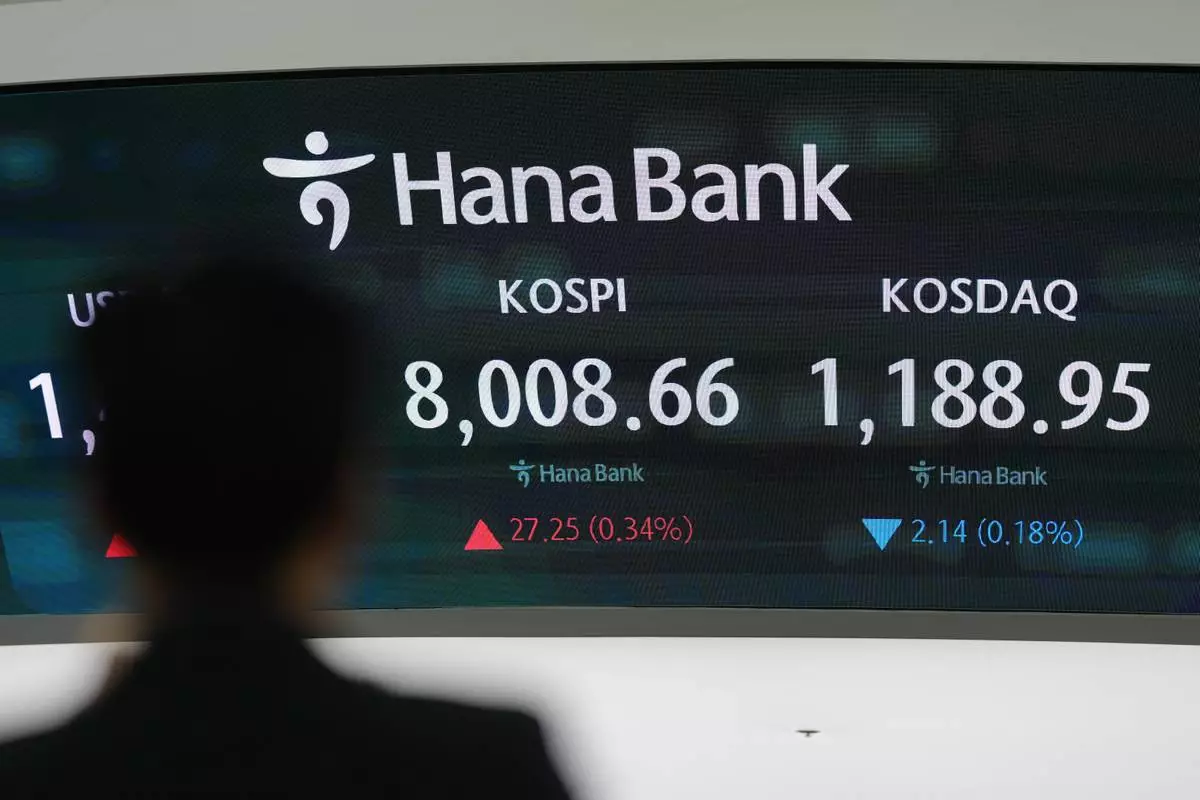
A dealer stands near the screens showing the Korea Composite Stock Price Index (KOSPI), and the Korean Securities Dealers Automated Quotations (KOSDAQ) at a dealing room of Hana Bank in Seoul, South Korea, Friday, May 15, 2026. (AP Photo/Lee Jin-man)

Employees of Hana Bank celebrate in a photo-op to mark the Korea Composite Stock Price Index (KOSPI) of over 8,000 points at a dealing room of Hana Bank in Seoul, South Korea, Friday, May 15, 2026. (AP Photo/Lee Jin-man)