NASHVILLE, Tenn. (AP) — Four Memphis residents are suing U.S. and Tennessee officials, saying they have been harassed, arrested and physically mistreated for engaging in activities protected by the First Amendment such as observing and recording law enforcement agents in their city.
A lawsuit filed Wednesday in federal court targets the Memphis Safe Task Force, comprising agents from 13 federal agencies that President Donald Trump ordered to the city to fight crime alongside Tennessee State Troopers and the Tennessee National Guard.
Since late September, hundreds of federal, state and local law enforcement personnel tied to the task force have made traffic stops, served warrants and searched for fugitives in the majority Black city of about 610,000 people. The lawsuit says the task force has conducted over 120,000 traffic stops.
"In the professed name of crime control, Task Force agents have stopped, menaced, and arrested Memphians engaging in routine, day-to-day activities,” the lawsuit states. “In response, Memphians encountering Task Force agents in public, including Plaintiffs, have stopped to gather information about and record Task Force activities.”
The U.S. Department of Justice and a spokesperson for the task force did not respond to Associated Press emails seeking comment Wednesday.
Hunter Demster, a Memphis resident and plaintiff, says he regularly sees the task force stopping cars in his neighborhood, which has a large Hispanic population. In one interaction, he was surrounded by task force agents after he filmed a traffic stop and told the people in the car that they had a right not to speak to police.
“It is a terrifying feeling," Demster said. “I did nothing illegal. I used my First Amendment protected rights to hold up a phone and say some ‘know your rights’ information.”
Scarlet Kim, senior staff attorney with the American Civil Liberty Union’s Speech, Privacy, and Technology Project, said the Tennessee law is written so broadly that officers have wide discretion to invoke it against observers even when the observers are not impeding their actions.
“When observers go to the scene of task force activity and they are observing, they’re gathering information," said Kim. “They are picking up their phones and cameras and documenting what’s happening. That’s all core protected First Amendment activity. And it’s not a basis for the government to essentially react in the way that they’re reacting.”
Federal officials including Defense Secretary Pete Hegseth, former Attorney General Pam Bondi and White House Deputy Chief of Staff Stephen Miller, have visited Memphis to praise the task force. Miller in October predicted the surge in law enforcement would make the city “safer than any of you could ever possibly imagine” and that “businesses and investment are going to pour in, and Memphis will be richer than ever before.”
The task force is part of a larger effort by Trump to use National Guard troops and surge federal law enforcement in cities, particularly ones controlled by Democrats. Following troop deployments in the District of Columbia and Los Angeles, he referred to Portland, Oregon, as “war-ravaged” and threatened apocalyptic force in Chicago. Speaking last year to U.S. military leaders in Virginia, Trump proposed using cities as training grounds for the armed forces.
The lawsuit accuses task force agents of systematically retaliating against the four plaintiffs and other members of the public engaged in similar observations. It claims the threats and harassment are the “direct result of federal policy” that views observing federal agents performing their duties in public as a threat of harm to those agents. The lawsuit also claims that federal and state officials have failed to train their agents not to retaliate against citizens engaged in activities protected by the First Amendment.
The lawsuit asks the court to declare that retaliation against the plaintiffs for observing and recording law enforcement activity is unconstitutional and to prohibit the agents from further retaliation. It also targets a Tennessee law that requires observers to stand at least 25 feet (7.6 meters) away from law enforcement officers, if they are warned to do so, or face arrest. The suit asks the court to declare unconstitutional the use of the “Halo Law” against defendants who are not interfering with agents or impeding their duties.
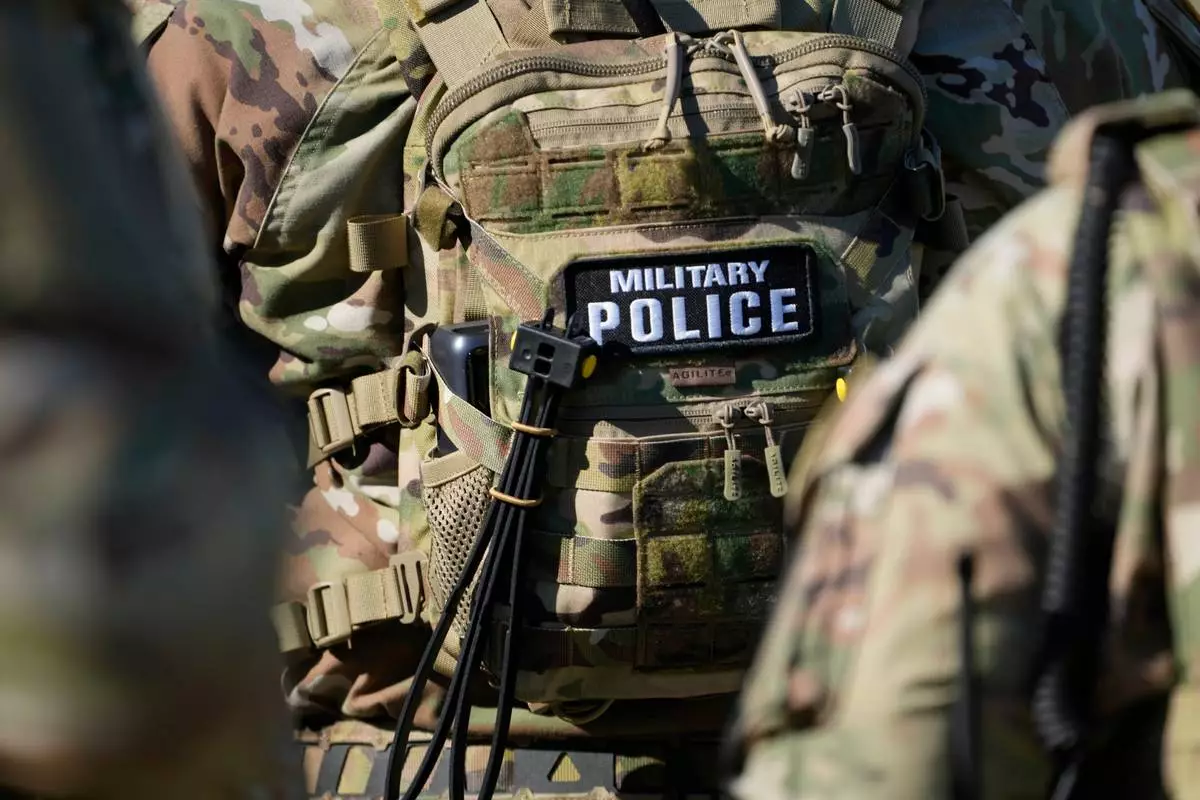
FILE - Members from the National Guard working as part of the Memphis Safe Task Force conduct a community safety patrol at Tom Lee Park, Oct. 12, 2025, in Memphis, Tenn. (AP Photo/George Walker IV, File)
LOS ANGELES (AP) — The wide-ranging prosecution in the death of “Friends” star Matthew Perry is coming to a close. Five people have pleaded guilty for various roles in supplying the actor with ketamine, the drug that killed him at age 54 in 2023. Four of them have been sentenced. The last person will be sentenced in the coming days.
Here's a look at each person.
Perry’s 60-year-old longtime live-in personal assistant Kenneth Iwamasa was intimately involved in the actor’s illegal ketamine use, acting as his drug messenger and personally giving him injections — six to eight per day in the last days of his life — according to his plea agreement.
“Shoot me up with a big one,” Iwamasa told authorities Perry said to him on Oct. 23, 2023. After several injections, the assistant left him at his home in the Pacific Palisades neighborhood of Los Angeles and returned to find Perry dead in his hot tub. An autopsy found the primary cause of death was the acute effects of ketamine, with drowning as a secondary cause.
Iwamasa made nearly all of the illegal drug buys on Perry’s behalf, working in coordination with his co-defendants. One of them, Dr. Salvador Plasencia, taught him how to give Perry the injections.
Iwamasa was quick to participate with police and prosecutors, becoming the first to reach a plea deal as they sought to use him as a key witness against other defendants.
PLEADED GUILTY TO: One count of conspiracy to distribute ketamine causing death.
SENTENCE: He’s scheduled to become the final defendant sentenced on May 27.
WHAT THEY SAID: Iwamasa is the only defendant who has yet to give public comment.
Prosecutors say she was known as “The Ketamine Queen,” because of her jet-setting, drug dealing lifestyle. Her lawyers say authorities made up that nickname to feed a media frenzy.
Jasveen Sangha did admit to running a serious drug operation, selling Perry the dose of ketamine that he took on the day he died, and causing the death of another man, 33-year-old Cody McLaury, in 2019.
Like the other defendants, Sangha had no previous convictions.
But, prosecutors said, and a judge agreed, that unlike the other defendants whose actions were atypical, she had been dealing drugs including ketamine, methamphetamine and cocaine for at least five years from her home.
Sangha is a 42-year-old who was born in Britain, raised in the United States and has dual citizenship. Her social media accounts showed her in posh spaces alongside rich-and-famous faces in Spain, Japan and Dubai, London and Los Angeles.
Sangha went to high school in Calabasas, California — perhaps best known as home to the Kardashians — and went to college at the University of California, Irvine, graduating in 2005 and going to work at Merrill Lynch. She later got an MBA from the Hult International Business School in London.
Her lawyers presented that personal history as evidence that she was an otherwise upstanding citizen, but prosecutors used the same facts to argue she didn't need to sell drugs but did so for greed and glamour.
PLEADED GUILTY TO: Three counts of distribution of ketamine, one count of distribution of ketamine resulting in death or serious bodily injury, and one count of using her home for drug distribution.
SENTENCE: She was sentenced to 15 years in prison, the longest so far.
WHAT THEY SAID: “These were not mistakes. They were horrible decisions,” Sangha said at sentencing, adding that her choices had “shattered people’s lives and the lives of their family and friends.”
Fleming, 56, was working as a drug addiction counselor when a mutual friend he had with Perry told him that the actor was seeking ketamine, according to filings from prosecutors.
Fleming’s lawyers said he was a former television and film producer whose career had been ravaged by substance abuse, and that after gaining hard-won sobriety he became a counselor.
But he had badly relapsed when approached about Perry, and connected the actor with Sangha to buy her product.
In all, prosecutors say, Fleming delivered 50 vials of Sangha’s ketamine for Perry’s use, marking up the price to make a profit, including 25 vials sold for $6,000 to the actor four days before his death.
Authorities found him early in the investigation and lawyers on both sides agreed he was immediately and extraordinarily cooperative. He gave up Sangha, and became the first to appear in court and enter a guilty plea.
PLEADED GUILTY TO: One count of distribution of ketamine resulting in death.
SENTENCING: He was sentenced Wednesday to two years in prison and three years of probation.
WHAT THEY SAID: “This grievous failure will haunt me forever,” Fleming wrote in a letter to the court. After he was sentenced, he said: “I want to do everything I can to make sure a tragedy like this never happens again. I don’t want anyone to die from ketamine.”
“I wonder how much this moron will pay?”
That was a text message Plasencia sent to a fellow doctor when he learned Perry was looking for illegal, off-the-books ketamine, according to a plea agreement where the doctor admitted to selling 20 vials of the drug to the actor in the weeks before his death.
Plasencia, a 44-year-old Los Angeles-area doctor known to patients as “Dr. P,” was one of the main targets of the prosecution and had been headed for a joint trial with Sangha when he reached the plea agreement last year.
Perry was connected to Plasencia through another patient. The actor had been getting ketamine legally from his regular doctor as treatment for depression, an off-label but increasingly common use of the surgical anesthetic. But he wanted more than that doctor would prescribe.
Plasencia admitted to injecting Perry with some of the initial vials he provided, and left more for Iwamasa to inject, despite the fact that Perry froze up and his blood pressure spiked after a dose.
Plasencia graduated from UCLA's medical school in 2010 and had not been subject to any medical disciplinary actions before the Perry case.
PLEADED GUILTY TO: Four counts of distribution of ketamine.
SENTENCE: 2 1/2 years in prison, two years of probation and a $5,600 fine.
WHAT THEY SAID: Plasencia cried at his sentencing as he imagined the day he would have to tell his 2-year-old son “about the time I didn’t protect another mother’s son. It hurts me so much.”
Chavez, a San Diego doctor who ran a ketamine clinic, was the source of the doses that Plasencia sold to Perry.
Chavez admitted to obtaining the ketamine from a wholesale distributor on false pretenses and passing it along.
Chavez, 55, graduated from UCLA's medical school in 2004. He has surrendered his medical license.
CHARGE: One count of conspiracy to distribute ketamine.
SENTENCING: Eight months of home confinement and three years of supervised release.
WHAT THEY SAID: “I just want to say my heart goes out to the Perry family,” Chavez said at sentencing.
Versions of this story previously ran on Aug. 15, 2024, and Sept. 3, 2025.
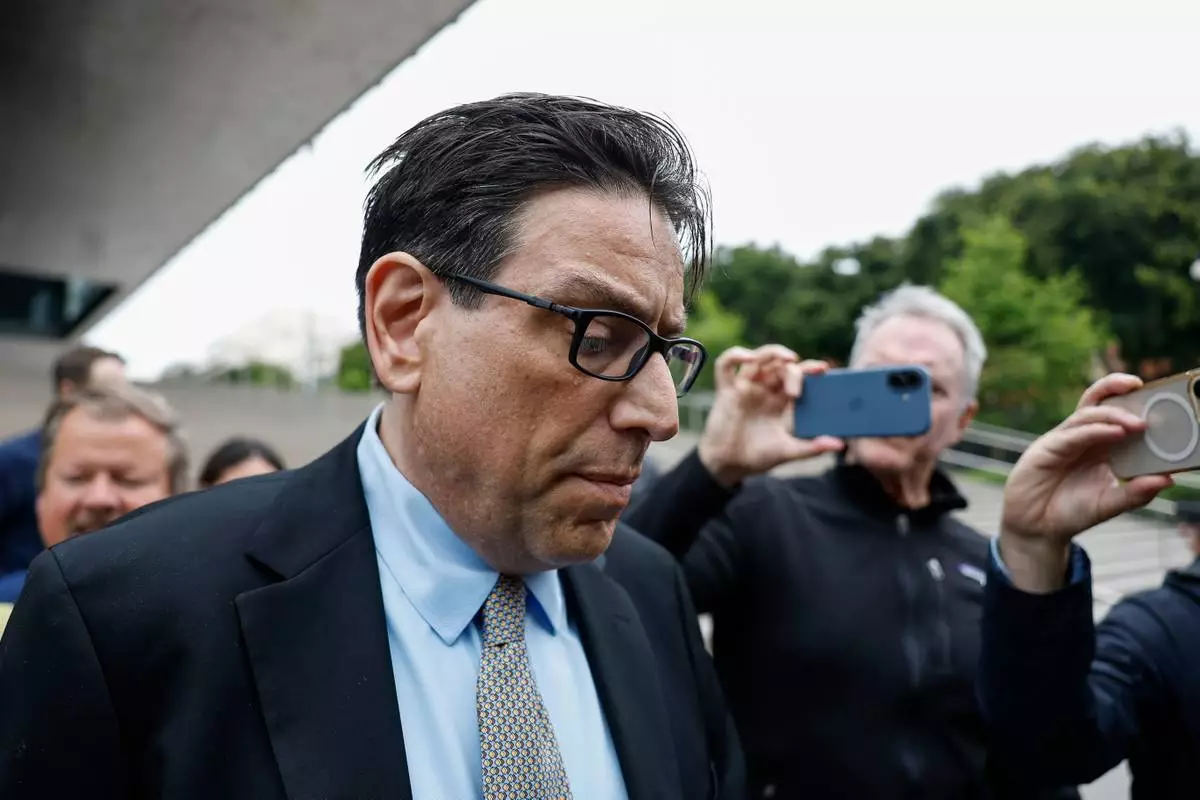
Erik Fleming departs federal court in Los Angeles after being sentenced in connection with the ketamine overdose death of actor Matthew Perry, on Wednesday, May 13, 2026, in Los Angeles. (AP Photo/Caroline Brehman)
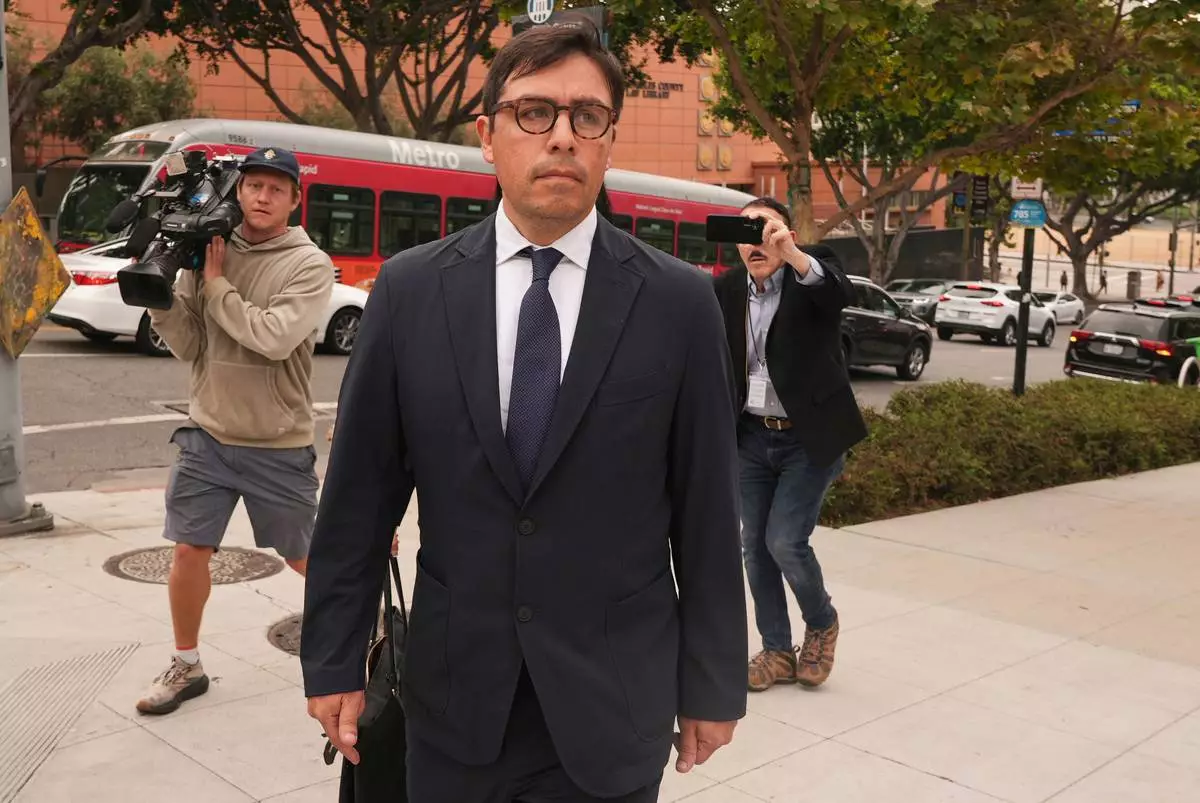
FILE - Dr. Salvador Plasencia leaves federal court in Los Angeles on July 23, 2025, after pleading guilty to giving ketamine to Matthew Perry, leading up to the actor's 2023 overdose death. (AP Photo/Damian Dovarganes, File)
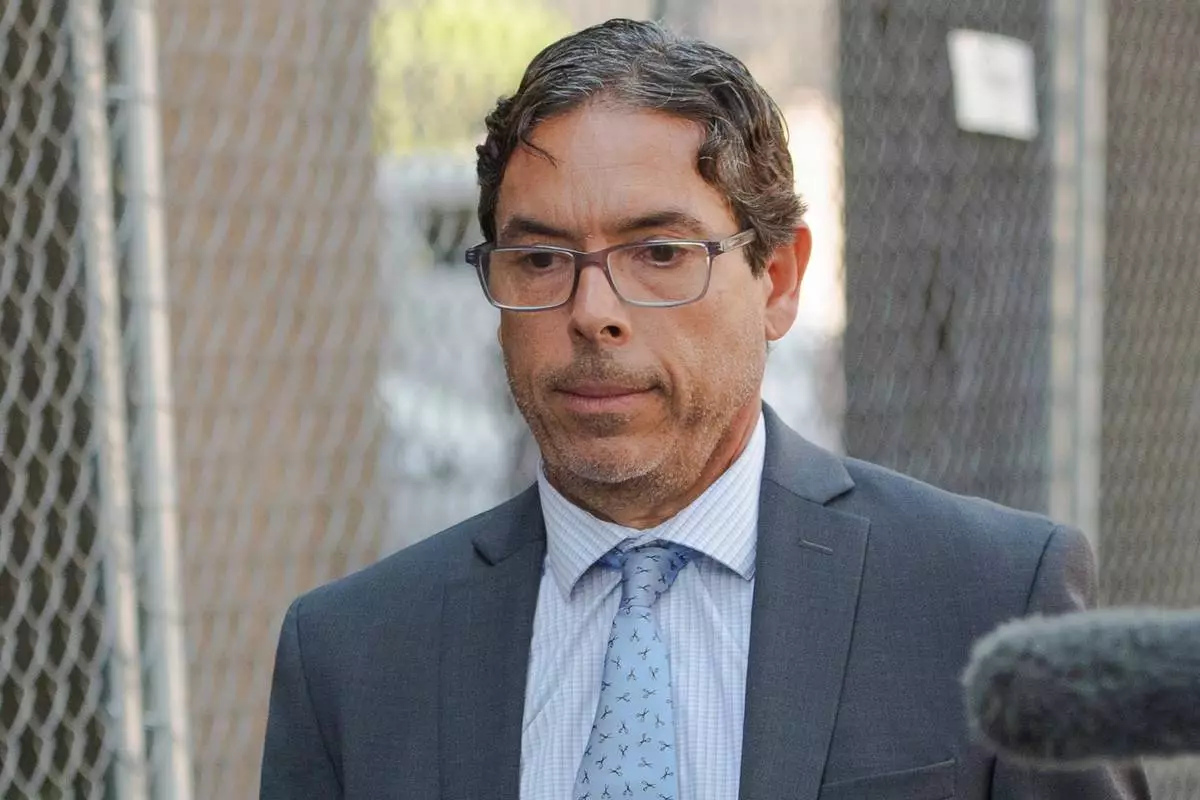
FILE - Dr. Mark Chavez, a physician charged in connection with Matthew Perry's fatal overdose, walks out of United States Courthouse after pleading guilty to conspiring to distribute the surgical anesthetic ketamine in Los Angeles, on Oct. 2, 2024. (AP Photo/Damian Dovarganes, File)
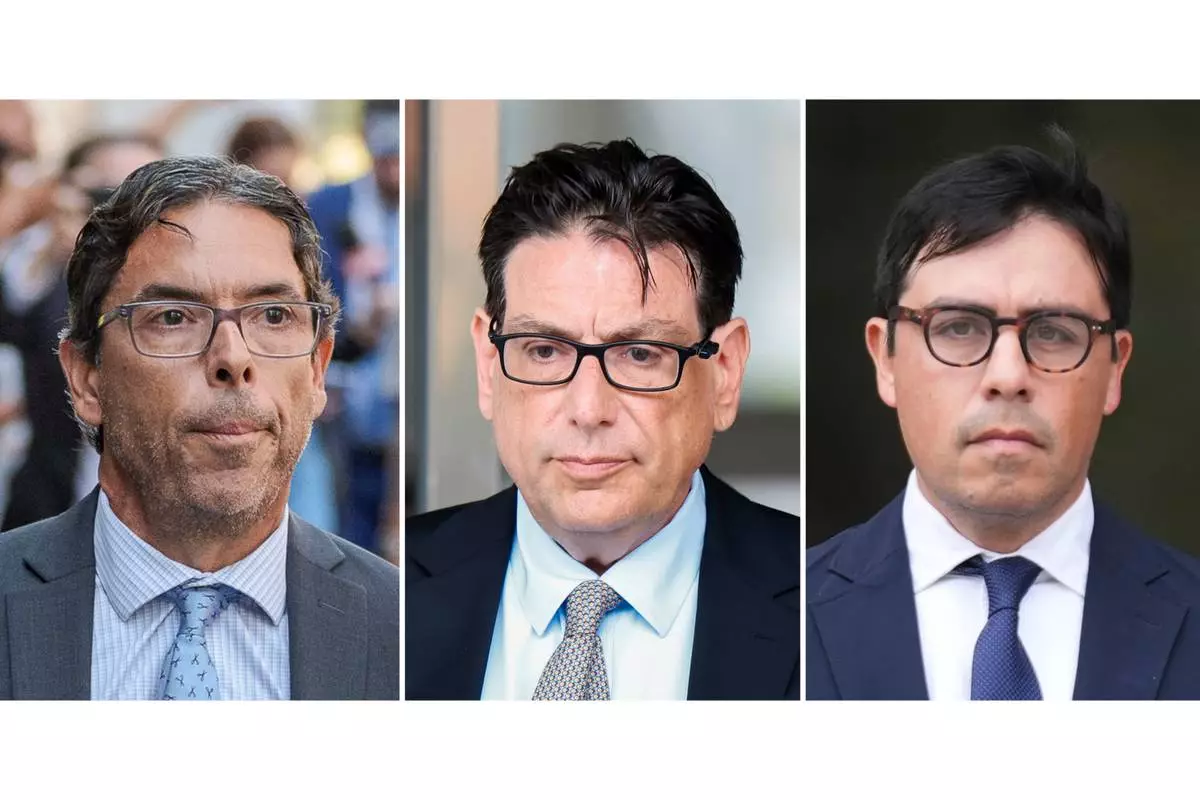
This combination of images show, from left, Dr. Mark Chavez outside of United States Courthouse in Los Angeles, on Oct. 2, 2024, Erik Fleming outside federal court in Los Angeles on May 13, 2026, and Dr. Salvador Plasencia outside federal court in Los Angeles on July 23, 2025. (AP Photo)
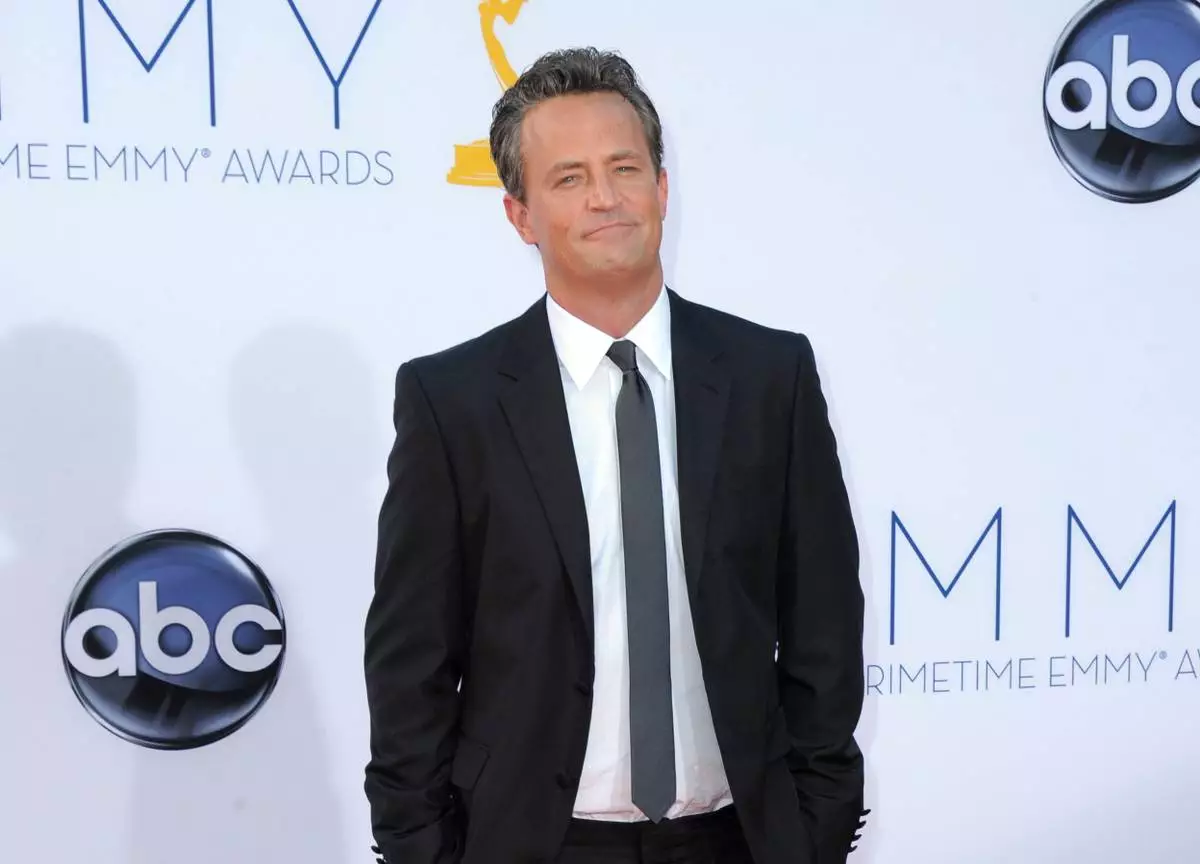
FILE - Actor Matthew Perry arrives at the 64th Primetime Emmy Awards in Los Angeles on Sept. 23, 2012. (Photo by Jordan Strauss/Invision/AP, File)