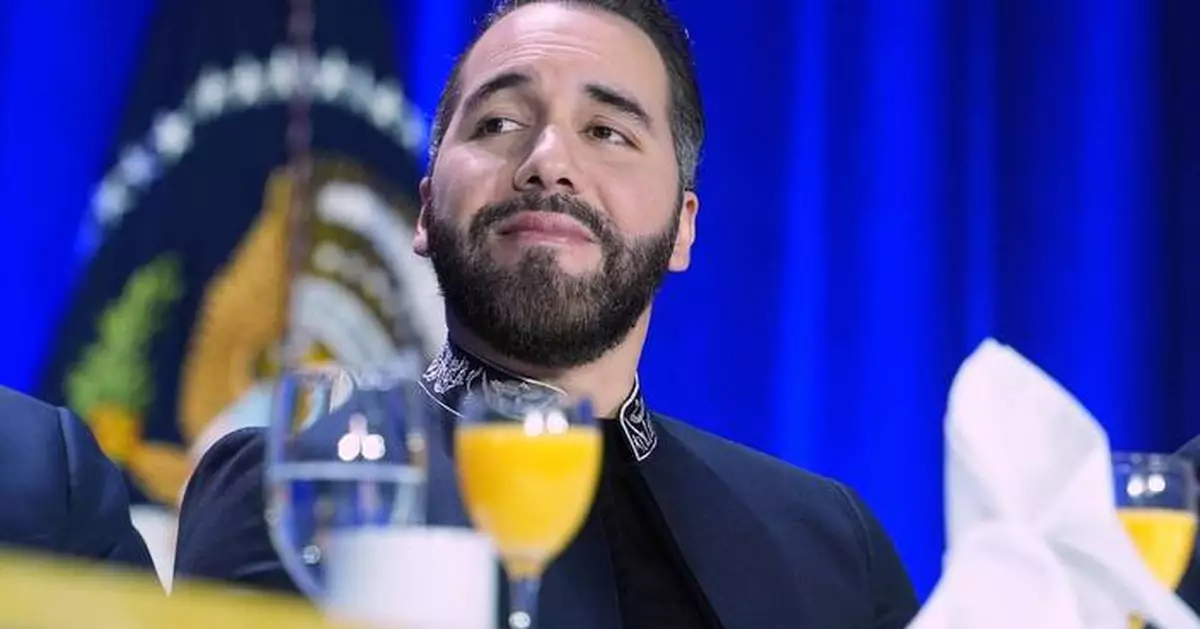
SAN SALVADOR, El Salvador (AP) — The number of people deported to El Salvador from the U.S. nearly doubled in the first months of 2026, according to official figures, coming as Salvadoran President Nayib Bukele has positioned himself as an ally willing to help the Trump administration accelerate deportations, a central priority.
The U.S. deported 5,033 Salvadorans back to their country in the first three months of 2026 compared with 2,547 deportees in the same period in 2025, according to El Salvador migration authority figures obtained by The Associated Press on Tuesday.
That marks nearly a 98% increase at the same time that the Trump administration has boosted deportation flights across the world. Globally, deportation flights from the U.S. jumped around 61% between 2024 and 2025, according to data compiled by the Asociación Agenda Migrante El Salvador, or AAMES, and other organizations.
The U.S. has stopped regularly releasing deportation data, so experts instead are relying on other information from countries like El Salvador, deportation flights and other numbers.
The sharp increase in deportations “confirms a real hardening of the U.S. immigration system toward the region,” said César Ríos of AAMES.
The jump comes as Bukele, a tough-on-crime politician, has sought to align himself with U.S. President Donald Trump, and the U.S. government has lined up allies across Latin America to help him carry out his agenda. While Mexico and other Central American nations have quietly accepted deportees from third countries, Bukele has boldly embraced Trump's efforts in Latin America.
In March 2025, Bukele most notably accepted 238 Venezuelan deportees accused of being members of the Venezuelan gang Tren de Aragua and locked them up in a mega-prison built for accused gang members in Bukele's ongoing offensive on El Salvador's gangs. The incident fueled widespread accusations of human rights abuses.
The geopolitical firestorm came after Trump's government struck a deal with Bukele to accept what they described as transfer and imprisonment of foreign criminals to El Salvador. Under the agreement, El Salvador would receive $6 million from the U.S.
In April, the Trump administration mistakenly deported a Maryland resident and Salvadoran citizen Kilmar Abrego García with protected status in the U.S., becoming yet another legal and political flashpoint. Bukele originally refused to return Abrego García and denied accusations of beating and torture — which have been widely documented by human rights groups in Salvadoran prisons.
He was later returned to the U.S. in June to face charges that he helped bring immigrants to the U.S. illegally, something his lawyers call “baseless.” Abrego García has pleaded not guilty and asked a judge to dismiss his case as the U.S. Department of Homeland Security announced that it hoped to deport Abrego García to Liberia.
Even more recently, Bukele joined a coalition of other right-leaning Trump allies in a group of countries that Trump dubbed the Shield of the Americas, purportedly aimed at cracking down on criminal groups in Latin America, even though the two most essential countries in that effort — Mexico and Colombia — refused to attend.
Meanwhile, many migrants in the U.S. are turning their eyes on U.S. Supreme Court arguments as Trump seeks to stop shielding hundreds of thousands of migrants from Haiti and Syria, a decision many of the more than 200,000 Salvadoran migrants with temporary protections worry might eventually affect them.
Bukele has helped the U.S. with its immigration agenda even before Trump entered office.
In 2023, El Salvador’s government began to slap a $1,130 fee on travelers from dozens of countries connecting through the nation’s main airport, amid pressure from the Biden administration to help control the number of migrants moving toward the United States' southern border. At the same time, migration from El Salvador, fueled by gang violence and poverty, dipped following Bukele's contentious war on the gangs.
Analysts said that Bukele's government used dips in migration as a bargaining chip to offset human rights criticisms by the U.S.
Megan Janetsky reported from Mexico City.
Follow AP’s coverage of Latin America and the Caribbean at https://apnews.com/hub/latin-america
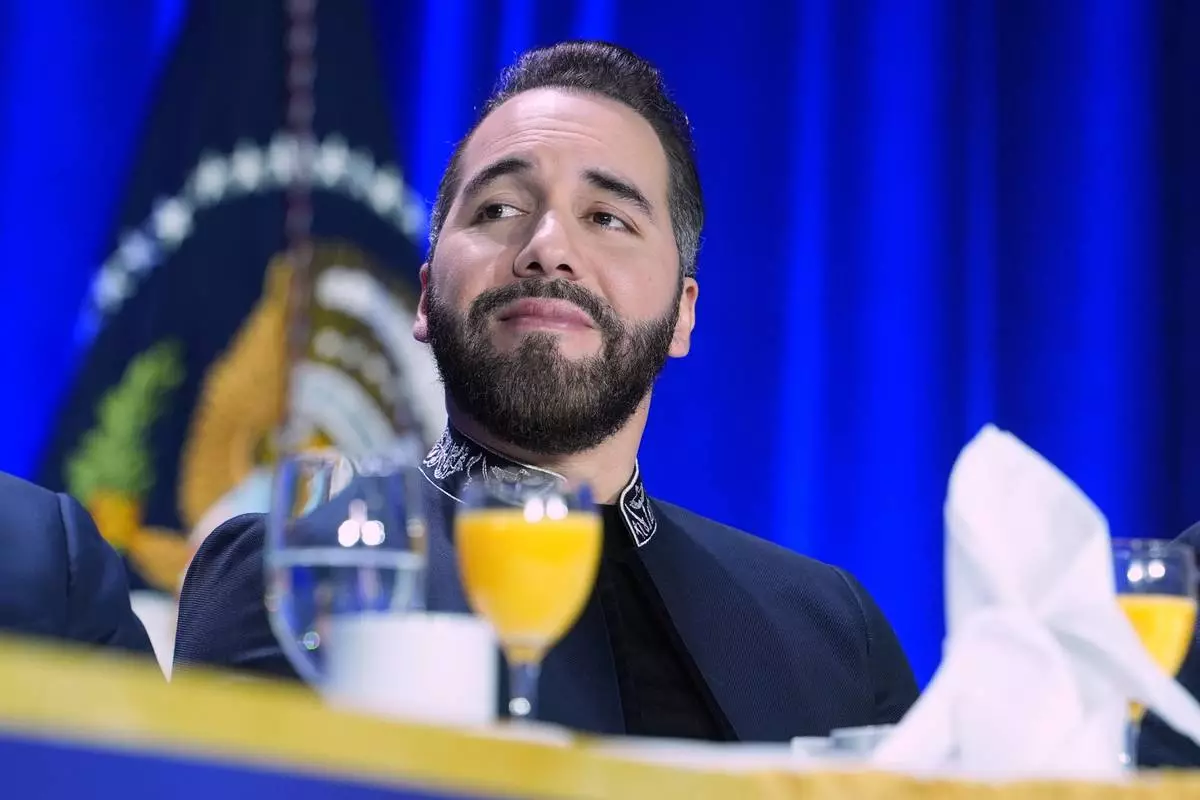
FILE - President of El Salvador, Nayib Armando Bukele Ortez, listens as President Donald Trump speaks during the National Prayer Breakfast, Feb. 5, 2026, in Washington. (AP Photo/Evan Vucci, File)
PARK CITY, Utah (AP) — A Utah mother who published a children’s book about grief after the death of her husband will serve a life sentence without the possibility of parole for his murder, a judge ruled Wednesday.
Kouri Richins was convicted in March of aggravated murder for lacing her husband Eric Richins’ cocktail with five times the lethal dose of fentanyl at their home near Park City in 2022. A jury also found her guilty of four other felonies, including insurance fraud, forgery and attempted murder for trying to poison her husband weeks earlier on Valentine’s Day with a fentanyl-laced sandwich. Her defense said it will appeal the conviction and sentence.
“A person convicted of those things is simply too dangerous to ever be free,” Judge Richard Mrazi said when handing down the sentence on the day that Eric Richins would have turned 44.
Prosecutors said Richins, a 35-year-old real estate agent with a house-flipping business, was millions in debt and planning a future with another man. She had opened numerous life insurance policies on her husband Eric Richins without his knowledge and falsely believed she would inherit his estate worth more than $4 million after he died.
Richins stood at the podium in a lime green jail uniform as she asked her sons, who were not present in court, “Please just don't give up on me.”
Richins faces several decades to life in prison. She has been adamant in maintaining she is innocent, saying Wednesday that the verdict was “an absolute lie.”
Jurors also found Richins guilty of four other felonies, including attempted murder for trying to poison her husband weeks earlier on Valentine’s Day with a fentanyl-laced sandwich.
Eric Richins’ father, Eugene Richins, urged Mrazik to impose a life sentence without the possibility of parole to protect his grandsons, who were ages 9, 7 and 5 when their father died.
“This sentence is important so Eric’s three sons never have to live with the fear that the person responsible for taking their father could ever harm them again,” he said during the sentencing hearing, which fell on the day his son would have turned 44.
The case captivated true-crime enthusiasts when Richins was arrested in 2023 while promoting her children’s book about a boy coping with the death of his father.
Richins' sons “are not props for some twisted children’s book about grief and loss, and yet that is what they’ve been reduced to by Kouri,” said her sister-in-law Katie Richins-Benson, who now has the boys in her care.
Social workers read letters from the sons, who all said they would feel unsafe if their mother was ever released from prison. The children said Richins threatened to kill their animals and showed them videos of famished children in war zones when they refused to eat undercooked food.
“You took away my dad for no reason other than greed, and you only cared about yourself and your stupid boyfriends,” said the middle son, now 11. He described having to “be a parent” to his younger brother because his mother did not watch over them. Richins made the boy paranoid about sitting on his dad's side of the bed, saying he might die, too, he alleged.
The oldest son, now 13, said he also felt like he had to take care of his siblings, but his younger brother “mostly took care of me, though, because I was locked in my room.” He said his mother would lock him inside “pretty much daily” while she was drunk.
“I will and have always prioritized your safety," Richins said in court after hearing her sons' statements.
The most serious charge, aggravated murder, is punishable either by a range of 25 years to life in prison, or a life sentence without parole. Prosecutors did not push for the death penalty.
Prison time for the attempted aggravated murder charge depends on the severity of the bodily injury that occurred. After taking a bite of the sandwich his wife left for him, Eric Richins broke out in hives, injected himself with his son’s EpiPen, drank a bottle of Benadryl and passed out, prosecutors said. Depending on the judge's assessment, Kouri Richins could face 15 years to life, 6 years to life or 5 years to life for that charge.
Two counts of insurance fraud, second-degree felonies, each carry a 1-15 year sentence, and a third-degree felony forgery charge is punishable by 0-5 years in prison.
The judge has discretion to decide whether Richins' prison sentences for each count will overlap or stack up.
Richins also faces more than two dozen money-related criminal charges in a separate case that has not yet gone to trial.
The trial was scheduled for five weeks but ended early when her defense team rested its case without calling any witnesses. Her attorneys said they were confident that prosecutors had not produced enough evidence to convict her of murder.
The jury deliberated for just under three hours before finding her guilty of all counts.
During the trial, prosecutors showed the jury text messages between Richins and her lover in which she fantasized about leaving her husband and gaining millions in a divorce. Prosecutors also displayed the internet search history from Richins’ phone, which included queries about the lethal dose of fentanyl, luxury prisons and how poisoning is marked on a death certificate.
The defense argued that Eric Richins was addicted to painkillers. Prosecutors countered by showing police body camera footage from the night of his death in which Kouri Richins tells an officer that her husband had no history of illicit drug use.
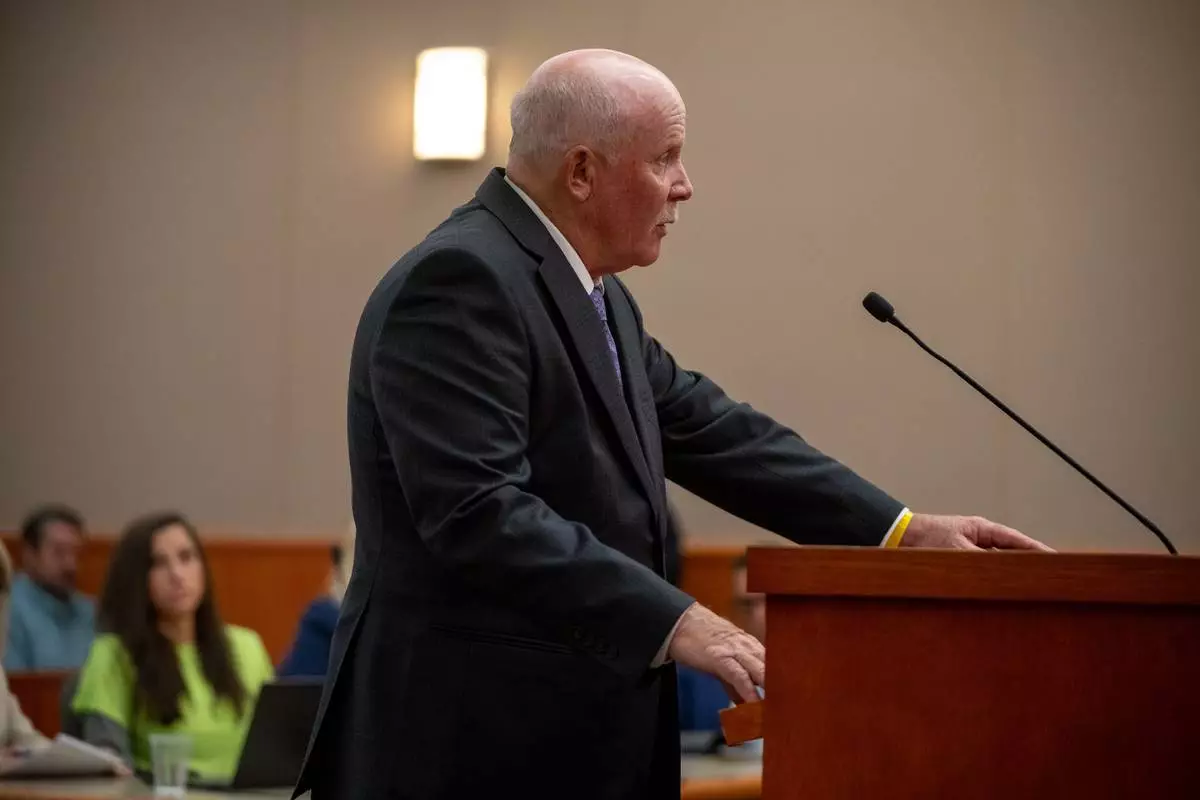
Gene Richins makes an impact statement during the sentencing of Kouri Richins in 3rd District Court in Park City, Utah, Wednesday, May 13, 2026. (Trent Nelson/The Salt Lake Tribune via AP, Pool)
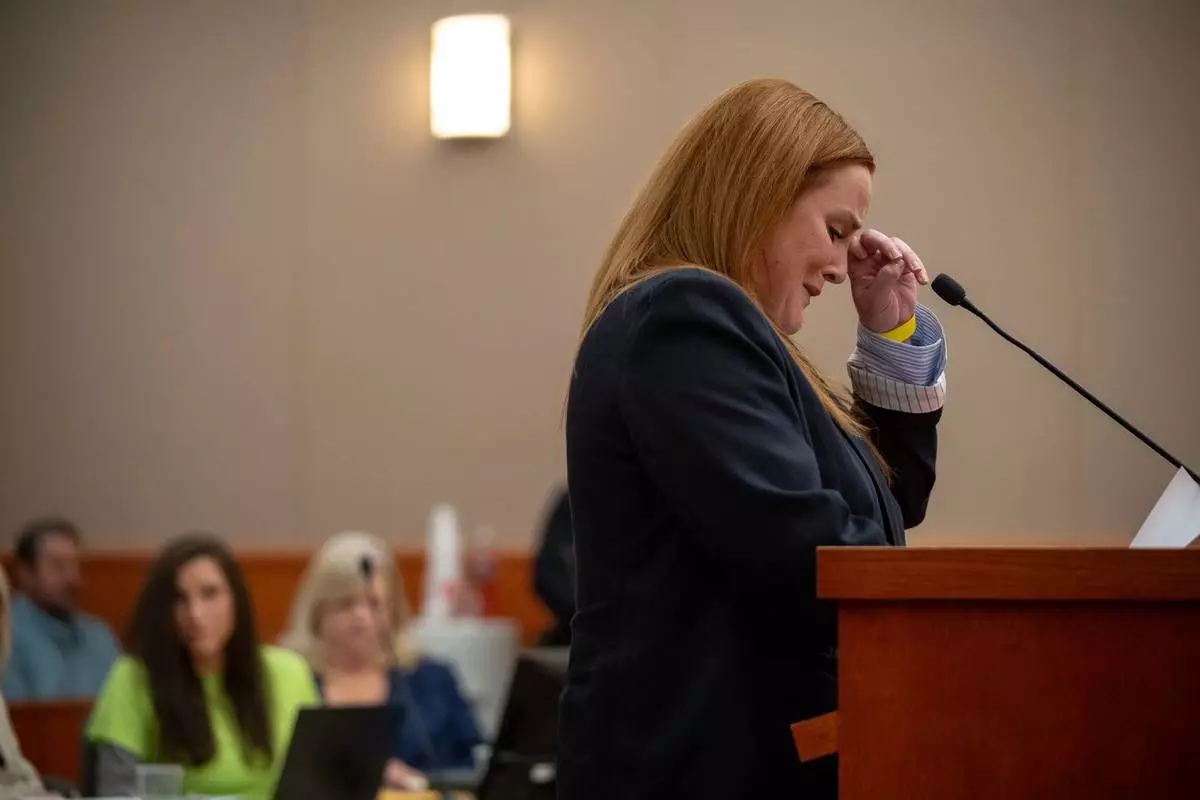
Amy Richins makes an impact statement during the sentencing of Kouri Richins in 3rd District Court in Park City, Utah, Wednesday, May 13, 2026. (Trent Nelson/The Salt Lake Tribune via AP, Pool)
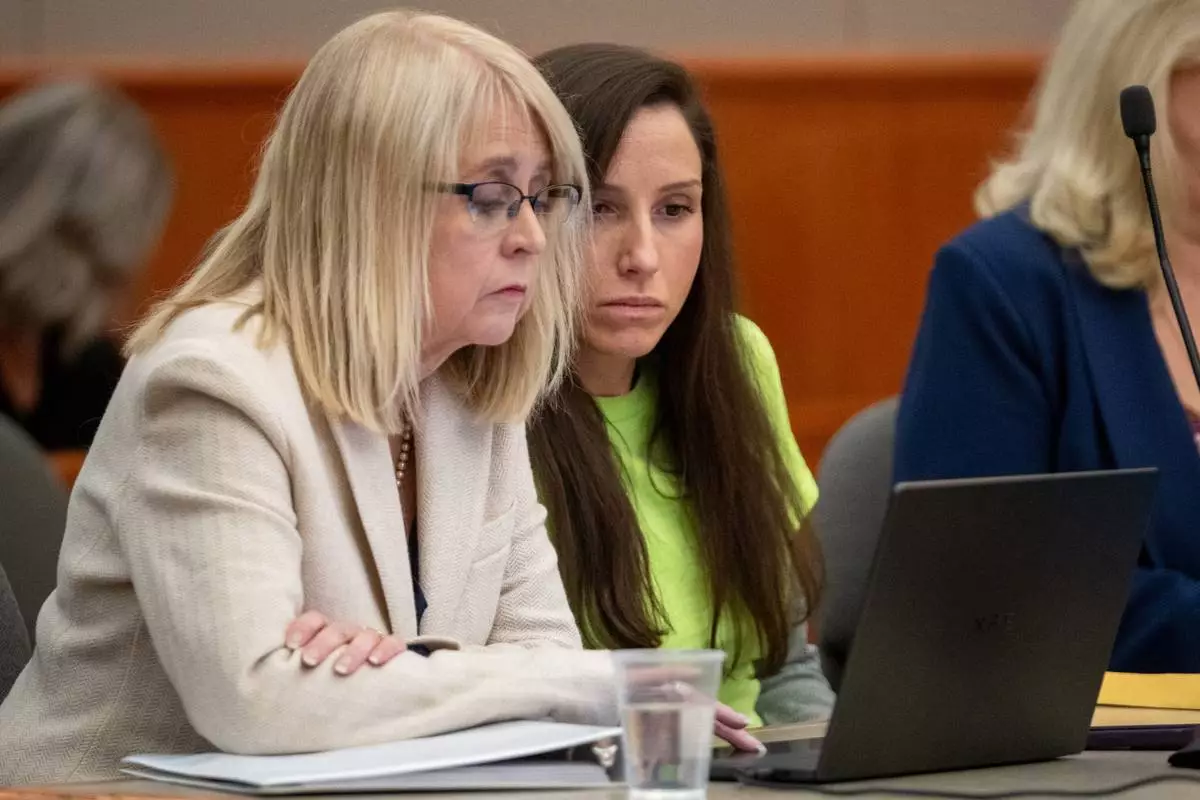
Kouri Richins appears at a sentencing hearing with her defense attorney Wendy Lewis, left, in 3rd District Court in Park City on Wednesday, May 13, 2026. (Trent Nelson/The Salt Lake Tribune via AP, Pool)
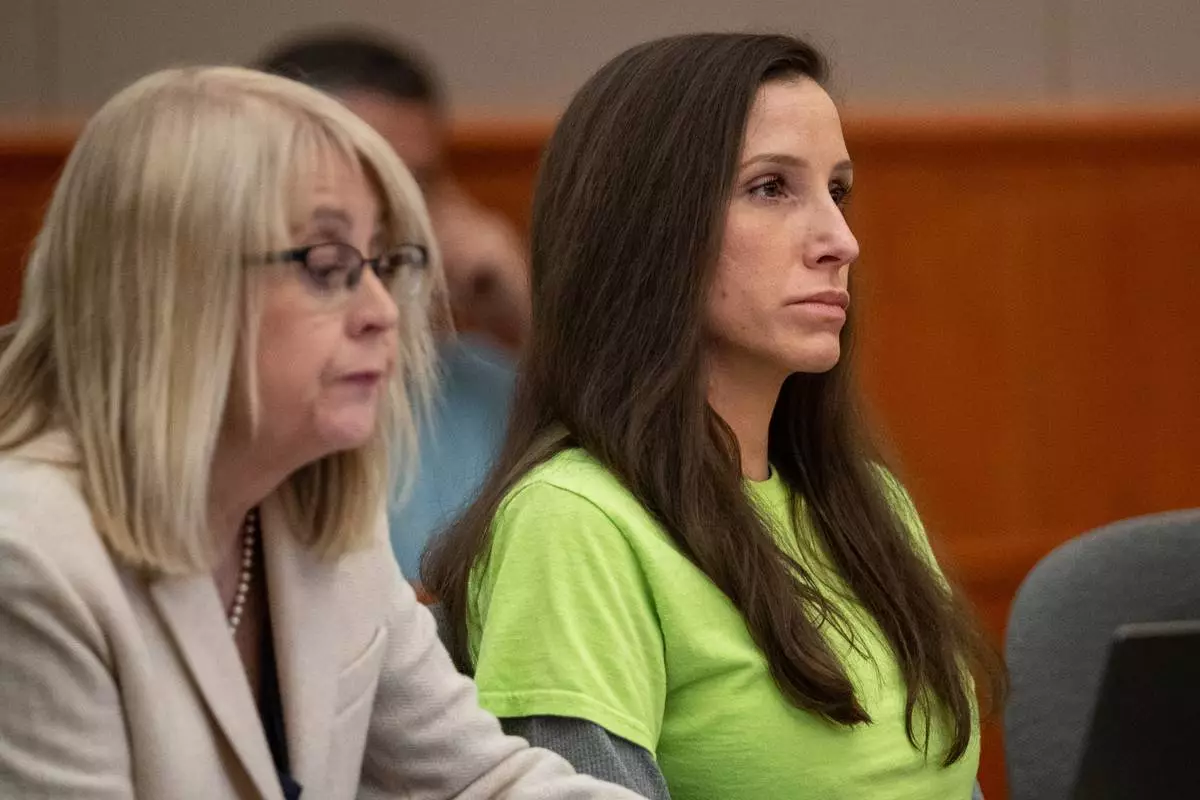
Kouri Richins appears at a sentencing hearing with her defense attorney Wendy Lewis, left, in 3rd District Court in Park City on Wednesday, May 13, 2026. (Trent Nelson/The Salt Lake Tribune via AP, Pool)
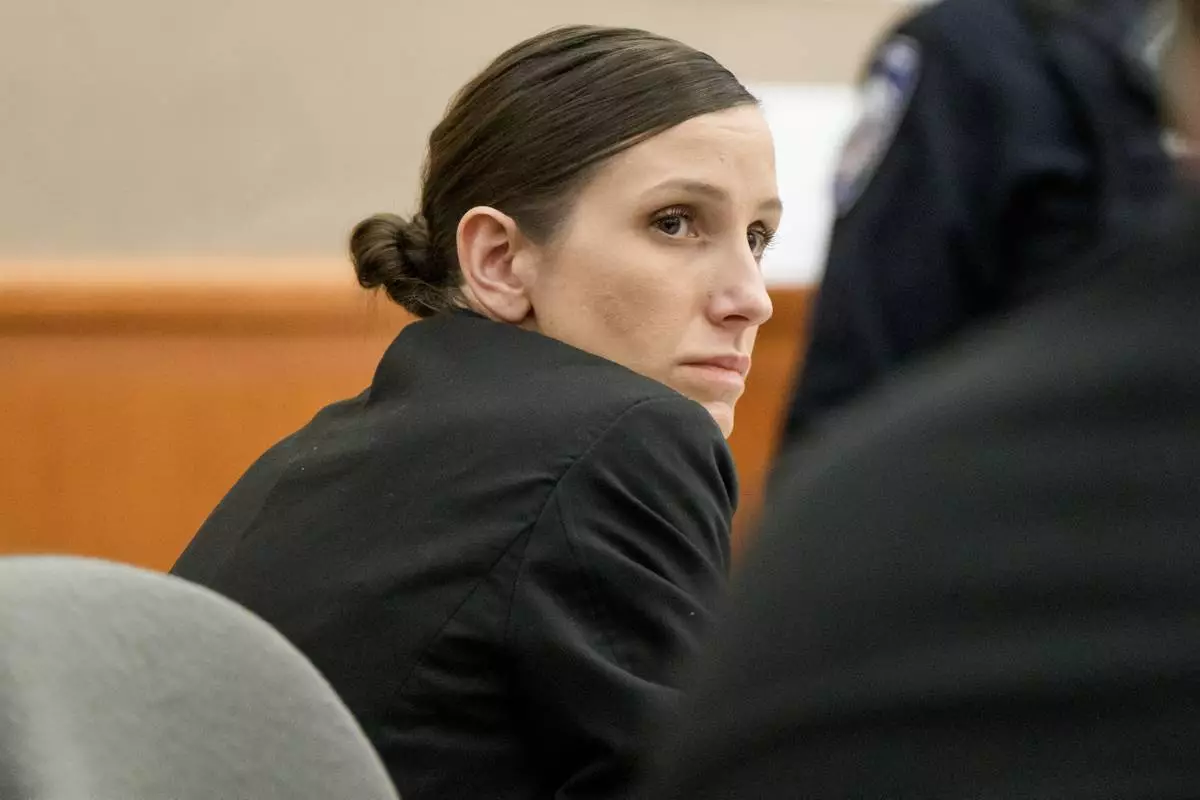
FILE -Kouri Richins looks on during her murder trial at the Summit County Courthouse in Park City, Utah, Monday, Feb. 23, 2026. (AP Photo/Spenser Heaps, Pool, File)